
Pine Mountain Settlement School
Series 09: BIOGRAPHY – Board of Trustees
DARWIN D. MARTIN, Trustee
1929 Correspondence Part 1
Gallery I: July 12 – December 27, 1929
(From M.R. Hook and A. Melville)
Gallery II: January 18 – June 8, 1929
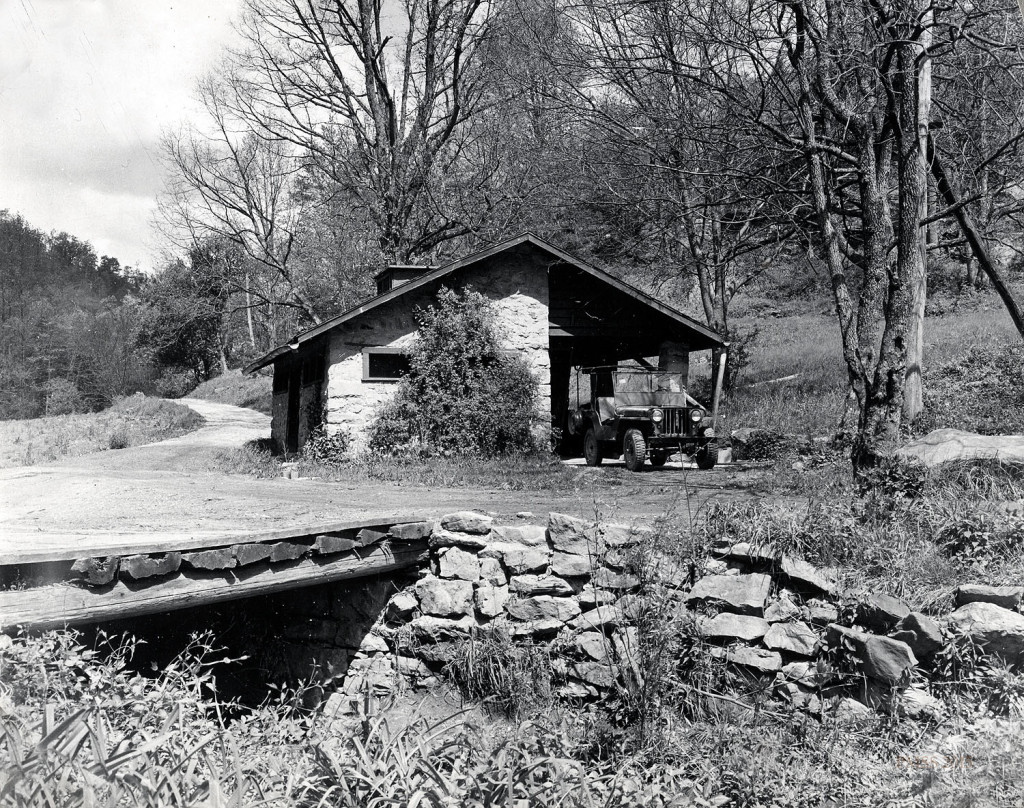
Tool Shed I with bridge across Isaac’s Creek in front. Arthur W. Dodd Album. [dodd_A_006_mod.jpg]
TAGS: Darwin D. Martin 1929 Correspondence Part 1, William Browning, creek straightening, Angela Melville, vocational training, curriculum, Reservoir, Henry Creech. Katherine Pettit, traveling in Eastern Kentucky, Mary Rockwell Hook, “Scrap House,” Open House, power line, fundraising, donations from Martin, fire insurance, recruiting new board members, Isaac’s Creek flood, Line Fork fire, Intermountain log train, Larkin Company orders, power line survey, goat-raising, Zande House insurance
DARWIN D. MARTIN 1929 Correspondence Part 1
DARWIN D. MARTIN 1929 CORRESPONDENCE provides images and summaries of the correspondence of Darwin D. Martin, to and from Pine Mountain Settlement School staff. A member of the Board of Trustees at Pine Mountain Settlement School, 1920-1933, Martin was a generous contributor to and consultant for the School. He served for many years as the Board President. His knowledge and his wealth were fundamental to the success of the School in its earliest years of development. An executive of the Larkin Co. in Buffalo, New York, Martin was very generous with his gifts to the School.
Angela Melville, an Interim Director during Martin’s time on the Board, tried to find a balance in educational programming for Pine Mountain and when seeking advice from Martin she wrote the following tenuous desire for and about the School “… as to what the School should grow into” in the next two years …
“… if it will have the courage to keep its uniqueness, and not become a standardized high school. … ……. but that its guidance into real life for its young people goes hand in hand with its heritage of cultural opportunity and the joy of life….and a deep and true religion,…so that this school may truly build character….”
–Angela Melville
[Note: Letters from PMSS staff in the PMSS Collections are carbon copies, typewritten, unsigned, and meant for the Office files. The original signed documents were sent to the correspondents. The initials at the bottom left of most PMSS letters indicate the writer and secretary. Letters from Darwin D. Martin are typewritten originals on Larkin Company letterhead or his personal stationery. The following lists of contents are in chronological order and not necessarily in the order of image numbers.]
CONTENTS I: Darwin D. Martin 1929 Correspondence Part 1
(February 14 – December 27, 1929)
From Angela Melville and Mary Rockwell Hook
724, 725, 726 [P1050724, P1050725, P1050726] Three-page handwritten letter to [unknown] from Mrs. Inghram D. (Mary Rockwell) Hook. [n.d. – first page is missing.] Building the “Scrap House” from leftover logs and bark-covered slabs from Big Log, with Uncle William‘s supervision; praised two reports to the Trustees as valuable for the School & Board for reference; enjoyed descriptions of Xmas festivities; feared Catherine French didn’t get many pictures due to rain; cites advantages to reviving the tradition of singing folk songs after supper.
720-721 [P1050720, P1050721] Carbon copy of the typewritten memorandum from Angela Melville, February 14, 1929.
*Angela Melville’s memorandum with her suggestions for the School’s next two years, including providing intensive training – both vocational and “book subjects” – to five or six 18-year-old boys. It would be a work-study vocational guidance course to prepare them, at age 20, to function “in the industrial civilization which they will enter.” Melville gives reasons for the need of such a school and entrance requirements. Also, she states that “the school should be developed for girls,” providing training in nursing, home-making, and “general initiation into the field of activities open to women.” She ends by predicting a possible end to how PMSS’s High School would end and “the entire facilities of the school used for this vocational guidance school.” However, she warns that Pine Mountain should make sure that it does not become only a technical school, “but that its guidance into real life for its young people goes hand in hand with its heritage of cultural opportunity and the joy of life….and a deep and true religion,…so that this school may truly build character….”
722 [P1050722] Typewritten Chart Showing PMSS “Proposed Organization.”
[Likely an addendum to Angela Melville’s memorandum of February 14, 1929.] The chart shows the curriculum for Boy’s Vocational School and Girl’s Vocational School. “Boys now here who would fit into the 1928-1929 school… – Brit Wilder, Morgan Cornett, Frank Bird, Wilson Cornett, Hankin Cornett, George Trosper.”
719 [P1050719] Carbon copy of the typewritten letter, March 15, 1929, to Martin in Buffalo, NY, from Angela Melville.
Sent him [Martin] a memo* she wrote “as to what this school should grow into”; would like to ask the Board to allow her “to start the school with five or six boys…It may be that none of the Board would agree with me, but every day convinces me more and more that the school has a great future, if it will have the courage to keep its uniqueness, and not become a standardized high school.” She writes about additional hopes for the School, including a “tutor-at-large” who could handle difficult cases.
683 [P1050683] Carbon copy of typewritten letter, July 12, 1929. Unsigned letter to Martin reports on advice received from Mr. Browning, State University farm engineer, about creek straightening. [See complete transcription below.]
723 [P1050723] Handwritten Letter to Mr. [Glyn] Morris, December 27, [no year], from Mrs. Inghram D. (Mary Rockwell) Hook in Denver, Colorado. Hook is “delighted with the appreciation of Open House as shown by the writer of the article” she received. Hook wrote, “The house always seems to me a place of enchantment. I love every bit of it.” [unsigned – missing next page?]
GALLERY I: Darwin D. Martin 1929 Correspondence Part 1
(February 14 – December 27, 1929)
To or From Angela Melville, Katherine Pettit, and Mary Rockwell Hook.
-
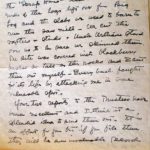
- 724 D.D. Martin 1929 Correspondence, page 1. [P1050724_mod.jpg]
-
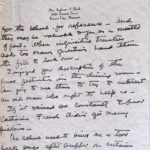
- 725 D.D. Martin 1929 Correspondence, page 2. [P1050725_mod.jpg]
-
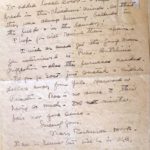
- 726 D.D. Martin 1929 Correspondence, page 3. [P1050726_mod.jpg]
-
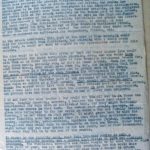
- 720 D.D. Martin 1929 Correspondence, page 1. [P1050720_mod.jpg]
-
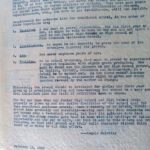
- 721 D.D. Martin 1929 Correspondence, page 2. [P1050721_mod.jpg]
-
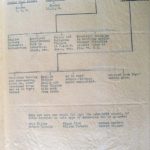
- 722 D.D. Martin 1929 Correspondence. [P1050722_mod.jpg]
-
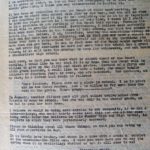
- 719 D.D. Martin 1929 Correspondence. [P1050719_mod.jpg]
-
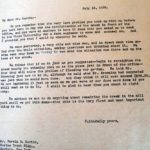
- 683 D.D. Martin 1929 Correspondence. [P1050683_mod.jpg]
-
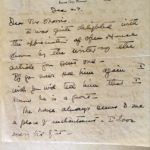
- 723 D.D. Martin 1929 Correspondence. [P1050723_mod.jpg]
TRANSCRIPTION I: Darwin D. Martin 1929 Correspondence Part 1
683 [Image # P1050683]
From Katherine Pettit.
July 12, 1929.
My dear Mr. Martin:-
Do you remember that the very last problem you took up with me before you left here in May was the straightening of the creek in front of the office, and you were so anxious to have it done that you asked me to send to the State University for a farm engineer to come and counsel us. And I promised you that I would do whatever he said.
He came yesterday, a very able and wise man, and he spent much time going over the whole situation, asking questions and thinking about it. He even went away down on Greasy to see what the situation was there and up the head of the creek.
He thinks that if we do just as you suggested — begin to straighten the creek nearby the swimming pool on to the place just in front of the office — that they will solve the problem of flooding our garden. He told Mr. Browning [Farm Manager] just how to do it, although he said what Mr. Browning had suggested was just what he would have done. And they think it will cost around $500.00. We are beginning it just as soon as we get more of our farm work done if you still want us to do it. I shall be glad to hear from you about it right away.
He advises as not to do anything about repairing the creek in the mill yard until we get this done — that this is the very first and most important thing to do.
Faithfully yours,
[unsigned]
Mr. Darwin D. Martin,
Marine Trust Bldg.,
Buffalo, New York.
KP/D
TRANSCRIPTION II: DARWIN D. MARTIN Correspondence 1929 Part 1
(January 18 – June 25, 1929)
To or From Angela Melville and Katherine Pettit.
JANUARY
002 January 18, 1929. To Darwin D. Martin from [unsigned, apparently Angela Melville], with ideas on what fundraising pleas to make, if any, in the upcoming issues of “Notes.” The writer is waiting for advice from Mr. Samuels. PMSS is “always a month behind in the payment of our bills….” The writer describes the School’s expenses, income from bequests and the “Sun Up” benefit, and the School’s efforts to pay the insurance bills. The writer mentions a letter from Mr. Arnspiger about the lower rates for PMSS.
003 January 21, 1929. To Melville from Martin, agreeing that “we should make haste slowly in a public appeal for money for the power line. We need to know more about it.” He suggests that Melville asks Arnspiger to charge the School’s fire insurance at cost. If he declines, then Martin will see what he can do in Cincinnati. He has heard from Miss [Evelyn K.] Wells of Henry C. Munger’s $25,000 bequest for the Endowment Fund.
004 January 25, 1929. To Martin from AM [Melville], telling of her plans to write to Arnspiger and send Martin copies of the correspondence between the insurance agent, Mr. Woodward, and Melville.
005 January 30, 1929. To Martin from AM [Melville], enclosing a copy of Arnspiger’s letter. She reports “that with the ‘Sun Up’ benefit money, we are able to practically pay off all December bills.”
FEBRUARY
006 February 7, 1929. To Melville from Martin, acknowledging receipt of the correspondence from Melville. Martin lists the School’s fire protections which he instructs should be sent to Arnspiger. He wonders whether Arnspiger could “persuade the Board to hold off the [rate increase] until we have another fire.”
007 February 13, 1929. To Martin from AM [Melville], who feels that Arnspiger should not be approached at this time: “I have a feeling that Mr. Arnspiger’s good will is worth a good deal to us in getting our insurance handled promptly and efficiently, as he has done it these many years, and that a slight difference in rates would not be worth that to us ….”
MARCH
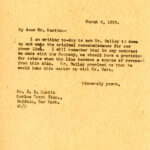
010 March 9, 1929. To Martin from AM [Melville], reporting that she plans to write to Mr. Bailey about the power line survey. “…[In] any contract we make with the Company, we should have a provision for rebate when the line becomes a source of revenue from this side. Mr. Bailey…[will] take this matter up with Mr. Watt.”
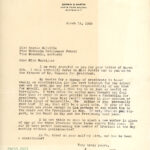
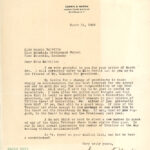
008 March 14, 1929. To Melville from Martin, deferring to her and Miss [Katherine] Pettit “as to the fitness of Mr. Samuels for [Board] president.” Martin assures her that his “desire for a change of presidents is based wholly on consideration for the best interest for the school and not to pave the way for less responsibility of any kind for myself. As I said, I will try to be just as useful as heretofore.” He feels that the president should be a Kentuckian, and recommends William Speed of Louisville. He asks whether the number of trustees can be increased without Board action.
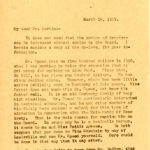
009 March 19, 1929. To Martin from [unsigned, apparently Melville], enclosing a copy of by-laws which state that the “number of trustees can be increased without action by the Board.” She writes about Mr. Speed’s giving history and background. She suggests that Martin should visit him. She is waiting to hear from Mr. Bailey, who will “make the original survey for our power line.”
011 [DUPLICATE OF IMAGE #008]
012 [NO IMAGE]
013 [DUPLICATE OF IMAGE #009]
014 March 20, 1929. To Martin from AM [Melville], sending him a draft of a fundraising April Letter that includes his name as the donor of the first $1,000 to the “need for electricity” and asking him for permission to use his name. She gives him her address: “℅ Inter Mountain Coal and Lumber Company, Putney, Kentucky.”
015 March 26, 1929. To Martin from AM [Melville], asking if he can arrange with Larkin Company to send “shoes for our children at a low price.” She reacts to an article Martin sent her, writing “….[H]owever, you are entirely mistaken in thinking that I want an opportunity school here. What I want is a vocational school, closely related to the actual life out in the world; in other words, a school organized very much on the Antioch plan.”
016 March 26, 1929. To Melville from Martin, surprised that Pine Mountain has flooded, due to “[i]nnocent little Isaac’s branch,” and asks what he can do.
017 March 29, 1929. To Martin from AM [Melville], sending him photographs of the flood. She updates him on the progress of the survey.
APRIL
018 April 9, 1929. To Melville from Martin, referring to an article on Liberia in the April issue of “Mountain Life and Work,” inspiring him to ask, “Don’t you wish you could get an Iberia-trained [sic] person to add to your teaching staff?” He sent the flood photographs to Mrs. [Celia Cathcart] Holton and asked her to join him in interview with Mr. Speed. He thanks Melville for the Pineville “Sun” with a flood article and hopes that Mr. Samuel’s house was not affected.
019 April 15, 1929. To Melville from Martin, who will be bringing a guest to the Board meeting: Dr. John F. Krill, an osteopathic physician. He mentions articles in the April 9th issue of Christian Science Monitor about mountain schools with illustrations of Pine Mountain and a series on mountain labor troubles.
020 April 17, 1929. Martin to Pettit, writing about “a fire from a defective flue.” He plans to visit Line Fork for the first time.
021 April 24, 1929. To Martin from KP [Pettit], who will hold off rebuilding at Line Fork until Mrs. [Mary Rockwell} Hook arrives. Pettit recommends Miss Ruth Dennis to become a board member, who has lived at Line Fork and visits the School every year. Dennis’s father is editor of a Chicago paper.
022 April 24, 1929. To Melville from Martin, asking whether he will be meeting Mr. Lewis for horses at Laden or taking the Intermountain log train from Putney. The “ladies” in the party, including Miss Hench, would probably prefer the latter. [Miss Elizabeth C. Hench, Secretary, PMSS Board)
023 April 26, 1929. To Melville from Martin, reporting that William S. Speed of Louisville, has declined becoming a PMSS trustee and adds a quote from Speed’s letter explaining his reason. Mrs. Hook will not be attending the board meeting.
024 April 29, 1929. To Melville from Martin, asking him to reply to the enclosed letter from Mrs. Holton. He explains why he can’t get train reservations yet.
MAY
025 May 2, 1929. To Martin from AM [Melville], informing Martin that Pettit feels that he should stop in Louisville to see Mr. Thomas Lloyd Smith “in regard to being a member of our board.” Martin should take the logging train from Putney. She encloses a letter from Mr. Bailey of the Kentucky Utilities Company about scheduling the survey. Melville asks Martin to visit him and Mr. Watt about the increased cost to come over the Creech land and her need to know the “actual right of way” in order to get a right of way. She also encloses a copy of a report and summary by Mr. [Glenn] Argetsinger of his testing of 7th graders.
026 May 15, 1929. To Martin from AM [Melville], asking him to forward the enclosed $10 receipt to Dr. Krill, who “left this money for the office.” She also asks for Krill’s address to add to the School’s mailing list.
027 NO IMAGE
028 May 16, 1929. To Pettit from Martin, reporting his meeting with Dr. Krill. He, Krill, and Holton were shown the Kentucky Utilities Company “from across the river” by Mr. and Mrs Samuels. He gives the cost and available sizes of “solid leather [B]lucher oxfords” for the PMSS children. He is mailing a copy of Liberty with the story of Taliesin. [Postscript] “Dr. [Alfreda] Withington would like to see the enclosed business announcement of Jack Hoyt.
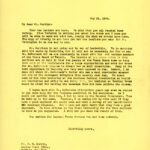
029 May 17, 2025. To Pettit from Martin, asking if Mr. Morrison will meet with Arthur T. McCormack, M.D., Chairman of the State Board of Health in Louisville, to request an engineer “without cost to the school to make a survey of our requirements for sewage disposal.” He informs Pettit that “Dr. McCormack’s father was the founder of the State Board of Health and Mrs. Samuels is of a family in which the father was the family physician,” facts that Morrison can use as talking points. He asks about progress on ordering “the new section needed for Laurel House furnace (boiler).” He offered to order it along with “the two radiators for Laurel House porch to be enclosed. He asks how many Shur-Stop replacements are needed.
030 May 21, 1929. To Martin from KP [Pettit], referring him to Miss [Marian] Purbrick about the shoes. Mentions that Mr. Morrison won’t be meeting with McCormack. She provides details about McCormack and his father. She is currently asking him if they have a good engineer, which she doubts. At his suggestion, she has also written to the State University for a farm engineer. “The section for Laurel House furnace has not been ordered.”
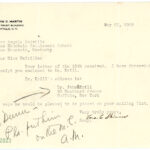
031 May 23, 1929. To Melville from Vera C. Skinner, Secretary, on Martin’s letterhead, sending Dr. Krill’s address in Buffalo, NY. [Melville’s handwritten notation in bottom margin asks Miss (Colette) Dunn(e) to put him on the mailing list.]
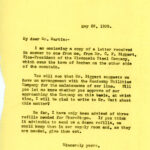
032 May 28, 1929. To Martin from AM [Melville], To Martin from AM [Melville],enclosing a letter to her from “Mr. C.F. Biggert, Vice President of the Wisconsin Steel Company, which owns the town of Benham on the other side of the mountain.” Biggert suggests that PMSS arrange with the Kentucky Utilities Company for maintenance of PMSS’s power line. She asks Martin if he approves.
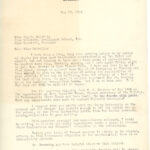
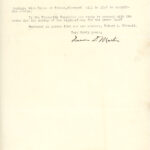
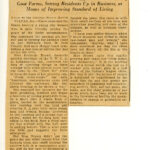
033-033a May 28, 1929. Two-page letter to Melville from Martin, thanking her for entertaining Dr. Krill and himself. Martin encloses a clipping from The Christian Science Monitor concerning the experiments of Miss Gertrude Brown, former YWCA secretary in Indianapolis, “in the Ozarks with goats.” He wonders if any experiments in goat-raising have been made in eastern Kentucky and suggests she consult the State University about it; also Mr. [William] Browning. And Miss Brown in Vulcan, Missouri. He offers to “finance the early experiences.” He writes, “Before your ideal of forest reserve is likely to be adopted, efforts to find industries adaptable in the mountains will have to be exhaustively pursued.” He encloses a letter from “our new advisor, Robert L. Kincaid.”
034 [NO IMAGE]
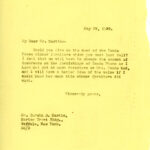
035 May 29, 1929. To Martin from AM [Melville], asking the cost of the Zande House wicker furniture that he had sent. She feels the amount of insurance on Zande House may have to be changed, as she has more furniture that Mrs. Zande had.
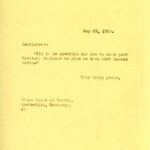
036 May 29, 1929. To “Gentlemen” at the State Board of Health, Louisville, KY, from KP [Pettit], asking for them to send their Sanitary Engineer to provide PMSS with “much needed advice.”
037 N.D. Newspaper article from The Christian Science Monitor, titled “… Miss Gertrude Brown Turns Scraggy Hills Into Thriving Goat Farms, Setting Residents Up in Business, as Means of Improving Standard of Living.”
JUNE
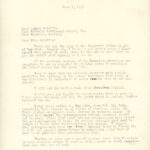
043 June 1, 1929. To Melville from Martin, writing “I think we can safely waive a fixed amount for upkeep of power line — in the end we shall have to pay the actual cost anyway,,,,” If there is no objection from the Executive Committee, he feels that the actual survey for the power line should proceed. He reminds Melville that “the ultimate contract must include provision for rebating to the school Endowment Fund parts of our investment in proportion to sales from the line to new customers.” He tells her about the Shur-stop refills; his $1,000 donation for construction fund and later another $1,000. A letter from Luigi Zande to Martin advises on the School’s use of concrete, stone and coal, crushed stone, and sand. Martin suggests how to transport and pay for a carload of sand from Gatun.
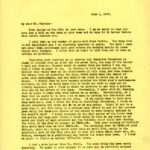
038 June 1, 1929. To Martin from [unsigned, apparently Melville] who will discuss his suggestions concerning goats with Pettit. She states her opinion about his “scheme for keeping people in these remote damp valleys. I think that we ought to lift them out of them as quickly as possible.” Responding to Martin’s question about “whether the Executive Committee is ready to proceed with an order for the power line,” she writes about maintenance of the line; whether to wait another year; the total amount in the fund plus Martin’s promise of $1,000; estimated cost of the line; and Mr. Boston’s preliminary survey. She received a “nice” letter from Dr. Krill and asks Martin to bring him to PMSS again.
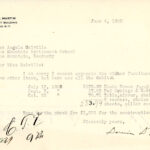
045 June 4, 1929. To Melville from Martin, sending her the “debits” for the Zande House furniture and other house furnishing. He encloses a $1,000 check for the construction fund.
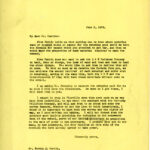
044 June 5, 1929. To Martin from AM [Melville], who tells him that, before ordering construction supplies, Pettit needs the “formula for cement” that he promised to send in order to estimate the amounts required. Melville also writes about Pettit’s preferred way to transport the supplies to the School. Melville plans to meet with the Kentucky Utilities Company in Pineville about the contract and starting the survey, adhering to Martin’s advice.
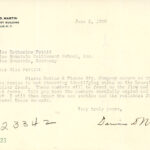
046 June 5, 1929. To Pettit from Martin, who asks for the identifying numbers on the Laurel House boiler front to send to Pierce Butler & Pierce Mfg. Company. He will then order items for Laurel House veranda. [Handwritten numbers in lower left margin.]
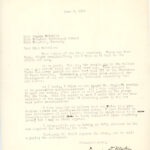
047 June 6, 1929. To Melville from Martin, responding to her statements that people should leave the mountains. He writes about when to decide about paying for power-line maintenance. He asks for estimates; mentions use of the Delco, and his ideas to develop the School’s “textile industry,” rather than “heavy industrial lines requiring power.”
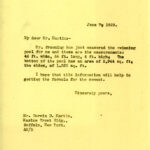
049 June 7, 1929. To Martin from AM [Melville], sending Mr. Browning’s measurements of the swimming pool in order to get the “formula for the cement.”
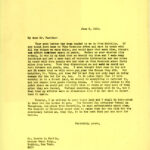
048 June 8, 1929. To Martin from KP [Pettit}, responding to his letter and her experiences concerning goats. She is writing to “your Ozard lady” asking how she works with goats. Pettit mentions the opinions of the Seventh Day Adventist School in Tennessee and the doctors of Knoxville concerning goats.
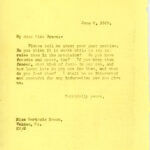
050 June 8, 1929. To Miss Gertrude Brown in Vulcan, MO, from KP [Pettit], asking several questions about how she deals with goats.
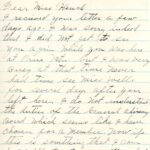
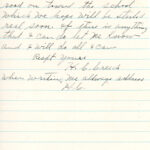
041-041a June 10, 1929. Handwritten two-page letter to Hench from H[enry] C. Creech, asking about “the duties of the General Advisory Board which seems like I have [been] chosen for a member. Now if this is something that I can do I will try to serve the school the best I can.” He mentions that “Harlan Fiscal Court appropriated fifty-thousand dollars to extend the Pine Mountain road toward the school.”
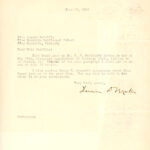
039 June 20, 1929. To Melville from Martin, writing about the acceptance by Mr. G.F. Meldrum and Henry C. Creech to be members of the Advisory Board. He encloses Meldrum’s acceptance letter to Hench.
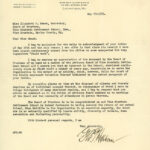
040 May 29, 1929 [Enclosed in Martin’s letter of June 20, 1929.] To Hench from George F. Meldrum, CPA, on letterhead for Meldrum & Meldrum, Louisville, KY. He has been interested in the School since his visit several years ago and asks about the duties of a member of the PMSS Advisory Board. He ends his letter by congratulating the Board for Melville’s return to PMSS as an executive and praising her qualifications.
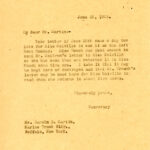
042 June 25, 1929. To Martin from [unsigned], Secretary, reporting how the School will handle the letters from Moldrum and Creech.
GALLERY II: Darwin D. Martin Correspondence Part 1
-
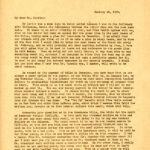
- martin_d_1929_corresp_002
-
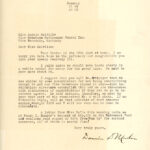
- martin_d_1929_corresp_003
-
- martin_d_1929_corresp_004
-
- martin_d_1929_corresp_005
-
- martin_d_1929_corresp_006
-
- martin_d_1929_corresp_007
-
- martin_d_1929_corresp_008
-
- martin_d_1929_corresp_009
-
- martin_d_1929_corresp_010
-
- martin_d_1929_corresp_011
-
- martin_d_1929_corresp_013
-
- martin_d_1929_corresp_014
-
- martin_d_1929_corresp_015
-
- martin_d_1929_corresp_016
-
- martin_d_1929_corresp_017
-
- martin_d_1929_corresp_018
-
- martin_d_1929_corresp_019
-
- martin_d_1929_corresp_020
-
- martin_d_1929_corresp_021
-
- martin_d_1929_corresp_022
-
- martin_d_1929_corresp_023
-
- martin_d_1929_corresp_024
-
- martin_d_1929_corresp_025
-
- martin_d_1929_corresp_026
-
- martin_d_1929_corresp_028
-
- martin_d_1929_corresp_029
-
- martin_d_1929_corresp_030
-
- martin_d_1929_corresp_031
-
- martin_d_1929_corresp_032
-
- martin_d_1929_corresp_033
-
- martin_d_1929_corresp_033a
-
- martin_d_1929_corresp_035
-
- martin_d_1929_corresp_036
-
- martin_d_1929_corresp_037
-
- martin_d_1929_corresp_038
-
- martin_d_1929_corresp_039
-
- martin_d_1929_corresp_040
-
- martin_d_1929_corresp_041
-
- martin_d_1929_corresp_041a
-
- martin_d_1929_corresp_042
-
- martin_d_1929_corresp_043
-
- martin_d_1929_corresp_044
-
- martin_d_1929_corresp_045
-
- martin_d_1929_corresp_045a
-
- martin_d_1929_corresp_046
-
- martin_d_1929_corresp_047
-
- martin_d_1929_corresp_048
-
- martin_d_1929_corresp_049
-
- martin_d_1929_corresp_050
Previous:
DARWIN D. MARTIN 1928 Correspondence Part 1
(January 6 – July 20, 1928)
DARWIN D. MARTIN 1928 Correspondence Part 2
(July 21 – September 26, 1928)
DARWIN D. MARTIN 1928 Correspondence Part 3
(October 1 – December 28, 1928)
Next:
DARWIN D. MARTIN 1929 Correspondence Part 2
(June 8 – December 21, 1929)
DARWIN D. MARTIN 1930 Correspondence Part 1
See Also:
DARWIN D. MARTIN Board – Biography
GOVERNANCE BOT 1929 Correspondence
Return To:
DARWIN D. MARTIN Correspondence Guide