Category Archives: Uncategorized

DANCING IN THE CABBAGE PATCH – Mountains and Sight to the Blind

Pine Mountain Settlement School
Series: POSTS
Mountains and 
Lucy Furman’s Sight to the Blind

MOUNTAINS 

Lucy Furman’s Sight to the Blind is one of the most memorable early works written by a Settlement worker in the Appalachian Mountains. Her process of adapting to living in the mountains of Appalachia was both an inspiration and an education for women of similar interests – those who wanted to find purpose in their lives while challenging themselves in one of the most remote geographies of the United States at the time.

Lucy Furman arrived in Knott County in the Eastern corner of the Central Appalachians in the first quarter of the twentieth century. Her keen ear for speech and her equally observant sight have left her readers, one of the more honest accounts of life in the remote Appalachian mountains near Hindman, Kentucky. Her graphic depictions of the beauty of the physical landscape begin with the eye and ear of an “outsider” but it is soon clear that the term “outsider” meant little to Furman. The bifurcation of “insider” and “outsider” are often reduced in distinction by what some may broadly call our joined “human condition” – something that Lucy Furman knew all so well.  

In her writing, Lucy Furman weaves a panoramic picture of early rural mountain living with the briefest of narratives. In her novel, her literary eyes and ears are sharply focused on the life of one mountain woman, whose name is Aunt Dalmanuthy. It is Aunt Dalmanuthy’s “Resurrection” following cataract surgery on her eyes that gives the book its title. The novel is slim and brief in details, but broadly panoramic as seen through this story of “vision.” It is so much more than just another Appalachian hard-luck novel. It is an ode to mountains written in the early dialect of the region but rendered with reverence and remarkable accuracy.

First recorded in the Century Magzine in 1912 and then published in book form by Macmillan Co., the book immediately had a wide audience. The 1914  publication’s popularity was enhanced by the introduction written by the journalist Ida Tarbell, a well-known journalist of the day. Tarbell prepares the reader for the journey Lucy Furman has chosen to share. She maps out the terrain ahead by broadly outlining the remote social setting and appealing to women’s instinct for new adventure in the locked-down world of the early twentieth century.

The stature of Tarbell no doubt boosted the sales of Furman’s book,  but Furman’s small book, Sight to the Blind is for the author, Furman, a classic in Appalachian literature. Her small book was written just as Katherine Pettit, the founder of Pine Mountain Settlement School, and her colleagues from Hindman were working to establish a new mountain school in Harlan County, Kentucky. Furman knew Pettit and, like many who had met her through her role in the earlier founding of the Hindman Settlement (W.C.T.U School), Furman was intrigued by such bravery and applied to work with the early School at Hindman.

Lucy Furman, became a long-time employee of Hindman Settlement and a lifetime friend of Katherine Pettit and  Pine Mountain Settlement School. Settling in at Hindman, Furman soon became well-known for her intimate literary portraits of eastern Kentucky and particularly of her life at Hindman, the first rural settlement school in Kentucky.  First called the W.C.T.U Settlement, Hindman was established by Pettit and her wealthy Louisville colleague, May Stone, who shared many of the same founding principles as Pettit. The W.C.T.U name, or Women’s Christian Temperance Union, paid homage to the school’s primary benefactor. In Furman’s book Sight to the Blind, she captures the essence of the “temperance” mission and gives it an exclamation mark! Her W.C.T.U. admiration was, however, not shared by Pettit, who kept some distance from the tenants of the anti-alcohol manifesto of the W.C.T.U. organization. 

But, like Pettit,  Furman had a keen ear for the local mountain dialect and culture, and she also had a keen nose. She could tell when liquor was in close company and took some pride in ferreting it out. In Sight to the Blind, Furman uses all her senses in the novel to bring the reader as close as possible to time and place and people in the mountains of Eastern Kentucky. Those who have grown up in the area, as this author has, will quickly sense the reality, the language,  and the delight of that early time in the mountains that Furman recalls in her book.  Many still living near the waters of Troublesome Creek, or whose ancestors lived nearby, will, no doubt share Furman’s delight and the author’s despair in the habits of the rural community – habits that are a deep silo of literary fodder. The geography and the life of the area agreed fully with Furman and she remained for her lifetime.

THE STORY

In Sight to the Blind, Furman tells the story of a woman whose sight is impaired by cataracts and who rails about her dark world to anyone who will listen.  Her plaintive and sometimes raging invectives as the book opens are familiar territory to many who have had similar “quarrelsome” relatives or who welcome a venue to gripe about current status. Aunt Dalmanutha is especially quarrelsome and easily animated by the local preachers as well as the “do-gooders” from the settlement school (Hindman). With the preachers, Dalmanutha is especially cantankerous.  Who are they to think that her vision will clear if only she will open her eyes to God as the local preachers admonish. She takes issue with the criticism of compatriots for her ‘ornery life” which they blame on her impaired reception of their Christian way of life. Dalmanuthy is not one to go gently anywhere.

In relating the story of Aunt Dalmanutha and her family, the author reveals many of the classic struggles with faith found in the course of Appalachian mountain living in the first quarter of the twentieth century.   Furman graphically challenges some of the basic tenets of mountain preaching with what she experienced in her early urban Settlement Movement life. The local preachers, if any ever read her books, most likely saw her as “ornery” as Dalmanutha. The challenges described by Furman are the familiar challenges that ring throughout early rural settlement school literature and that today resonate so strongly with many women’s issues worldwide. It is this obstinacy of Furman that attracted the author and most likely inspired suffragist Ida Tarbell to laud the all-too-familiar worldwide women’s story, then currently playing out in the mountains of eastern Kentucky.

Ida Tarbell says in the opening lines of her Introduction to Furman’s  authorship of two novels

A more illuminating interpretation of the settlement idea than Miss Furman’s stories “Sight to the Blind” and “Mothering on Perilous” does not exist. Spreading what one has learned of cheerful, courageous, lawful living among those that need it has always been recognized as part of a man’s work in the world. It is an obligation which has generally been discharged with more zeal than humanity. To convert at the point of a sword is a hateful business. To convert by promises of rewards, present or future, is hardly less hateful. And yet, much of the altruistic work of the world has been done by one or a union of these methods. 

Harriet Butler, to whom Furman dedicated her book,  was one of the most beloved nurses at Hindman in its first years. She was later recruited to Pine Mountain Settlement to work with Pettit in her founding years in Harlan County.  Harriet helped to found the Big Laurel Medical Clinic, a satellite of Pettit’s newly founded Pine Mountain Settlement School in Harlan County. In Furman’s story of Aunt Dalmanutha, Harriet Butler is clearly the nurse, re-named “Miss Shippen” in her book.

Furman’s precocious book captures the sentiments of local families for their mountain preachers, but through Dalmanutha and in Miss Shippen, Furman strongly questions the ” … cock-sure pride in the superiority of his religion and his cultivation,” seemingly taking a jab at the male preachers who often dominated life in the eastern mountains.

Back to the book, Dalmanuthy, urged by nurse Shippen to seek medical assistance in removing cataracts from her eyes, Dalmanuthy, is finally persuaded by Miss Shippen to pursue medical treatment for her eyes. She travels by train to a Bluegrass medical clinic, and there, the necessary treatment is successful. After many weeks in recovery at the home of her doctor, where she not only has her sight restored but is also given a new set of teeth and, more importantly, a “resurrection” in spirit, Dalmanuthy emerges a “whole” woman.

The story is a short one, but so very powerful in its literary comparison of the struggle of women to cope with Appalachian rural mountain life. The narrative places Dalmanutha as a strk contrast to the affluent life of women in the Bluegrass region.  On her return to the mountains, eyes wide open, she is Sight to the Blind personified. The dialect of Dalmanuthy, a woman who was severely impaired and poorly served by her environment due to the limited resources, is reborn powerful, eyes and soul now wide open to the world.  The physical limitations of her medical condition are removed, and with the new sight, she then recovers her self-reliance. She falls back into the well-known strong mountain reliance that some mountain women find, and some do not. But, is it enough for Dalmanutha?

The treatment to restore her sight was successful. But she is also reborn. As she travels back to her home in the mountains with her sight restored, she is quoted in the mountain dialect by Furman in what can only be called an Appalachian epiphany

‘But it were not till I sot in the railroad cyars ag’in, and the level country had crinkled up into hills, and the hills had riz up into mountains, all a-blazin’ out majestical in the joy of yaller and scarlet and green and crimson, that I raley got my sight and knowed I had it. Yes, the Blue Grass is fine and pretty and smooth and heavenly fair; but the mountains is my nateral and everlastin’ element. They gethered round me at my birth; they bowd down their proud heads to listen at my first weak cry; they cradled me on their broad knees; they suckled me at their hard but ginerous breasts. Whether snow-kivered, or brown, or green, or many colored, they never failed to speak great, silent words to me whensoever I lifted up my eyes to ’em; they still holds in their friendly embrace all that is dear to me, living or dead; and, women, if I don’t see ’em [the mountains] in heaven, I’ll be loesome and homesick thar.”

Furman, Lucy. Sight to the Blind, New York: McMillan Company 1914. With an introduction by Ida Tarbell.

Ida Tarbell speaks to this transformative event in her Introduction to the book

“A more illuminating interpretation of the settlement idea than Miss Furman’s stories ‘Sight to the Blind,’ and ‘Mothering on Perilous’ does not exist. … That to which we have converted men has not always been more satisfactory than our way of going at it.” 

Our way of going at it” was, in Tarbell’s eye, better seen through the vision of women and not the men who handed down principles, good tidings, and doctrine, but governed by dire consequences from their pulpit and desk. Tarbell, Furman, Pettit, Harriet Butler, and many more women advocated for women to “settle among those who need them.” This was the ethos of the Mountain Settlement Movement that Furman and Tarbell felt at the beginning of the twentieth century and clearly nurtured in women who lived in the mountains of Eastern Kentucky, there to mix and mingle with an ethos so often found in women living in other mountainous regions throughout the world.

THE MOUNTAINS

In Eastern Kentucky, it is impossible to ignore the mountains. They are both majestic and terrifying. They are sheltering and limiting walls of comfort. They are defined as dwelling places. They face one on getting up and one on going to bed. In Appalachia’s hollows, if the back is turned on one, another is in the face. It is not hard to imagine the dwellers of mountains all nodding their heads in agreement, smiling, or feeling a great lump rise in the throat when thinking about their/our mountains. But mountains defy ownership or specific worship. Go to the top of any mountain in the Central Appalachians, and mountains roll out like an ocean, broken only now by the yellow rock pushing its flat islands of recent surface mining along the horizon.

Mountains are jointly owned. Mountain dwellers hold as tightly to those mountains they can see as well as those they live near or below.  Sometimes even those that they cannot see, they know they are there. Those who live “in” the mountains are truly enfolded by the arms, the hollows, of mountains in Eastern Kentucky.

Distant view of 3 men tilling field; mountains & barn.[nace_II_album_085.jpg]

The students who attended Pine Mountain Settlement School and, later, even those students who came to visit in the environmental education programs, carried their own interpretations of “their” adopted mountains. In the early 1940s, a small poem written by a boarding student at Pine Mountain Settlement School described very specifically the mountains she preferred. The poem captures the disjoin of living in a town in the mountains and living “in” the mountains. The writer, Pine Mountain Settlement School student, Mildred Centers, captures the sense of mountain ownership.

I’m getting tired of this place. I don’t like being all crowded together.

I like the good hills. You know — where there is plenty of room for everyone and some to spare.

All I’ve seen are boulevards, streets, avenues, and building. All I’ve heard is the whirr of the motor and the rumble of machinery. And the people — crowded highways, jammed buses, workers packed in the street cars. the shrill voices of men, women, and children while going about daily tasks wear on me.

I like the hills. You know — the quietness, with only the chirp of the birds, the sigh of the breeze, the trickle of the brooks, the rush of the mountain stream. Best of all the quiet moonlit fields where paths lead from valley to valley.

I’d like to take a run up a long steep slope of some hill, find myself a seat on a stone, and whistle some good old mountain tune.

Mildred Centers. Pine Cone 1944  January.
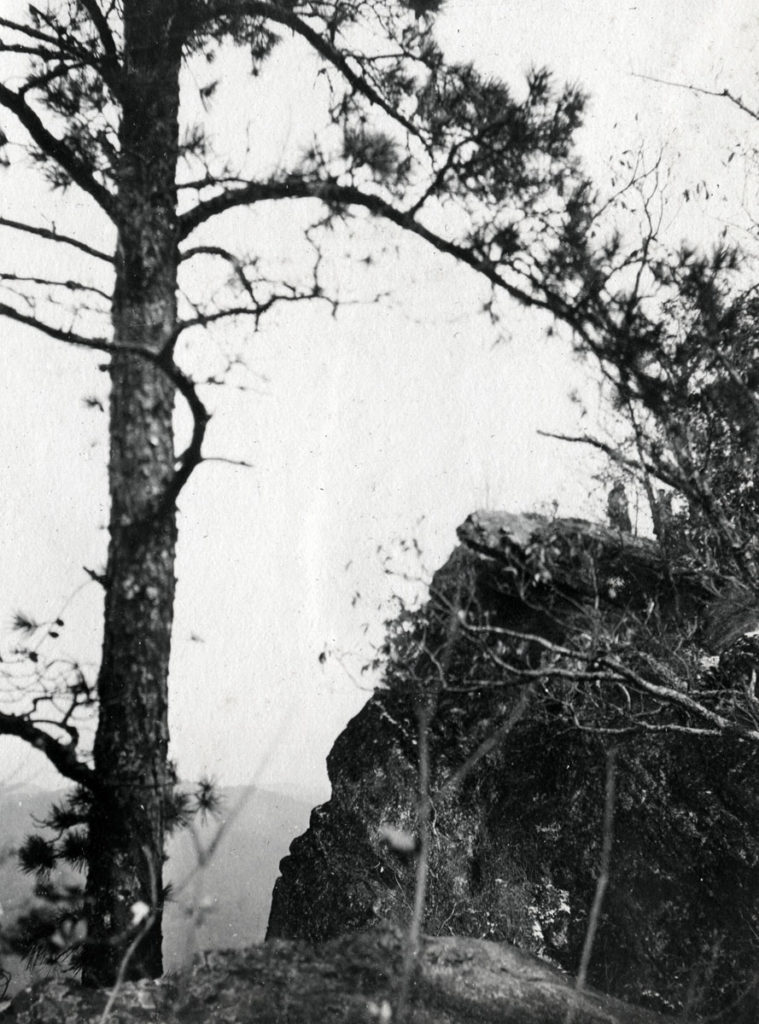
Jack’s Gap, is a favorite place to run up to. [pine tree and one figure on rock] mccullough_II_069c

The Geology of Mountains and “Dowbles”

“Pine Mountain is a long and unique ridge in the Central Appalachian Mountains that run through the Eastern section of  Kentucky. It extends about 125 miles from near Jellico, Tennessee, to a location near Elkhorn City, Kentucky. Birch Knob, the highest point, is 3,273 feet above sea level and is located on the Kentucky-Virginia border.” (Wikipedia) Pine Mountain Settlement School is positioned near the Eastern terminus of the long-tilted mountain chain.”

The geology of the long Pine Mountain inspired writers, whether as part of the local mythology or within the carefully delineated and many scientific tracts that have been written about the creation and evolution of its singular geology. Mr. Napier entertains us with his Observations on Pine Mountain when he describes the mountain as “…one of nature’s mysteries to be thought over.” He described to Katherine Pettit his view of the creation of the mountain as the remnant of a large river that originated somewhere near Long Island and was gouged out by the force of the water. He describes the Dowbles that one can experience when the ridgeline is walked. Some “Dowbles have retained the water and are treacherous swamps on either side of the mountain. He continues

You still see the signs of great river been flowed north east. You will find swamps, even marshes with more or less water followin’ the old river bed in different places the marshes are so bad that cattle gets in there and dies in the mire if they are not found and helped out. And decayed shells to show they has been a large water course the width of the clifts on each side of the Dowbles shows it has been the banks of the great river. By examinen the rocks on Both Sides of the old river bed it is plain to be seen that river flowed north east. If you notice you will get all kind of water flowin’ out of that mountain and you get the best proof of this by the lime stone in the Pine Mountain. The same lime stone you find several hundred feet below. Elsewhere the upheaval has raised the limestone ledge on Pine Mountain from a level of the lime stone bed found in northern Ky. around Lexington and Winchester.

To read more about Mr. Napier’s observations of mountains and their “upheavals”, visit the following page. Geologists beware …  but there is no doubt that Pine Mountain is “… a mysterious mountain that needs to be thought through.”.

Mr. Napier, Observations on Pine Mountain, 1 page
Come for a visit.

Pine Mountain is a long, narrow ridge starting in northern Tennessee and extending northeastward into southeastern Kentucky and southwestern Virginia. Its southwestern terminus is near Pioneer, Tennessee, and it extends approximately 122 miles (196 km) to the northeast to near the Breaks Interstate Park in Kentucky and Virginia.
DANCING IN THE CABBAGE PATCH In The Dining Room, Manners and Etiquette

DANCING IN THE CABBAGE PATCH
In The Dining Room, Manners and Etiquette

TABLE ETIQUETTE 

rood_062

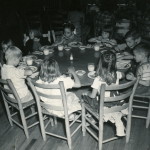
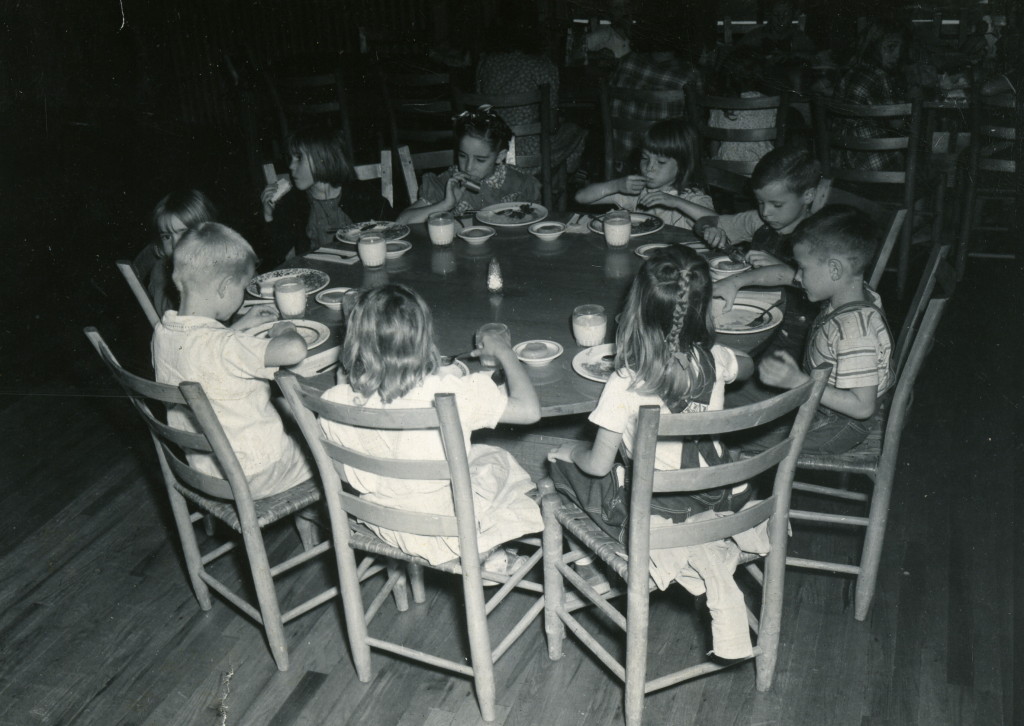
Over the years table manners were taken very seriously at Pine Mountain.  As all meals early in the School’s history as a boarding school were served “family style” at large round tables that could hold up to eight students.  The need for decorum in these group settings was soon evident.  In these earlier years when young children made up the majority of the population, the need for supervision at each of the tables was evident.  Each table included a staff member who would model table manners and would remind any child whose comportment was lacking, that there were better behaviors to strive for. Soon rules were instituted for table behavior and amended over the years to accommodate behaviors that “came along” with new populations and older students. One of the most egregious offenses was “putting your knife in your mouth” or “eating with a knife”.

“I like my peas with honey
I’ve liked it all my life.
It makes the peas taste funny
But it keeps them on my knife!”

This ditty was often quoted with humor by many Pine Mountain students and no doubt called to mind the admonishment of NEVER eat with one’s knife. Never put your knife in your mouth!

Another table rule was that no matter how bad the food tasted to the students, they were never to complain about the food.  A recurring tale is told of a student who was having trouble with the new food he encountered at the School.  In the kitchen, a small bar of homemade soap had somehow slipped into a soup pot and the soup found it’s way to the table.  A young man at the table took his first spoonful and exclaimed, “This tastes like soap!” Silence and startled looks greeted his exclamation.  He quickly recovered, again exclaiming, “And, that’s just the way I like it!”

Every student at Pine Mountain Settlement was expected to also abide by what was called the “Three Bite” rule. The rule mandated that any food placed in front of the student was expected to be sampled by the student.  They were to take at least three bites of the “new” food and failure to do so was duly noted by their fellow students as well as the staff.  Failure to comply resulted in an end to the meal for the student. Many students would later say that was how they learned to like food unfamiliar to them.  Some recall this “Three Bite” rule with less fondness. Canned chard never became a favorite and there were many plots and maneuvers to avoid eating this limpid vegetable.

RULES

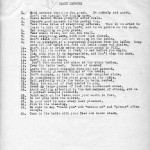
Certainly, the three “rules” noted above, seem reasonable for those early years, but those examples are only three of 39 rules associated with dining at Laurel House that were mandated in 1921! Some of the 39 were not so reasonable.

The documented rules were addressed to those dining as well as those serving the tables.

September 6, 1921

  1. Good manners begin on the porch. Be orderly and quiet. Don’t run through the dining room.
  2. Leave Laurel House promptly after meals.
  3. Observe good manners in the pantry too.
  4. Take three bites of everything offered. This is in order to learn to like it if you don’t and to be polite to the cook.
  5. Eat everything on your plate.
  6. Take small bites, but not too small.
  7. Chew everything well, with your lips closed.
  8. Don’t talk while you are waiting on the table.
  9. Sit up straight at a convenient distance from the table; keep arms off the table and feet off table rungs and chairs.
  10. Don’t talk or drink water when your mouth is full.
  11. Wait till the server is ready to eat before you begin.
  12. Clap only when it is appropriate, and don’t clap too much.
  13. Don’t reach in front of anyone.
  14. Don’t tip your chair.
  15. Don’t turn around and stare at the other tables. 
  16. Keep the table neat. Beware of crumbs!
  17. Leave the chairs straight when you are excused.
  18. Discuss only pleasant things at the table.
  19. Don’t whisper, or talk to your next neighbor alone.
  20. Be considerate of the other people at the table.
  21. Wait patiently while the table is being served.
  22. Enjoy the amount of food served to you.
  23. Break up large pieces of food into convenient sizes.
  24. Avoid calling attention to the bad manners of others. And, be a perfect example youself.
  25. Do not wait on the table when your mouth is full.
  26. Do not play with the silver.
  27. Do your best to make every meal pleasant. 
  28. Join in the blessing.
  29. Be sure to say “thank you”,”excuse me” and “please often enough.
  30. Come to the table with your face and hands clean.

By the late 1930’s some of this early discipline began to break down as the age of the student crept upward and some began to assert themselves or insist on their learned habits.  In a memo from Glyn Morris, the Director dictated to his secretary Fern Hall, that he sends notes to staff charged with overseeing the Dining Hall in Laurel House. In this case, the note is to John Spelman III. It reads

Notes from Staff Meeting held in Laurel House, April 2.

Mr. Morris requested that we watch the conduct in the dining room.
He mentioned such things as:

         excessive noise
         starting to eat before the hostess
         unnecessary amounts of going to and from the kitchen

Fern Hall, 
Sec.

THE DIETITIANS

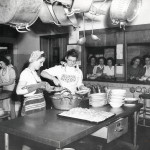
Dietitians rule at Pine Mountain. The Kitchen and the services associated with feeding students are unrelenting and critical to the overall well-being of the School. Attention to the dining decorum at the School was often front and center and there are several documents that spell out the rules of the table and one of them, importantly, is “Be polite to the cook.”

One of the longest-reigning dietitians at Pine Mountain was Berdina Bishop.  Like many of the women who assumed this role at Pine Mountain School, she was not trained as a dietitian but quickly showed her skills at this complex task. She writes in her dietician notes of her experiences in the kitchen. Her notes, found in a large scrapbook and an album she donated to the School, and in the gathered reports she was required to submit regularly to the Director, demonstrate her eye for detail.  Her large Scrapbook contains many of her memories of her Pine Mountain years and it is within this tome that we find some of the records she kept of her kitchen years. Her records and reports to the Directors she served are found scattered throughout her record. The reports to the Director also provide a cost accounting of foodways at the School. Her reports join those of dieticians who preceded and followed her and tracked the growing cost of feeding students and staff at the institution. 

Other notable dietitians include Bertha Cold, sister of Edith Cold; Georgia Ayers Dodd; Chloe Hayes-Bunch, and others. During the two World Wars, staff, such as teacher Louise Fliermans, were given that difficult task with little preparation. Much more may be learned about the Dining Room at Pine Mountain and etiquette and manners by consulting the various biographies of those who worked in the kitchen and dining area.

DINING IN THE COMMUNITY SCHOOL YEARS

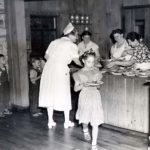
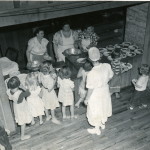
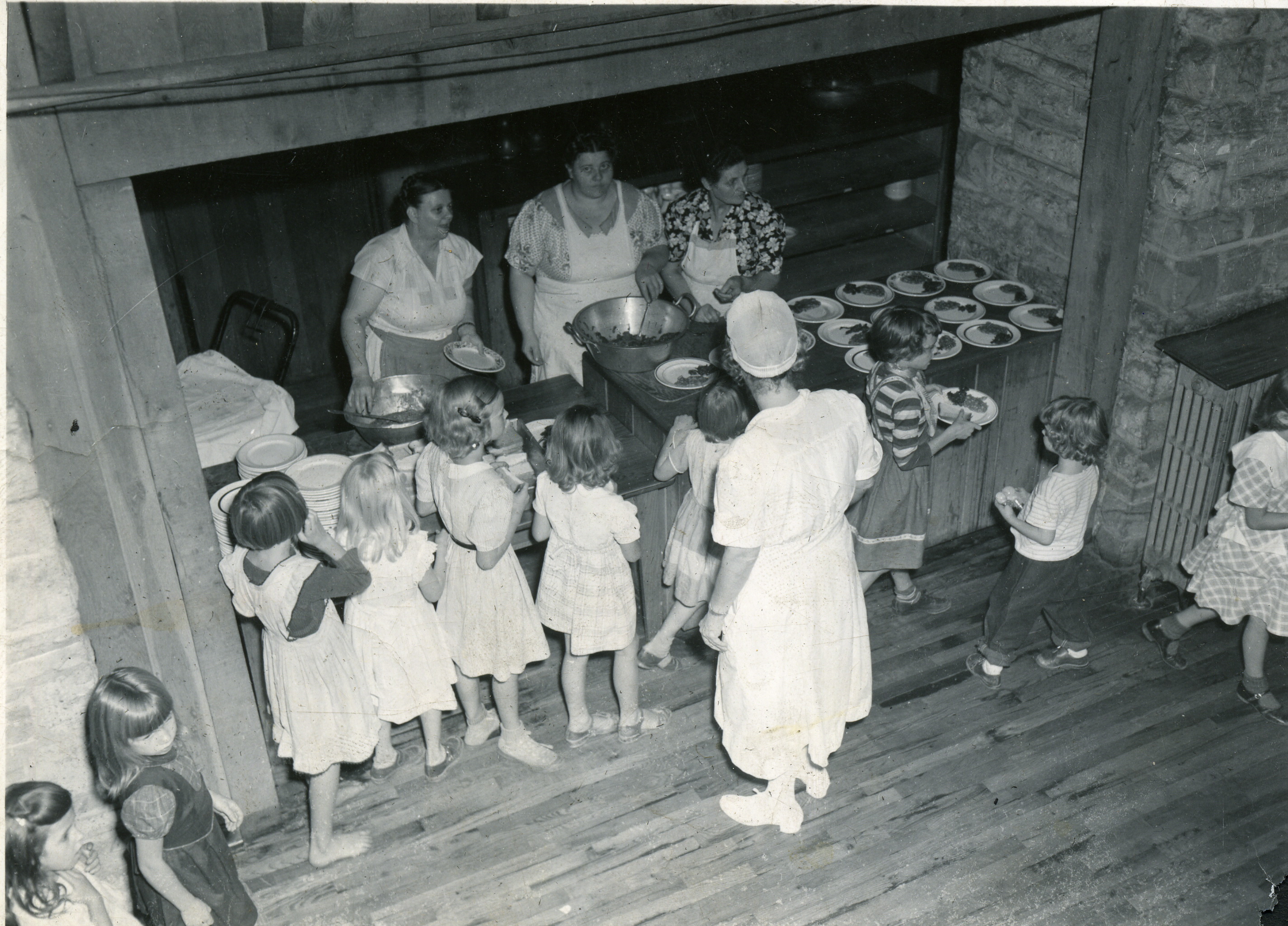
During the Community School years (1949-1963)  at Pine Mountain, dining began to more closely follow that found in grade schools throughout the country.  However, as can be seen in the photograph that introduces this blog, the tables were still set for dining with plates, saucers, silverware, and napkins properly placed for each student. Each child would take their plate through a “cafeteria” line where they received the main offering of the day.  

Grace M. Rood (back to camera) at Laurel House II dining hall. Grace Rood Album. [rood_043.jpg]

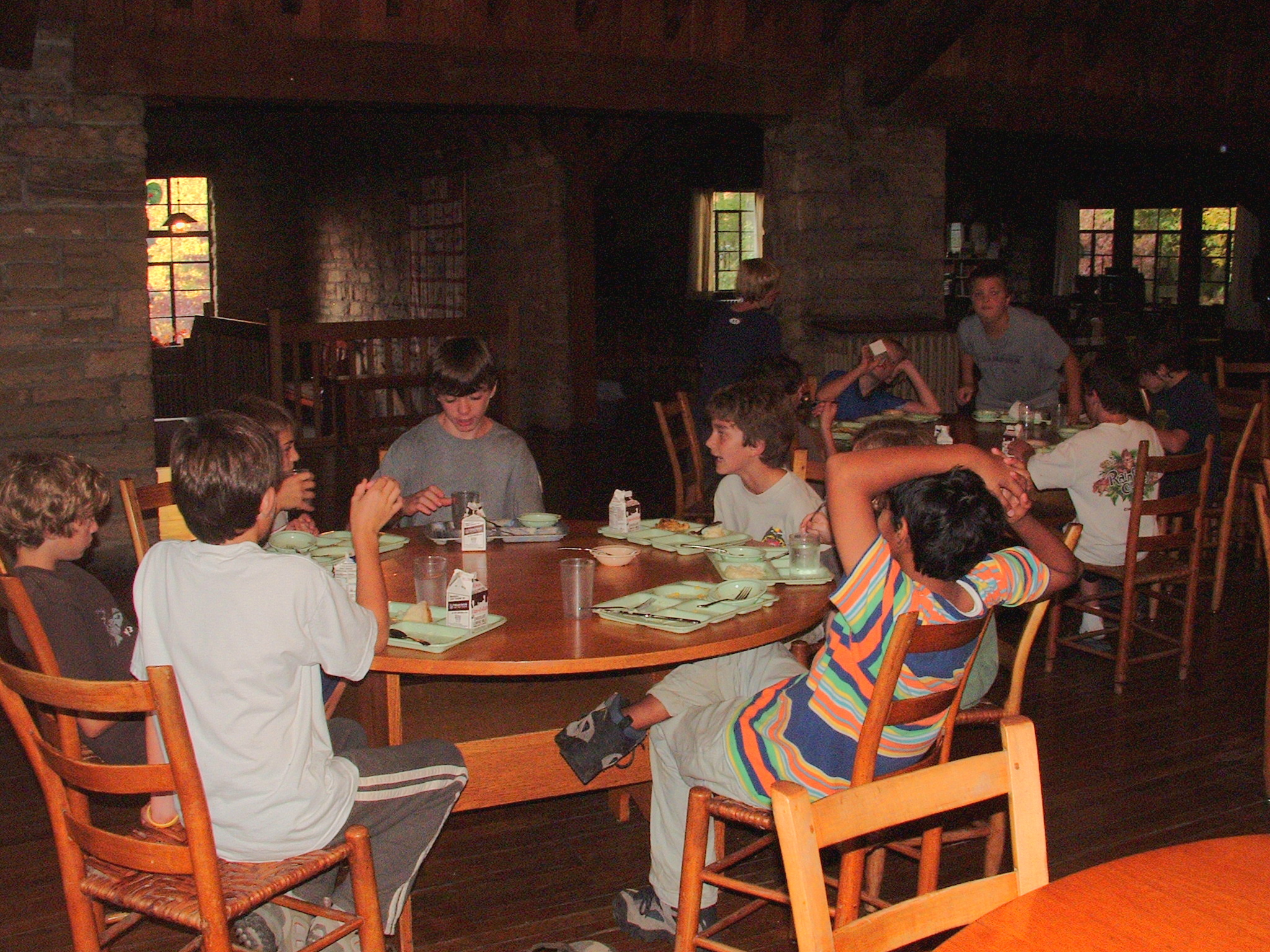
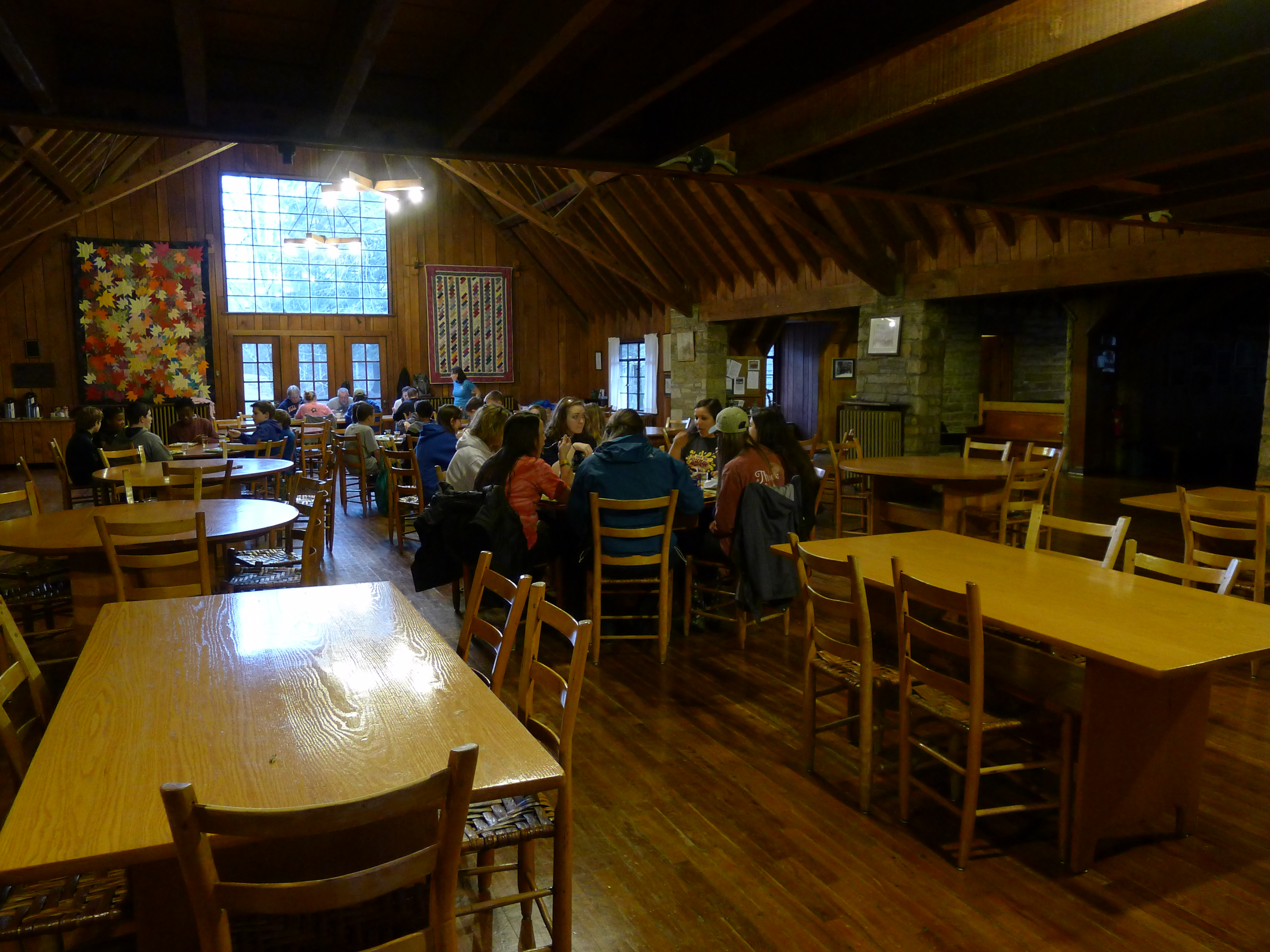
What is missing in the later years is the presence of an adult at each table.  Modeling behaviors and monitoring eating habits were done at a distance. At a long table, seen in the background of the photograph, some of the staff may be seen. The placement of students and staff today who gather as part of the very active Environmental Education programs at the School looks much as it did during the Community School period.  One of the noticeable differences today is the use of sectioned cafeteria trays used by all diners. All visitors and staff continue to bus their dinnerware.

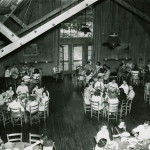
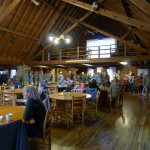
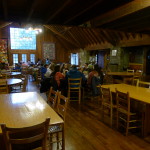
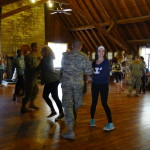
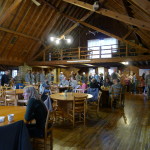
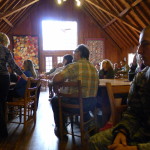
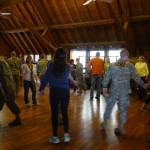
In the dining room, the beautiful multi-purpose tables from the very earliest years are still in constant use. The tops of the tables tilt to full upright and become a seat which can then be used on the dance floor when folk dancing is introduced following the meal. The hickory cane-bottomed chairs are still found throughout the dining room.  Notoriously easy to up-end, the chairs now are more frequently heard hitting the floor as children are more accustomed to heavier seating. Another observation is that the noise level of the children has gradually increased and echoes off the walls of the dining room.  The excited and animated conversations are also often punctuated by some child leaning too heavily on the tilt-top of the table causing it to “slap” back down on the base. As children compete to be heard, the loud voices fill the room. The auditory experience in the dining room has changed dramatically from the earlier years when children were quickly quieted. Shouting and raising the voice in the dining room was monitored by all present and quickly corrected by staff and by the children themselves.

The dining room at Laurel House, today. Environmental education classes

While the 3-bite rule has faded away for most children dining at Pine Mountain today, another rule has been instituted. That rule is to refuse or not ask for food that will not be eaten. The food waste at the end of each meal for the student groups is scraped into a special bin and the scraps are weighed for each visiting school for each meal. Remarkably, the Gospel of the Clean Plate ideal has been reached by some remarkable school groups whose”0″ waste at their meals set a record for other schools to emulate. Further, each student in today’s dining hall is asked to bus their tray and to assist the kitchen staff in the important job of sweeping floors, cleaning tables and straightening chairs after dining. Katherine Pettit is probably smiling at this continuation of individual disciplined responsibility which she attached to every activity.

GALLERY


SEE:   

DANCING IN THE CABBAGE PATCH   About

DANCING IN THE CABBAGE PATCH  I Guide

DANCING IN THE CABBAGE PATCH II   Introduction

DANCING IN THE CABBAGE PATCH  In the Garden

DANCING IN THE CABBAGE PATCH  In the Kitchen Pots and Pans

DANCING IN THE CABBAGE PATCH   Dieticians

DANCING IN THE CABBAGE PATCH  In the Dining Room, Manners and Etiquette 

        DANCING IN THE CABBAGE PATCH  Gospel of the Clean Plate

        FOODWAYS Overview

        FOODWAYS Essential Foods at Pine Mountain Settlement School

        FOODWAYS An Old Fashioned Dinner March 14, 1919


DANCING IN THE CABBAGE PATCH Guide

Pine Mountain Settlement School
DANCING IN THE CABBAGE PATCH
GUIDE

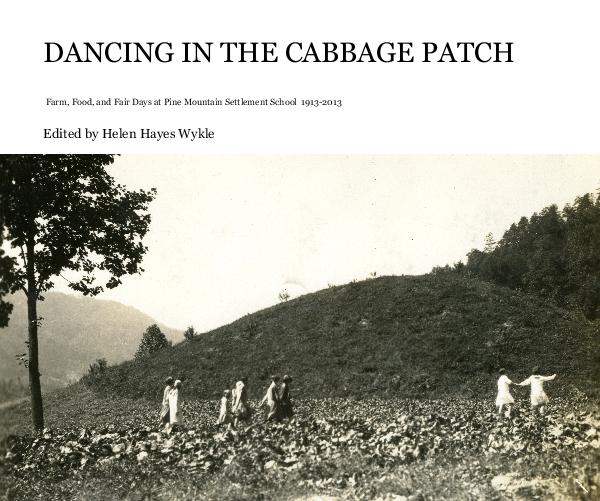
Cabbage patch below Grapevine Knoll, PMSS, c. 1915. [dancing-in-the-cabbage-patch-2-copy.jpg]

DANCING IN THE CABBAGE PATCH Guide

TAGS:  Pine Mountain Settlement School, Harlan County, Kentucky 1913 – present, rural settlement schools, sense of place,  foodways, cabbages, agrarian myths, sustainable agriculture, educational reform, industrial education, Ayrshire cows, heritage seeds, Appalachian foodways, settlement school kitchens, kindergartens, rural migration, miners, mining, mores and manners, Kentucky politics, educational reform, poppets,  play-pretties, sheriffs, Appalachian religions, settlement schools, communists and conservatives, hippies, hi-jinks, and other topics 


GUIDE (Alphabetical)

DANCING IN THE CABBAGE PATCH Guide

DANCING IN THE CABBAGE PATCH I  About

DANCING IN THE CABBAGE PATCH II  Introduction

DANCING IN THE CABBAGE PATCH III Place

DANCING IN THE CABBAGE PATCH IV A Brave and Imaginative Plan Takes Place

DANCING IN THE CABBAGE PATCH Cows

DANCING IN THE CABBAGE PATCH Dis-ease

DANCING IN THE CABBAGE PATCH  Earth Day and Mary Rogers 

DANCING IN THE CABBAGE PATCH English Country Dancing at Pine Mountain Settlement

DANCING IN THE CABBAGE PATCH  Farming the Land 1913-1930

DANCING IN THE CABBAGE PATCH  Farm and Dairy Early Years I

DANCING IN THE CABBAGE PATCH  Farm and Dairy Early Years II 

DANCING IN THE CABBAGE PATCH  Farm and Dairy Morris Years III

DANCING IN THE CABBAGE PATCH Going and Coming Back I

DANCING IN THE CABBAGE PATCH Coming Back and Going Some More II

DANCING IN THE CABBAGE PATCH Gospel of the Clean Plate

DANCING IN THE CABBAGE PATCH In the Dining Room Manners and Etiquette

DANCING IN THE CABBAGE PATCH  In the Kitchen Pots and Pans 

DANCING IN THE CABBAGE PATCH Laden Trail or The Road 

DANCING IN THE CABBAGE PATCH  Maple Syrup and Sugar

DANCING IN THE CABBAGE PATCH Mexico and Pine Mountain Settlement School 1936

DANCING IN THE CABBAGE PATCH Moonshine

DANCING IN THE CABBAGE PATCH Pigs

DANCING IN THE CABBAGE PATCH Poultry

DANCING IN THE CABBAGE PATCH Salamanders

DANCING IN THE CABBAGE PATCH Sheep

DANCING IN THE CABBAGE PATCH Sheep Shearing and Cecil Sharp

DANCING IN THE CABBAGE PATCH Santa Clause Christmas Trees Parties

DANCING IN THE CABBAGE PATCH  Sorghum Molasses Stir-Off I

DANCING IN THE CABBAGE PATCH Sorghum Molasses Stir-Off II

DANCING IN THE CABBAGE PATCH Snow

DANCING IN THE CABBAGE PATCH Trees

DANCING IN THE CABBAGE PATCH War and PMSS

DANCING IN THE CABBAGE PATCH Weaving


DANCING IN THE CABBAGE PATCH Alpha Sigma Tau Service and Philanthropy

Pine Mountain Settlement School
Series   : Friends & Guests

ALPHA SIGMA TAU Service and Philanthropy
THANK YOU ! 

Alpha Sigma Tau (ΑΣΤ) is a national Panhellenic sorority founded on November 4, 1899 at Michigan State Normal College (now Eastern Michigan University). It is the third-oldest educational sorority, and has more than 90 active chapters and colonies nationwide. [Wikipedia]

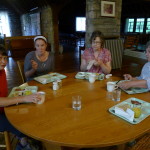
James Madison Alpha Sigma Tau volunteers dine together at Laurel House. 2015

James Madison Alpha Sigma Tau volunteers dine together at Laurel House, 2015. [P1060992.jpg]

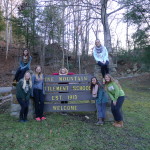
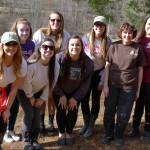
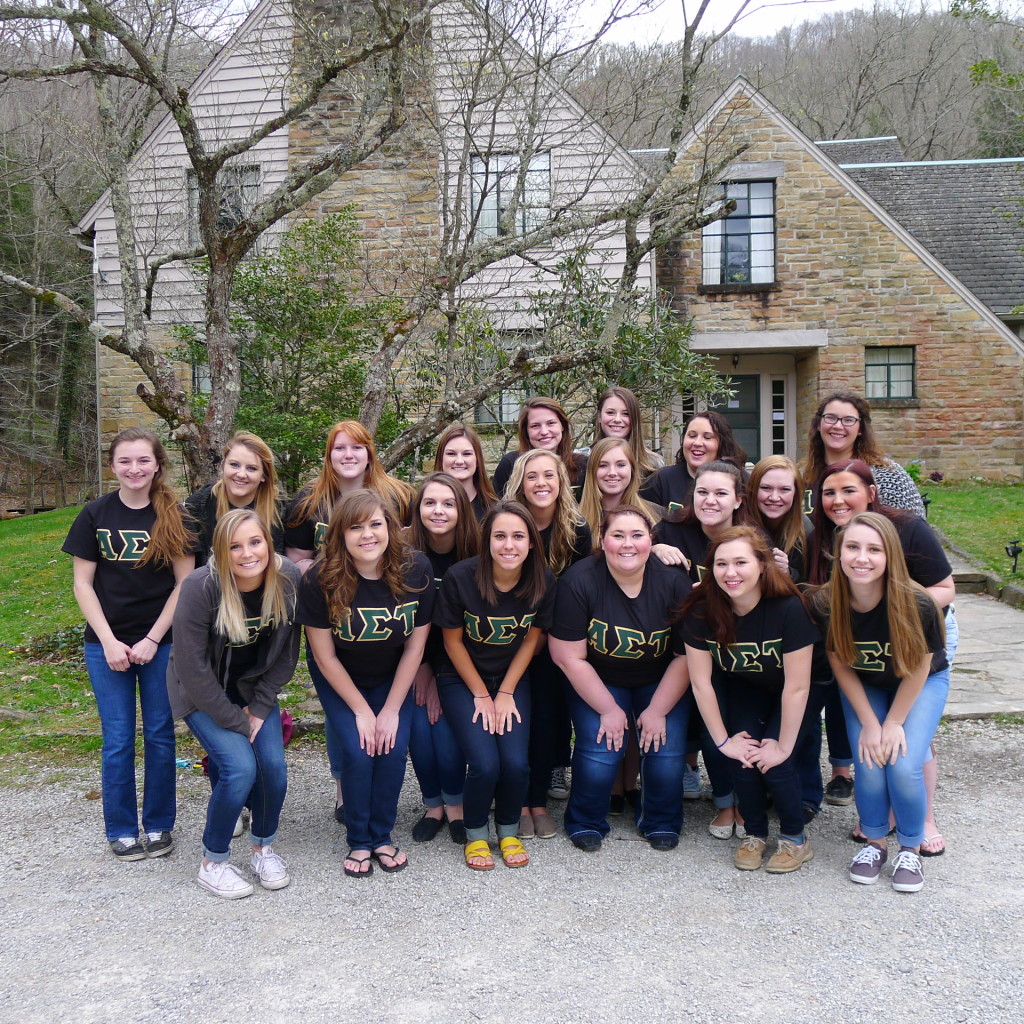
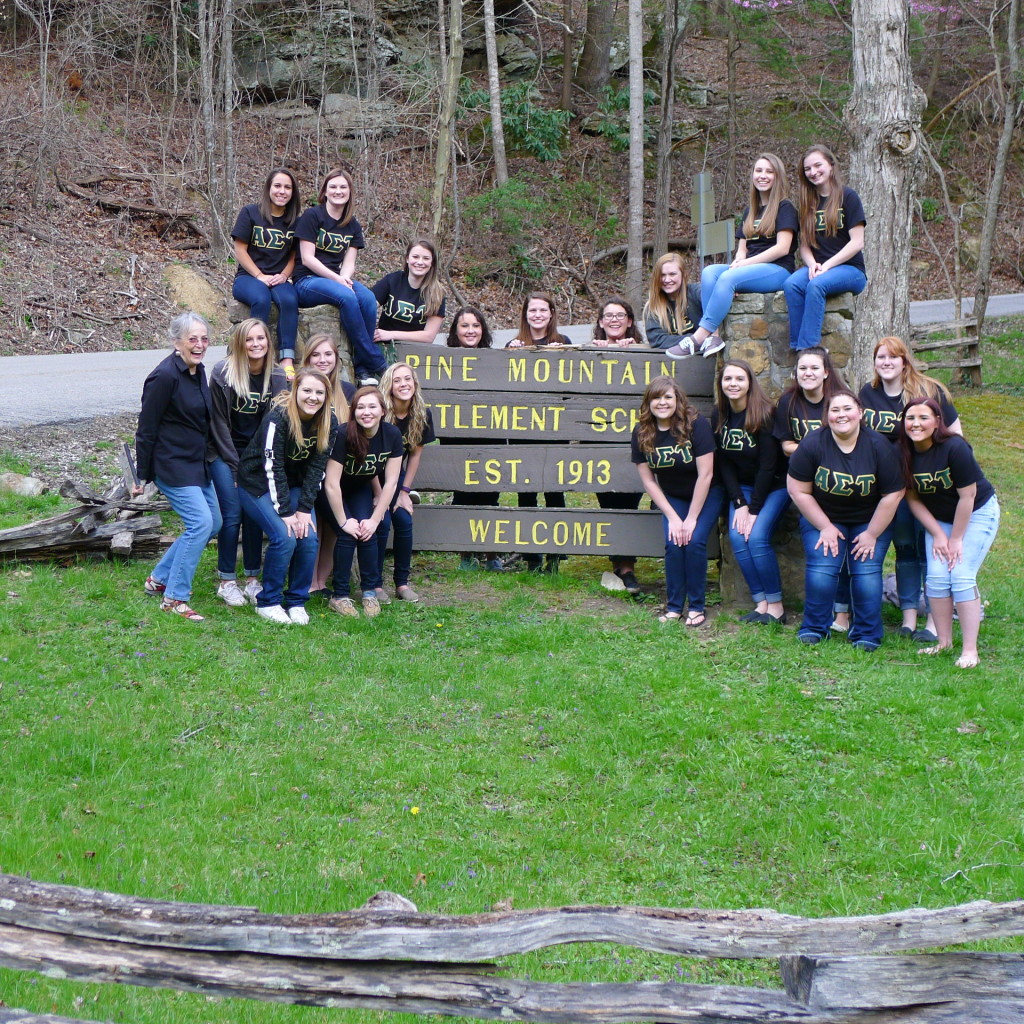
Since 1945 the national sorority Alpha Sigma Tau (AST) has been a strong supporter and advocate for Pine Mountain Settlement School. With nearly 90 chapters throughout the United States Alpha Sigma Tau selected Pine Mountain as the primary philanthropy for the sorority and Habitat for Humanity as its primary service focus. Since 1945 Pine Mountain has been enriched by the close relationship with this philanthropic sorority and the many visits by members of various national chapters.

Pine Mountain has been very fortunate over the years to have the chapters visit the School and to have them participate in programs or provide designated service to the institution. For example, in the Spring of 2014 the School welcomed Radford University‘s Alpha Sigma Tau chapter to the campus. Pine Mountain was again fortunate in November of 2014 to have another group from AST on campus, seven AST members from James Madison University in Virginia. In March 2015 sisters from the Grand Valley University chapter of Alpha Sigma Tau came to work on the archive and grounds of the School.

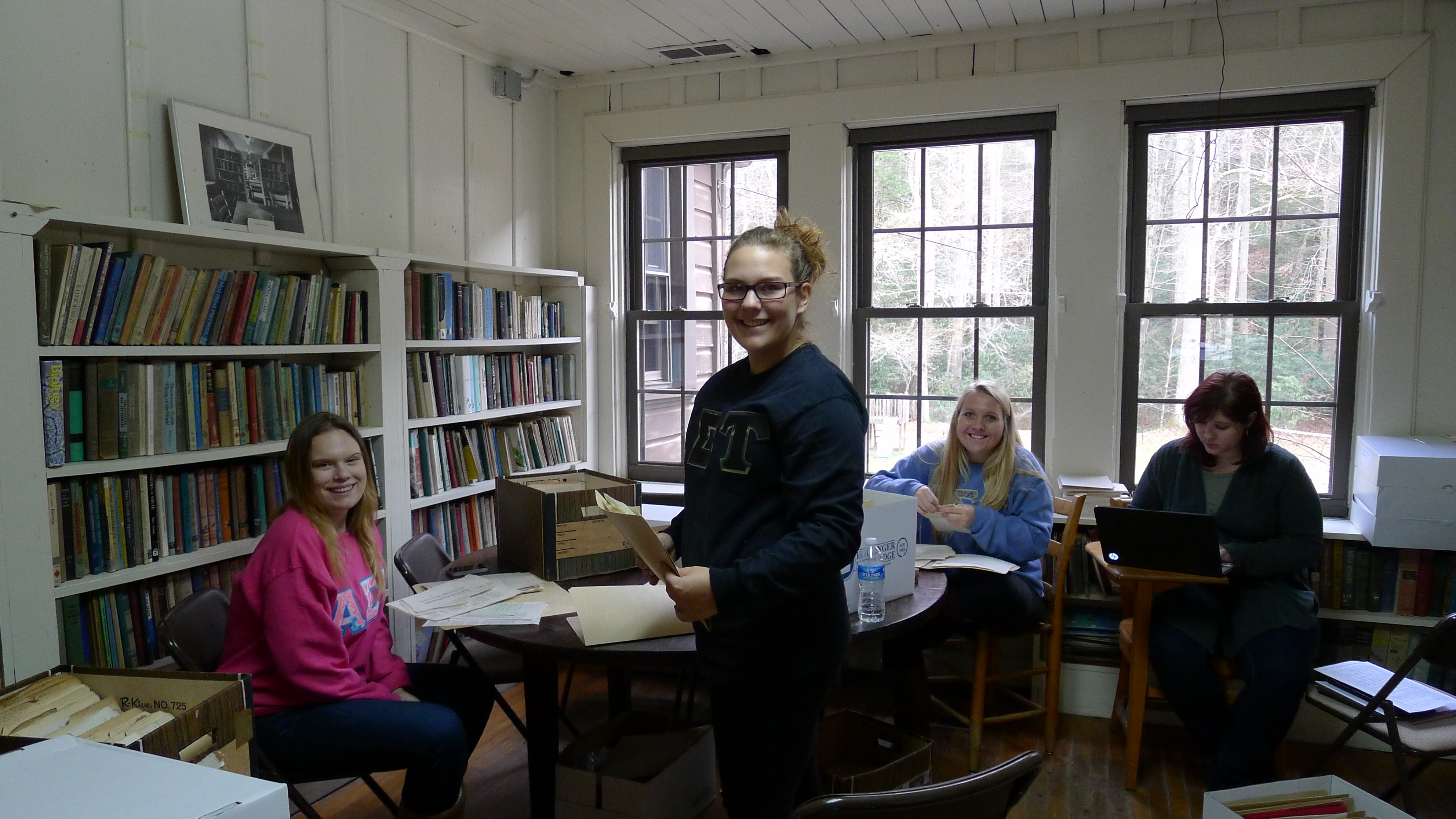
These visitors are welcomed by the School’s Community Coordinator, Judy Lewis, who coordinates a variety of volunteer activities for the groups. Students are also given the opportunity to participate in any on-going programs that occur while they are on campus so they can understand the work and the mission of the institution. Further, they can contribute a variety of services, including building maintenance, trail work and other grounds maintenance and, importantly, they can work in the institution’s ARCHIVE where they can learn about the School’s history and the many individuals who have been a part of the institution since its founding in 1913. While working in the archive the sisters are honing skills in collection organization, digitization, database management and historical writing — and some heavy lifting! While working on trails, grounds or buildings the visitors can enjoy the physical environment of the place and help to maintain the beauty of the site. These service projects are just a few of the possibilities available to visiting sorority groups.

The philanthropy and the work of Alpha Sigma Tau benefits Pine Mountain in ways that are both tangible and intangible. The opportunity for the sororities to learn more about the work of Pine Mountain and for Pine Mountain to show its deep appreciation for the years of support they have given the School has enriched everyone.

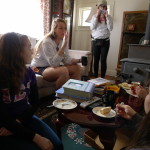
Judy Lewis, Community Coordinator and her GIANT teapot and equally large hospitality! [P1060589.jpg]

Judy Lewis, Community Coordinator and her GIANT teapot and equally large hospitality! [P1060589.jpg]

The following are some of the groups that have visited the campus in 2014 and 2015 and who have given their service to the School. We welcome additional chapters to schedule visits to the School. Details can be discussed by contacting the main Office of the School.

RADFORD UNIVERSITY, RADFORD, VA Chapter

P1050506

Radford sisters working in the Library, formerly called “Boy’s House.” [P10505061.jpg]


JAMES MADISON UNIVERSITY, HARRISONBURG, VA, Chapter

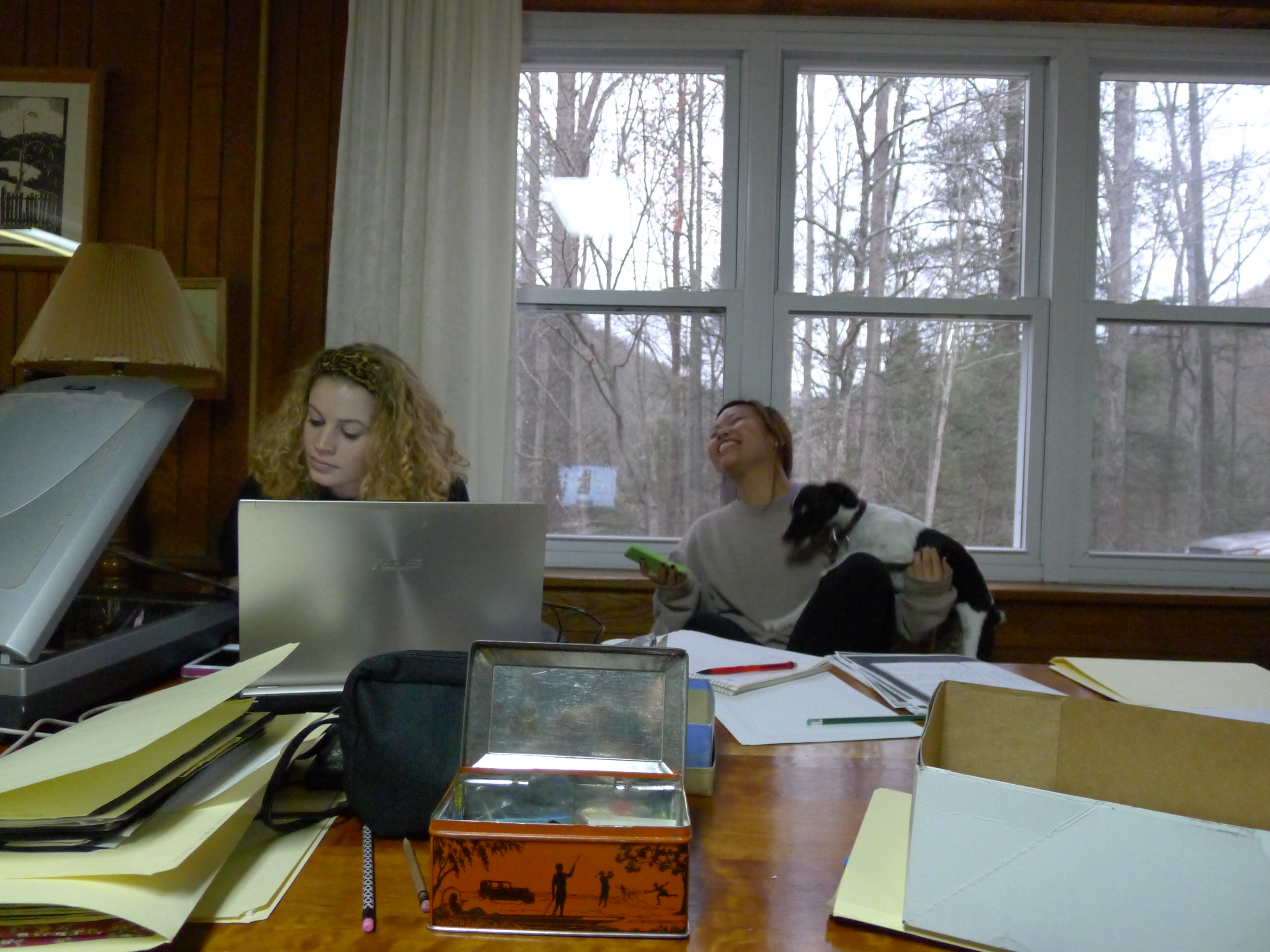
James Madison crew working on the archive with a little help from a friend.

James Madison crew working on the archive at West Wind house with a little help from an energetic friend. [P1060784.jpg]

Thank you James Madison crew for all your hard work!


GRAND VALLEY STATE UNIVERSITY, ALLENDALE, MI Chapter

Thank you Cecelia, Jackie, Kayla, Carly, Shannon, Hannah and Olivia!


TWO AT ONCE! EASTERN MICHIGAN & SHIPPENSBURG UNIVERSITIES

The week of June 15-17, 2015, Pine Mountain Settlement School was fortunate to have two separate Alpha Sigma Tau chapters on campus. They did a splendid job of assisting with the community Day Camp and helping the archivists compile folder data for an index to the large archival collections at the School. They also had an opportunity to commune with another Alpha Sigma Tau Chapter and to make friends across institutions. We thank them all!

To see some of their work for the Pine Mountain Settlement School Collections go to —

PMSS SERIES I-III – CONTAINER LIST, 1911-1983 – BOXES 1-54

We could not have done this without you.

A thank you, as well, to Anna Smith, our community volunteer librarian, whose fine work helped to prepare the collections for work before and after!! Thank you! Thank you!

P1100102

Anna Smith, community volunteer Librarian who assisted in preparation and follow-up for the two Alpha Sigma Tau work on the PMSS Collections. Ready to eat at Hill House. [P1100102.jpg]


EASTERN MICHIGAN UNIVERSITY,(YPSILANTI Chapter

P1100126

(Alpha Chapter) Eastern Michigan University, Ypsilanti, MI
Thank you, Sydney, Sky, Heather and Caitlin.  June 15-17, 2015. [P1100126.jpg]


SHIPPENSBURG (PA) UNIVERSITY Chapter

(Beta Epsilon Chapter) Shippensburg, PA
Thank you MIchaella, Samantha, Allyson and Emilee, June 15-17, 2015.


FAIRMONT STATE UNIVERSITY, WEST VIRGINIA

Founded as a private institution in 1865 Fairmont State was a Methodist institution that was dedicated to training teachers. In 1866 the school was transferred to the Regency of  the West Virginia Normal School and in 1868 the state of West Virginia purchased the institution and it became a branch of Marshall College. After a succession of names, in 1931 the school became known as Fairmont State Teacher’s College and later as Fairmont State College.  In 2004 the state of West Virginia legislature voted to change the name again to current appellation, Fairmont State University.

The long history of the institution left a trail of historical information and buildings and in 1994 it was placed on the National Register of Historic Places.

Pine Mountain is pleased to have an association with the Alpha Sigma Tau sorority of Fairmont State University and to welcome the school to its campus.

P1120193

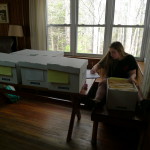
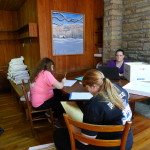
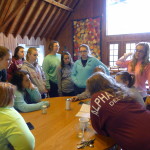
On this, their first visit to Pine Mountain, the girls assisted with an archival move and reorganization project. Others worked with the Maintenance Department on the school’s extensive grounds.  While others helped to sort, cull and re-shelve an extensive library collection. All the work was an important contribution to the conservation and maintenance of the property of the School.  The important re-housing the archive and cleaning and clearing of the many degraded boxes from long years of  storage in West Wind, one of the many buildings at the school, was especially noteworthy.The following pictures show some of the activities of creating new boxes, boxing printing blocks, and re-labeling degraded file folders.

The following pictures show some of the activities of creating new boxes, boxing printing blocks, and re-labeling degraded file folders.

P1120216

Thank you!


SEE ALSO:

ALPHA SIGMA TAU AND PINE MOUNTAIN SETTLEMENT SCHOOL