Tag Archives: agriculture

Flax, Hemp and Silk

Pine Mountain Settlement School
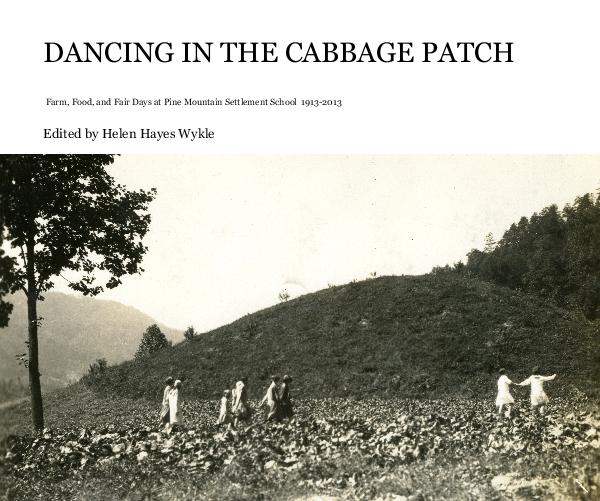
DANCING IN THE CABBAGE PATCH
FLAX, HEMP, AND SILK

373 [Uncle William Creech with children from Pine Mountain School retting flax.]

notes for flax article BELOW.

1913

By Lyster H. Dewey–Botanist in Charge of Fiber Plant Investigations, Bureau of Plant Industry.  United States Department of Agriculture, Bureau of Plant Industry – Circular No. 57. Author: Lyster HDeweyBotanist in Charge of Fiber InvestigationsBureau of Plant Industry Pages: 1 – 7. THE CULTIVATION OF HEMP IN THE UNITED STATES. INTRODUCTION. ??  1910

1910 INTRODUCTION.

In 1910 Lyster H. Dewey, a botanist in charge of Fiber Plant Investigations for the Bureau of Plant Industry in the U.S. Department of Agriculture, wrote a small circular (No. 57) called “The cultivation of Hemp in the United States…” He noted that the two plants that were most promising for cultivation were hemp and flax. Kentucky became an optimum environment for the cultivation of these two plants.

018a P. Roettinger Album. “Uncle William giving a lesson in spreading flax.” [William Creech, standing in back, and 9 children in the field.]

FLAX

In one of the earliest photographs made at Pine Mountain Settlement School, William Creech, one of the founders of the settlement in Harlan County in eastern Kentucky, is shown with a group of children laying out cut flax on the hillside near his home. The Pine Mountain valley with its rich soil and long East to West orientation was, like the rest of the state “as favorable as anywhere in the world”, said Lyster Dewey of the growth of this friendly plant, particularly, its cousin, hemp.

HEMP

Hemp is one of the oldest fiber-producing plants and examples of the durable homespun fabrics and ropes and cords derived from hemp have been found in the archaeological remains of some of the world’s earliest civilizations.

Hemp is a member of the mulberry family, Moraceae which includes the Osage orange, the paper mulberry and the common mulberry trees.  It is also a relative of the nettle family from which ramie, a strong bast fiber, is derived. Anyone who has ever painted or produced fine art prints knows that mulberry paper is some of the best support for paints and inks and its strong and very white surface retains its purity through time.

What Dewey fails to tell us in this government publication is the history of the notorious side of the family of hemp, the genus Cannabis. Instead, he notes that the genus Cannabis

… is generally regarded by botanists as monotypic, and the one species Cannabis sativa is now held to include the half dozen forms which have been described under different names …  and which are cultivated for different purposes.

It has been asked which came first, the discovery of the narcotic properties of the plant or its usefulness as a fiber-producing plant. In China, one of the earliest civilizations to produce textiles of hemp, the people called the plant “ma” and the cloth became known as hempen cloth. Further, Chinese writings tell of the use of the hemps seeds and the oil from the seeds as central to their foodways. There does not appear to be any use of the plant for what the Chinese called bhang, charas, and ganga the common names of their narcotic drugs. “The production and use of these drugs were developed farther west,” says Dewey.

Hemp did come west but it was a variety that was first cultivated by the Puritans for its fiber-producing qualities. The early farming of hemp in New England was not nearly so successful as it became further South. For example, in Virginia the soil and longer growing season produced a robust plant but the industry failed to thrive as tobacco filled the fields.  (For discussion see: Moore, Brent. A Study of the Past, the Present, and the Possibilities of the Hemp Industry in Kentucky, 1905.)

It was in Pennsylvania and in Kentucky that the industry thrived. Dewey describes the origins

The cultivation of hemp seems to have been a flourishing industry in Lancaster County, Pa., before the Revolution. An elaborate account of the methods then employed in growing hemp, written about 1775 by James Wright, of Columbia, Pa., (New Era, Lancaster, Pa., June 25, 1905.) was recently published as an historical document. The methods described for preparing the land were equal to the best modern practice, but the hemp was pulled by hand instead of cut. Various kinds of machine brakes had been tried, but the had all “given Way to one simple Break of a particular Construction, which was first invented & made Use of in this country.” The brief description indicates the common hand brake still in use in Kentucky.

By 1910, when Dewey’s circular was published, hemp was grown and harvested mainly for the production of commercial twine, a staple for tying just about anything together.

The first crop of hemp in Kentucky was raised by Mr. Archibald McNeil, near Danville, in 1775. (Moore, Brent. A Study of the Past, the Present, and the Possibilities of the Hemp Industry in Kentucky, p. 16, 1905.) It was found that hemp grew well in the fertile soils of the bluegrass country, and the industry was developed there to a greater extent than it had been in the eastern colonies. While it was discontinued in Massachusetts, Virginia, and Pennsylvania, it has continued in Kentucky to the present time. In the early days of this industry in Kentucky, fiber was produced for the homespun cloth woven by the wives and daughters of the pioneer settlers, and an export trade by way of New Orleans was developed. In 1802 there were two extensive ropewalks in Lexington, Ky., and there was announced “a machine, moved by a horse or a current of water, capable, according to what the inventor said, to break and clean eight thousand weight of hemp per day.” (Michaux, F. Andre. Travels to the west of the Alleghanies, p. 152, 1805. In Thwaites, Early Western Travels, v. 3, p. 200, 1904.) Hemp was later extensively used for making cotton-bale covering. Cotton bales were also bound with hemp rope until iron ties were introduced, about 1865. There was a demand for the better grades of hemp for sailcloth and for cordage for the Navy, and the industry was carried on more extensively from 1840 to 1860 than it has been since.

ITALY.

The highest-priced hemp fiber in the markets of either America or Europe is produced in Italy (Bruck, Werner F. Studien uber den Hanfbau in Italien, p. 7, 1911), but it is obtained from plants similar to those in Kentucky. The higher price of the fiber is due not to superior plants, but to water retting and to increased care and labor in the preparation of the fiber. Four varieties are cultivated in Italy:

(1) “Bologna,” or great hemp, called in France “chanvre de Piedmont,” is grown in northern Italy in the provinces of Bologna, Ferrara, Rovigo, and Modena. In the rich alluvial soils and under intensive cultivation, this variety averages nearly 12 feet in height, but it is said to deteriorate rapidly when cultivated elsewhere. (2) “Cannapa picola,” small hemp, attaining a height of 4 to 7 feet, with a rather slender reddish stalk, is cultivated in the valley of the Arno in the department of Tuscany. (Dodge, Charles Richards. Culture of hemp in Europe. U.S. Department of Agriculture, Fiber Investigations, Report No. 11, p. 5, 1898.) (3) “Neapolitan,” large-seeded. (4) “Neapolitan,” small-seeded.

The two varieties of Neapolitan hemp are cultivated in the vicinity of Naples, and even so far up on the sides of Vesuvius that fields of hemp are occasionally destroyed by the eruptions of that volcano. Seed of each of these Italian varieties has been grown in trial plots at Washington, D.C., and Lexington, Ky. The Bologna, or Piedmont, hemp in seed rows attained a height of 8 to 11 feet, nearly as tall as Kentucky seed hemp grown for comparison, but with thicker stalks, shorter and more rigid branches, and smaller and more densely clustered leaves. The small hemp, cannapa picola, was only 4 to 6 feet high. The large-seeded Neapolitan was 7 to 10 feet high, smaller than the Bologna, but otherwise more like Kentucky hemp, with more slender stalks and more open foliage. The small-seeded Neapolitan, with seeds weighing less than 1 gram per 100, rarely exceeded 4 feet in height in the series of plots where all were tried.

FRANCE.

Hemp is cultivated in France chiefly in the departments of Sarthe and Ille-et-Vilaine, in the valley of the Loire River. Two varieties are grown, the Piedmont, from Italian seed, and the common hemp of Europe. The former grows large and coarse, though not as tall as in the Bologna region, and it produces a rather coarse fiber suitable for coarse twines. The latter, seed of which is sown at the rate of 1 1/2 to 2 bushels per acre, has a very slender stalk, rarely more than 4 or 5 feet high, producing a fine flax-like fiber that is largely used in woven hemp linens. The common hemp of Europe, which includes the short hemp of France, is also cultivated to a limited extent in Spain, Belgium, and Germany. It grows taller and coarser when sown less thickly on rich land, but it never attains the size of the Bologna type.

ITALY.

The highest-priced hemp fiber in the markets of either America or Europe is produced in Italy (Bruck, Werner F. Studien uber den Hanfbau in Italien, p. 7, 1911), but it is obtained from plants similar to those in Kentucky. The higher price of the fiber is due not to superior plants, but to water retting and to increased care and labor in the preparation of the fiber. Four varieties are cultivated in Italy:

(1) “Bologna,” or great hemp, called in France “chanvre de Piedmont,” is grown in northern Italy in the provinces of Bologna, Ferrara, Rovigo, and Modena. In the rich alluvial soils and under intensive cultivation, this variety averages nearly 12 feet in height, but it is said to deteriorate rapidly when cultivated elsewhere. (2) “Cannapa picola,” small hemp, attaining a height of 4 to 7 feet, with a rather slender reddish stalk, is cultivated in the valley of the Arno in the department of Tuscany. (Dodge, Charles Richards. Culture of hemp in Europe. U.S. Department of Agriculture, Fiber Investigations, Report No. 11, p. 5, 1898.) (3) “Neapolitan,” large-seeded. (4) “Neapolitan,” small-seeded.

The two varieties of Neapolitan hemp are cultivated in the vicinity of Naples, and even so far up on the sides of Vesuvius that fields of hemp are occasionally destroyed by the eruptions of that volcano. Seed of each of these Italian varieties has been grown in trial plots at Washington, D.C., and Lexington, Ky. The Bologna, or Piedmont, hemp in seed rows attained a height of 8 to 11 feet, nearly as tall as Kentucky seed hemp grown for comparison, but with thicker stalks,

ITALY.

The highest-priced hemp fiber in the markets of either America or Europe is produced in Italy (Bruck, Werner F. Studien uber den Hanfbau in Italien, p. 7, 1911), but it is obtained from plants similar to those in Kentucky. The higher price of the fiber is due not to superior plants, but to water retting and to increased care and labor in the preparation of the fiber. Four varieties are cultivated in Italy:

(1) “Bologna,” or great hemp, called in France “chanvre de Piedmont,” is grown in northern Italy in the provinces of Bologna, Ferrara, Rovigo, and Modena. In the rich alluvial soils and under the intensive cultivation, this variety averages nearly 12 feet in height, but it is said to deteriorate rapidly when cultivated elsewhere. (2) “Cannapa picola,” small hemp, attaining a height of 4 to 7 feet, with a rather slender reddish stalk, is cultivated in the valley of the Arno in the department of Tuscany. (Dodge, Charles Richards. Culture of hemp in Europe. U.S. Department of Agriculture, Fiber Investigations, Report No. 11, p. 5, 1898.) (3) “Neapolitan,” large-seeded. (4) “Neapolitan,” small-seeded.

The two varieties of Neapolitan hemp are cultivated in the vicinity of Naples, and even so far up on the sides of Vesuvius that fields of hemp are occasionally destroyed by the eruptions of that volcano. Seed of each of these Italian varieties has been grown in trial plots at Washington, D.C., and Lexington, Ky. The Bologna, or Piedmont, hemp in seed rows attained a height of 8 to 11 feet, nearly as tall as Kentucky seed hemp grown for comparison, but with thicker stalks, shorter and more rigid branches, and smaller and more densely clustered leaves. The small hemp, cannapa picola, was only 4 to 6 feet high. The large-seeded Neapolitan was 7 to 10 feet high, smaller than the Bologna, but otherwise more like Kentucky hemp, with more slender stalks and more open foliage. The small-seeded Neapolitan, with seeds weighing less than 1 gram per 100, rarely exceeded 4 feet in height in the series of plots where all were tried.

FRANCE.

Hemp is cultivated in France chiefly in the departments of Sarthe and Ille-et-Vilaine, in the valley of the Loire River. Two varieties are grown, the Piedmont, from Italian seed, and the common hemp of Europe. The former grows large and coarse, though not as tall as in the Bologna region, and it produces a rather coarse fiber suitable for coarse twines. The latter, seed of which is sown at the rate of 1 1/2 to 2 bushels per acre, has a very slender stalk, rarely more than 4 or 5 feet high, producing a fine flax-like fiber that is largely used in woven hemp linens. The common hemp of Europe, which includes the short hemp of France, is also cultivated to a limited extent in Spain, Belgium, and Germany. It grows taller and coarser when sown less thickly on rich land, but it never attains the size of the Bologna type.

SOILS SUITED TO HEMP.

Hemp requires for the best development of the plant, and also for the production of a large quantity and good quality of fiber, a rich, moist soil with good natural drainage, yet not subject to severe drought at any time during the growing season. A clay loam of rather loose texture and containing a plentiful supply of decaying vegetable matter or an alluvial deposit, alkaline and not acid in reaction, should be chosen for this crop.

SOILS TO BE AVOIDED.

Hemp will not grow well on stiff, impervious, clay soils, or on light sandy or gravelly soils. It will not grow well on soils that in their wild state, are overgrown with either sedges or huckleberry bushes. These plants usually indicate acid soils. It will make only poor growth on soils with a hardpan near the surface or in fields worn out by long cultivation. Clay loams or heavier soils give heavier yields of strong but coarser fiber than are obtained on sandy loams and lighter soils.

EFFECT OF HEMP ON THE LAND.

Hemp cultivated for the production of fiber, cut before the seeds are formed and retted on the land where it has been grown, tends to improve rather than injure the soil. It improves its physical condition, destroys weeds, and does not exhaust its fertility.

PHYSICAL CONDITION.

Hemp loosens the soil and makes it more mellow. The soil is shaded by hemp more than by any other crop. The foliage at the top of the growing plants makes a dense shade, and, in addition, all of the leaves below the top fall off, forming a mulch on the ground, so that the surface of the soil remains moist and in better condition for the action of soil bacteria. The rather coarse taproots (Pl. XLI, fig. 3), penetrating deeply and bringing up plant food from the subsoil, decay quickly after the crop is harvested and tend to loosen the soil more than do the fibrous roots of wheat, oats, and similar broadcast crops. Land is more easily plowed after hemp than after corn or small grain.

HEMP DESTROYS WEEDS.

Very few of the common weeds troublesome on the farm can survive the dense shade of a good crop of hemp. If the hemp makes a short, weak growth, owing to unsuitable soil, drought, or other causes, it will have little effect in checking the growth of weeds, but a good, dense crop, 6 feet or more in height, will leave the ground practically free from weeds at harvest time. In Wisconsin, Canada thistle has been completely killed, and quack-grass severely checked by one crop of hemp. In one 4-acre field in Vernon County, Wis., where Canada thistles were very thick, fully 95 per cent of the thistles were killed where the hemp attained a height of 5 feet or more, but on a dry, gravelly hillside in this same field where it grew only 2 to 3 feet high, the thistles were checked no more than they would have been in a grain crop. Some vines, like the wild morning-glory and bindweed, climb up the hemp stalks and secure light enough for growth, but low-growing weeds can not live in a hemp field.

HEMP DOES NOT EXHAUST THE FERTILITY OF THE SOIL.

An abundant supply of plant food is required by hemp, but most of it is merely borrowed during development and returned to the soil at the close of the season. The amounts of the principal fertilizing elements contained in mature crops of hemp, as compared with other crops, are shown in the accompanying table.

Amounts of principal fertilizing elements in an acre of hemp, corn, wheat, oats, sugar beets, and cotton. (Insert first table from p. 310 here)

The data in the table indicate that hemp requires for its best development a richer soil than any of the other crops mentioned except sugar beets. These other crops, except the stalks of corn and the tops of beets, are entirely removed from the land, thus taking away nearly all the plant food consumed in their growth. Only the fiber of hemp is taken away from the farm, and this is mostly cellulose, composed of water and carbonic acid. The relative proportions by weight of the different parts of the hemp plant, thoroughly air dried, are approximately as follows: Roots 10 per cent, stems 60 per cent, and leaves 30 per cent. The mineral ingredients of these different parts of the hemp plant are shown in the following table:

p. 310 here.Peter, Robert. Chemical Examination of the Ash of Hemp and Buckwheat Plants. Kentucky Geological Survey, p. 12, 1884. )

Hemp leaves the ground mellow and free from weeds and is therefore recommended to precede sugar beets, onions, celery, and similar crops, which require hand weeding. If hemp is grown primarily to kill Canada thistle, quack-grass, or similar perennial weeds, it may be grown repeatedly on the same land until the weeds are subdued.

BARNYARD MANURE.—The best single fertilizer for hemp is undoubtedly barnyard manure. It supplies the three important plant foods, nitrogen, potash, and phosphoric acid, and it also adds to the store of humus, which appears to be more necessary for hemp than for most other farm crops. If other fertilizers are used, it is well to apply barnyard manure also, but it should be applied to the preceding crop, or, at the latest, in the fall before the hemp is sown. It must be well rotted and thoroughly mixed with the soil before the hemp seed is sown, so as to promote a uniform growth of the hemp stalks. Uniformity in the size of the plants of other crops is of little consequence, but in hemp, it is a matter of prime importance. An application of coarse manure in the spring, just before sowing, is likely to result in more injury than benefit. The amount that may be applied profitably will vary with different soils. There is little danger, however, of inducing too rank a growth of hemp on upland soils, provided the plants are uniform, for it must be borne in mind that stalk and not fruit is desired. On soils deficient in humus as a result of long cultivation, the increased growth of hemp may well repay for the application of 15 to 20 tons of barnyard manure per acre. It would be unwise to sow hemp on such soils until they had been heavily fertilized with barnyard manure.

RETTING.

Retting is a process in which the gums surrounding the fibers and binding them together are partly dissolved and removed. It permits the fiber to be separated from the woody inner portion of the stalk and from the thin outer bark, and it also removes soluble materials that would cause rapid decomposition if left with the fiber. Two methods of retting are practiced commercially, viz, dew retting and water retting.

DEW RETTING.

In this country, dew retting is practiced almost exclusively. The hemp is spread on the ground in thin, even rows, so that it will all be uniformly exposed to the weather. In spreading hemp, the workman takes an armful of stalks and, walking backward, slides them sidewise from his knee, so that the butts are all even in one direction and the layer is not more than three stalks in thickness. (Pl. XLIV, fig. 3.) This work is usually paid for at the rate of $1 per acre, and experienced hands will average more than 1 acre per day. The hemp is left on the ground for four weeks to four months. Warm, moist weather promotes the retting process, and cold or dry weather retards it. Hemp rets rapidly if spread during early fall, provided there are rains, but it is likely to be less uniform than if retted during the colder months. It should not be spread early enough to be exposed to the sun in hot, dry weather. Alternate freezing and thawing or light snows melting on the hemp give the most desirable results in retting. Slender stalks one-fourth inch in diameter or less, ret more slowly than coarse stalks, and such stalks are usually not overretted if left on the ground all winter. Hemp rets well in young wheat or rye, which hold the moisture about the stalks. In Kentucky, most of the hemp is spread in December. A protracted January thaw with comparatively warm, rainy weather occasionally results in overretting. While this does not destroy the crop, it weakens the fiber and causes much loss. When retted sufficiently, so that the fiber can be easily separated from the hurds, or woody portion, the stalks are raked up and set up in shocks, care being exercised to keep them straight and with the butts even. They are not bound in bundles, but a band is sometimes put around the shock near the top. The work of taking up the stalks after retting is usually done by piecework at the rate of $1 per acre.

WATER RETTING.

Water retting is practiced in Italy, France, Belgium, Germany, Japan, and China, and in some localities in Russia. It consists of immersing the hemp stalks in water in streams, ponds, or artificial tanks. In Italy, where the whitest and softest hemp fiber is produced, the stalks are placed in tanks of soft water for a few days, then taken out and dried, and returned to the tanks for a second retting. Usually, the stalks remain in the water for about eight days, and the second time a little longer. In either dew retting or water retting, the process is complete when the bark, including the fiber, readily separates from the stalks. The solution of the gums is accomplished chiefly by certain bacteria. If the retting process is allowed to go too far, other bacteria attack the fiber. The development of these different bacteria depends to a large extent upon the temperature. Processes have been devised for placing pure cultures of specific bacteria in the retting tanks and then keeping the temperature and air supply at the best for their development. (Rossi, Giacomo.) Macerazione della Canapa. Annali della Regia Scuola Superiore di Agricultura di Portici, s.2, v. 7, p. 1-148, 1907. These methods, which seem to give promise of success, have not been adopted in commercial work.

BREAKING.

Breaking is a process by means of which the inner, woody shell is broken in pieces and removed, leaving the clean, long, straight fiber. Strictly speaking, the breaking process merely breaks in pieces the woody portions, while their removal is a second operation properly called scutching. In Italy and in some other parts of Europe, the stalks are broken by one machine or device, and afterwards scutched by another. In this country, the two are usually combined in one operation.

HAND BRAKES.

Hand brakes (Pl. XLVI, fig. 1), with little change or modification, have been in use for many generations, and even yet more than three-fourths of the hemp fiber produced in Kentucky is broken out on the hand brake. This simple device consists of three boards about 5 feet long set edgewise, wider apart at one end than the other, and with the upper edges somewhat sharpened. Above this, a framework, with two boards sharpened on the lower edges, is hinged near the wide end of the lower frame, so that when worked up and down by means of the handle along the back, these upper boards pass midway in the spaces between the lower ones. A carpenter or wagon maker can easily make one of these hand brakes, and they are sold in Kentucky for about $5.

The operator takes an armful of hemp under his left arm, places the butts across the wide end of the brake near the hinged upper part, which is raised with his right hand, and crunches the upper part down, breaking the stalks. This operation is repeated several times, moving the stalks along toward the narrow end so as to break the shorter pieces, and when the hemp appears pretty well broken, the operator takes the armful in both hands and whips it across the brake to remove the loosened hurds. He then reverses the bundle, breaks the tops, and cleans the fiber in the same manner. The usual charge for breaking hemp on the hand brake in this manner is 1 cent to 1 1/2 cents per pound. There are records of 400 pounds being broken by one man in a day, but the average day’s work, counting six days in a week, is rarely more than 75 pounds. In a good crop, therefore, it would require 10 to 15 days for one man to break an acre of hemp. The work requires skill, strength, and endurance, and for many years, there has been increasing difficulty in securing laborers for it. It is plainly evident that the hemp industry can not increase in this country unless some method is used for preparing the fiber requiring less hand labor than the hand brake.

MACHINE BRAKES.

Several years ago, a brake was built at Rantoul, Ill., for breaking and cleaning the fiber rapidly, but producing tow or tangled fiber instead of clean, straight, line fiber, such as is obtained by the hand brake. This machine consisted essentially of a series of fluted rollers followed by a series of beating wheels. Machines designed after this type, but improved in many respects, have been in use for several years at Havelock, Nebr., and first at Gridley, then at Courtland and Rio Vista, Cal. These machines have sufficient capacity and are operated at comparatively small cost, the hurds furnishing more than sufficient fuel for the steam power required, but the condition of the fiber produced is not satisfactory for high-class twines and it commands a lower price than clean, long, straight fiber.

The Sanford-Mallory flax brake, consisting essentially of five fluted rollers with an interrupted motion, producing a rubbing effect, has been used to a limited extent for breaking hemp. This machine, as ordinarily made for breaking flax, is too light and its capacity is insufficient for the work of breaking hemp.

A portable machine brake (Pl. XLVI, fig. 4) has been used successfully in Kentucky during the past two years. It has a series of crushing and breaking rollers, beating and scutching devices, and a novel application of suction to aid in separating hurds and tow. The stalks are fed endwise. The long fiber, scutched and clean, leaves the machine at one point, the tow, nearly clean, at another, and the hurds, entirely free from fiber, at another. It has a capacity of about 1 ton of clean fiber per day.

Another portable machine brake has been in use in California during the past two years, chiefly breaking hemp that has been thoroughly air dried but not retted. This hemp, grown with irrigation, becomes dry enough in that arid climate to break well, but this method is not practicable in humid climates without artificial drying. The stalks, fed endwise, pass first through a series of fluted or grooved rollers and then through a pair of beating wheels, removing most of the hurds, and the fiber, passing between three pairs of moving scutching aprons, each pair followed by rollers, finally leaves the machine in a kind of continuous lap folded back and forth in the baling box.

A larger machine (Pl. XLVI, fig. 3), having the greatest capacity and turning out the cleanest and most uniform fiber of any of the brakes thus far brought out, has been used to a limited extent during the past eight years in Kentucky, California, Indiana, and Wisconsin. This machine weighs about 7 tons, but it is mounted on wheels and is drawn about by a traction farm engine, which also furnishes power for operating it. The stalks are fed sidewise in a continuous layer 1 to 3 inches thick, and carried along so that the ends, forced through slits, are broken and scutched simultaneously by converging revolving cylinders about 12 and 16 feet long. One cylinder, extending beyond the end of the other, cleans the middle portion of the stalks, the grasping mechanism carrying them forward being shifted to the fiber cleaned by the shorter cylinder. The cylinders break the stalks and scutch the fiber on the underside of the layer as it is carried along, and the loosened hurds on the upper side are scutched by two large beating wheels just as it leaves the machine. The fiber leaves the machine sidewise, thoroughly cleaned and ready to be twisted into heads and packed in bales. This machine, with a full crew of 15 men, including men to haul stalks from the field and others to tie up the fiber for baling, has a capacity of 1,000 pounds of clean, straight fiber of good hemp per hour. The tow is thrown out with the hurds, and until recent improvements, it has produced too large a percentage of tow. It does good work with hemp retted somewhat less than is necessary for the hand brake, and it turns out more uniform and cleaner fiber. For good work, it requires, as do all the machines and also the hand brakes, that the hemp stalks be dry. If the atmosphere is dry at the time of breaking, the hemp may be broken directly from the shocks in the field, but in regions with a moist atmosphere, or with much rainy weather, it would be best to store the stalks in sheds or under cover, and with a stationary plant it might be economical to dr them artificially, using the hurds for fuel. Extreme care must be exercised in artificial drying, however, to avoid injury to the fiber.

IMPROVEMENT NEEDED IN HEMP-BREAKING MACHINES.

While hemp-breaking machines have now reached a degree of perfection at which they are successfully replacing the hand brakes, as the thrashing machines half a century ago began replacing the flail, there is still room for improvement. This needed improvement may be expected as soon as hemp is grown more extensively, so as to make a sufficient demand for machinery to induce manufacturers to invest capital in this line. For small and scattered crops, a comparatively light, portable machine is desirable, requiring not more than 10 horsepower and not more than four or five laborers of average skill for its operation. It should prepare the fiber clean and straight, ready to be tied in hanks for baling, and should have a capacity of at least 1,000 pounds of clean fiber per day. For localities where hemp is grown more abundantly, so as to furnish a large supply of stalks within short hauling distance, a larger machine operated in a stationary central plant by a crew of men trained to their respective duties, like workers in a textile mill, will doubtless be found more economical. Artificial retting and drying may also be used to good advantage in a central plant. The hemp growers of Europe have adopted machine brakes more readily than the farmers in this country, and the hemp industry in Europe is most flourishing and most profitable where the machines are used. Most of the hemp in northern Italy is broken and scutched by portable machines. Machines are also used in Hungary, and the machine-scutched hemp of Hungary is regularly quoted at $10 to $15 per ton, higher than that prepared by hand. These European machines may not be adapted to American conditions, but, together with American machines which are doing successful work, they sufficiently contradict the frequent assertion of hemp growers and dealers that “no machine can ever equal the hand brake.”

MARKET.

All of the hemp produced in this country is used in American spinning mills, and it is not sufficient to supply one-half of the demand. The importations have been increasing slightly during the past 20 years, while there has been a decided increase in values. The average declared value of imported hemp, including all grades, for the 4,817 tons imported in 1893, was $142.31 per ton, while in the fiscal year 1913, the importations amounted to 7,663 tons with an average declared value of $193.67 per ton. There have been some fluctuations in quotations, but the general tendency of prices of both imported and American hemp has been upward. (Fig. 19.) The quotations for Kentucky rough prime, since October 1912, have been the highest recorded for this standard grade. Furthermore, the increasing demand for this fiber, together with the scarcity of competing fibers in the world’s markets, indicates a continuation of prices at high levels.

DANCING IN THE CABBAGE PATCH Guide

Pine Mountain Settlement School
DANCING IN THE CABBAGE PATCH
ALPHABETICAL GUIDE

Cabbage patch below Grapevine Knoll, PMSS, c. 1915. [dancing-in-the-cabbage-patch-2-copy.jpg]

TAGS:  Pine Mountain Settlement School, Harlan County, Kentucky 1913 – present, rural settlement schools, sense of place,  foodways, cabbages, agrarian myths, sustainable agriculture, educational reform, industrial education, Ayrshire cows, heritage seeds, Appalachian foodways, settlement school kitchens, kindergartens, rural migration, miners, mining, mores and manners, Kentucky politics, educational reform, poppets,  play-pretties, sheriffs, Appalachian religions, settlement schools, communists and conservatives, hippies, hi-jinks, and other topics 


DANCING IN THE CABBAGE PATCH GUIDE (Alphabetical)

DANCING IN THE CABBAGE PATCH Guide

DANCING IN THE CABBAGE PATCH I  About

DANCING IN THE CABBAGE PATCH II  Introduction

DANCING IN THE CABBAGE PATCH III Place

DANCING IN THE CABBAGE PATCH IV A Brave and Imaginative Plan Takes Place

DANCING IN THE CABBAGE PATCH Cows

DANCING IN THE CABBAGE PATCH Dis-ease

DANCING IN THE CABBAGE PATCH  Earth Day and Mary Rogers 

DANCING IN THE CABBAGE PATCH English Country Dancing at Pine Mountain Settlement

DANCING IN THE CABBAGE PATCH  Farming the Land 1913-1930

DANCING IN THE CABBAGE PATCH  Farm and Dairy Early Years I

DANCING IN THE CABBAGE PATCH  Farm and Dairy Early Years II 

DANCING IN THE CABBAGE PATCH  Farm and Dairy Morris Years III

DANCING IN THE CABBAGE PATCH Going and Coming Back I

DANCING IN THE CABBAGE PATCH Coming Back and Going Some More II

DANCING IN THE CABBAGE PATCH Gospel of the Clean Plate

DANCING IN THE CABBAGE PATCH In the Dining Room Manners and Etiquette

DANCING IN THE CABBAGE PATCH  In the Kitchen Pots and Pans 

DANCING IN THE CABBAGE PATCH Laden Trail or The Road 

DANCING IN THE CABBAGE PATCH  Maple Syrup and Sugar

DANCING IN THE CABBAGE PATCH Mexico and Pine Mountain Settlement School 1936

DANCING IN THE CABBAGE PATCH Moonshine

DANCING IN THE CABBAGE PATCH Pigs

DANCING IN THE CABBAGE PATCH Poultry

DANCING IN THE CABBAGE PATCH Salamanders

DANCING IN THE CABBAGE PATCH Sheep

DANCING IN THE CABBAGE PATCH Sheep Shearing and Cecil Sharp

DANCING IN THE CABBAGE PATCH Santa Claus Christmas Trees Parties

DANCING IN THE CABBAGE PATCH  Sorghum Molasses Stir-Off I

DANCING IN THE CABBAGE PATCH Sorghum Molasses Stir-Off II

DANCING IN THE CABBAGE PATCH Snow

DANCING IN THE CABBAGE PATCH Trees

DANCING IN THE CABBAGE PATCH War and PMSS

DANCING IN THE CABBAGE PATCH Weaving


INTRODUCTION – Growing From the Soil

Pine Mountain Settlement School
DANCING IN THE CABBAGE PATCH 
INTRODUCTION  –  Growing From the Soil
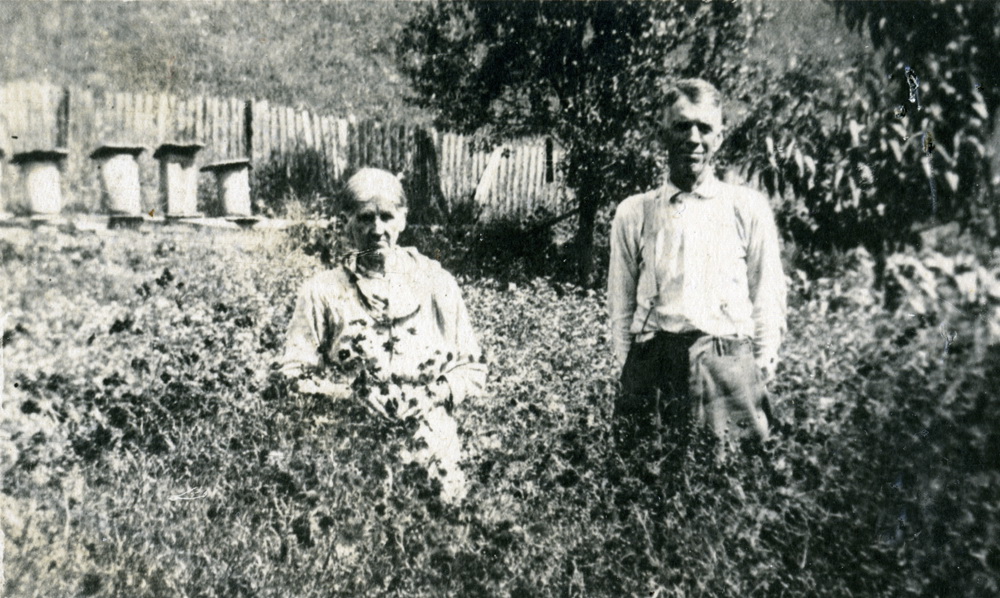
VI_34_1116a_mod

“We can dance alone, or we can grow the patch together.”

Land in the Southern Appalachians is precious soil. The people grow from the soil as surely as plants take root and spring towards the sun. The people grow strong to work the soil, and they bend as the soil pulls their tired bodies back to lie in peace within it. Yet, the cycle is more a dance than a dirge. The dance is the dance that so many children and adults have today forgotten. It is the jitterbug of stream-beds and the waltz of wind-blown mountain tops. It is the courtly movement through rows of cabbage and corn. It’s the balanced step-dance across a foot-log. It is a dance that educates for wholeness; the kind of wholeness often found in the rhythm of the rural countryside.

Dancing in the cabbage patch was part of the early education at Pine Mountain Settlement School. It was not just an education for children. It was the exercise of everyone who marveled at the cycles of life and the bountiful bloom of new crops as they re-shaped the flat field and high hill. It was and is all that is intuited in the fragile relationship with the land. A dance in the cabbage patch is an exercise in the nourishment of both body and soul. It is a solo dance made joyful by the sharing.

We can dance alone, or we can grow the patch together. At one time, Pine Mountain raised over 10,000 heads of cabbage in its central garden patch. Today, together, the cabbage patches are unlimited for us all if we can reconnect with the land.

The story of Dancing in the Cabbage Patch is structured into a series of essays about Pine Mountain and its Community. It explores the land of Appalachia, its farming, its foodways, the health of its people, and a myriad of celebrations. It is the history of a unique rural Appalachian settlement school and its community that spans an existence of more than 100 years.

_________________________________________________________

The foundation of Pine Mountain Settlement School can be found in the early efforts of key visionaries in both the School and the community.  Some of these unique individuals are described here in their  BIOGRAPHIES as compiled by the authors of this digital collection. Other biographical notes may be discovered in the many stories told about each other. The biographies and stories are filled with characters whose lives may not at first appear visionary, but, on closer examination, these are folk who have much to offer in their knowledge of the land and many gifts. The region has led many seekers to both truth and fiction, and to a land little understood and often misrepresented, but perpetually hopeful.

Some seekers understood where they had been led, but others, clearly, could not shake their myths and prejudices. The Pine Mountain Valley, its land and its people, is filled with many clear truths, fantastical mythologies, and a delightful invitation to romp through one of the most misunderstood regions of America.  In summary, to explore Appalachia is to dive into a deep journey with these truth tellers, these tellers of tall tales, and those oblivious to the stuff of dreams, visions, and tall tales. It is a journey about the evolution of America, its vision of itself, and glimpse for many to recapture their origins.

Read deeply, the stories from Pine Mountain carry echoes of self-will, absence of doubt, and a certainty that comes shining or struggling through the fragments of so many closely observed and remembered ancestors.  As the School and Community worked together, as D.A.R.s championed the Pilgrim, each group began to blend to establish a rich and unique community. Each Settlement School worker, and each descendant of Pioneers gave depth and guaranteed continuity to one of the first rural settlement schools in the Central and Southern Appalachians. In the School is found a map for those seeking the meaning of democracy and how community is not just a word, but a kind of visual, auditory, and sensory glue that builds democratic ideas. Not soon to be forgotten are the narratives of the staff and of the community as they share their lives and their dreams that helped to shape the vision we now hold of the early rural settlement movement and the foundations of our democracy. In the PINE MOUNTAIN SETTLEMENT SCHOOL COLLECTIONS ARCHIVE, there are many paths to follow. Some will be familiar. Some will be uniqe. Some are just tall tales.

THE FOUNDERS

When William Creech gave his land in 1913 so that Pine Mountain Settlement School could begin its journey, he also gave to the School one of the most famous quotes associated with the institution. Katherine Pettit, a co-founder of the School, used Creech’s visionary words for “his people” to promote the institution. The wisdom of William Creech and the surrounding community, and of those who came to “save” the community but found themselves for the first time, continues to resonate with many cultures and lives throughout the world. Almost all of Pettit’s successors at the School have found this quote to be foundational.

An Old Man’s Hope for the Children of the Kentucky Mountains

I don’t look after wealth for them. I look after the prosperity of our nation. I want all younguns taught to serve the livin’ God. Of course, they won’t all do that, but they can have good and evil laid before them and they can choose which they will. I have heart and craving that our people may grow better. I have deeded my land to the Pine Mountain Settlement School to be used for school purposes as long as the Constitution of the United States stands. Hopin’ it may make a bright and intelligent people after I’m dead and gone.
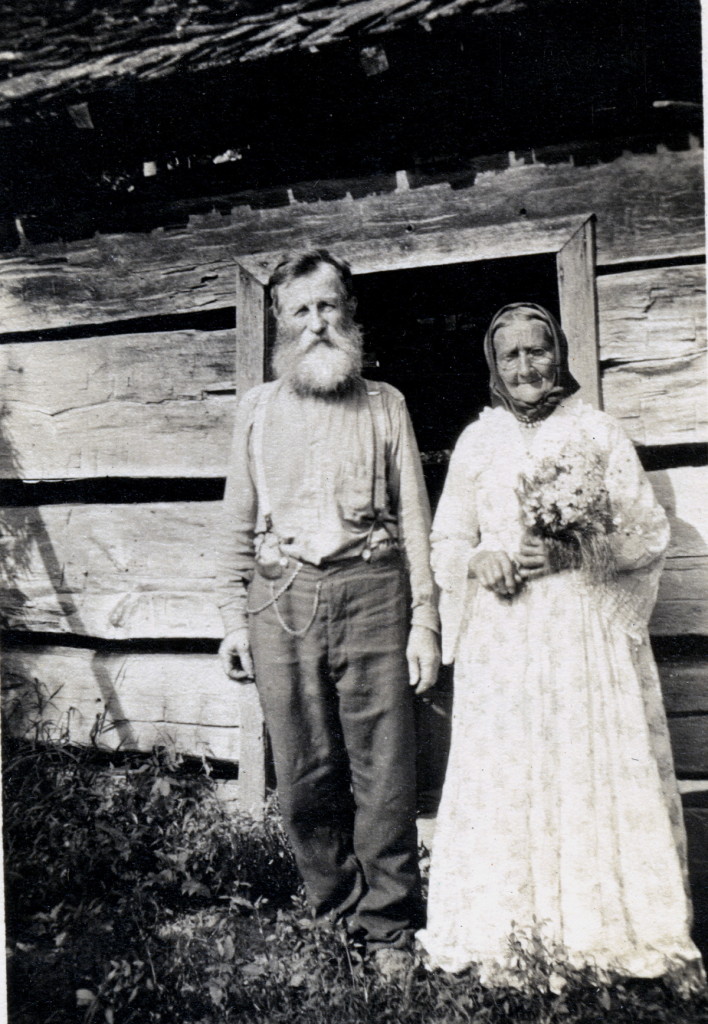
hook_007_mod.jpg

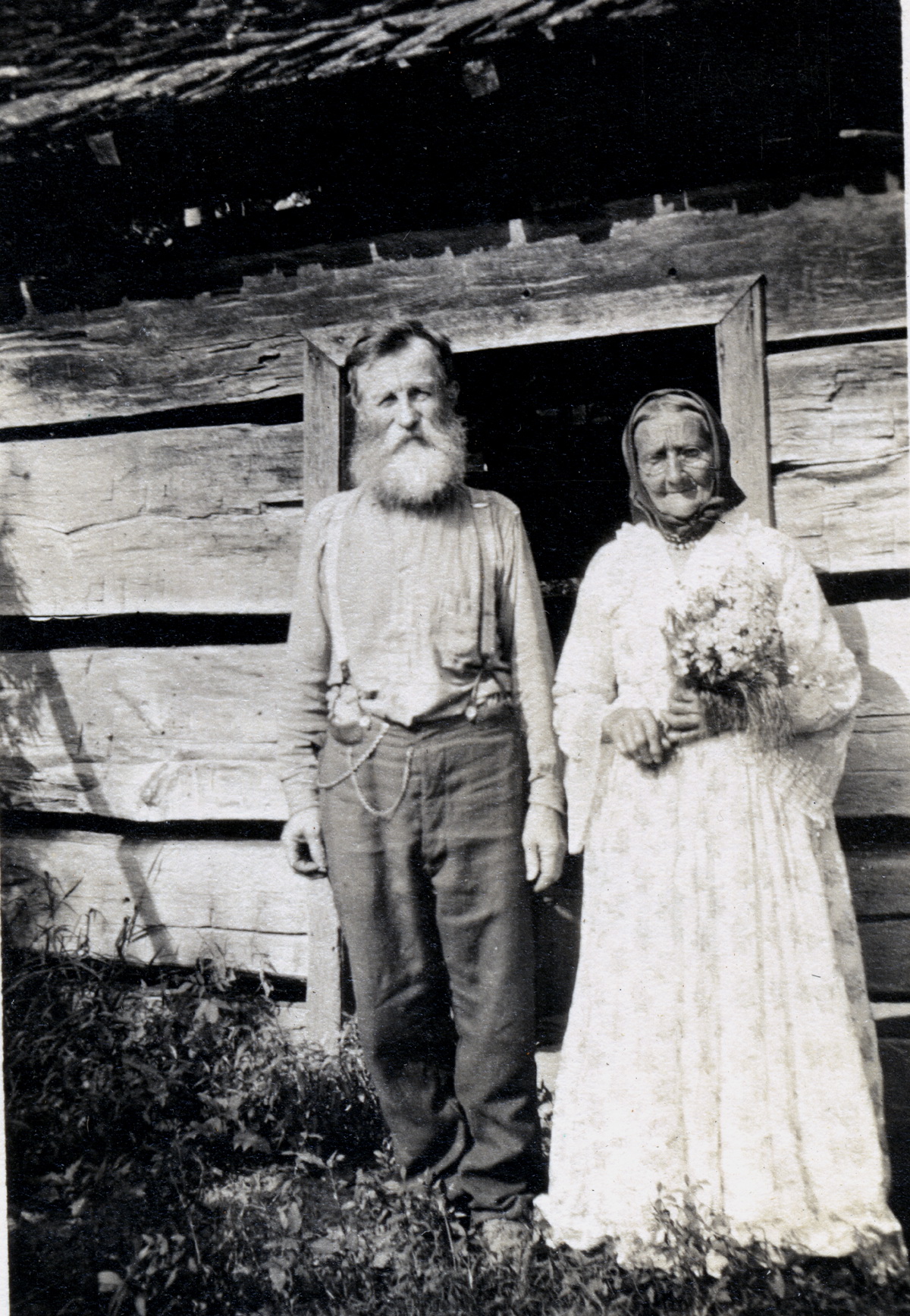
Uncle William and Aunt Sal stand in front of their old home while re-enacting their wedding picture. hook_007_mod.jpg

Uncle William and Aunt Sal donated  135*  acres of land for the Pine Mountain Settlement School. [*This acreage varies in the historical record and often includes the donation of other land from community families and lumber and mining companies.] Other families such as the Metcalfs, Wilders, Turners, Boggs, Cornetts, and so many others, were major contributors to the historic wealth of this remote settlement genealogy and geography and story.

In this photograph, Uncle William Creech and his wife, Sally Creech, re-enact their wedding in front of their original cabin home in 1917. Now often referred to as “Aunt Sal’s Cabin,” it was relocated to the grounds of the Settlement School in 1926 and is now a central landmark of the School, which is on the National Historical Register.

One of the founders of the School,  Katherine Pettit  (1868 -1938) was a Kentucky native.  She began her work at nearby Hindman Settlement School, which she also founded, and served as co-director at Pine Mountain Settlement School until her retirement in 1930. For the next five years, she traveled throughout the world and continued to doggedly trudge throughout Harlan County, urging farmers to adopt modern farming techniques.  In 1932, she visited South America. In that same year, she received the Sullivan Medallion from the Univ. of Kentucky as the outstanding citizen of the state of Kentucky. She died Sept. 3, 1938, at the age of sixty-eight.

The co-founder, along with Pettit and William Creech, was Ethel de Long Zande  (1868 -1928), a New Jersey native and Smith College graduate. She was recruited by Pettit to be the educational co-director of the School and to give academic guidance, fundraising, and educational programming.  Pettit knew de Long’s work as the two had served in similar positions at Hindman Settlement School, where de Long worked with Pettit for two years. Ethel de Long was as powerful in her beliefs and will as were Pettit and William Creech, but that did not prevent them from hiring a multitude of staff who carried the same strengths. Pettit and de Long and their staff provided basic education for children and training for mothers in health, cooking, and home care. In 1918, Ethel de Long married Luigi Zande, an Italian stonemason. She died much too early of cancer in 1928. Her short time at Pine Mountain solidified the shared vision of the two other founders, Katherine Pettit and Uncle William Creech, and the three left a lasting legacy and an unmovable foundation for the School.

THE ARCHITECT

Another force that needs to be reckoned with is that of Mary Rockwell Hook. Mary Rockwell Hook was recruited to Pine Mountain to serve as the lead architect for the buildings and the grounds of the school.  Her work represents one of the first instances of women’s work in the architectural profession.  A native of Kansas City, Kansas, and daughter of a banker, she was one of the first group of women to study in the renowned school of architecture in France, the École des Beaux-Arts in Paris. Her work represents a major milestone for women architects in America, as she was, by all accounts, she was among the first women to earn an architectural degree in the United States. It was Mary Rockwell Hook’s remarkable work that earned Pine Mountain Settlement School recognition as a National Historic Landmark in 1983.

Her architecture, like the people who grew up out of the land, and its organic presence always runs as a sub-text throughout all that is Pine Mountain Settlement School. Mary Rockwell knew the land and the people, and she continued to work with the School until her death at the age of 101.
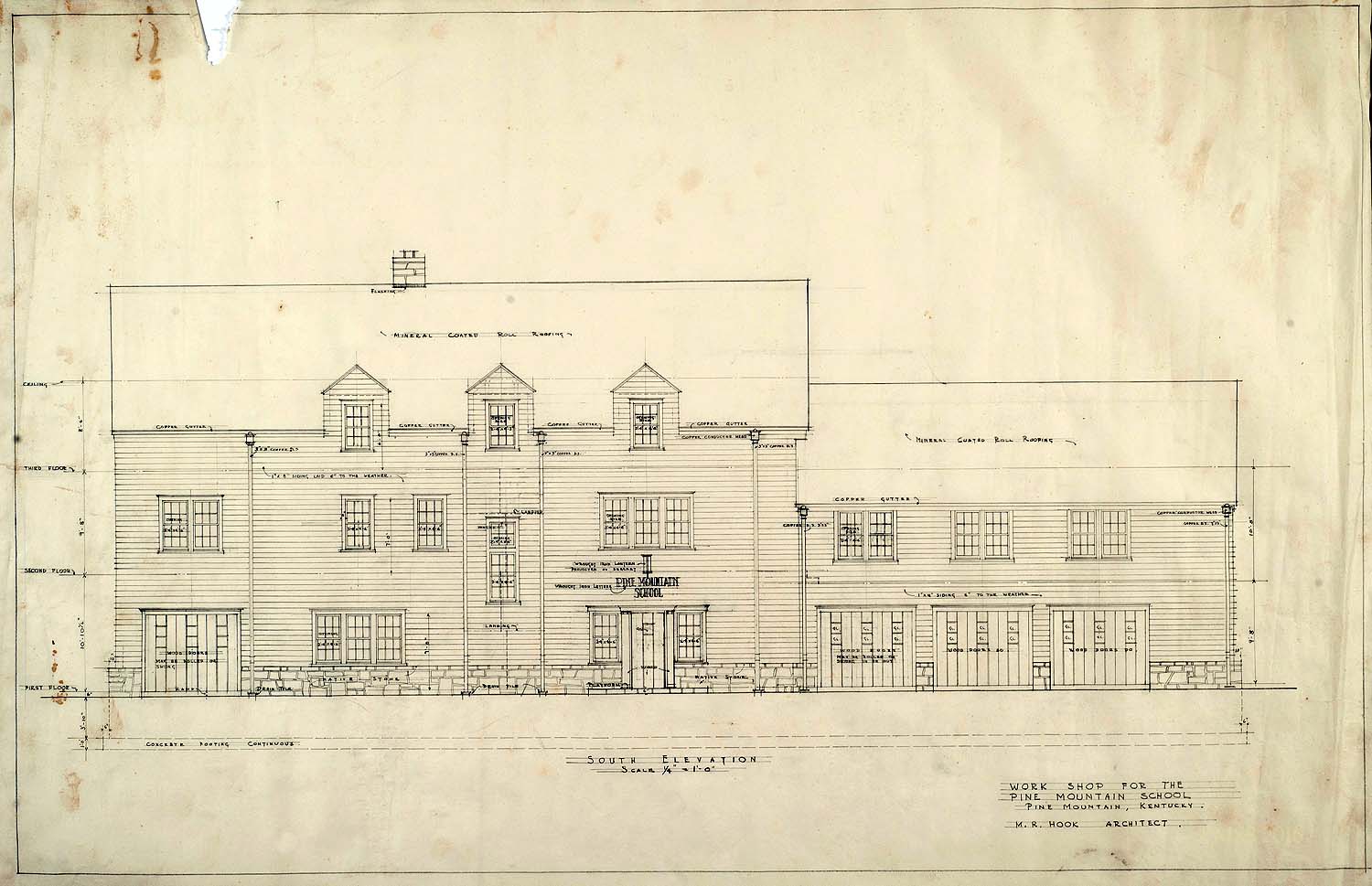
Work Shop For The Pine Mountain School Boys Industrial MSR5852_1 M.R. Hook South Elevation 1/4″=1′-0″ (early proposed plan)

Throughout the literature of Pine Mountain Settlement School, one will see individuals acknowledged as “Uncle” and “Aunt” such-and-such. When used with the first names of community members, the familial designation was generally not a designation of a familial blood relationship, but one of endearment. It was used particularly within the staff and families at the School, but it was always a long-held title of respect and endearment in the Pine Mountain community.  Following his donation of land for the school in 1913, Uncle William only lived six more years, until 1918.  Aunt Sal lived on until 1925. Their passing was as though a near Uncle and Aunt had passed, and they had.

It was the generous donation of land by William and Sally Creech, the Metcalfs, and others, and their advocacy and their vision that made the school on the headwaters of the Kentucky River a reality. But it was the community that was the bond that sustained it.  When Uncle William and Aunt Sal gave the land, they did so with the intent to create a school, and they sought out supporters in the community and, with the community’s support, convinced the two remarkable women to come to the remote valley in Harlan County to become the new Settlement’s directors. Pettit and de Long needed little persuasion, and the community was ready for them.

BUILDING THE SCHOOL

In Pettit and de Long, William Creech found a congruence of goals and vision. Pettit and de Long took the educational challenge of Uncle William to heart, and Uncle William held the two women close to his own heart and dream.  Katherine Pettit, a member of the Lexington chapter of the Kentucky Federation of Women’s Clubs, had, with May Stone and the support of the Club, founded Hindman Settlement School in 1900, and knew what she wanted in a school.  Thirteen years later, more importantly, she knew where she wanted a school.  Ethel de Long, who had worked for many years as an educator with Pettit at Hindman, was a pragmatic and articulate program creator, but, like Pettit, she wanted to chart her own course and exercise some of her new ideas on education in the central Appalachians. Both Pettit and de Long were visionaries, as was Mary Rockwell Hook, but they were all also well connected to other forceful women and men. Their long chain of contacts gave them the foundation and support needed to launch the new settlement school.

The Creeches, Pettit,  de Long, and Hook, as well as others in the Pine Mountain community, were a productive and dynamic combination. The quick formation of an Advisory Board provided the outside oversight, funding, and professional support needed to grow the institution. The founders of 1913 gave the school a solid financial foundation through ferocious and smart publicity and funding appeals. Further, they gave the institution a strong social base on which it could grow and flourish.  And, grow it did.  In 2013, the school celebrated its one-hundredth year as an educational institution, confirming the promise and the wisdom of those early planners.

At Pine Mountain, there are many institutional histories. This abbreviated one is only an introduction. To visit other historical resources, see the PMSS HISTORIES Guide. 

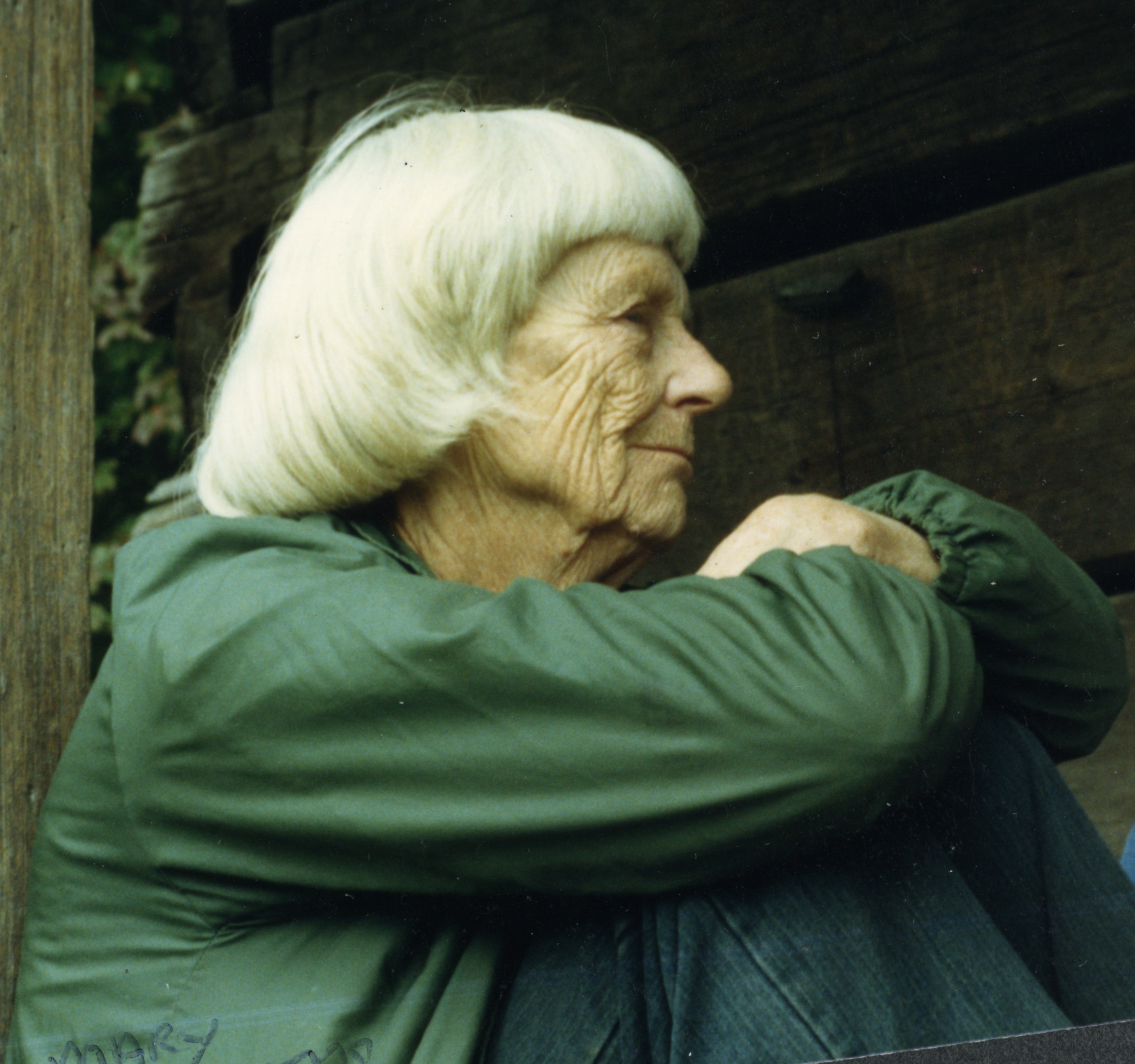
Mary Rogers, wife of Burton Rogers, School Director (1949-1983), and who became the founder of the Environmental Education program at the School, wrote The Pine Mountain Album 1913-1983 for the School’s 50th Anniversary. It remains the iconic and the best source for a brief history of the school.

Mary Rogers’ small booklet covering the institutional history from 1913 to 1983,  breaks the history into easily understood blocks.  Her brief narrative history, illustrated with her own delicate drawings, is an eloquent statement describing the founding years of the institution, the boarding school years, and the later Community School.  It describes the founder’s plans for the School and the dedication to the founder’s ideas through the years.  She says of Pettit and the School

” She [Pettit] had a deep love for the people and concern for their needs.  At Hindman she had already translated the work of Jane Addams and the urban settlement movement into a rural idiom.  Now, her thoughts were turning to more isolated, as yet unserved, areas of the mountains.

 Traditional schooling was a part of her plan, but she envisaged also a settlement serving a whole community in its economic, health, and cultural development.  A settlement would not attempt to substitute an outside culture for the indigenous.  It would try to strengthen people’s faith in their own heritage, making use of both the mountain environment and their unique traditions as media for learning.  It would help people to retain a secure sense of their own worth as human beings. 

 The new school must have sufficient acreage to supply the bulk of its own needs.  It must be less dependent on the slow, unreliable transportation of supplies by ox wagon through almost roadless country.
[
Rogers, Mary. The Pine Mountain Album,1913-1983] 

EDUCATION FOR LIFE

Education was foremost in the mind of  Uncle William, and education was at the center of the mission of the two women co-founders of the institution, and all three agreed that this education must be a pragmatic education. It must give the children of the school not only ‘book larnin’, but it must also give them “education for life.” Uncle William described this “education for life” as an understanding of farming practice and a respect for the land that would combine with traditional educational practice. Only then could the total education of the person occur.
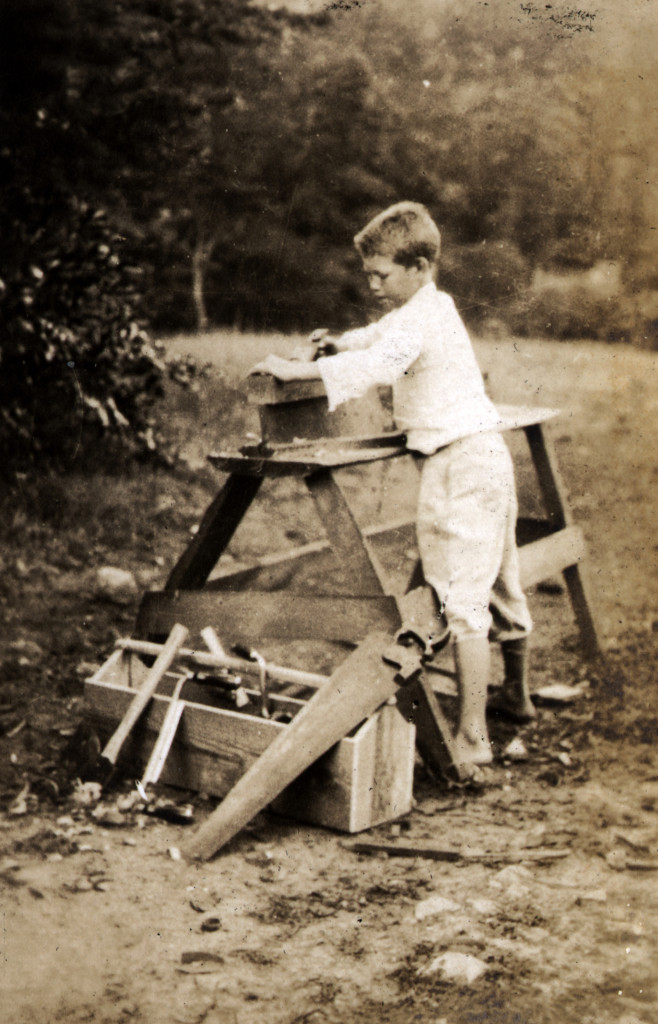
pmss0133

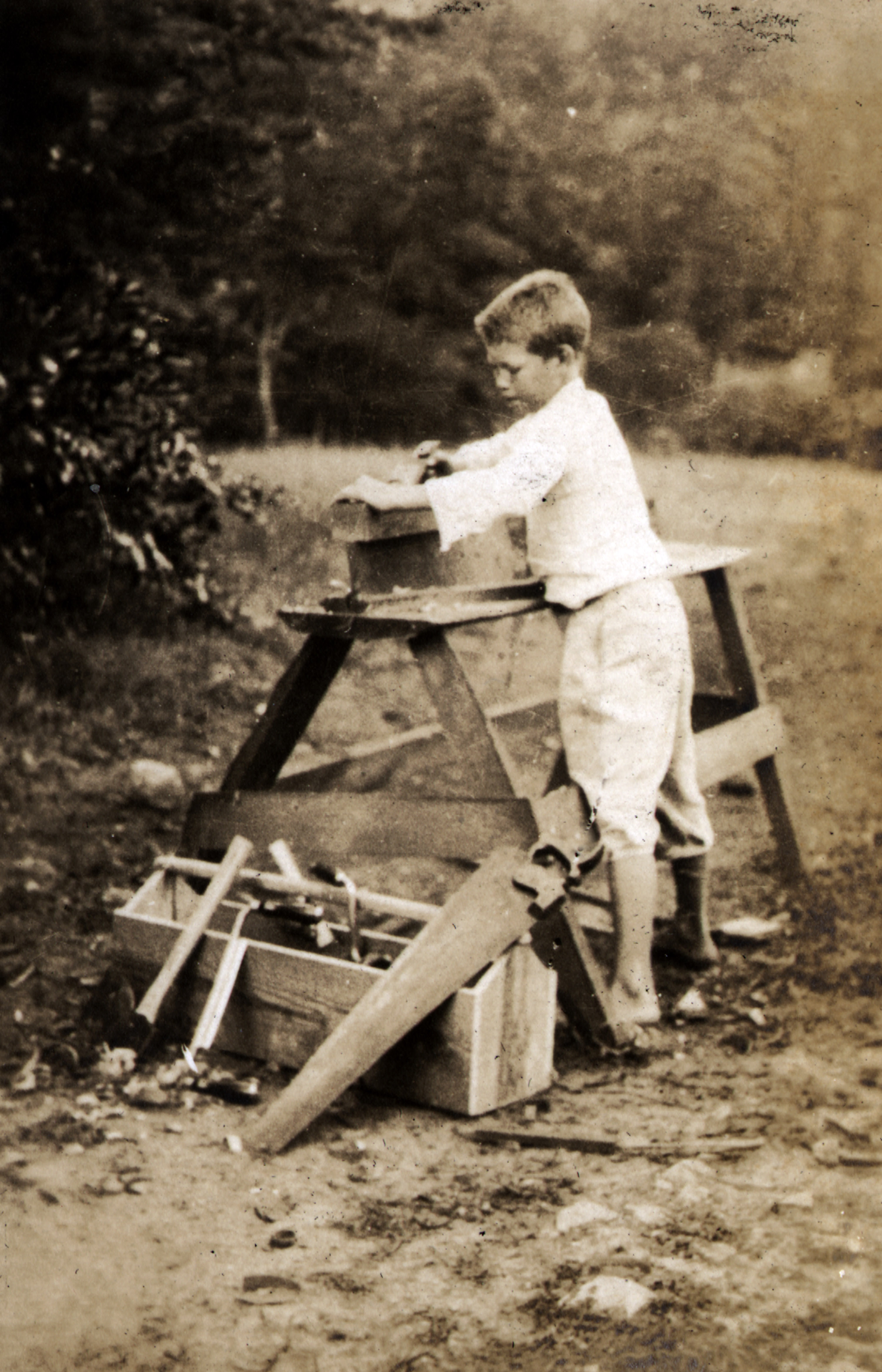
Head, hand, and heart at work in this early carpentry project by a student of the school.

Throughout the one-hundred-plus-year history of the School, the adherence to an agrarian focus remained central to the understanding of Pine Mountain’s “education for life.”  The pragmatic work engaged by all who passed through the School emphasized education as a life-long process and one for which they, alone, were responsible.

“Education for life” demanded mindfulness throughout every day. Participation in farming, food preparation, community celebration, woodworking, environmental field work, and more. It was an educational idea anchored in a classroom experience, but practiced in every action of the student.  Even today, this hybrid approach, solidified by hands-on learning experiences, has proven to be one of the most effective learning strategies.

An “education for life” is what the poet and writer Wendell Berry describes in his thoughtful series of essays, A Continuous Harmony: Essays Cultural and Agricultural (1970, 1972). He calls that life a kind of “local life aware of itself.” He asserts that this “regionalism is the awareness that local life is intricately dependent, not just for its quality but also for its continuance, upon local knowledge.”  Berry made frequent trips to eastern Kentucky and to Pine Mountain. He dedicated his small book of essays to Ann and Harry Caudill, two Eastern Kentucky locals from Whitesburg, Kentucky, who were intensely aware of their place in the land and who educated many on the fragility of Appalachian land in Night Comes to the Cumberlands (1962). In the words of Steward Udall, it is a book, that is the “story of land failure and the failure of men,” but that, in its fatalistic telling, called the attention of the world to the lives of so many in the Central Appalachians.

Today, as we move rapidly toward ecological and social disruptions, the need to remind ourselves of our responsibility to an “education for life” is even more critical.  The education at Pine Mountain has always served up this idea.  Pine Mountain Settlement School is a place and an idea that educates for life, and that is committed to the literacy of historical community and how that history informs the living community. This commitment to education, both formal and informal, is essential to tying together the land and the people in a fundamental and hope-filled sustainable ecosystem.

In 2015, the School’s mission statement was reworded, but not dramatically altered, when it admonished that the goal of the School was to

… enrich lives and connect people through Appalachian place-based education for all ages…”

However, “Twenty years ago [1912] Kentucky ranked fortieth in Education among the states of the Union;  today she is still fortieth,” reported the Kentucky Education Commission after a two-year study made of education in schools and colleges in the Commonwealth from 1932 to 1934.  This was the pre-Depression era, and it raised desperate appeals for ideas and help with a school system ravaged by a growing economic crisis.   As part of their 1932 study, the state surveyed the students whose lives they were charged to improve. Pine Mountain was visited and queried about educational needs and programs.   The surveyors found no shortage of students who were willing to closely critique their school and to make recommendations to their surveyors.  Remarkably, the surveyors listened.  Remarkably, the educational journeys described by the students served as a model for planning a new course for education within the state. The descriptions of those students are closely detailed in the nearly complete collection of student records held in the Pine Mountain Settlement School Archive Student Records.

In 2010, Kentucky’s ranking in a national survey was 34th in the nation.  In two years, the state jumped 24 places in the Quality Counts annual report as recorded in Education Week magazine. In 2013, under the Governance of Beshear, the state placed an amazing 10th in the national rankings for K-12 education.  Something is working. Attention to rural youth was part of the 2013 State-wide success.

Read more here: Kentucky Ranks 10th in National Education Survey 2013

A precursor to the leap forward was the Rural Youth Guidance Institute, earlier called the Pine Mountain Institute, was begun by director Glyn Morris in 1934.  It became known throughout the country as a progressive and successful educational model.  The Pine Mountain students were “educated for life,” and the Depression years in Appalachia and at  Pine Mountain Settlement School provided some of the best lessons for that kind of education. The 1930s had many teaching moments that few who experienced them, forgot — student or teacher.

The school still stands as a model for educators who want to “educate for life.”  Today, particularly in the field of environmental education, Pine Mountain continues to lead the way in the state of Kentucky across all age groups.  Today, it educates multiple generations and promotes education as a life-long learning process.  A brief 1934 article for The Pine Cone, a school paper written by Pine Mountain students, reflects on the state’s campaign to reform education for its students and where Pine Mountain students fit into that campaign. It demonstrates how the PMSS students were actively engaged in the 1930′ educational planning process

A somewhat unusual feature of this campaign was the enlistment of the services and sympathies of the students themselves by the state. The generous response of the Pine Mountain students to this appeal for comments was characteristic of the sense of community promoted at the school.  The school, started twenty-one years earlier, gave the children a willingness to give of their energies that the cause of education may be advanced.  They described the influence of Pine Mountain as a real education that “will help us work a little more skillfully, think a little more clearly and act a little more kindly.”

NOTE:

This exploration of farming, food, and community engagement at Pine Mountain Settlement School, found in this DANCING IN THE CABBAGE PATCH series of essays, is authored by one of Pine Mountain’s children, the daughter of one of the School’s farmers and the author of this essay and others in “Dancing …”   The essays are offered as a contribution to the history of the institution and are filtered through the writer’s perspective. There are many other perspectives.

PHOTOGRAPHS AS EDUCATIONAL TOOLS

The photographs of rural life taken by various photographers, during the long history of Pine Mountain Settlement School, found in this essay and throughout “DANCING …”  are derived from a life lived close to the land.  Within the faces of the students, the workers, and community families, especially in the children, can be found wonder, stubbornness, joy, fear, defiance, pride, and hope.  It is those images combined with some of the personal narratives captured in letters, documents, and autobiographies in the archival collection, that the many perspectives may be studied. In these often very personal and literal reflections, can be found a tall mountain filled with deep wisdom, peace, humility, despair, determination, hope and anger, but generally overflowing with joy.
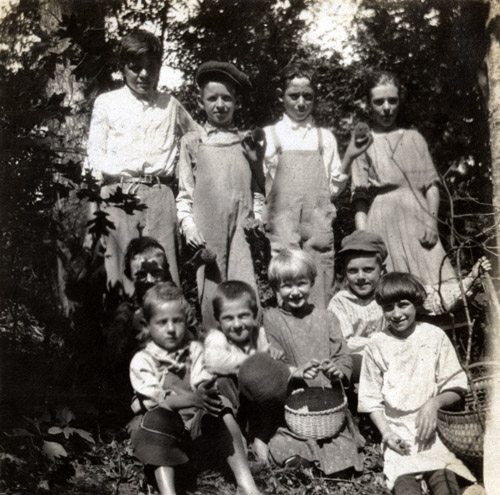
pmss0098

 Yet, some who will view the photographs or read the workers’ letters about the community will only see the poverty and possibly the exploitation of the local population by “outsiders.”  That is not what the school was or is about, and on close reading, that is not what the archive ultimately will reveal.

The author  John Berger reminds us in And Our Faces, My Heart, as Brief as Photos (Berger, 1984)  that time and space are inseparable. He cautions us that we must be careful of giving so much to the historical projection of time. He argues, “It is space, not time, that hides consequences from us.” In the Pine Mountain Valley, it is “up Cutshin and down Greasy,”  and Wellsley College and “between Hel-fer-Sartin and Kingdom Come,” and Boston and Turkey Neck Bend and New York and Fiesty and Rowdy, that we arrange and rearrange our critical visual perspectives.

The words of those who knew and know the land best are sprinkled throughout the following narratives, but it’s the photographs, the images of land and people, that most vividly detail the agrarian evolution of the community. The agricultural essence of the unique rural community on the north side of Pine Mountain, as explored through the lives of those who worked at Pine Mountain Settlement School and those who lived nearby in the community, is as relevant today as it was when the first vision was shaped by the founders.   These are pictures of education at work — it is embeded in a constant reciprocal stream of teaching.  In photograph and text, the interactive life along the Pine Mountain range and at the Pine Mountain Settlement School is a reassertion of geographies of hope and how to move between our spaces. It is about our finding of a personal space in our society and of society finding a space for us.

Pine Mountain Settlement School today continues to be an experiment in rural settlement school practices as well as a model environmental education school. As the School moves beyond its 100th year,  the community celebrates with the School.  It celebrates the people, the place and an unwavering relationship to the land and to the lessons that may be learned from a close association with its geography in all its variants.

People and place, student and land, farmer and field, ecologist and mountainside, are all tied to an educational vision and mission. Today, the school’s programs and its “education for life” ethos reveal an evolving vision and mission. Remarkably, it is a vision that remains fresh and inspiring. No matter where one enters the narrative about the School, the general aim is clear.  It is to create critical minds and a sensitive eye when looking at how seasons pass,  space evolves, and lives evolve and pass in the valley.  It is a narrative that is both sequential and simultaneous, history and historical.

Today, our polemics are animated by ideological conflicts, by rancorous politics, and an inability to discern truths. We often lose our close touch with both time and space.  History now quickly melts our contexts into a sea of irrationality, and speed creates a blur with no time for reflection.  Often, history only surfaces to support some argument or political position that has no verity. We tend to forget in the rush of our lives that there are many truths, many more generations to inspire, and many lessons to learn and many stories to tell that open the pages of our own unique place in time and space.

Many of those lessons are found in our relationships, in our historical and genealogical archives, while others may be found on a hike to some remote and quiet place like  Jack’s Gap overlooking a slice of life with the long view.  When we look out from high places on the expanse of mountains that stretch out below, the view may resemble a troubled sea to some. The viewer may perceive a deep green sea, interrupted by the silt, the growing tides of discontent, the green and brown of surface mining  —  but the air sits close upon that unique Pine Mountain Mountain — fragrant with fresh pine and vibrant with sunrise and sunset. The trails of Pine Mountain wait to be explored.
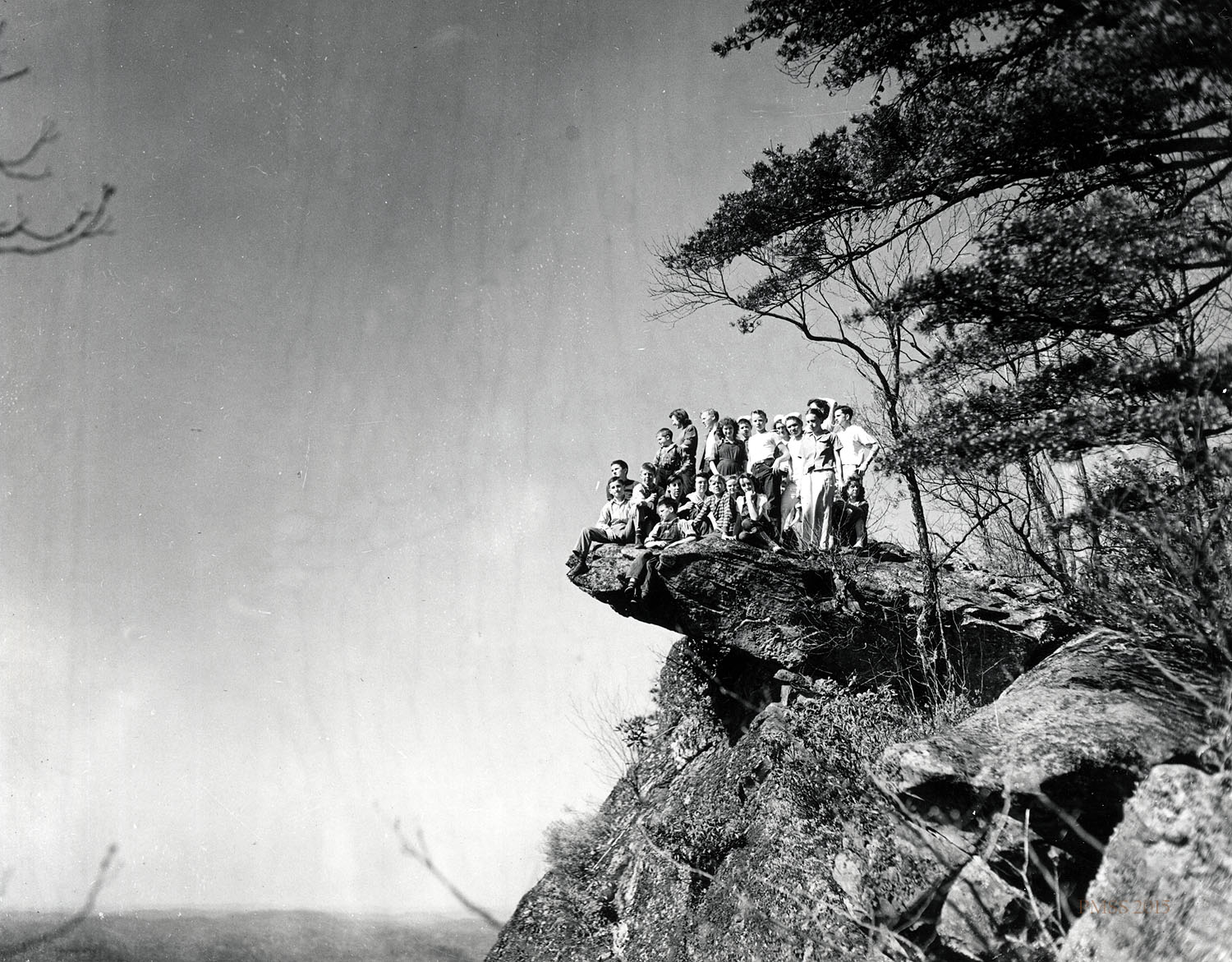
Little Shepherd Trail

Jack’s Gap outing. Arthur W. Dodd Album. [dodd_A_066_mod.jpg]

As we all reach for improvement in the quality of our lives, there are many reminders in the stories and images from Pine Mountain that tell us, like Uncle William, that life does not need the accumulation of wealth, so much as it requires the nurturing of the wealth that lives within us and that surrounds us all. As we look backward with intelligence at the 100 years of Pine Mountain Settlement School, we will hopefully be better prepared to move forward with inspiration and intention to a vital future, wherever that future may find each of us. I suspect Uncle William is smiling as his dream continues to unfold and catch hold.

HHW

SEE: DANCING IN THE CABBAGE PATCH Guide

GO TO:  DANCING IN THE CABBAGE PATCH III – PLACE

BACK:  DANCING IN THE CABBAGE PATCH I – ABOUT