
Pine Mountain Settlement School
Series 17: PUBLICATIONS PMSS
NOTES 2023 Fall
Jason Brashear, Interim Director
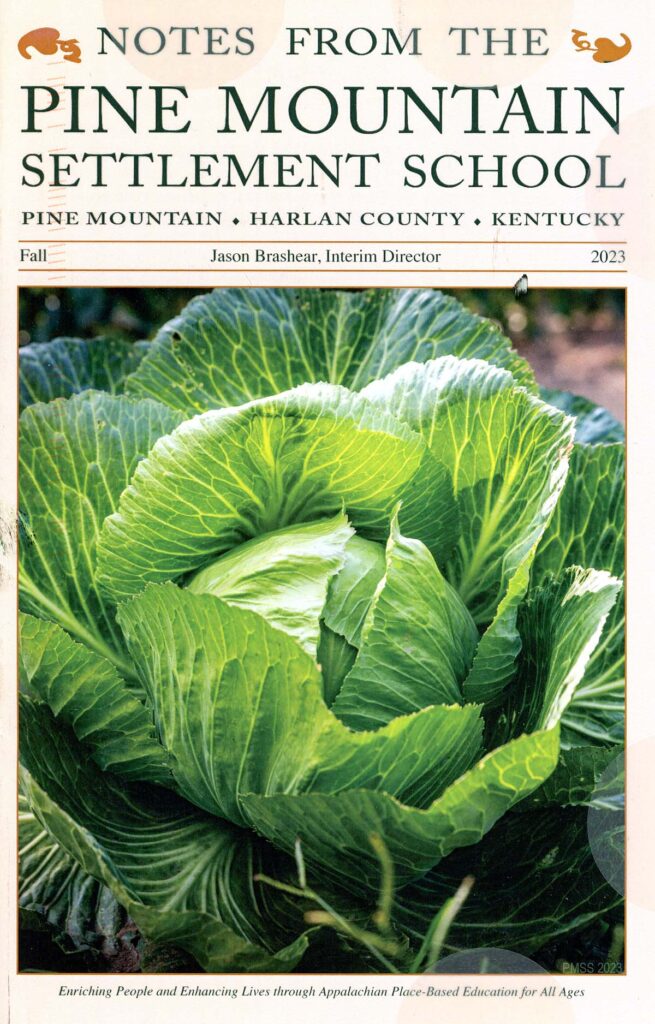
Cover page for PMSS “NOTES,” Fall 2023. [010 notes_2023_fall000.jpg]
TAGS: Notes 2023 Fall, November, outreach, farming, activities of PMSS, Director’s report, Jason Brashear, Board of Trustees, staff activity, Mark Messer, Pine Mountain Settlement School programming, fundraising, cabbages, agriculture, garden, sheep, Patrick Angel, Uncle William’s Reasons
NOTES – 2023 Fall
“Notes from the Pine Mountain Settlement School”
November
2023 was a transitional year for the School. It was stewarded by Jason Brashear, the former Program Director, who in 2023 was appointed the Interim Director of the School. At the end of November, the Board of Trustees selected Jason from a wide-ranging applicant pool and appointed him to the Director position.
The November Notes highlight the many activities of the School during this transitional year as noted by the newly appointed Director, Jason Brashear. The Director reminds all of the deep connection to the founding objectives of the institution in the well-known words of one of the founders of the institution, William Creech.
As an agronomist at heart, Jason is moving the agricultural foundations of Pine Mountain forward. The staff support of the agricultural potential for programming at the School is detailed in this November Notes. The garden at Pine Mountain has always been a part of the institution’s focus, as it often has served the needs of the School’s food service and educated the surrounding community. The protected environment of the School produces hearty and healthy vegetables that are explored in the School’s unique programs. Cabbages have always been part of the institution’s chosen crops as the soil and location are particularly favorable to the glorious cabbage seen on the cover page. Like the cabbage, the school looks to the healthy growth of the surrounding community.
When the PMSS Boarding School was in operation, the School recorded the cultivation of several thousand cabbages that were processed to feed the School and to encourage improved gardening in the community for the year and improved diet. — The processing of cabbage as sauerkraut and a variety of other edible and healthy offerings may not be on everyone’s menu, but it is something to consider. The cost of a cabbage is still within reach! A garden of cabbages is a field of green. –HW
GALLERY
We have school communities, naturalist communities, alumni communities, art communities, preservation communities, and the list goes on. It’s each of these, their connectedness, and diversity that make Pine Mountain such a special and unique space. —Jason Brashear
-
- 001 notes_2023_fall_001
-
- 002 notes_2023_fall_002
-
- 003 notes_2023_fall_003
-
- 004 notes_2023_fall_004
-
- 005 notes_2023_fall_005
-
- 006 notes_2023_fall_006
-
- 007 notes_2023_fall_007
-

- 008 notes_2023_fall_008
TRANSCRIPTION: NOTES – 2023 Fall
P. 1
NOTES FROM THE
PINE MOUNTAIN
SETTLEMENT SCHOOL
PINE MOUNTAIN ~ HARLAN COUNTY ~ KENTUCKY
FALL Jason Brashear, Interim Director 2023
[Cover photograph of a head of cabbage with the caption: “Enriching People and Enhancing Lives through Appalachian Place-Based Education for All Ages”]
P. 2
From our Director
[Photograph of Jason Brashear]
As the dog days of summer begin to wane and the cool crisp fall mornings become abundant, I grasp to the warm rays of sun in the afternoon and grow with excitement for the season that is coming. For us at Pine Mountain Settlement School, the changing of the seasons isn’t just a change in the weather, but a programmatic shift as our focus on community programs broadens to a larger scale, filled with hundreds of school aged kids that will gather on campus, dance in the Laurel House, and occupy West Wind.
As I ponder that transition, it becomes increasingly clear that the Settlement School has several communities. Traditionally, we refer to our community as the neighbors surrounding the school, in a broad sense, those that live in Harlan and contiguous counties. But our circles and connections grow well beyond that and overlap and intertwine. We have school communities, naturalist communities, alumni communities, art communities, preservation communities, and the list goes on. It’s each of these, their connectedness, and diversity that make Pine Mountain such a special and unique space.
Our founder William Creech once said, “I don’t want hit to be a benefit for just this neighborhood, but fir the whole state and the nation, and for folks acrost the sea, if they can get any benefit out of hit.” With this, Pine Mountain has and will always be a place of inclusivity, a place for folks to gather, learn, and break bread together, and a place to connect to the world around us. This summer has been filled to the brim with groups from the Bronx to Harlan, who have found their benefit on the Northside. As you peruse the pages of these notes, you’ll find..out about a group of students from the Bronx, Grow Appalachia, Summer Camps, and a new initiative focusing on increasing the consumption of fresh fruits and vegetables, and more.
[Signed] Jason Brashear
Jason Brashear
Interim Director
P. 3
BY THE NUMBERS
12 VISITING SCHOOLS GROUPS
796 STUDENTS SERVED
379 EXPERIENCE PARTICIPANTS
9 COMMUNITY EVENTS
3 SUMMER CAMPS
11 WEDDINGS & REUNIONS
On the Cover
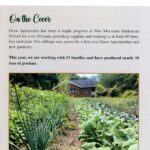
Grow Appalachia has been a staple program at Pine Mountain Settlement School for over 10 years, providing supplies and training to at least 40 families each year. The cabbage was grown by a first year Grow App member and new gardener.
This year, we are working with 52 families and have produced nearly 10 tons of produce.
[Photograph: Flourishing garden with a house in the background.]
P. 4
SUMMER CAMPS
Our programming team held three summer camps for local youth this summer to experience traditional Appalachian art and craft, agriculture, and the environment.
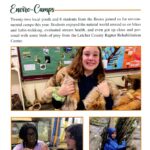
Enviro-Camps
Twenty-two local youth and 8 students from the Bronx joined us for envionmental camps this year. Students enjoyed the natural world around us on hikes and habit-trekking, evaluated stream health, and even got up close and personal with some birds of prey from the Letcher County Raptor Rehabilitation Center.
[Three photographs: smiling student in classroom with “fur” coat”, two students working on a classroom project, boy looking out from a space between boulders.]
P. 5
Camp Culture
During Camp Culture, 26 youth explored the wonders of Appalachian Culture, the history of the region, and enjoyed cooking wild greens and dandelions. They transformed to early settlers as they used primitive cabin building tools, cross-cutting logs and making wooden shingles, and also examined the indigenous tribes of the region.
[Photograph: Smiling student looks up from her weaving project.]
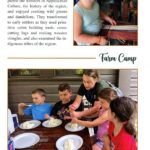
Farm Camp
In the middle of garden season, 21 students learned about our food system, where food comes from, and how important agriculture is to our area. During Farm Camp, they made natural dyes, picked and cooked fresh produce, and experimented with honey and beeswax candles.
[Photograph: Four students at a table eating ice cream and assisted by a worker.]
P. 6
Meet the Staff: Mark Messer
Mark Messer is our Farm Manager and Maintenance Technician. He is a Harlan County native and recalls the first time he stepped foot on campus was for a pottery class the settlement school was offering to the young children of [the] area. He began his work with the Settlement School in 2015 as an AmeriCorps VISTA and transitioned to a full-time position with the maintenance department in 2016. Mark enjoys the day-to-day task of helping maintain the buildings of campus and providing fresh produce for the school.
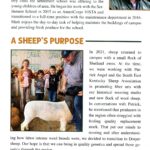
A SHEEP’S PURPOSE
In 2021, sheep returned to campus with a small flock of Shetland ewes. At the time, we were working with Patrick Angel and the South East Kentucky Sheep Association in promoting fiber arts with our historical weaving studio and new flock of wool sheep. In conversations with Patrick, he mentioned that producers in the region often struggled with finding quality replacement stock. That put our minds to running and after understanding how labor intense wool breeds were, we decided to transition to Dorper sheep. Our hope is that we can bring in quality genetics and spread those genetics through the region.
This summer, we acquired a small Dorper flock, that we hope will be the basis for our program for years to come. In a recent outing to the Tennessee Valley Fair, we won reserve champion ewe. Look for our genetics available next summer!
P. 7
GROWING A HEALTHY APPALACHIA –
In the Spring, we were asked to join an initiative, Growing a Healthy Appalachia Project with the University of Kentucky, ARH, Community Farm Alliance, Grow Appalachia and others. Harlan ARH piloted a healthy eating program, where staff members could receive a 6-week subscription for fresh produce for half the market cost. Pine Mountain Settlement School was fortunate to be able to aggregate those subscriptions with produce from our farm and purchased items from local Grow Appalachia members. We also hosted 2 pop-up farmers markets at the hospital, to encourage consumption of fresh, local produce. The program was well received and we anxiously await data results from the University to see if any habits changed in that short 6 week window.
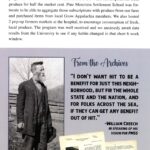
From the Archives
“I DON’T WANT HIT TO BE A BENEFIT FOR JUST THIS NEIGH-BORHOOD, BUT FIR THE WHOLE STATE AND THE NATION, AND FOR FOLKS ACROST THE SEA, IF THEY CAN GET ANY BENEFIT OUT OF HIT.”
-WILLIAM CREECH
IN SPEAKING OF HIS
VISION FOR PMSS
[Images: Photograph of William Creech and copy of a two-page typewritten document with photograph, addressed to “My Dear Friend” and dated “Memorial Day 1918.”]
P. 8
[Back page used for mailing address.]
[Logo] PINE MOUNTAIN
SETTLEMENT SCHOOL
36 Highway 510 Bledsoe, KY 40810
606) 558-3571 | www.PineMtn.org
ENRICHING LIVES
———–AND————–
CONNECTING PEOPLE
—–SINCE 1913—–
Non-Profit Org.
U.S. Postage
PAID
Lexington, KY
Permit # 850
Next:
NOTES – 2024
See Also:
FARM and FARMING Guide
FARM Guide
FARM GUIDE to Sheep, Goats, Weaving, Natural Dyes
Return To:
NOTES Index