Pine Mountain Settlement School
Series 24: PUBLICATIONS RELATED
Arthur E. Morgan, Chair T.V.A.
Some Suggestions for a Program to Promote Better Opportunities
for Rural Young People Especially in the Southern Highlands, 1935
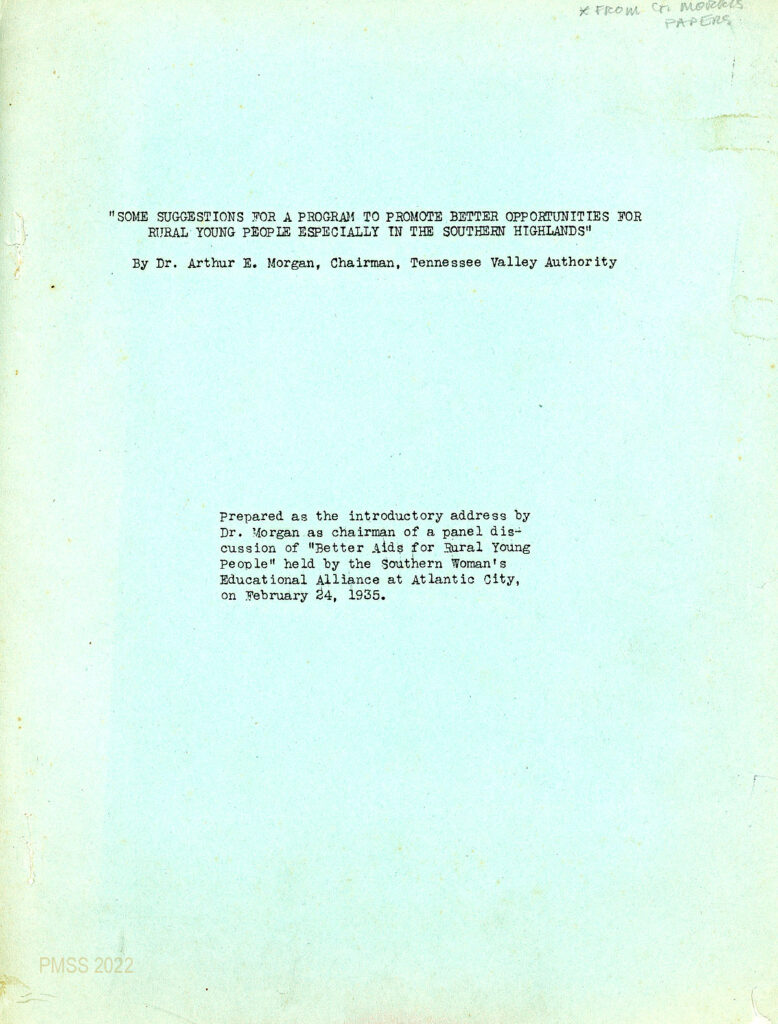
O cover [morgan_arthur_some_suggestions_000]
PUBLICATIONS RELATED 1935 Arthur E. Morgan Some Suggestions for a Program to Promote …
TAGS: Arthur E. Morgan, Chairman TVA, rural youth, Southern Highlands, employment opportunities, Tennessee Valley Authority, rural youth opportunities, vocational possibilities, industrial training, public schools
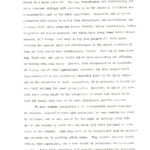
“Observing the character of education in many rural communities, it may be natural for us to think of a program for rural boys and girls as being outside of the public school system. I believe we should give second thought to that matter. It may be that rather than try to supplement the public school we should seek to revolutionize it and to work within it.”
Transcription
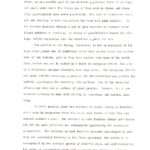
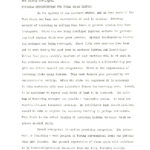
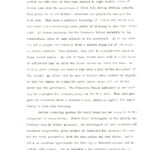
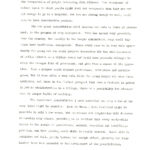
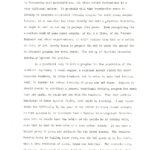
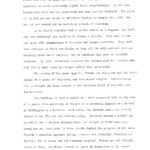
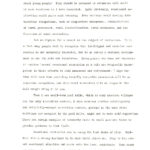
ARTHUR E. MORGAN. Some Suggestions for a Program to Promote Better Opportunities for Rural Young People Especially in the Southern Highlands
Prepared as the introductory address by Dr. Morgan as chairman of a panel discussion of “Better Aids for Rural Young People” held by the Southern Woman’s Educational Alliance at Atlantic City, on February 24, 1935.
The following paper by Arthur E. Morgan was included in the papers of Glyn Morris, PMSS Director. Morris was working closely with Orie Latham Hatcher of the Southern Woman’s Educational Alliance in 1935 when the Alliance sponsored the Atlantic City Conference where Morgan presented his paper. Consultant Hatcher was building a national reputation as an advocate for women and the education of rural disadvantaged children. The ground-swell of enthusiasm carried her ideas and those of others to the attention of the strong Alliance for the Guidance of Rural Youth, an educational program that is foundational to rural school systems throughout the country.
Morgan, whose comments are captured here, is perhaps the best known of Hatcher’s converts. As the chief administrator of the sprawling engineering project for the Tennessee Valley Authority, [T.V.A], he was a trained engineer but at heart he was an educator. In the early 1930s there was strong momentum to address poverty in the rural South. Morgan, like Hatcher and others who engaged the support of the Roosevelt administration, gathered with like-minded individuals in a series of national conferences. The conference in Atlantic City in 1935 was a turning point in a battle to save the minds and future livelihoods of rural youth.
Shortly after the Atlantic City meeting in February, Hatcher proposed to change the name of the Educational Alliance to the Alliance for Guidance of Rural Youth, a name that followed the organization until its evolution into a series of outreach programs.
Glyn Morris at Pine Mountain became a major player in building the momentum for rural youth guidance programs along with Orie Hatcher and won her admiration and confidence. Morris, Hatcher, Ruth Strang, and Arthur Morgan were all enthusiastic supporters of the Roosevelt administration and the future began to look brighter for rural men and women in the South under their guidance. The key to reaching into the rural communities was a network of strong like-minded individuals such as Morris and others who surrounded and endorsed the early work of Hatcher. Morgan became one of the strongest admirers of the new educational initiatives proposed by Hatcher. He was certainly one of those most strongly connected to her political network of support.
Morris, at Pine Mountain, focused on local educational outreach but had a close personal relationship with Hatcher that may be seen in the invitation to speak for her at her funeral in April of 1946. Morris worked to build a model program in guidance in Harlan County in direct cooperation with Hatcher and with the assistance of Ruth Strang whose work often echoed that of Hatcher. The educational foundation that Morris constructed in Harlan County had a long series of successes and elements reflecting the early work of Hatcher. Morris’ work in Harlan County was also transplanted into his later work with the public school system in Lewis County in upstate New York. His educational views and planning continue to inform both Kentucky and the New York rural public systems and elements he put into play may still be seen today in the programs of the Pine Mountain Settlement School and in Harlan County.
Efforts continue to build on the foundation of the early guidance programs continue. Today, programs such as that for Appalachian Youth in Harlan County and the Pine Mountain pioneering Environmental Education experiments have been adapted across the State of Kentucky and neighboring states. They continue to pull from the early initiatives of individuals such as Morgan, Morris and their mentors, Hatchers, and Strang. The Institute inspiration can be readily seen in this speech by Arthur E. Morgan who profoundly influenced by his work with Hatcher and the Alliance generated ideas that became the key to the early development of and sustainability of settlement-like schools in the Southern Appalachians. Morgan’s own founding of the Celo Community in 1937 is a prime example. The Celo Community, is a land trust in the mountains of Western North Carolina focused on environmentalism and education that continues to flourish and contribute to rural education today.
GALLERY: ARTHUR E. MORGAN ADDRESS for Southern Woman’s Educational Alliance at Atlantic City, February 24, 1935
-
- cover morgan_arthur_some_suggestions_000
-
- 016 morgan_arthur_some_suggestions_001
-
- 002 morgan_arthur_some_suggestions_002
-
- 003 morgan_arthur_some_suggestions_003
-
- 004 morgan_arthur_some_suggestions_004
-
- 005 morgan_arthur_some_suggestions_005
-
- 006 morgan_arthur_some_suggestions_006
-
- 007 morgan_arthur_some_suggestions_007
-
- 008 morgan_arthur_some_suggestions_008
-
- 009 morgan_arthur_some_suggestions_009
-
- 010 morgan_arthur_some_suggestions_010
-
- 011 morgan_arthur_some_suggestions_011
-
- 012 morgan_arthur_some_suggestions_012
-
- 013 morgan_arthur_some_suggestions_013
-
- 014 morgan_arthur_some_suggestions_014
-
- 015 morgan_arthur_some_suggestions_015
-
- 016 morgan_arthur_some_suggestions_016
SEE ALSO
RYGI RURAL YOUTH GUIDANCE INSTITUTE
RYGI RURAL YOUTH GUIDANCE INSTITUTE Guide by Year
ORIE LATHAM HATCHER Consultant