
Pine Mountain Settlement School
Series 13: EDUCATION
Harlan County Planning Council 1940
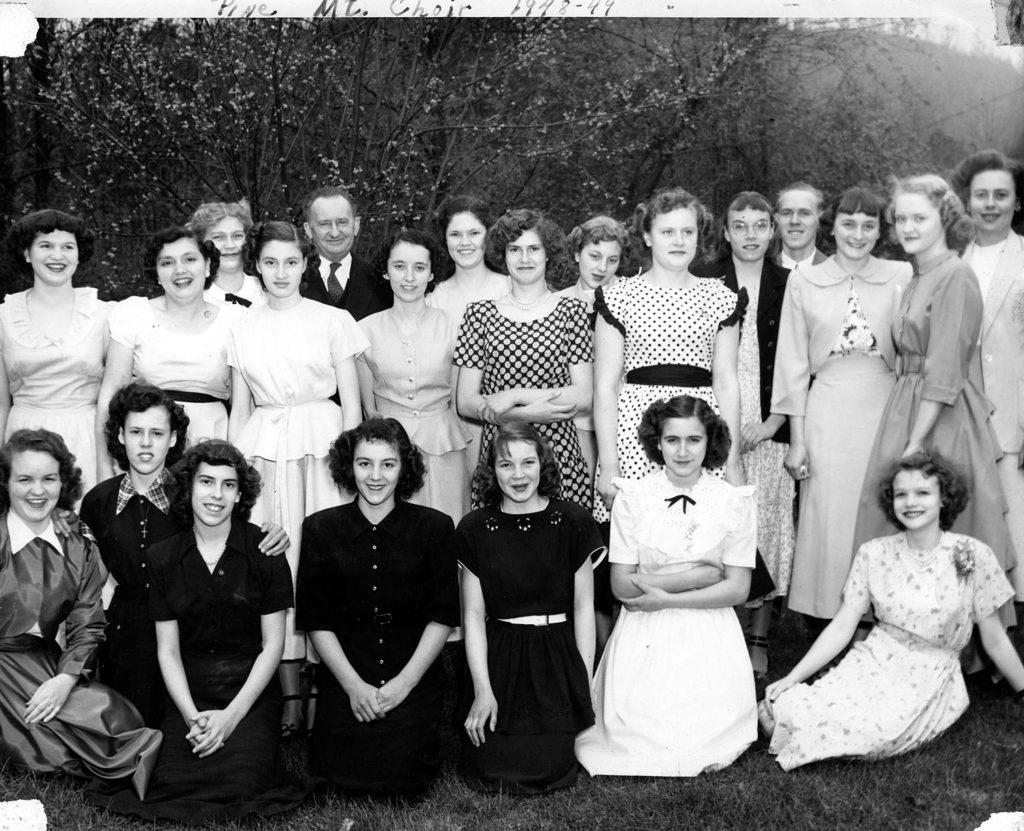
Graduating Seniors ? [Pine Mountain Choir 1948-49?] Dr. Clark Bailey, back row, 2nd from left. Bramlett Album II.
EDUCATION Harlan County Planning Council 1940
Chairman: Dr. Clark Bailey
1940 was the last year Glyn Morris, Director of Pine Mountain Settlement School participated as the Secretary of the Harlan County Planning Council. The following year he left the School to offer his service as a Chaplain in the War effort. Morris’s work with the Planning Council in the years leading up to his departure was formative. His deep commitment to youth guidance and to the strong intergration of industrial training as an important component in educational programs built a firm foundation for those schools in the region that were paying attention to the growing needs of the War.
THE PLANNING COUNCIL
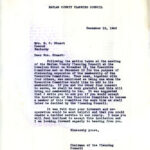
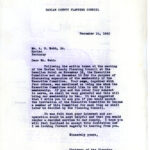
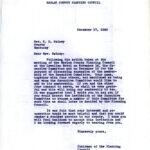
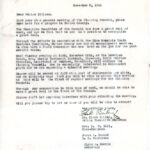
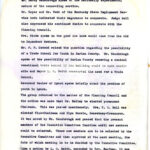
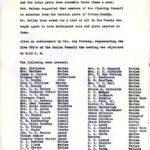
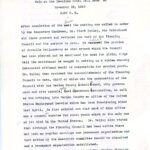
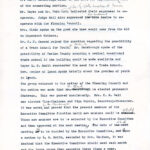
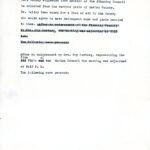
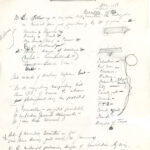
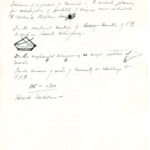
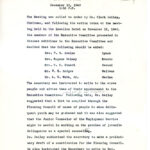
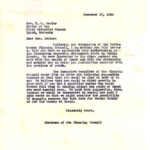
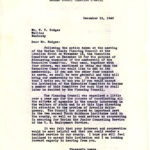
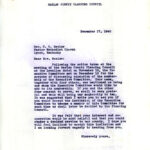
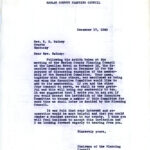
The following description of the Planning Council held at the Lewellyn Hotel on November 12 1940, in Harlan, KY. was inserted in letters to the following individuals inviting them to join the Council. These additions would bring Council’s membership to ten.
The other individuals invited included:
Mr. W.E. Hodges, Wallins
Rev. T.W. Beeler, Pastor Methodist Church, Lynch
Mrs. B.C. Stuart, Cawood,
Mr. A.S. Webb, Jr., Harlan
Rev. E.H. Rainey, Evarts
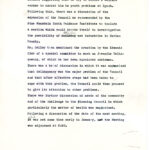
The Planning Council was organized a little over a year ago for the purpose of coordinating all the effort’s of agencies in the county interested in the welfare of youth and is at this tie directing its attention the [to] the problem of juvenile delinquency. The Council has played an important part in the two recent Youth Guidance Institutes held in the county, as well as in such matters as cooperating in securing for Harlan the Junior counseling Service of the U.S. Employment Service.
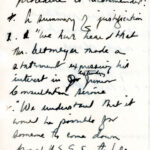
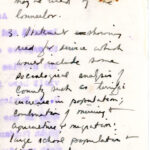
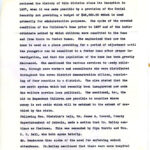
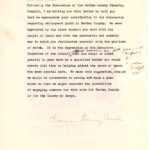
The following correspondence of the Planning Council in Harlan County in 1940 reflects some of the tension of the world at war and the looming impact of that conflict on the lives of everyone across the nation, particularly students and the mining families experiencing a surge in population and mining activity to satisfy the war effort.
The county was obviously confronting how deeply they could plan ahead in the midst of war. The local ability to “plan” would be in a war economy and the large unknowns of educational support budgets as well as teachers. A startling outcome following the war was the institution of the GI Bill which put higher education within the reach of the poorest student if they would seek it. But the challenges to Primary and Secondary education during the war were enormous and on the shoulders of the whole community and every citizen was expected to contribute. In Harlan County, the response to the war effort was enormous.
Today we have education for all. But we are still within a war-zone consciousness as education competes with the technical and digital explosions growing around us all. Further, our global reach is near and rapid. Our technical and digital explosions have been a fundamental game changer for human knowledge and one that will take different skills and very different educational preparation and support. The machinery of the education industry is slow to shift, but shift we must. If our students are to survive the digital battlefields they will need skills that have not even been identified to keep pace with the technological explosions across the world.
What will educational planning councils look like across the next ten to twenty years in the new digital world? Are there any roadmaps to be found in the following correspondence generated during another wartime? What issues will need to be addressed? What new strengths will be required? Can self-discipline as parents, teachers, and students be taught? Time management? Re-training of our teaching force? Software engineering — at what level does digital training start? New materials use and design? Cost? Who pays? Where and when does the educational skill satisfy standards? How do homes with no digital assets compete in schools today? Do we need Midnight Schools to educate parents and students toward digital and technical literacy? Who pays? How committed are we when we can’t even identify the enemy? When the digitally illiterate outnumber the literate how do we build coalitions?
So many questions. In small communities throughout the country, there are more questions than answers.
Do students have the self-discipline, and the emotional bandwidth to appropriately utilize the enormous wealth of educational information in today’s digital world? What is appropriate? Can the school’s students and parents sync with the digital world as it is now? A future digital world points many youth toward Juvenile delinquency in a variety of forms. What will be more important to fund — the impact on learning and performance within revised educational detention centers, prisons, or schools?
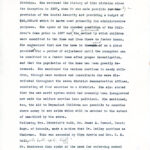
The suggestion in the 1940 Planning Council that interested Harlan County citizens was the idea that they could play a role as mentors/counselors and responsible models of citizenship for paroled youth. Could this model of citizenship be identified as a useful suggestion in this next crisis in our educational structures? The idea of citizen role models and caretakers shows up in the 1940 Harlan County Planning Council minutes. Today, can the new local industry support these contributing citizens? Contribute support to motivated and new learners and their families. How? What is the role of Federal/State funding and how can they best support community education programs? PTA doesn’t end when the children are grown?
Many folks today are asking “How do schools compete with the growing digital world and social media?” The rapid cultural change of today is in desperate need of synchronization with public instruction. The cost of public instruction continues to accelerate at millions of dollars. How can cost be spread across the fast-moving digital energy sector to connect communities directly to their new educational demands? Technology is a shared property. How can it be equitably be shared downstream to its future workforce? STEM and other innovative educational programs are being woven into many new educational programs, but is that movement lagging behind the rapid pace of technology? Is it lagging behind in rural communities more than urban ones? Who pays the bills? Government or/and industry? How much of that new world training can be delivered digitally? In the classroom? In persons? What does the new structural support look like for schools? Budgets?
1940 DR. CLARK BAILEY AND THE PLANNING COUNCIL
Dr. Clark Bailey, Chairman of the Planning Council was a member of the Board of Trustees at Pine Mountain. He was a key intermediary for students and staff at Pine Mountain with the larger Harlan County. His professional connections with medical and counseling peers were extensive. In his own professional circle, he raised the questions central to building community. His leadership was critical to the conversations that appear in these documents. The discussion regarding trade schools and traditional educational programs is a model that still rings true today and is recorded in the papers from the innovative planning group he led.
Further, in 1940 education also reached out to the social needs of disadvantaged families throughout the county, and within the current (1940) social service programs such as Aid to Dependent Mothers, that reaching out included state agencies like the Kentucky State Employment Service for cooperation and the courts for ways to redirect youth. These conversations and many more recorded here, were subjects of the Planning Council, a focus of Chairman, Dr. Bailey that came straight from his heart.
The Executive Committee of the Planning Council was innovative and the larger Council speaks to the substantial buy-in in 1940 of the Harlan County community. The buy-in was enormous, and today’s community PTA numbers are no match. The full Planning Council included representatives from five PTA groups in the county. The Executive Committee was called together for a monthly meeting and the larger body was assembled three times a year.
As the meeting recorded in these minutes, came to a close, Dr Bailey called for a list of individuals who “would agree to have delinquent boys and girls paroled to them. Over 50 individuals were present at the meeting. How many volunteered? Read on …
TRANSCRIPTION [Pending]




SEE ALSO
EDUCATION
HARLAN COUNTY PLANNING COUNCIL 1939
RURAL YOUTH GUIDANCE INSTITUTE 1940
RURAL YOUTH GUIDANCE INSTITUTE 1940 Findings
RURAL YOUTH GUIDANCE INSTITUTE 1940 Excerpts From Institute Findings
RURAL YOUTH GUIDANCE INSTITUTE 1940 Handbook
RURAL YOUTH GUIDANCE INSTITUTE 1940 Preliminary Announcements