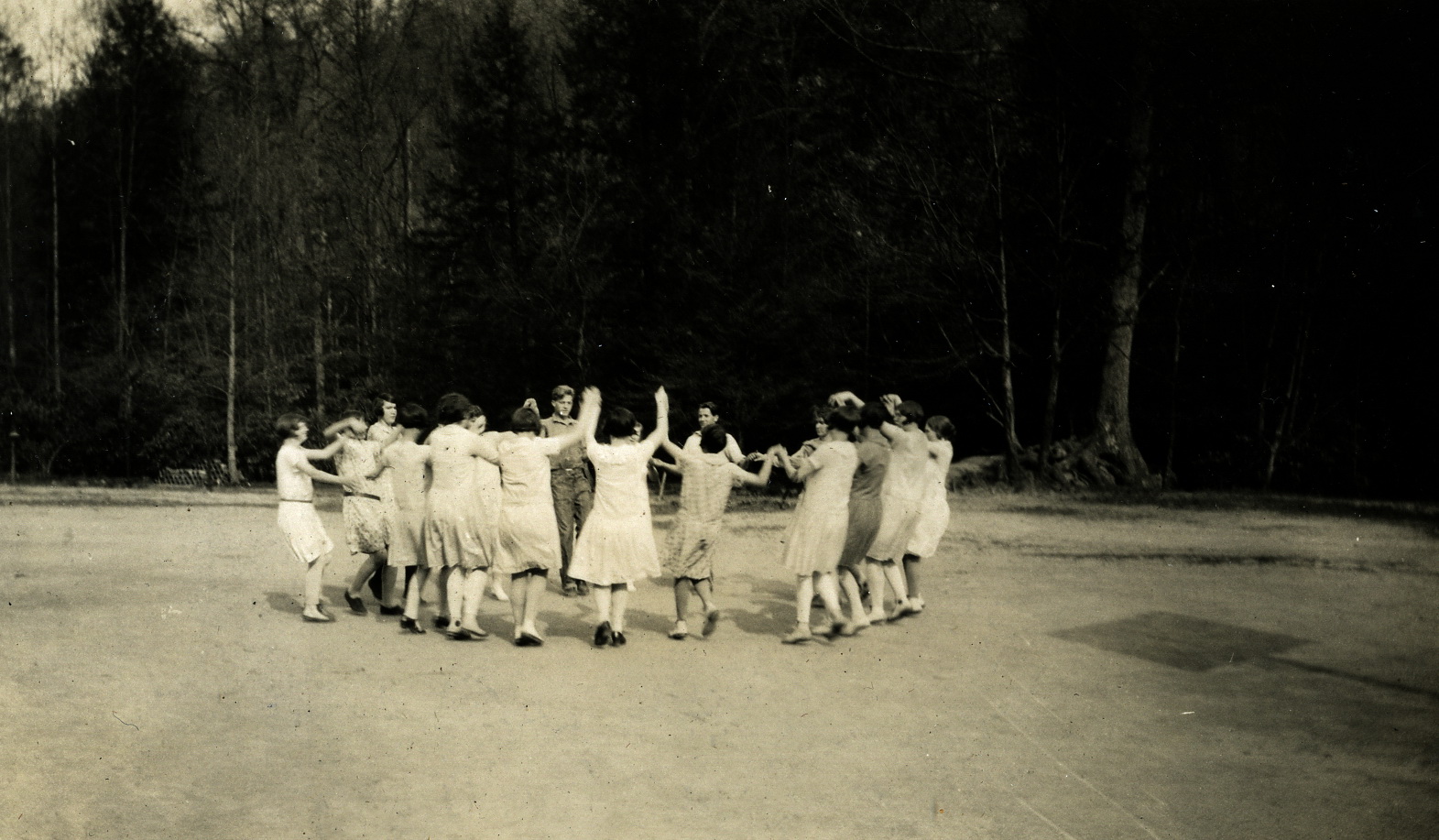
Category Archives: DANCING IN THE CABBAGE PATCH

Dancing in the Cabbage Patch is a joyful and personal description of life at Pine Mountain Settlement School, Kentucky, seen through the lens of the author and those who worked at the school or those who lived nearby.  The narratives center on the main themes of farming, foodways, families, craft, people, and celebration and explore the years 1913 to the present. Like the dances of the region, the reflections here are broken into running topical sets that often relate thematically.

Dancing in the Cabbage Patch contains photographs, manuscript material, oral histories, artifacts, and external links largely derived from the PINE MOUNTAIN SETTLEMENT SCHOOL COLLECTIONS and family records. Tangible mementos of times past supplement the personal recollections and reflections of the author. The ruminations are mine alone. This Cabbage Patch of memories is pulled largely from the early formative years of my youth (1940s) when I danced as a youngster in this enchanted Cabbage Patch of Appalachia. My memories are nuanced by the later years of association with the School through my parents and friends, and as a member of the School’s Board of Trustees. No longer in my youth, my memories are both diminished and expanded by all that life has generously taken away and added in the intervening years spent in other geographies.

The fiddle tunes of words and often the ruminating dances shared here are, thus, mine alone. Music and dance are metaphors and not intended to necessarily represent the performance of the orchestra that is Pine Mountain Settlement School and its broader community. The personal songs and dances of the author are not intended to define the many dancers, ballads, and folk tales of the School or its Community, or any larger implied culture. Pine Mountain Settlement and the community people and the region are an ever-present orchestra, and this is but one dance among many that played here.

As a story of place, Dancing in the Cabbage Patch is written with the hope that some will identify with the feeling of dancing in their cabbage patch of memory and place. I am mindful that Dancing in the Cabbage Patch is a reflection on a region consumed by regional self-reflection. Many dances and songs will continue to be created as the history of Pine Mountain Settlement and its surrounding community evolves and changes with the many rich memories, voices, and talents yet to be discovered in this ever-changing world.

Across the world, other cabbages will be grown and somewhere a child may dance among them and sing and dream of lands across the seas, and stream their story in song and dance and later in 0’s and 1’s. Some will hold their stories close, but many will want to be singers, fiddlers, dancers, and storytellers… joy-makers of history and place. Appalachia is a story of place and a place of story. It is a storied cabbage patch place of memory.

DANCING — Dairy Farm Early Years Cooperation

DANCING IN THE CABBAGE PATCH – Dairy I – Early Years V.1

THE DAIRY I – EARLY YEARS

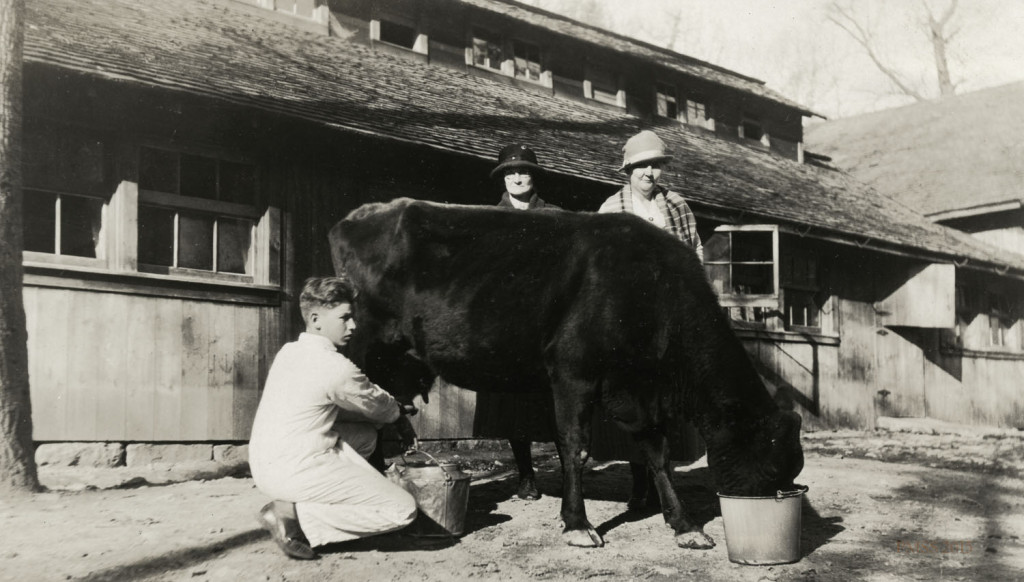
Mrs. Martha Burns, the dairy farmer, Miss Pettit (?), and a student milking one of the early cows. [norton_062.jpg]

Building out the early farm and farm tools at Pine Mountain was a cooperative process.Katherine Pettit imagined that one of the most beneficial programs at the school would be to

establish a herd of cows to supply milk, cream, and butter for the school. Board members went

to work to assist in the agricultural adventure.

With the assistance of Philip Roettinger, a Trustee from Cincinnati, who raised $500 dollars, a barn was constructed in 1915, and some so-called “mountain-scrub” cows were purchased as a starter herd.  These were largely Guernsey’s.  But, in 1916, an attempt was made to be more selective regarding the breed of cow, and four cows and a bull were purchased for the school.

The early Guernseys were not satisfactory in the damp and mountainous environment, and by 1920, the school had shifted to two Holsteins and a bull.  This breed also proved to not be satisfactory, and Pettit then consulted with the Kentucky Experimental Station at Quicksand and with the Harlan County Extension agent,  Mr. Robert Harrison, for a third breed.  Harrison and Pettit both believed the Ayrshire breed might be the best suited to the mountainous area and to the school’s needs, and a search was begun.   While the school sorted out the cow problems, they maintained an earlier mixed herd of Jerseys, Holsteins, and Ayrshires.

Miss Elizabeth Hench, also a Board member,  was the leader in the campaign for the development of the Ayrshire herd, and her correspondence and fund-raising efforts comprise some of the most amusing and creative fund-raising campaigns the school ever mounted.


This entry was posted in GUEST POSTS and tagged , , , , , , , , , , , on . Edit needed

Some of the Hench correspondence and her witty story of Ayrshires at Pine Mountain follow:

AYRSHIRES – THE JOYFUL HERD

The Joy Stock Company, Limited, came to Pine Mountain in 1921 with two heifers, Joy and Delight.  The third heifer, Joyce, arrived in August 1927.  While the backside of this cow may not look so joyful, the arrival of Joyce on August 9, 1927, was both a joyous and a be-deviling occasion.  The bovines did not come in mass, but in increments as they could be afforded.  The Joy Stock Company and Ruth Hench, secretary of the Board of Trustees, were the force behind the practice of dairying at the School. For years Miss Hench maintained a lively correspon- dence with donors to grow the herd and to keep the herd fed.

The arrival of the third Ayrshire, Cavalier’s Ruth III, familiarly known as “Joyce”,  is described by Miss Hench and by  the Assistatant Direcctor, Mrs.Zande in a series of delightful exchanges.

“JOYCE, THE NEW AYRSHIRE HEIFER, arrived at Pine Mountain on the afternoon of August 9.  She was purchased at the Spring City Stock farm of Waukesha, Wisconsin. She is a registered heifer due to calf about October 10. The sire of this heifer is among the best of the breed, and her dam produced 12,007

pounds of milk in 300 days, milking as high as 82 pounds per day. Her registered name is, Cavalier’s Ruth III, but her nickname at Pine Mountain is’ Joyce’.”

Mrs. Zande responded to Miss Hench’s new purchase:

“Your letter reminds me of a phrase Dr. Osler used over and over in his life —— ‘The angel troubling the pool”. 

Miss Hench continued,

“Joyce has temperment and horns. She didn’t enjoy her train trip from Wisconsin (and she came EXPRESS),  “refused to be led over the mountain peacefully from Putney, six men could do nothing with her, and she was finally crated up again and brought over in the log train. Brit Wilder, Uncle William’s grandson, and Mr. Browning, the farmer, were both in attendance. A large reception committee awaited her Tuesday but like all famous people she disappointed us and arrived later than she was scheduled.”

Miss Hench replied to Mrs. Zande’s concerns that not enough study had been given to the raising of cows:

DEAR MILK-GIVERS …

” So, one week-end at Berea, I borrowed four text books from the professor of cowology and immersed myself in the subject. I learned that the Ayrshire cow hails from Bobbie Burns’ shire, which lies two thousand feet above sea—level where the winters are cold. In 1800 the farmers began to improve their wild stock by cross—breeding. Now, whether for hillside climbing or nibbling short grass, the Ayrshire leads all breeds of dairy cows. They are largely white, brindled with color from deep red, seal brown, to a clear cherry red. Like the Scotch owners they are sometimes headstrong, forceful, and willing to assert themselves. But they have long graceful horns and they are stylish in appearance. The milk is not as abundant as that of the Holstein, nor as rich in butterfat as that of the Jersey arid Guernsey, but they are suited to conditions at Pine Mountain. So, if I have troubled the pool, I hope I have quieted the wavelets.”

Miss Pettit responded in her typical diplomatic style:

“We are so grateful to the Joy Stock Company….   I have always wanted you to know how thankful I am for the intelligent interest of all of you in this most important department…When Mrs. Burns, the dairy woman, returns, she will win Joyce’s heart by her gentleness, kindness, and care.”

The Ayrshires stayed and multiplied.

Miss Hench reports in 1929:

“Dear Milk-Givers:

     54 thrills were what I had in 1928 from the gifts to the Joy Stock Company, Limited.

1928  .   .  .   ….    $320.10

Grand total  ….   $2474.00

     Joyce had 1098 meals, three extra ones on February 29. She, being a cow, ruminated but did not thrill.  

     There are no marathons in our barn yard. So this is a fitting time to reproduce a letter used 6 years ago, a letter often asked for. It is a bona fida production of a Kentucky mountaineer:

‘Dear sir

I got your letter asken for a list of my assets and liabilities now i told you wen i sent in that order that i was keeping a restarent and not a general store and i dont keep such things as assets and liabilities on hand and besides if i did it aint none of your dam bisiness how much monie have i got no how.  They was a feller noseing around here yesterday wot said as how his name was r g dun & companie and he asked me how much money did i have and i kicked him clear into the middle of next Sunday.  i tell you i wont have no meddlin in my business i am as good as any man and a dam site bettern som if you dont want to sell me them goods wy go to hell. please answer by next mail.

Your fren,  jake’

Miss Hench writes:

“My books are open to your inspection. Joyce’s board is paid knee-deep in June. Her new calf is named Rejoice.  As our cow is doing her best, I know we shall match her endeavor.

     From one who is no coward,

     Elizabeth” 

The herd continued to grow and  when Joyce’s third calf was born it was named ‘Overjoy’ to which Hench replied, “When that series of names is exhausted, what next?”  

Even during the Great Depression of the 30s the supporters of the Joy Stock Co.  were generous.  Miss Hench’s appeal to donors while clever and light, was not without reflectiion on the serious economic conditions in the country.

From Miss Hench to her donors:

Financial Center January, 1931

Dear Heirs and Assigns of the Original Cow Company:

     44 stockholders during 1930 A.D. (Acute Depression) contributed $275.00 to the support of Joyce at the Pine Mountain Settlement School. That brings the grand total since 1920 up to $3027. I thank you all, the —whole company of 124 strong.

     … Some of you have received notice that your contributions would be applied to a new Milk Boom at the Barn,  I have $189.05 for that fund. When winter comes and the boys cannot work out of doors, then, under the direction of the Woodworking teacher (a former Pine Mountain boy) and the new Danish farmer, we shall enlarge one room of the Barn, install a stove, a hot water tank, and a sink in which to scald the buckets and pans.  We shall have also a cooling machine to make our milk bacteria free by dropping it to 34 degrees within an hour after milking it.

     A happy New Year to all of you and the wish that 1931 may mean the return of the good old times.

Elizabeth

The times did not change and as the Depression deepened. Miss Hench ruminates:

January, 1932

Dear Partner in our kine undertakings:

 During the year 1931 people became acquainted with a new phrase – new low level. But this was not true of the Joy Stock Company, Limited. We received $200, better by several dollars than our early holdings.

 Since we are in the cow business, we must look to cows for our theme. It is quiet contentment.  In the past, our ancestors, always cow owners, evolved two proverbs:

(l) Contented is the heart that thinks like a cow.
(2) It is a bawling cow that misses its calf the least.”   

In a recent novel by a popular Scotch author there is this significant passage:

“No, I am not a pessimist. But I haven’t been through bad enough times to justify me in being an optimist. . . To declare oneself an optimist, without having been down into the pit and out on the other side, looks rather like bragging.”

 So it becomes us to be quiet, even if we cannot be contented.

 I saw our cows in October when I went to the Pine Mountain Settlement School for the biennial meeting of the Board of Trustees. You will be sorry to learn that we have heard the last bellow of Joyce. I gave a check to cover her board through December 31, 1931. After that we shall forget her and feed our new cow,      REJOICE, whom we bought October 26th for $150, plus hauling $25. =$175. She is a fine big Ayrshire and I am certain you would love her too. It is now up to you and to me to see that she has daily food. As all four of her stomachs are larger than those of Joy, Delight, and Joyce, she will therefore require more food and hay.

Your friend who usually has a cow in tow,

Elizabeth

Another addition to the farm came in 1928 when the school was able to purchase a second-hand truck.  With funding secured by Darwin D. Martin,  Chairman of the Board of Trustees in 1928 the school was now able to be more efficient with many tasks.  Ethel de Long Zande wrote to Martin to thank him for the gift.

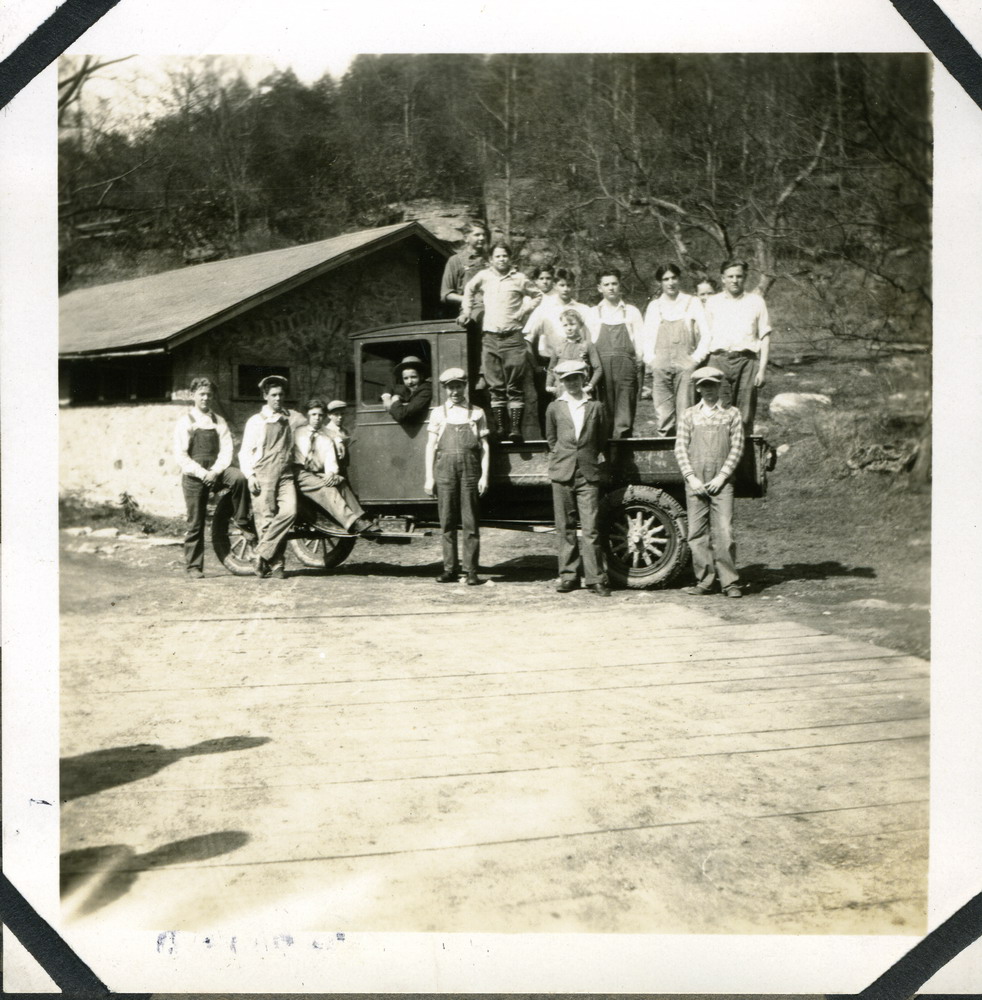
PMSS staff and Ford truck donated by Darwin D. Martin at Tool House. Bassett Album, c. 1928-29. [pmss_bas080.jpg]

[IMAGE:  Copy of letter]  Left: Letter from Ethel de Long Zande to Darwin D. Martin, (March 6, 1928) thanking him for his help in securing a much needed truck for the farm.]Darwin D. Martin was a Vice President of Larkin & Co., a catalog order company centered in Buffalo, New York.  Martin served on the Pine Mountain Board of Trustees through most of the late 1920s  and was an active supporter of the School and its programs, contributing consultation and many items of critical importance for operation.

Martin was one of the wealthiest executives in the country in the 1920s and the primary benefactor of the architect Frank Lloyd Wright.  Personally responsible for the financial support of nearly 15 of Wright’s building projects, mainly Tailesian, he had Wright design his own Martin family complex in Buffalo in 1902-1909. A difficult childhood prompted him to gather his family around him in a series of homes.  The complex is one of the most outstanding examples of Frank Lloyd Wright’s “Prairie Style” architecture.

While there is no evidence that Darwin D. Martin had a direct hand in the architectural planning of Pine Mountain, his connections were available to Mary Rockwell Hook, Pine Mountain’s architect.  As his health deteriorated in the mid 1930s, Martin resigned from the Pine Mountain Board but stayed in touch.  He died in 1935 following the loss of his Larkin fortune in the Financial Crash of 1932.

March 6, 1926

[Ethel de Long Zande writes to Miss Lavender, a former worker, living in Pasadena, California, and provides further details on the truck.]

“We have a Ford truck! It has been about the only topic of conversation since its arrival last Thursday, and mouths still drop open when it heaves in sight. And Luigi comes home every noon and tells me how much more it has gotten done in the morning, with the pride of a parent whose child has just proven to be a brilliant success. He says it has already paid for itself.  We got it through Harlan, a second-hand one. The new models were heavier than we wanted. This one had been

in use only six months and seemed to be exactly what we wanted. It was  $65O.OO when new, and we paid for it with extra repair parts and tires,  $357.OO. We think it may be well to spend another hundred on it sometime soon and install double gears for our hills. The price for the time of the mechanic who came with it to show Luigi how to take care of it, we have not yet received. , ,”

As indicated in the letter, this truck was a critical piece of equipment for the school, allowing the farm to operate without mules and horses for many operations.  Further, it allowed for the transport of materials across the new Laden Trail road from the nearby town of Harlan.

[IMAGE:  Truck and workers in front of the Tool Shed, c. 1926]

[IMAGE: Ethel de Long Zande and her companion dog.]

Ethel de Long Zande only lived two years beyond 1926.  By April of 1928 she was dead after a courageous battle with breast cancer.  True to her character, she worked until the last weeks of her illness.

In the obituary notice prepared by Evelyn Wells  that appeared in the New York Times, April 5, 1928, the following is excerpted:

“…On the day of Mrs. Zande’s funeral daffodils she had planted were in bloom in the Pine Mountain valley, but snow on the heights did not keep her friends, old and young, some with babes in arms, from crossing steep trails to honor her.  …. She was laid to rest on a little rise of ground where the view encompasses the valley she loved.

In this day, when so many of those who have had large opportunities are increasingly crowding into the great urban centers to use their gifts, it is well that we pause and pay tribute to this woman of rare talents, who rejoiced in devoting them to an under-privileged people in a remote mountain section.”

The following tribute from Philippians 4:8, is on an engraved plaque in the Pine Mountain chapel.

“… whatever things are true, 
whatever things are honest, 
whatever things are just, 
whatever things are pure, 
whatever things are lovely, 
whatever things are of good report; 
if there be any virtue, and if there be any praise, 
think on these things.”

Following the death of Ethel de Long, Miss Angela Melville was appointed interim Co-Director with Katherine Pettit. Meville served from 1928 to 1930.  Like her predecessors, she was a strong supporter of the dairy farm, but unlike Katherine Pettit, she rarely engaged the day-to-day. Her expertise resided not in her humor or her hands-on, but in her understanding of farming and economics.

On July 20, 1928, a printed notice from the Pine Mountain Settlement School announced that the School’s board of trustees had, on April 29 of that year,

” … invited Miss Angela Melville to become associate director of Pine Mountain Settlement School, beginning August 1, assuming sole charge of the academic department and of the office and fiscal promotion of the school, all of which had the devoted care of the late Mrs. Ethel deLong Zande.”

Miss Melville was equal in authority with the Director, Katherine Pettit when Pettit was not on campus, but with the specific areas of responsibility were not listed in the announcement.

Miss Melville had come from the Cooperative Bureau for Women Teachers in New York, where she had been director for the previous three years. Before that, she worked for two years with the National Credit Union Extension Bureau, organizing both industrial and rural credit unions in many U.S. states.

She had also worked a short time with the Brasstown Savings and Loan Association in North Carolina, and came highly recommended by former PMSS worker, Marguerite Butler.

Butler wrote of her in her article “The Brasstown Savings and Loan Association” in the July 1926 issue of Mountain Life & Work (vol. 2, no. 2, page 42).

Melville believed in the economy of a credit union, and having lived as a member of our community for several months, she believed in the success of one here. Not only were every one of us filled with her enthusiasm and interest, but also made to realize the duties, responsibilities and details of work involved in such an association.

Before Miss Melville’s appointment as Associate Director of PMSS, she had an earlier connection with the School. From 1916 to 1920, she organized the office and as a speaker raised funds for the School’s endowment which supported the School programs, including the farm and the Line Fork Settlement and Big Laurel Medical Settlement.

According to Darwin D. Martin, President of the Board, in the same announcement:

“Her admiration for Uncle William Creech, the founder of the school, her intimacy with its ideals, her acquaintance with you, our friends outside the mountains, and her knowledge and love of the mountains themselves, have all helped to fit her for her work here and make her the unanimous choice of the Board of Trustees.”


See
ANGELA MELVILLE 
DARWIN D. MARTIN
PHILIP ROETTINGER

DANCING IN THE CABBAGE PATCH Weaving at PMSS 1930s-1940s

Pine Mountain Settlement School
DANCING IN THE CABBAGE PATCH
Weaving at PMSS 1930s-1940s
Series: BY TOPIC – Arts & Crafts
Weaving

DANCING IN THE CABBAGE PATCH Weaving at PMSS 1930s-1940s

MARGARET MOTTER AND THE COLONIAL COVERLET GUILD

Margaret Motter was a worker at Pine Mountain Settlement School in the 1920s and 30s and again in the 1940s. She served as Principal and teacher from 1928 until 1938, and as the Publicity Representative and Head of the English Department from 1946 until 1949.  She was a prolific writer and a clever and persuasive speaker.  Associated with those skills, was her importance to the School as a fund-raiser.  Many times she was asked to represent the Pine Mountain Settlement and to travel to distant cities to speak to special audiences that might find the programs at Pine Mountain worthy of support. Many times she managed to bring her favorite subject into the talk. In one instance she found the perfect audience for her interests and for those of Pine Mountain the Colonial Coverlet Guild of Chicago, Illinois.

Weaving had long been one of Miss Motter’s favorite crafts and she found many ways to integrate comments on the weaving program at Pine Mountain into her public speaking tours.  When she shared her interests with the Colonial Coverlet Guild* in  Chicago, Illinois, where she spoke on November 10, 1948, it was clear that her enthusiasm captured her audience. Miss Motter enjoyed this talk and so did her audience.

To accompany the talk to some 80 members of the Guild, she brought along many of the coverlets and weaving samples from Pine Mountain.  She described the origins of the patterns, dyes, and some of the stories that came along with the individual pieces. She was able to build a picture of the community of mountain weavers. She described how for many years weaving was a household necessity for mountain families and how that skill had been adopted by the School as part of the curriculum to ensure the continuation of the craft.  For many children in the community, weaving was even a new art as commercial fabrics began to dominate wardrobes by the turn of the century.

Motter emphasized how the art stayed with a number of the graduates from Pine Mountain and in some homes in the Pine Mountain valley, families established their own looms and weaving as a cottage industry to provide additional income for the family. Pine Mountain’s efforts to encourage weaving were shared by the organized cottage industry known as the Fireside Industries which broadly supported craft in the Appalachian mountains.

When Margaret Motter addressed the Colonial Coverlet Guild* she wrote out her talk in her unique abbreviated form and years later left Pine Mountain a copy of this talk and others, as well. Her talk is transcribed below.  Many of the abbreviations have been expanded in this version and individuals are identified, where known.  The talk is a window into weaving activity at the School and the role Miss Motter and others had in encouraging the continuation of this mountain traditional craft by integrating the craft into the Pine Mountain educational programs and offering it as a part of their Industrial Training program.  Further, the focus on weaving was melded to the social outreach of the School and was used to engage the broader community and to stimulate the potential for economic independence for many women in the community. In many ways weaving and the values of the settlement movement were well paired.


TRANSCRIPTION OF MOTTER TALK

MESSAGE TO COLONIAL COVERLET GUILD
November 10th 1948
By Margaret Motter

Many of you are familiar I am sure with the institution and the dramatic beginnings of Pine Mountain Settlement School, but any sort of message about our school is incomplete without mentioning the name of William Creech, affectionately  known as “Uncle William.” Here was a man with a 3rd-grade education but with great vision who dreamed for 30 years of a school that would “holp” his people.

When he gave his land (all he had) [not quite!] he wrote some men in his un-lettered hand which we treasure. I want to give you the closing paragraph to remind you of the ever-recurring challenge from Uncle William to carry on —

“I don’t look for wealth for them ….

So through the years Pine Mountain has been serving an isolated rural community as an extension, housing a secondary and a vocational high school and as a center of culture, and social and economic welfare.

Uncle William believed it was “better for folkes children to learn how to work with their hands…”  In following this advice of Uncle William Pine Mountain has had from the beginning what we call a work program. Pupils pay $10.00 – $15.00 per month if they can afford it and work 2 1/2 hrs. per day and longer on Saturday.  This work program serves a dual purpose.  Children are made to feel the value of the education that they are earning thru work.  [It] keeps [their] self-respect, values and dignity of work itself and besides, through the work program the school is kept going. The children learn over a period of years and do all kinds of work connected with homemaking, farming, and some trades or vocations.  All work is done under supervision and changed every 9 weeks.  Children have on [the] whole a fine attitude ….

“One thing I don’t like is learnin’ but I like what hit makes you be…….”   [Comment by Brit Wilder one of the youngest students and the first to come to the school]

Now, a very popular part of our work program as well as an elective study during school hours is our weaving. I want to give you a few details about this department since you have been good enough to share in making this department function.

Our weaving room has recently been enlarged and we have space for more looms and better looms.  We have by no means enough to meet the demand.  We have 9 looms and one small one owned by the teacher.  6 of these were made at Berea, one at Pine Mountain after the Berea Style — 5 of the looms are 40″ and 4 are 22″-24″.  Since 6 of the looms were at Pine Mountain before 1924, I guess it is not an understatement [page 3] to say they have not the latest improvements!

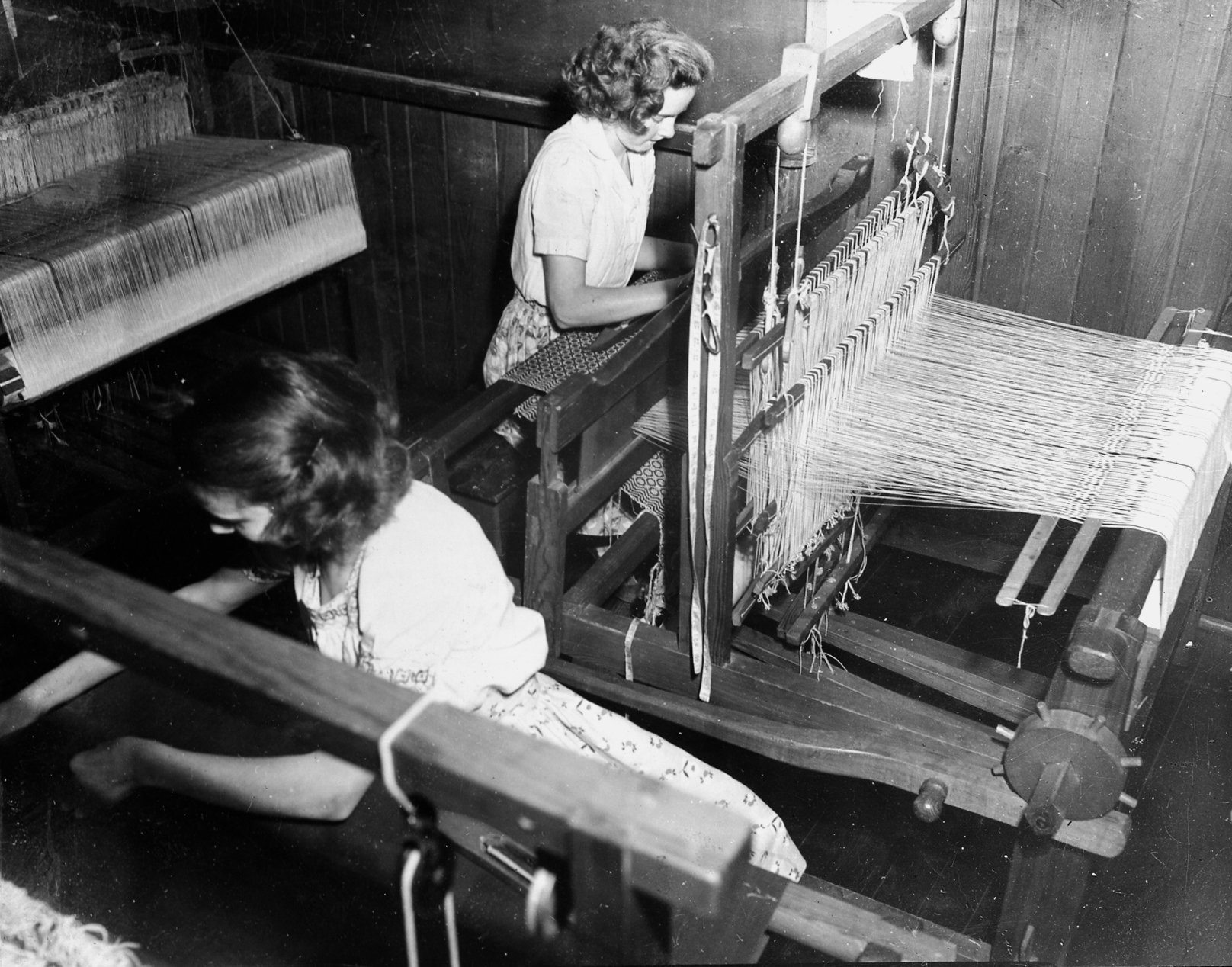
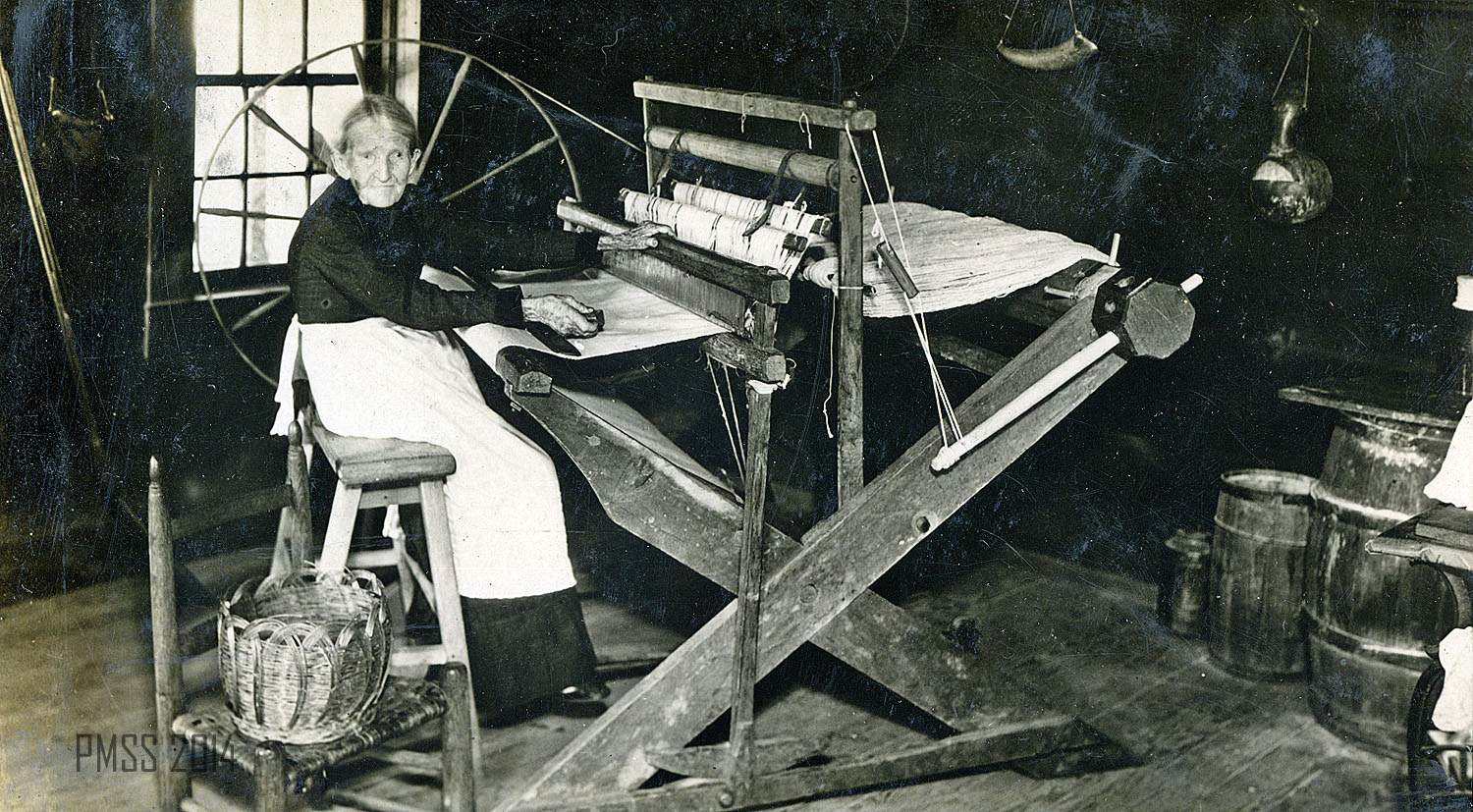
Weaving Room: Bess Taylor, Reba Blevins nace_1_061a.jpg

Weaving Room: Bess Taylor, Reba Blevins c. late 1940s. nace_1_061a.jpg

Our teacher informed me that a Swedish weaver told her we are doing very well indeed with the equipment we have.  So you can see as time goes on we shall need to replace these older looms with better ones and to purchase a pair of badly-needed scales [?] for the weaving room.

I have brought you some samples of weaving done by our girls. We use rags from feed-sacks which are dyed at the school and woven into rugs.  Old rayon stock and any kind of woven underwear can be transformed in the weaving room into lovely bags.  We have a neighbor who does some spinning for us and [the] other yarns we buy.

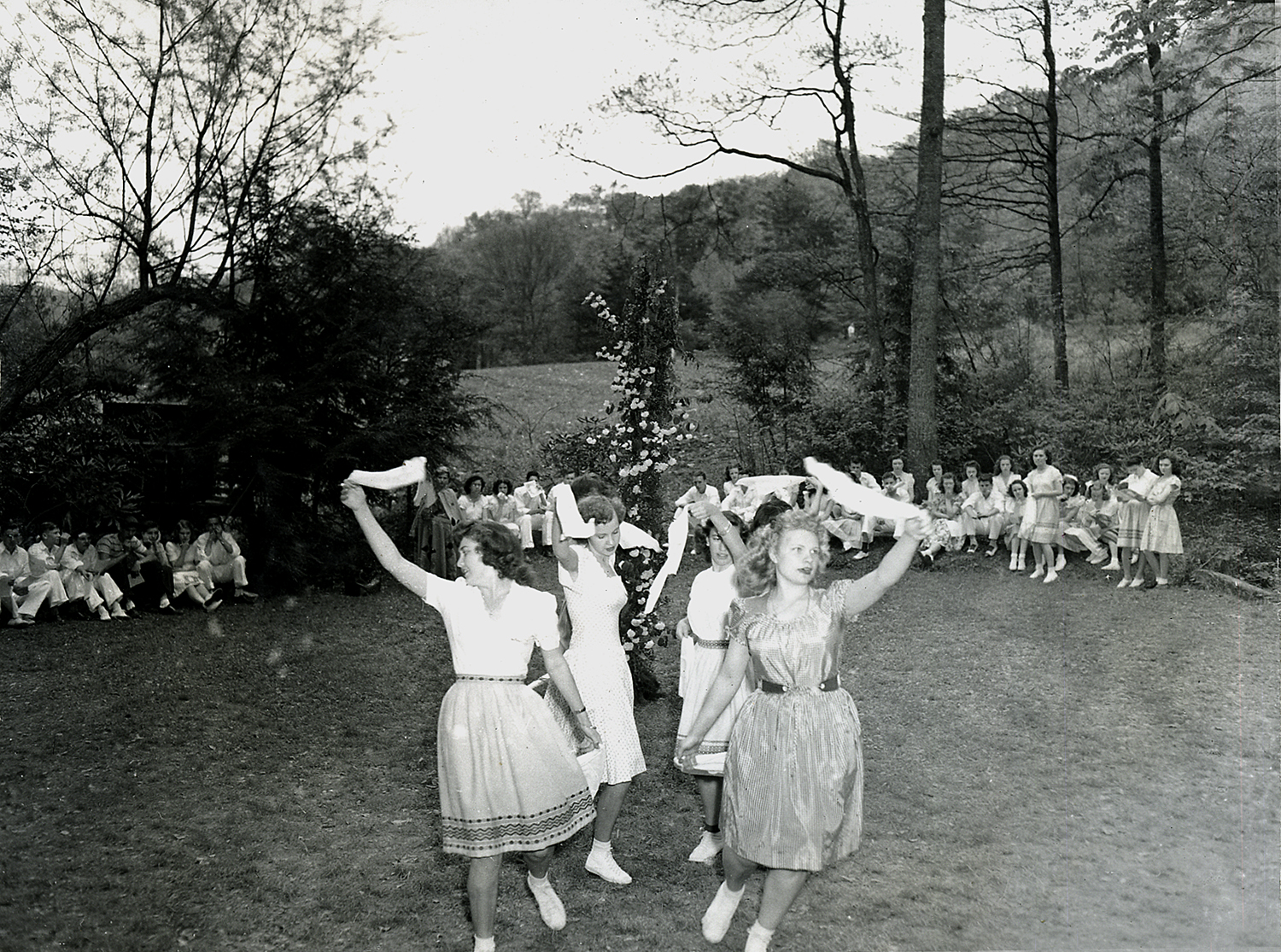
I mentioned that our weaving is very popular.  Some girls who learned to weave have been able to get a loom at home and have continued in their work.  Two of the senior girls have been especially interested “in weaving and confided in the teacher that they hope they’ll get a loom as a graduation gift from their home folks.  The girls love to weave a skirt to wear on May Day and have a chance to participate in the colorful “Weaver’s Dance”.

Weaving class in hand-woven skirts. Pearl Taylor, Ernestine Vitatoe, Bess Taylor, Jolene Lucas, Gladys Carroll, Reba Blevins, Margaret Slusher, Betty Huff -- 1946. nace_1_022b.jpg

Weaving class in hand-woven skirts. Pearl Taylor, Ernestine Vitatoe, Bess Taylor, Jolene Lucas, Gladys Carroll, Reba Blevins, Margaret Slusher, Betty Huff — 1946. nace_1_022b.jpg

"Glorishears" Morris Dance -- 1946. Shirley Holbrook and Delores Scott in lead. nace_1_021a.jpg

“Glorishears” Morris Dance — 1946. Shirley Holbrook and Delores Scott in lead.  nace_1_021a.jpg

Weaving does go on in some of the homes (as I mentioned), i.e., sample curtain [cur. ?] material [mat.?] woven by one of our neighbors. [The] Swedish pattern sells for $1.95 a yard.  I am reminded at this point of the way I happened to get one of my coverlets when I was at Pine Mountain in the fall of 1928.  In the office welcoming children as they arrived — In came last years student with a younger sister by hand and [a] coverlet over [the] other arm.  “I brung —–[?] “

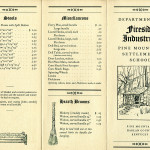
fireside_indust_pg_001a_mod

Della Hayes weaving at Pine Mountain. Probably in Old Log, c. 1940s.

That coverlet was definitely a home product, brown from walnut hulls and dusty rose from madder.  Just as lovely today as when I bought it and I love to think that little Della [Hayes] — now a successful nurse — had her start at Pine Mountain because her sister had learned to weave at our school and had a loom at home.

P1050096Walnut and madder dye weaving

[page 5] I am sure you are familiar with Dr. Allen Eaton’s book, Handmade in the Southern Mountains. [this should read, Allen H. Eaton. Handicrafts of the Southern Highlands], One of the colored illustrations shows a striped blanket that we call Pine Mountain Blanket #16. I have one of these made by a mountain woman who was taught to weave by our teacher — wool from her own sheep and vegetable dye used. This is the type of blanket we always use for our prophets in the Nativity Play.  You can see that the weaving even goes into something special like that.  *[Note: This same Pine Mountain Blanket #16 was used as a cover for the plaque which was un-veiled at the Pine Mountain Settlement School Centennial celebration in August 2013.]

P1050415

I say something special, Christmas at Pine Mountain is an occasion that one never forgets.  With our sacrificial meals for our Charity Fund now we’ll have something to share with others; with our appealing drama of lovely carols in [Laurel House] dining room while decorated with garlands, wreaths, and tree; with our gay Mummer’s Play ; with our charming Nativity Play in the Chapel, it is an occasion for happy activity — [a] genuine pleasure.  It has its effect upon children “Love and joy …” —“Hit’s peacefulest –” [Motter probably describes the change from the earlier celebrations of Christmas that were known for their liquor and guns.]

Boy's House Wassailers and Lords and Ladies -- 1946. [Good King Wenselaus ?] [In Laurel House] nace_1_025b.jpg

Boy’s House Wassailers and Lords and Ladies — 1946. [Good King Wenselaus ?] [In Laurel House] nace_1_025b.jpg

Your share in our work is indeed heartwarming to the staff and the trustees.  May we ask for your continued interest so that we may not fail to make Uncle William’s dream come true  — I don’t want hit to be for this local. only —-”  ——

*Swygert, Mrs. Luther M.  Heirlooms from Old Looms A Catalogue of Coverlets Owned By the Colonial Coverlet Guild of America and Its Members – R.R. Donnelley and Sons : 1940 (1955).


FIRESIDE INDUSTRIES

Through Pine Mountain’s efforts and the support of the broad-ranging Fireside Industries, a strong program of support for the Appalachian craft of weaving was developed and the practice was strongly revitalized in the 1930s and 40s. In many environments, during the 1930s and 1940s the idea of a “cottage industry” which is characterized by contracted work completed at home and then marketed through a central agency, was a developed and viable economic venture.  In the case of Pine Mountain, the idea was not new and was not exploited by the school so much for commercial reasons, but was incorporated into the educational program and into their primary goal of building “community.”

The idea of weaving at home was not unique to families in the Pine Mountain community but with Pine Mountain’s encouragement, it began to follow the model put forward by the Fireside Industries which flourished at centers such as Berea College, long a source of inspiration and support for the School’s weaving enterprises.

Pine Mountain’s interest was also shared by many other rural settlement schools in the region, particularly in the early settlements institutions in Western North Carolina.  What was unique at Pine Mountain was the early adoption of weaving and the measure of enthusiasm in the community for such work and the persistence of weaving as part of the educational program at the school.

Weaving has been an activity that has found a place at the School for over 100 years and more of its history. Through the enthusiasm of Katherine Pettit and her “kivers” and those like Margaret Motter, who followed her,  Pine Mountain has maintained it’s interest this this unique craft and in the long family traditions attached to weaving in the Central and Southern Appalachians. This long mountain family history led to the introduction of weaving and dying in the first decade of the school and maintained it through the years.

Katherine Pettit’s Dye Book written by Helen Wilmer Stone, a staff member at Pine Mountain, is a classic in the genre of vegetable dying of fiber. Under Katherine Pettit, Helen Wilmer Stone, Margaret Motter, Florence Daniels, Abbie Winch Christensen, Becky May Huff, and others, weaving and spinning, and the use of native plants for dyes later found a place in the curriculum of the Pine Mountain and other schools as a vocational tract.  When a more normalized curriculum was mandated by public instructions guidelines, weaving still remained as an elective at many of these schools, and often as an after-school program. Yet, in most schools and homes, weaving had gone away by the late 1940s.  Few instructors could be found to maintain the craft in schools other than arts and crafts schools and the maintenance f the equipment was high.

Unlike many regions of the Central and Southern Appalachians in the 1940s,  the Pine Mountain Valley had not fully abandoned weaving in some households.  In many homes in the mountains, and in the Pine Mountain region particularly, many families still maintained their old looms and many of the unique patterns continued their persistence through many generations of family weavers.  Some of the old patterns can still be found in mountain homes scratched out on rolled strips of cloth or on long scrolls of paper.  Like some ancient runes, these patterns are family treasures.

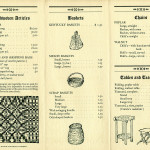
https://pinemountainsettlement.net/wp-content/uploads/2014/08/fireside_indust_pg_002a_mod.jpg

https://pinemountainsettlement.net/wp-content/uploads/2014/08/fireside_indust_pg_002a_mod.jpg

What Pine Mountain brought to the Fireside Industries or the “cottage industry” model, was a renewal or revival of the long-standing culture of eager mountain weavers.  Margaret Motter moved this enthusiasm along by carrying examples of weaving with her on almost every talk she gave outside the School.  Through Katherine Pettit’s early enthusiasm for collecting mountain “kivers” the attention to the beauty and skill of mountain weaving moved among the staff of the School like an aesthetic mantra.  Workers discovered in weaving sophisticated and beautiful local craftsmanship that utilized skill, intelligence, and tenacity — qualities that the community weavers had in abundance.  The education that occurred between the workers and the community was mutual — and it continues to be mutual today, even as the “community” of Pine Mountain has continued to expand outward to meet the demands of the industrial world and a more diverse public.


WEAVING IN 1949

A short piece written by Freshman student Mattie Mae Adams in the February 1949 PINE CONE, the student newsletter, describes a weaving experience at the School.  1949 was the last year the boarding school was in operation.

WEAVING

On my entrance to Pine Mountain I had a choice between science and weaving. I took weaving.  At first I was afraid to weave. I was afraid I would make a mistake. It seemed hard for me to remember all of the names of the parts of the loom, and it was still harder to wind a bobbin. But it didn’t take me long as I have Miss Christensen for a teacher.

She started me off on a rug that she had already started herself. Afterward, I thought I wanted to make one for myself. Now we have started on our May Day skirts, which are very difficult, because I get my threads crossed and have to take them out. Then I have to re-wind a bobbin. The next thing I know I’m using the wrong treadles or mending a broken heddle.  Broken threads are another difficulty.  I have just mended a broken thread when I discover a mistake which has to be taken out. Then I usually take out two to that four.

Now all of these things don’t happen every day; but when one happens it seems as if they all happen at once. Even in spite of these hard tasks, I am glad I made the choice of weaving. 

Mattie Mae Adams, Freshman


P1050033

Ccropped image of weaving held in the Katherine Pettit Collection in the Bodley-Bullock House, Bodley-Bullock House. Sorority House for Transylvania College. 200 Market St, Lexington, KY 40507.

SEE ALSO:

KATHERINE PETTIT – WEAVING

BECKY MAY HUFF

FLORENCE DANIELS

ABBIE WINCH CHRSTENSEN

HELEN WILMER STONE

KATHERINE PETTIT DYE BOOK

WEAVING at PMSS BEGINNINGS

WEAVING DRAPER LOOM STUDIO

WEAVING AT PMSS SAMPLES I

WEAVING AT PMSS SAMPLES II


DANCING IN THE CABBAGE PATCH Dulcimers at Pine Mountain

Pine Mountain Settlement School
Series 30: Music
Series 32: Object Collections
DANCING IN THE CABBAGE PATCH

DANCING IN THE CABBAGE PATCH Dulcimers at Pine Mountain 

TAGS: dulcimers; mountain dulcimer; musical instruments; Ethel de Long Zande; music; ballads; songs; Appalachian musical instruments; Appalachian music; Evelyn K. Wells; plucked dulcimer; bowed dulcimer ;

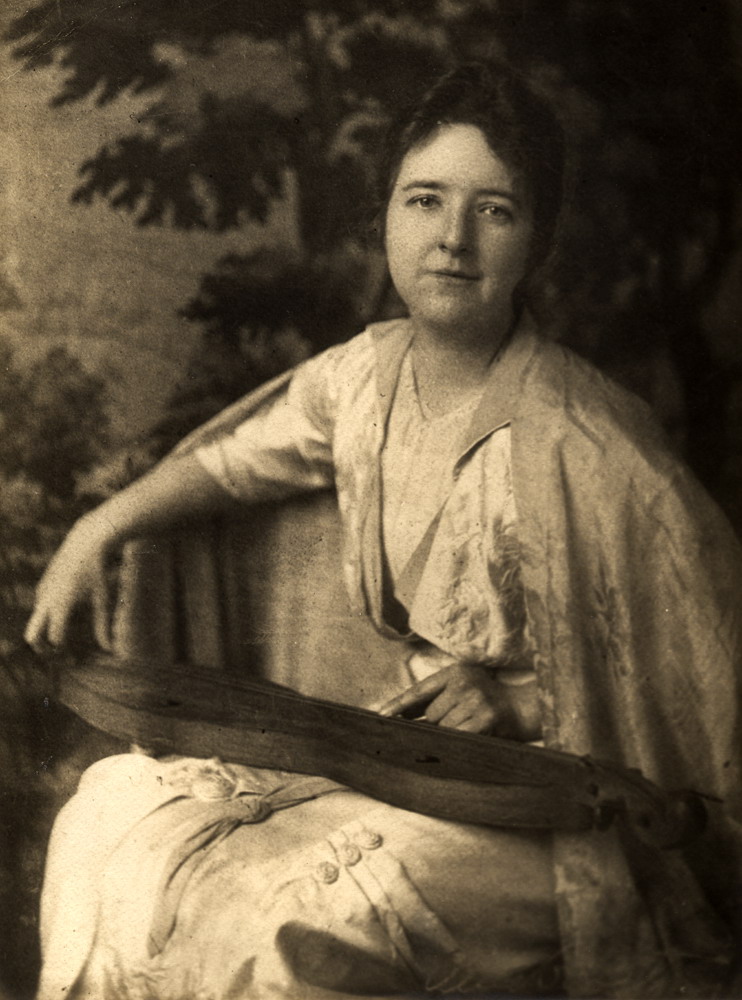
Ethel de Long with mountain dulcimer, c. 1915

Ethel de Long with mountain dulcimer, c. 1915

THE MOUNTAIN DULCIMER

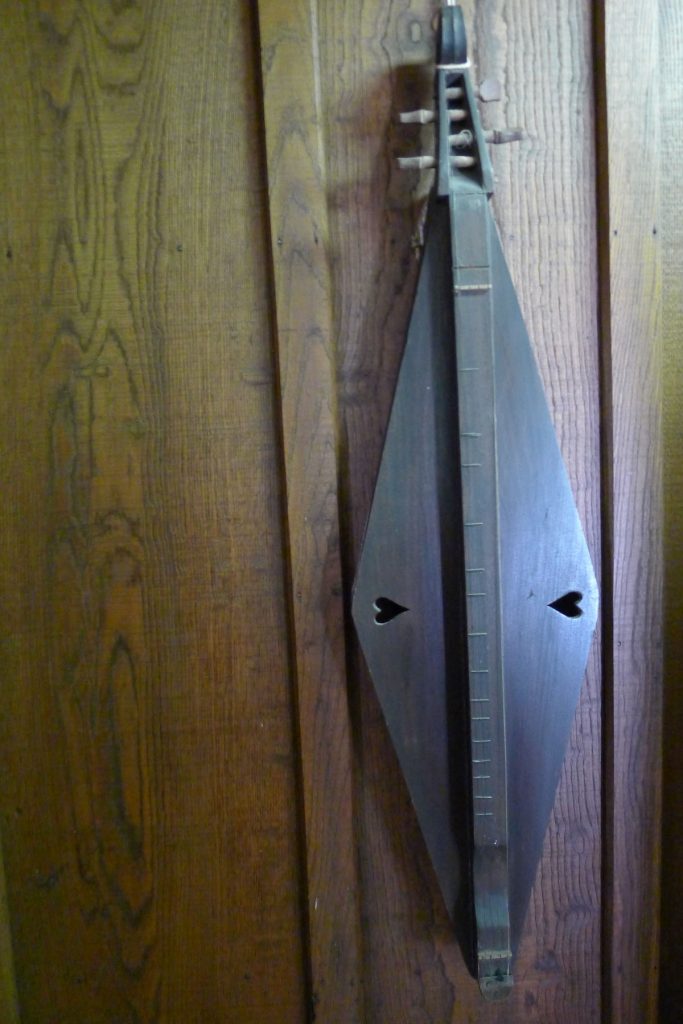
The mountain “dulcimer” is an oblong, box-like instrument, with in-curving sides, about two and a half feet long and eight inches at its greatest width. It has three strings of either gut or wire. One string is fretted, the other two are drone strings. The fretted string and the one next to it are tuned a fifth above the third string.

Angela Melville Album II - Part III. "E.K.W." [with dulcimer]. [melv_II_album_313.jpg]

Angela Melville Album II – Part III. “E.K.W.” [Evelyn K. Wells with dulcimer]. [melv_II_album_313.jpg]

The dulcimer is either picked or bowed. When it is picked, it is held on the knees, and the left hand plays the melody by passing a little stick up and down the keyboard over the fretted string, while the right hand plucks the strings. When it is bowed, the player holds one end in his lap and rest the other against a table, holding the bow in the right hand and passing the fingers or a stick up and down the keyboard with the left.

There are very few dulcimers left in the mountains now, but in the old days they were often found beside the fiddle and the homemade banjo. Now the fiddle, the banjo and the organ are taking the place of the old-fashioned instrument.

The theory of most scholars of the subject is that this instrument was brought into the mountains by some settler from the continent of Europe, because it is a well-known fact that the German zither of the 18th century is identical in shape, tuning and general appearance with the the mountain dulcimer. One of these zithers is displayed in the Crosby-Brown collection of musical instruments in the Metropolitan Museum in New York along with other 18th century instruments. This is supposed to be a descendant of the monochord of the middle ages.

There are two types of stringed instruments. the plucked instruments and the struck instruments. The former are psalteries, the latter dulcimers. Since the mountain dulcimer is plucked, it should belong in the class with psalteries, but the mountaineer, with his love of sweet-sounding names, has preferred to call it a “dulcimer,” and perhaps by this time he has acquired the right of possession.

[Source unknown. Pine Mountain Settlement School archive.]

As recorded in her letters, Ethel de Long Zande had her portrait made in New York City with a dulcimer in her lap. It is possible that the photographer was Doris Ulmann, who knew Ethel and photographed widely in the Pine Mountain region during the beginning years of the School.

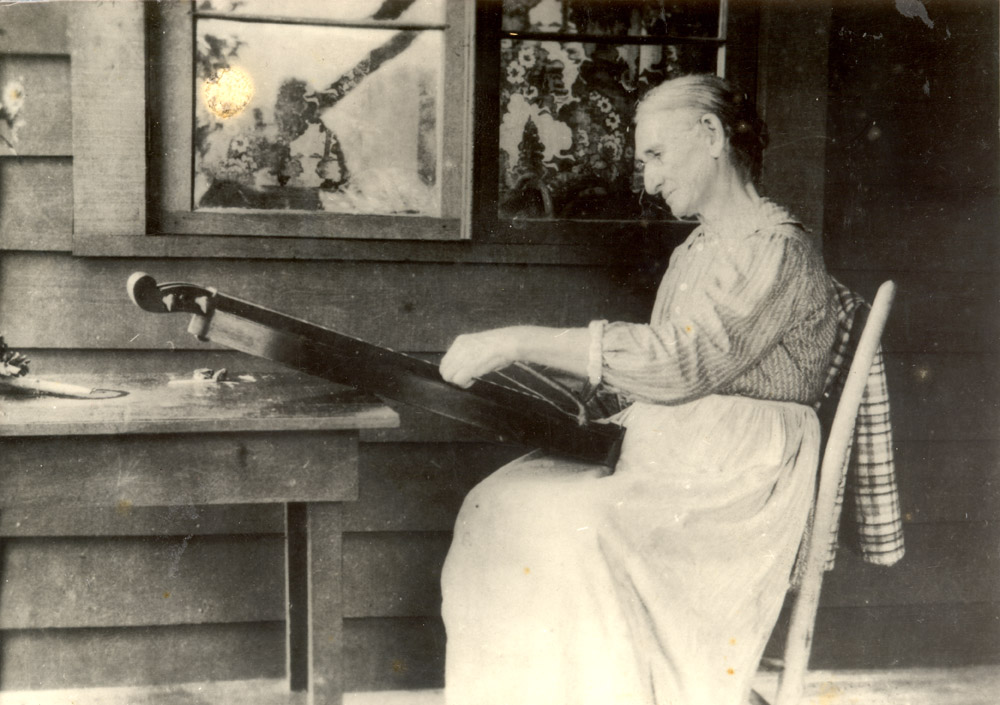
In the following photograph by an unknown photographer, “Aunt Leah” sits and plays the dulcimer using a bow. As described by the anonymous author, above, this was a more uncommon form for playing the instrument, but it was nevertheless known by some community members in the early years of the School.

pmss00024

“Aunt Leah” using a bow to play a hand-made mountain dulcimer at Pine Mountain Settlement School. [pmss00024.jpg]

DULCIMERS IN COLLECTION

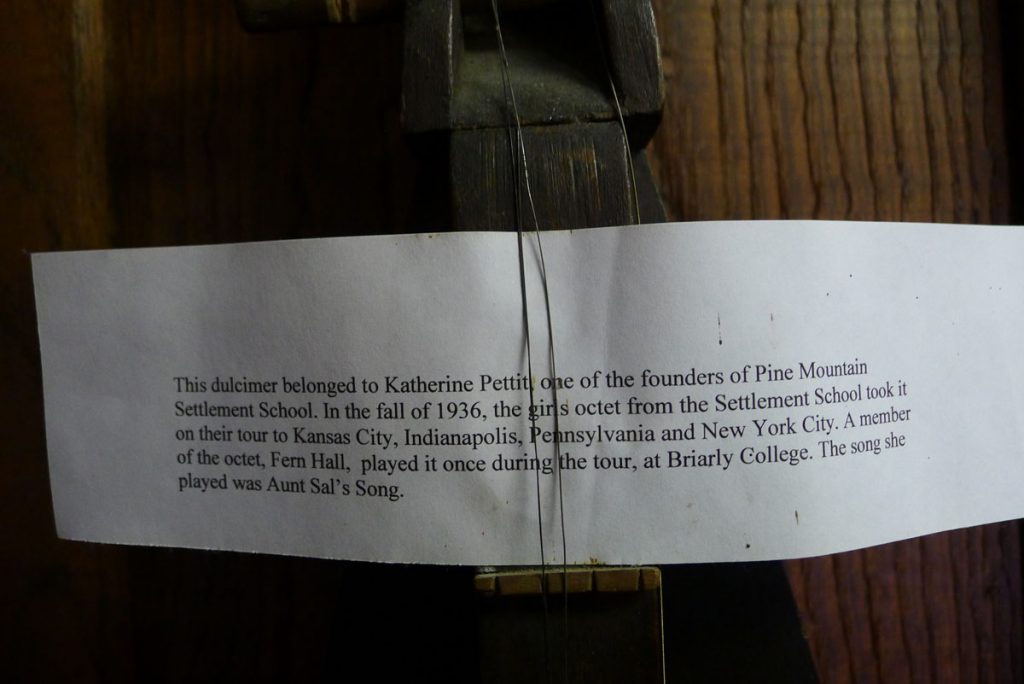
Dulcimer used by PMSS Girl’s Octet


 Return to MUSIC AND DANCE

DANCING IN THE CABBAGE PATCH II Introduction

Pine Mountain Settlement School
DANCING IN THE CABBAGE PATCH II
INTRODUCTION  –  Growing From the Soil

VI_34_1116a_mod

Land in the Southern Appalachians is precious soil. The people grow from the soil as surely as plants take root and spring upward towards the sun. The people grow strong to work the soil, and they bend as the soil pulls their tired bodies back to lie in peace within it. Yet, the cycle is more a dance than a dirge. The dance is the dance that so many children and adults have today forgotten. It is the jitterbug of stream-beds and the waltz of wind-blown mountain tops. It is the courtly movement through rows of cabbage and corn. It’s the balanced step-dance across a foot-log. It is a dance that educates for wholeness; the kind of wholeness often found in the rhythm of the rural countryside.

Dancing in the cabbage patch was part of the early education at Pine Mountain Settlement School. It was not just an education for children. It was the exercise of everyone who marveled at the cycles of life and the bountiful bloom of new crops as they re-shaped the flat field and high hill. It was and is all that is intuited in the fragile relationship with the land. A dance in the cabbage patch is an exercise in the nourishment of both body and soul. It is a solo dance made joyful by the sharing.

We can dance alone, or we can grow the patch together. At one time, Pine Mountain raised over 10,000 heads of cabbage in its central garden patch. Today, together, the cabbage patches are unlimited for us all if we can reconnect with the land.

The blog Dancing in the Cabbage Patch is structured into a series of essays about Pine Mountain and its Community. It explores the land of Appalachia, its farming, its foodways, and its celebrations. It is the history of a unique rural Appalachian settlement school that spans an existence of more than 100 years.

_________________________________________________________

The foundation of Pine Mountain Settlement School can be found in the early efforts of key visionaries in both the School and the community.  Some of these unique individuals are described in their      BIOGRAPHIES as compiled by the two authors of this blog. Other biographical notes may be discovered in the many stories told about each other. The biographies and stories are filled with characters whose lives may not at first appear visionary, but, on closer examination, these are folk who have led many seekers to both truth and fiction, and to a land little understood and often misrepresented.

Some seekers understood where they had been led, but others, clearly, could not shake their myths and prejudices. The Pine Mountain Valley, its land and its people, is filled with a clear truth, a fantastical mythology, and a delightful romp through one of the most misunderstood regions of America.  In summary, to explore Appalachia is to dive into a deep exploration of the truth tellers, the seekers, and those oblivious to dreams, visions, and truth. It is a journey about the evolution of America and its vision of itself.

Read deeply, the stories from Pine Mountain carry echoes of self-will, absence of doubt, and a certainty that comes shining or struggling through these fragments of lives.  As the School and Community worked together to establish and to give continuity to one of the first rural settlement schools in the Central and Southern Appalachians, they left a map for those seeking the meaning of democracy. Not soon to be forgotten are the narratives of the staff and community who helped to shape the vision we now hold of the early rural settlement movement and the foundations of our democracy. In the PINE MOUNTAIN SETTLEMENT SCHOOL COLLECTIONS ARCHIVE, there are many paths to follow.

THE FOUNDERS

When William Creech gave his land in 1913 so that Pine Mountain Settlement School could begin its journey, he also gave to the School one of the most famous quotes associated with the institution. Katherine Pettit, a co-founder of the School, used Creech’s visionary words for “his people” to promote the institution. The wisdom of William Creech and the surrounding community, and of those who came to “save” the community but found themselves for the first time, continues to resonate with many cultures and lives throughout the world. Almost all of Pettit’s successors at the School have found this quote to be foundational.

An Old Man’s Hope for the Children of the Kentucky Mountains

I don’t look after wealth for them. I look after the prosperity of our nation. I want all younguns taught to serve the livin’ God. Of course, they won’t all do that, but they can have good and evil laid before them and they can choose which they will. I have heart and craving that our people may grow better. I have deeded my land to the Pine Mountain Settlement School to be used for school purposes as long as the Constitution of the United States stands. Hopin’ it may make a bright and intelligent people after I’m dead and gone.

hook_007_mod.jpg

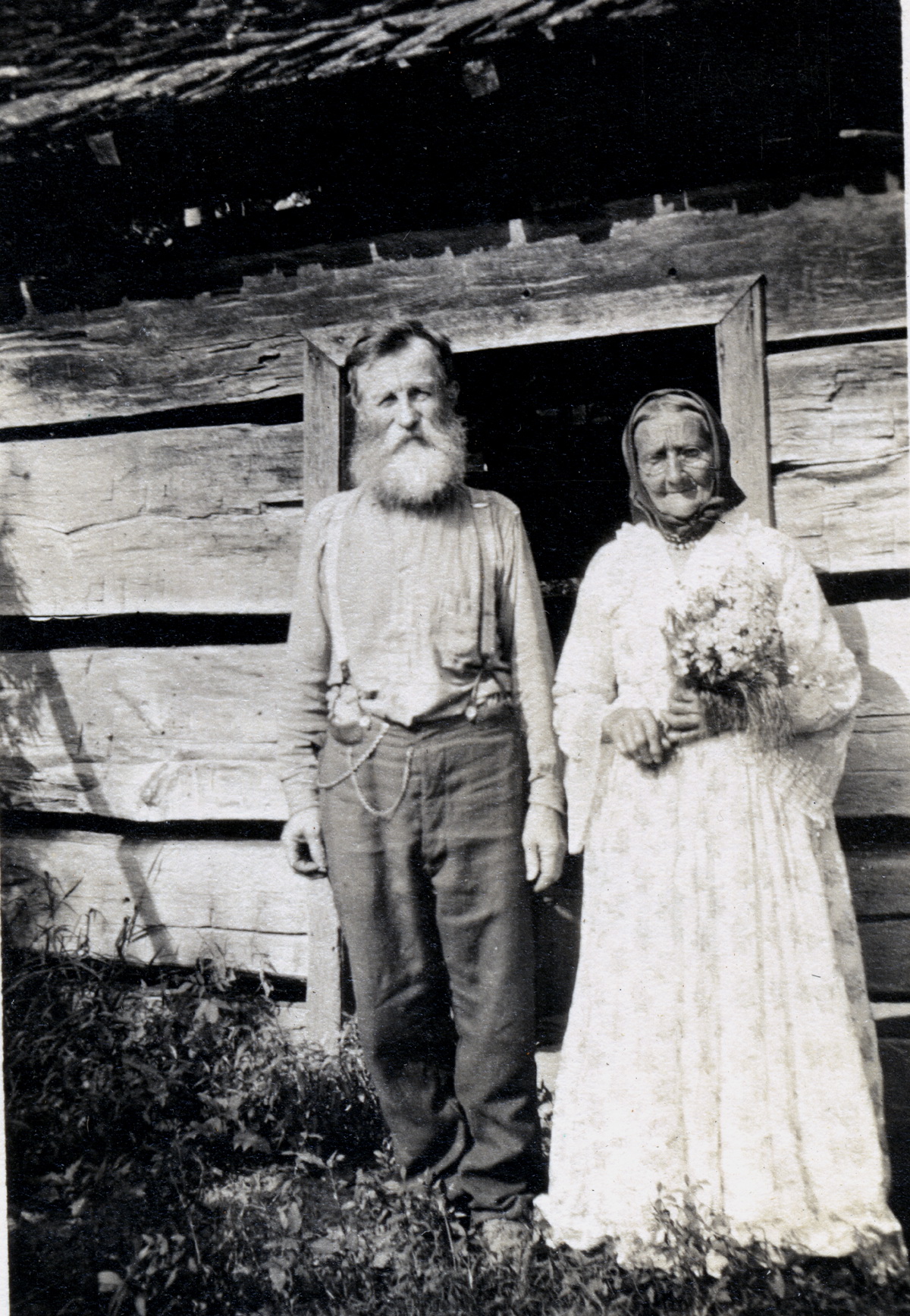
Uncle William and Aunt Sal stand in front of their old home while re-enacting their wedding picture. hook_007_mod.jpg

Uncle William and Aunt Sal donated  135*  acres of land for the Pine Mountain Settlement School. [*This acreage varies in the historical record and often includes the donation of other land from community and lumber and mining companies and other families such as the Metcalfs, Wilders, and others.]

In this photograph, Uncle William Creech and his wife, Sally Creech, re-enact their wedding in front of their original cabin home in 1917. Now often referred to as “Aunt Sal’s Cabin,” it was relocated to the grounds of the Settlement School in 1926 and is now a central landmark of the School, which is on the National Historical Register.

One of the founders of the School,  Katherine Pettit  (1868 -1938) was a Kentucky native.  She began her work at nearby Hindman Settlement School, which she also founded, and served as co-director at Pine Mountain Settlement School until her retirement in 1930. For the next five years, she traveled throughout the world and continued to doggedly trudge throughout Harlan County, urging farmers to adopt modern farming techniques.  In 1932, she visited South America. In that same year, she received the Sullivan Medallion from the Univ. of Kentucky as the outstanding citizen of the state of Kentucky. She died Sept. 3, 1938, at the age of sixty-eight.

The co-founder, along with Pettit and William Creech, was Ethel de Long Zande  (1868 -1928), a New Jersey native and Smith College graduate. She was recruited by Pettit to be the educational co-director of the School and to give academic guidance, fundraising, and educational programming.  Pettit knew de Long’s work as the two had served in similar positions at Hindman Settlement School, where de Long worked with Pettit for two years. Ethel de Long was as powerful in her beliefs and will as were Pettit and William Creech, but that did not prevent them from hiring a multitude of staff who carried the same strengths. Pettit and de Long and their staff provided basic education for children and training for mothers in health, cooking, and home care. In 1918, Ethel de Long married Luigi Zande, an Italian stonemason. She died much too early of cancer in 1928. Her short time at Pine Mountain solidified the shared vision of the two other founders, Katherine Pettit and Uncle William Creech, and the three left a lasting legacy and an unmovable foundation for the School.

Another force that needs to be reckoned with is that of Mary Rockwell Hook. Mary Rockwell Hook was recruited to Pine Mountain to serve as the lead architect for the buildings and the grounds of the school.  Her work represents one of the first instances of women’s work in the architectural profession.  A native of Kansas City, Kansas, and daughter of a banker, she was one of the first group of women to study in the renowned school of architecture in France, the École des Beaux-Arts in Paris. Her work represents a major milestone for women architects in America, as she was, by all accounts, she was among the first women to earn an architectural degree in the United States. It was Mary Rockwell Hook’s remarkable work that earned Pine Mountain Settlement School recognition as a National Historic Landmark in 1983.

Her architecture, like the people who grew up out of the land, and its organic presence always runs as a sub-text throughout all that is Pine Mountain Settlement School. Mary Rockwell knew the land and the people, and she continued to work with the School until her death at the age of 101.

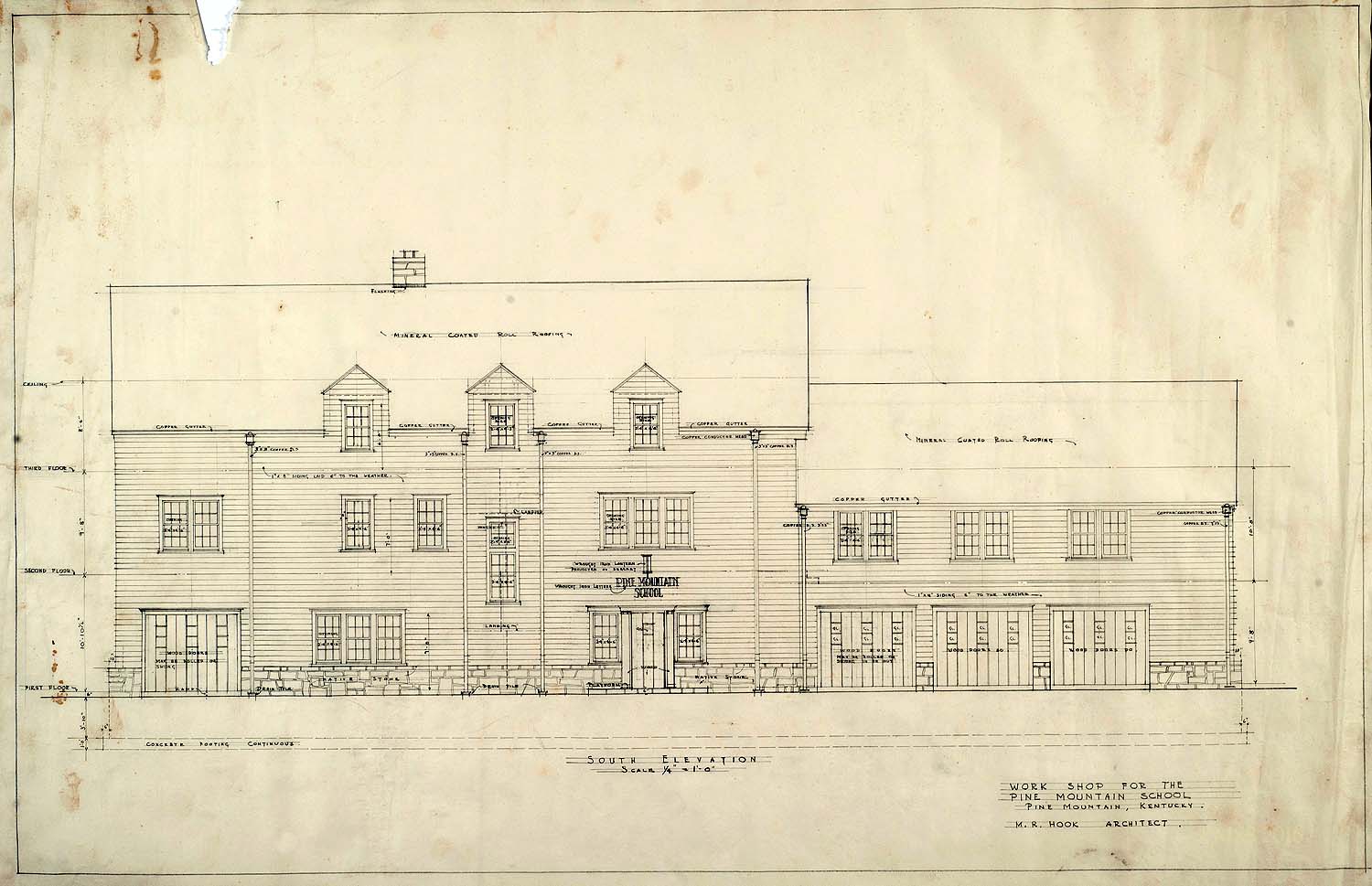
Work Shop For The Pine Mountain School Boys Industrial MSR5852_1 M.R. Hook South Elevation 1/4″=1′-0″ (early proposed plan)

Throughout the literature of Pine Mountain Settlement School, one will see individuals acknowledged as “Uncle” and “Aunt” such-and-such. When used with the first names of community members, the familial designation was generally not a designation of a familial blood relationship, but one of endearment. It was used particularly within the staff and families at the School, but it was always a long-held title of respect and endearment in the Pine Mountain community.  Following his donation of land for the school in 1913, Uncle William only lived six more years, until 1918.  Aunt Sal lived on until 1925. Their passing was as though a near Uncle and Aunt had passed, and they had.

It was the generous donation of land by William and Sally Creech, the Metcalfs, and others, and their advocacy and their vision that made the school on the headwaters of the Kentucky River a reality. But it was the community that was the bond that sustained it.  When Uncle William and Aunt Sal gave the land, they did so with the intent to create a school, and they sought out supporters in the community and, with the community’s support, convinced the two remarkable women to come to the remote valley in Harlan County to become the new Settlement’s directors. Pettit and de Long needed little persuasion, and the community was ready for them.

BUILDING THE SCHOOL

In Pettit and de Long, William Creech found a congruence of goals and vision. Pettit and de Long took the educational challenge of Uncle William to heart, and Uncle William held the two women close to his own heart and dream.  Katherine Pettit, a member of the Lexington chapter of the Kentucky Federation of Women’s Clubs, had, with May Stone and the support of the Club, founded Hindman Settlement School in 1900, and knew what she wanted in a school.  Thirteen years later, more importantly, she knew where she wanted a school.  Ethel de Long, who had worked for many years as an educator with Pettit at Hindman, was a pragmatic and articulate program creator, but, like Pettit, she wanted to chart her own course and exercise some of her new ideas on education in the central Appalachians. Both Pettit and de Long were visionaries, as was Mary Rockwell Hook, but they were all also well connected to other forceful women and men. Their long chain of contacts gave them the foundation and support needed to launch the new settlement school.

The Creeches, Pettit,  de Long, and Hook, as well as others in the Pine Mountain community, were a productive and dynamic combination. The quick formation of an Advisory Board provided the outside oversight, funding, and professional support needed to grow the institution. The founders of 1913 gave the school a solid financial foundation through ferocious and smart publicity and funding appeals. And, they gave the institution a strong social base on which it could grow and flourish.  And, grow it did.  In 2013, the school celebrated its one-hundredth year as an educational institution, confirming the promise and the wisdom of those early planners.

There are many institutional histories. This abbreviated one is only an introduction. To see other historical resources, see the PMSS HISTORIES Guide. 

Mary Rogers, wife of Burton Rogers, School Director (1949-1983), and founder of the Environmental Education program at the School, wrote THE PINE MOUNTAIN STORY 1913-1983 for the School’s 50th Anniversary. It remains the best source of the history of the school.

Mary Rogers’ small booklet covers the institutional history from 1913 to 1983, and breaks the history into easily understood blocks of history.  Her brief narrative history, illustrated with her own delicate drawings, is an eloquent statement describing the founding years of the institution, the boarding school years, and the later Community School.  It describes the founder’s plans for the School and the dedication to the founder’s ideas through the years.  She says of Pettit and the School

” She [Pettit] had a deep love for the people and concern for their needs.  At Hindman she had already translated the work of Jane Addams and the urban settlement movement into a rural idiom.  Now, her thoughts were turning to more isolated, as yet unserved, areas of the mountains.

 Traditional schooling was a part of her plan, but she envisaged also a settlement serving a whole community in its economic, health, and cultural development.  A settlement would not attempt to substitute an outside culture for the indigenous.  It would try to strengthen people’s faith in their own heritage, making use of both the mountain environment and their unique traditions as media for learning.  It would help people to retain a secure sense of their own worth as human beings. 

 The new school must have sufficient acreage to supply the bulk of its own needs.  It must be less dependent on the slow, unreliable transportation of supplies by ox wagon through almost roadless country.

EDUCATION FOR LIFE

Education was foremost in the mind of  Uncle William, and education was at the center of the mission of the two women co-founders of the institution, and all three agreed that this education must be a pragmatic education. It must give the children of the school not only ‘book larnin’, but it must also give them “education for life.” Uncle William described this “education for life” as an understanding of farming practice and a respect for the land that would combine with traditional educational practice. Only then could the total education of the person occur.

pmss0133

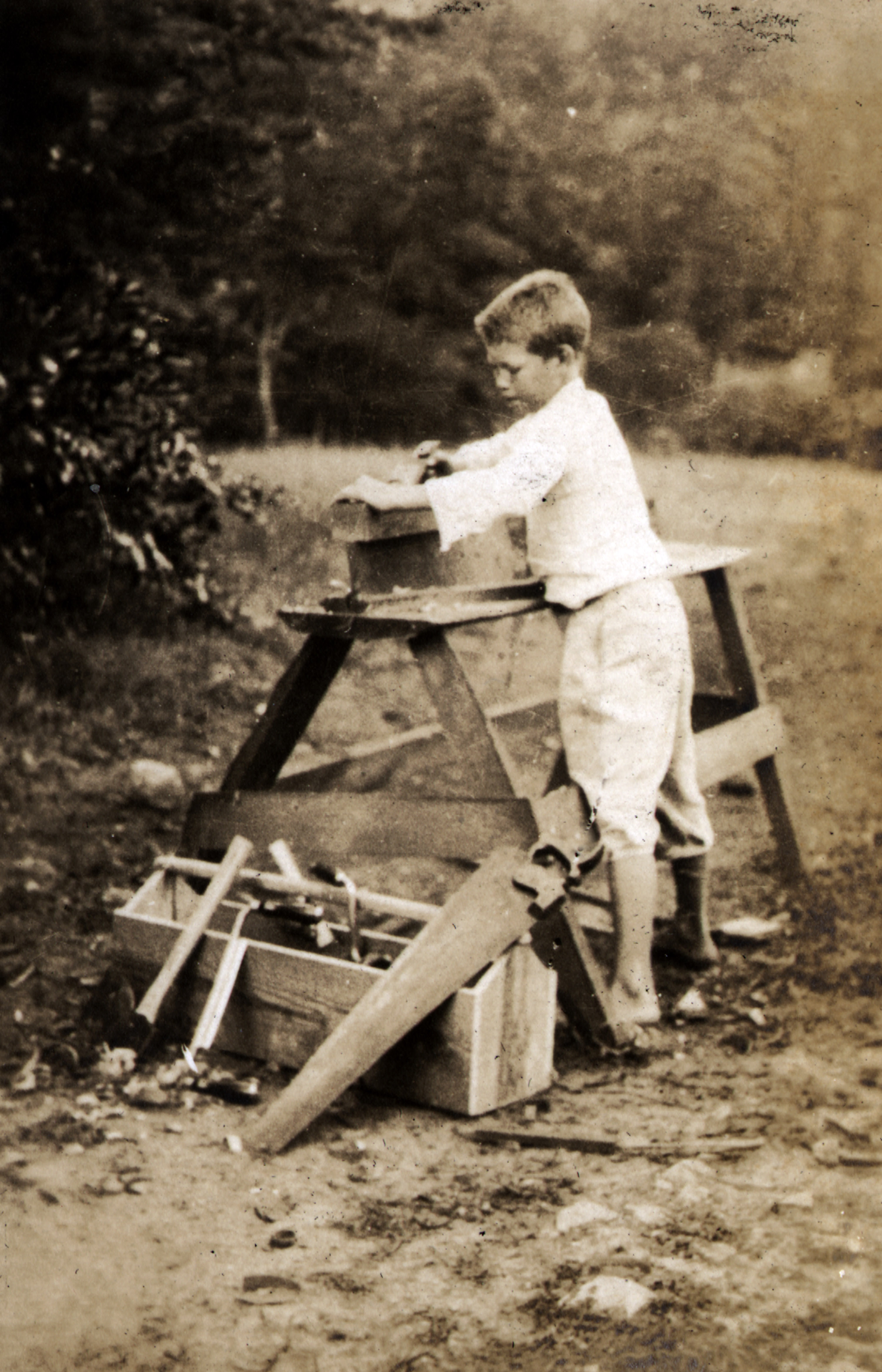
Head, hand, and heart at work in this early carpentry project by a student of the school.

Throughout the one-hundred-year history of the School, the adherence to an agrarian focus is central to the understanding of Pine Mountain’s “education for life.”  The pragmatic work engaged by all who passed through the School emphasized education as a life-long process and one for which they, alone, were responsible.

“Education for life” demanded mindfulness throughout every day. Participation in farming, food preparation, community celebration, woodworking, environmental field work, and more. It was an educational idea anchored in a classroom experience, but practiced in every action of the student.  Even today, this hybrid approach, solidified by hands-on learning experiences, has proven to be one of the most effective learning strategies.

An “education for life” is what the poet and writer Wendell Berry describes in his thoughtful series of essays, A Continuous Harmony: Essays Cultural and Agricultural (1970, 1972). He calls it a kind of “local life aware of itself.” He asserts that this “regionalism is the awareness that local life is intricately dependent, not just for its quality but also for its continuance, upon local knowledge.”  Berry dedicated his small book of essays to Ann and Harry Caudill, two Eastern Kentucky locals from Whitesburg, Kentucky, who were intensely aware of their place in the land and who educated many on the fragility of Appalachian land in Night Comes to the Cumberlands (1962). It is a book, in the words of Steward Udall, that is the “story of land failure and the failure of men,” but that, in its fatalistic telling, called the attention of the world to the lives of so many in the Central Appalachians.

Today, as we move rapidly toward ecological and social disruptions, the need to remind ourselves of our responsibility to an “education for life” is even more critical.  The education at Pine Mountain has always served up this idea.  Pine Mountain Settlement School is a place and an idea that educates for life, and that is committed to the literacy of historical community and how that history informs the living community. This commitment to education, both formal and informal, is essential to tying together the land and the people in a fundamental and sustainable ecosystem.

In 2015, the mission statement was reworded, but not dramatically altered, when it admonished that the goal of the School was to enrich lives and connect people through Appalachian place-based education for all ages.

“Twenty years ago [1912] Kentucky ranked fortieth in Education among the states of the Union;  today she is still fortieth,” reported the Kentucky Education Commission after a two-year study made of education in schools and colleges in the Commonwealth from 1932 to 1934.  This was the pre-Depression era, and it raised desperate appeals for ideas and help with a school system ravaged by a growing economic crisis.   As part of their 1932 study, the state surveyed the students whose lives they were charged to improve. Pine Mountain was visited and queried about educational needs and programs.   The surveyors found no shortage of students who were willing to closely critique their school and to make recommendations to their surveyors.  Remarkably, the surveyors listened.  The educational journeys described by the students served as a model for planning a new course for education within the state. The descriptions of those students are closely detailed in the nearly complete collection of student records held in the Pine Mountain Settlement School Archive Student Records.

In 2010, Kentucky’s ranking in a national survey was 34th in the nation.  In two years, the state jumped 24 places in the Quality Counts annual report as recorded in Education Week magazine. In 2013, under the Governance of Beshear, the state placed an amazing 10th in the national rankings for K-12 education.  Something is working. Attention to rural youth was part of the 2013 success.

Read more here: Kentucky Ranks 10th in National Education Survey 2013

The Rural Youth Guidance Institute, earlier called the Pine Mountain Institute, was begun by director Glyn Morris in 1934 and became known throughout the country as a progressive and successful educational model.  The Pine Mountain students were “educated for life,” and the Depression years in Appalachia and at  Pine Mountain Settlement School provided some of the best lessons for that education. The 1930s had many teaching moments that few who experienced them, forgot — student or teacher.

The school still stands as a model for educators who want to “educate for life.”  Today, particularly in the field of environmental education, Pine Mountain continues to lead the way in the state of Kentucky across all age groups.  Today, it educates multiple generations and promotes education as a life-long learning process.  A brief 1934 article for The Pine Cone, a school paper written by Pine Mountain students, reflects on the state’s campaign to reform education for its students and where Pine Mountain students fit into that campaign. It demonstrates how the PMSS students were actively engaged in the 1930′ educational planning process

A somewhat unusual feature of this campaign was the enlistment of the services and sympathies of the students themselves by the state. The generous response of the Pine Mountain students to this appeal for comments was characteristic of the sense of community promoted at the school.  The school, started twenty-one years earlier, gave the children a willingness to give of their energies that the cause of education may be advanced.  They described the influence of Pine Mountain as a real education that “will help us work a little more skillfully, think a little more clearly and act a little more kindly.”

This exploration of farming, food, and community engagement at Pine Mountain Settlement School, found in the DANCING IN THE CABBAGE PATCH series of essays, is authored by one of Pine Mountain’s children, the daughter of one of the School’s farmers, Helen Hayes Wykle.   The essays are offered as a contribution to the history of the institution and are filtered through the writer’s perspective. There are many other perspectives.

PHOTOGRAPHS

The photographs of rural life taken by various photographers, during the long history of Pine Mountain Settlement School, found in this essay, are derived from a life lived close to the land.  Within the faces of the students, the workers, and community families, especially in the children, can be found wonder, stubbornness, joy, fear, defiance, pride, and hope.  It is those images combined with some of the personal narratives captured in letters, documents, and autobiographies in the archival collection, that the many perspectives may be studied. In these often very personal and literal reflections, can be found a tall mountain of deep wisdom, peace,

pmss0098

humility, despair, determination, hope, anger, but especially joy.  Yet, some who will view the photographs or read the workers’ letters about the community will only see the poverty and possibly the exploitation of the local population by “outsiders.”  That is not what the school was or is about, and on close reading, that is not what the archive ultimately will reveal.

The author  John Berger reminds us in And Our Faces, My Heart, as Brief as Photos (Berger, 1984)  that time and space are inseparable. He cautions us that we must be careful of giving so much to the historical projection of time. He argues, “It is space, not time, that hides consequences from us.” In the Pine Mountain Valley, it is “up Cutshin and down Greasy,”  and Wellsley College and “between Hel-fer-Sartin and Kingdom Come,” and Boston and Turkey Neck Bend and New York and Fiesty and Rowdy, that we arrange and rearrange our critical perspectives.

The words of those who knew and know the land best are sprinkled throughout the following narratives, but it’s the photographs, the images of land and people, that most vividly detail the agrarian evolution of the community. The agricultural essence of the unique rural community on the north side of Pine Mountain, as explored through the lives of those who worked at Pine Mountain Settlement School and those who lived nearby in the community, is as relevant today as it was when the first vision was shaped by the founders.   These are pictures of an education — it is in a constant reciprocal stream of teaching.  In photograph and text, the interactive life along the Pine Mountain range and at the Pine Mountain Settlement School is a reassertion of geographies of hope and how to move between our spaces. It is about finding a personal space in our society and society finding a space for us.

Pine Mountain Settlement School today continues to be an experiment in rural settlement school practice as well as a model environmental education school. As the School moves beyond its 100th year,  the community celebrates with the School.  It celebrates the people, the place and an unwavering relationship to the land and to the lessons that may be learned from a close association with its geography in all its variants.  People and place, student and land, farmer and field, ecologist and mountainside, are all tied to an educational vision and mission. Today, the school’s programs and its “education for life” ethos reveal an evolving vision and mission. Remarkably, it is a vision that remains fresh and inspiring. No matter where one enters the narrative about the School, the general aim is clear.  It is to create critical minds and a sensitive eye when looking at how seasons pass,  space evolves, and lives evolve and pass in the valley.  It is a narrative that is both sequential and simultaneous, history and historical.

Today, our polemics are animated by ideological conflicts, by rancorous politics, and an inability to discern truths. We often lose our close touch with both time and space.  History melts our contexts into a sea of irrationality, and speed creates a blur with no time for reflection.  Often, history only surfaces to support some argument or political position that has no verity. We tend to forget in the rush of our lives that there are many truths, many more generations to inspire, and many lessons to learn and many stories to tell that open the pages of our own unique place in time and space.

Many of those lessons are found in our relationships, in our historical and genealogical archives, while others may be found on a hike to some remote and quiet place like  Jack’s Gap overlooking a slice of life in the long view.  When we look out from high places on the expanse of mountains that stretch out below, the view may resemble a troubled sea. The deep green sea, interrupted by the silt, the growing tides of discontent, the green and brown of surface mining  —  but the air sits close upon that mountain, fragrant with fresh pine and vibrant with sunrise and sunset. The trails of Pine Mountain wait to be explored.

Little Shepherd Trail

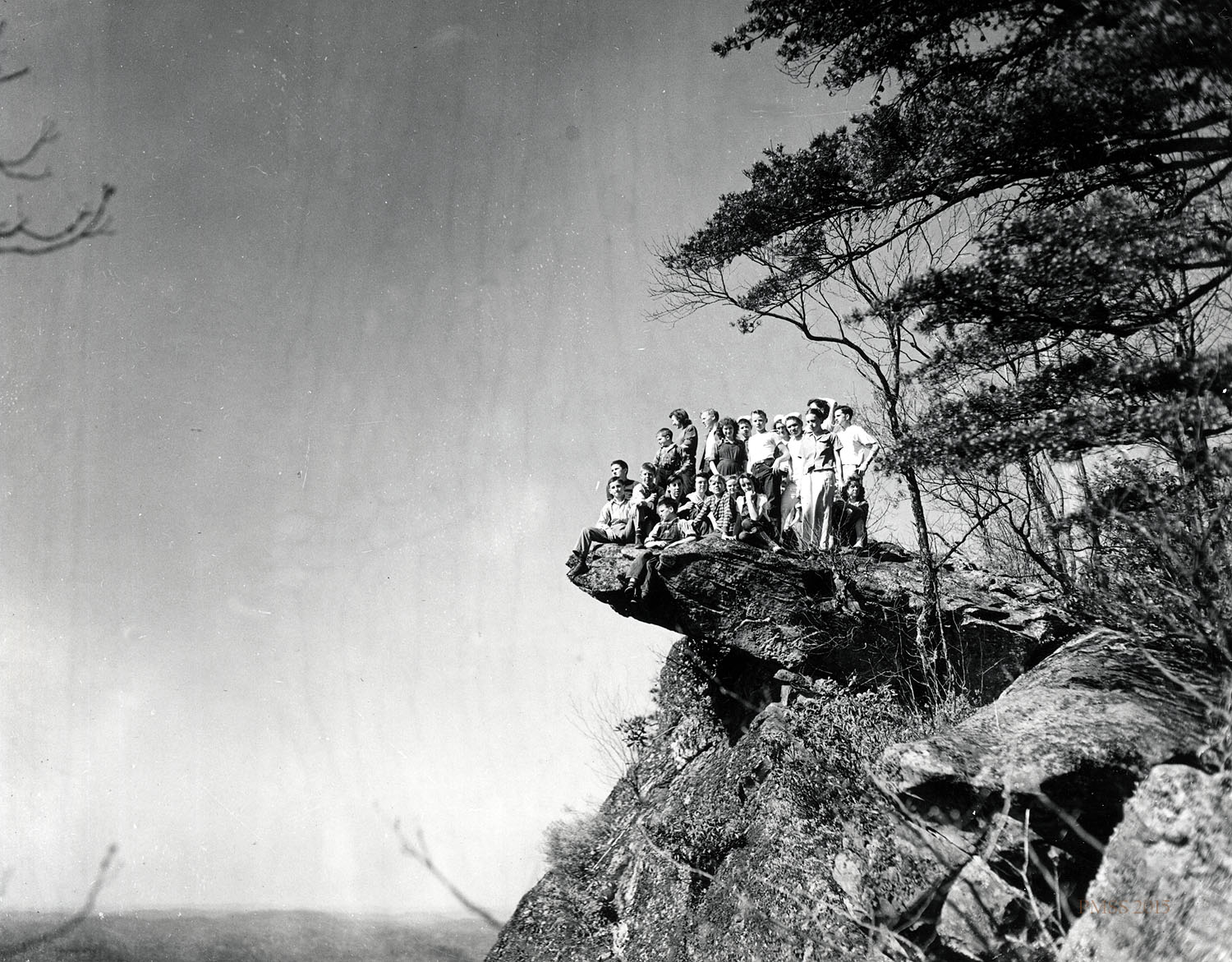
Jack’s Gap outing. Arthur W. Dodd Album. [dodd_A_066_mod.jpg]

As we all reach for improvement in the quality of our lives, there are many reminders in the stories and images from Pine Mountain that tell us, like Uncle William, that life does not need the accumulation of wealth, so much as it requires the nurturing of the wealth that lives within us and that surrounds us all. As we look backward with intelligence at the 100 years of Pine Mountain Settlement School, we will hopefully be better prepared to move forward with inspiration and intention to a vital future, wherever that future may find each of us. I suspect Uncle William is smiling as his dream unfolds and catches hold.

Helen Hayes Wykle

GO TO:  DANCING IN THE CABBAGE PATCH III – PLACE

BACK:  DANCING IN THE CABBAGE PATCH I – ABOUT

SEE ALSO: DANCING IN THE CABBAGE PATCH Guide

DANCING IN THE CABAGE PATCH The Physical Space of an Idea

Pine Mountain Settlement School
DANCING IN THE CABBAGE PATCH
Pine Mountain Settlement School –
The Physical Space of an Idea
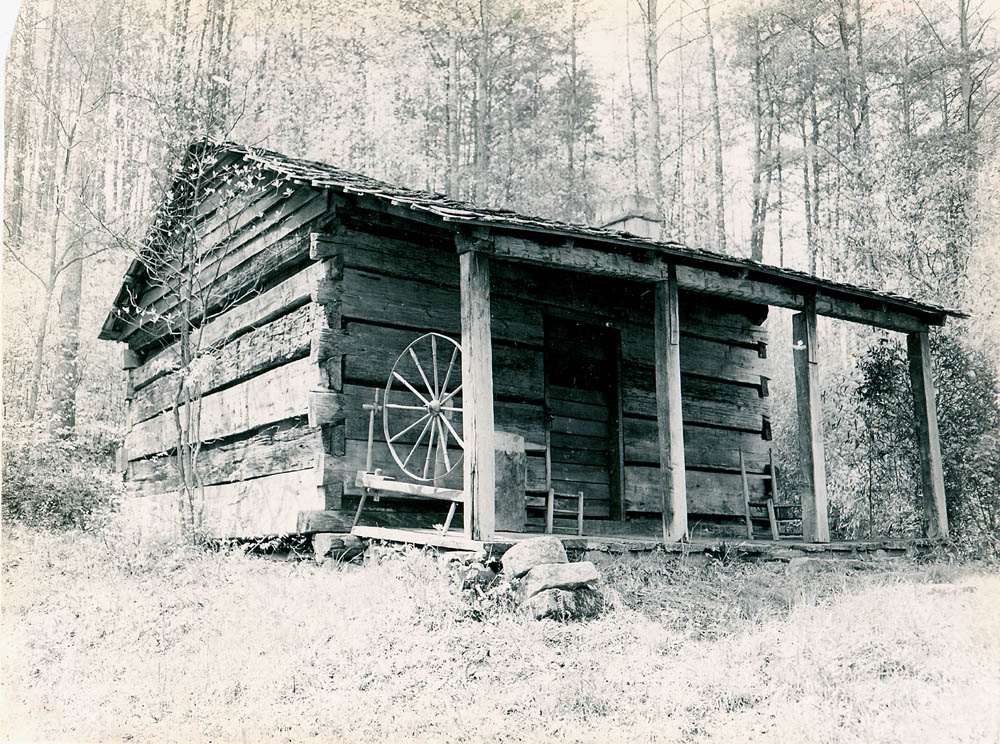
pmss3197modAunt Sal’s Cabin at Pine Mountain Settlement School

LOG CABINS AND EARLY COMERS BACK THERE

A Poem by Dora Read Goodale  (1863-1953), from Mountain Dooryards, Torch Press, Cedar Rapids, IA, 1941.

Little bitty ……. hit mought so be,
But it doesn’t look that way to me;
Ever’ log in it once a tree
That aimed at the sky ; the chimley-herth
Once a piece of the living yerth
And old Kentuck; and shutter and sill,
Puncheons, ruf-boards, or what ye will
Hewed and rived by my pap’s pap
When he was young an full of sap
Ther’es Coy’s fiddle — I tell you what! —
Mammy’s churn, and the big black pot
For Monday’s wash; and the shot-gun thar
Over the door, that’s kilt a bar;
Porch out front, and a picket gate
With flowers a-blowin early and late —
Why, ever’ one of em’s dear, so dear,
If I’d done been in Heaven a year
I’d still want out, to get back here.

                  Dora Read Goodale

Dora Read Goodale came to Pine Mountain Settlement School to teach when she was forty-seven years old.  Her stay was brief. She was born in 1866 in Mount Washington in the Berkshires and the position at Pine Mountain was a familiar mountain one.  Her arrival at the school in the founding year of 1913, yet presented her with multiple challenges.

Dora was constantly challenged at Pine Mountain by the many physical adjustments needed to build the new institution.  Those adjustments, while consuming at times, still provided her with a unique perspective of the school, the community, and its people.  Her early life in a precocious Vermont family of writers and poets gave her a sustaining interest in the unique environment, it’s challenges, and language and enhanced her skill at integrating colloquial dialogue into her poetry.  This unique skill brought Dora, the writer, an admiring public and more importantly, it brought her talents as a writer to her classroom teaching at the school. There was no shortage of language and subjects for her literary interests.

In Vermont, before they had reached adolescence, she and her sister Elaine Goodale [Eastman] were both lauded as child prodigies as they had both published extensively in national magazines and journals. Unlike her sister Elaine, Dora, the younger of the two, continued writing poetry for most of her lifetime. Her last literary work, at age 75,  was Mountain Dooryards compiled while she was in residence at Pleasant Hill Mission School, a Tennessee school not unlike Pine Mountain. Mountain Dooryards is a book with many echoes of Pine Mountain. At the Pleasant Hill School, she served as the Director of a medical treatment center known as Uplands Sanitorium at Pleasant Hill. She held that position from the late 1930s through 1941.

Her experiences at the two Appalachian schools and their surrounding communities constitute the core of Dora Read Goodall’s literary inspiration.

pmss001_bas042_mod

The 1920s view of the Settlement School reveals the cleared areas and the site of the institution within the steep mountainous terrain of Harlan County, Kentucky. The wide-angle view is deceptive, as the closeness of the mountain is missed in this panoramic view. Lower left is Old Log, the oldest building on the site.  The Tool Shed is to the middle left and the Office sits to its right.  Deep in the valley on the right-hand mountain slope, is the Burkham School House II and to its left is Old Laurel House.  Across the valley, the Barn sits high on the hill above the Office. The Infirmary (now Hill House)Practice House, and Farm House cannot be seen. The Swimming Pool and the Draper Industrial Building  were not yet constructed. Big Log is hidden in the middle distance of the photograph.  The Chapel is to the far right side and beyond it, hidden by the dark knoll, is Far House I   the home of ETHEL DE LONG ZANDE Director.  Even in this early photograph, what stands out is the large swaths of cultivated farmland and sheltering mountains.
pmss3193

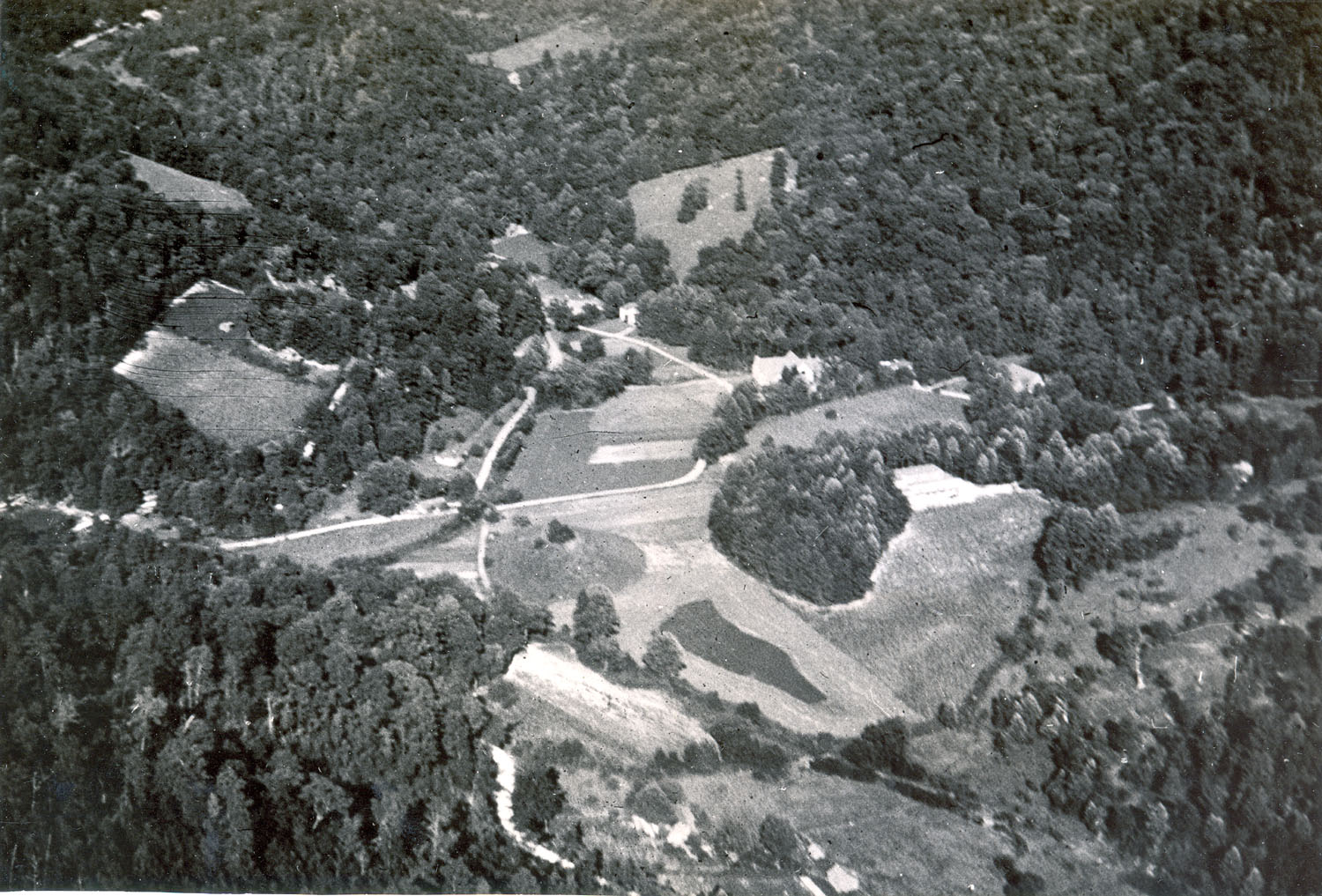
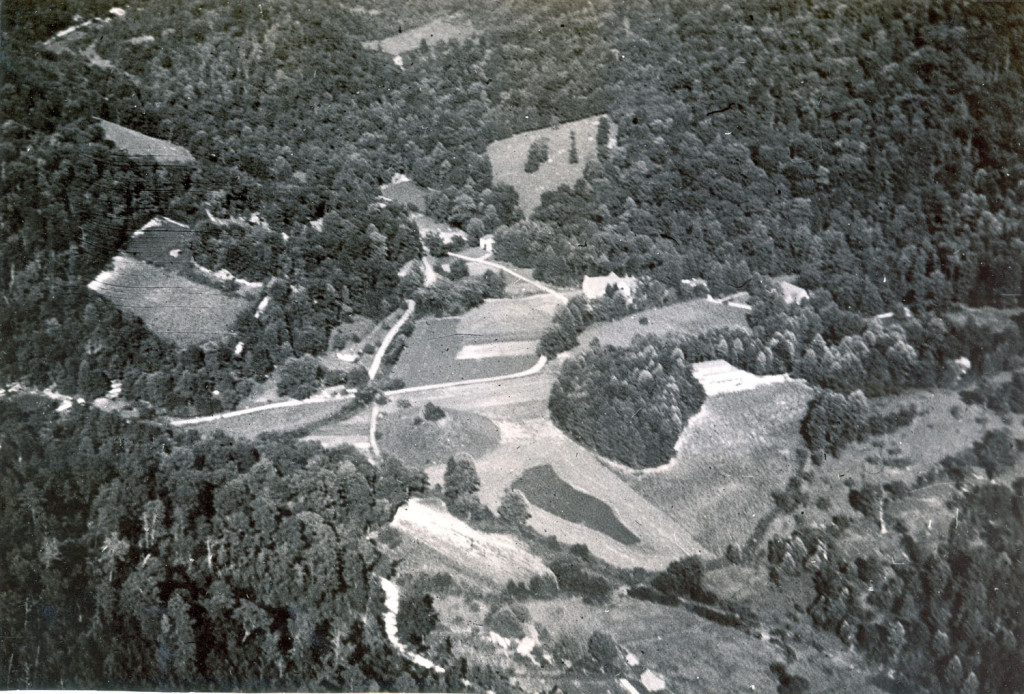
Aerial view of Pine Mountain Settlement School c. 1941. Westwind is just under construction as the white patch to the right of the photograph. Again, cultivated fields stand out against the heavily forested area around the school. Today, most of the fields are overgrown with young timber and the cultivated land has been reduced to the central areas of the campus at the middle of the photograph. Photo, Arthur Dodd.

Pine Mountain Settlement School is nestled in the long valley on the north side of the unique mountain range called Pine Mountain. It is a long (approx. 150 mile) continuous mountain situated on the Cumberland Plateau in the Southeastern United States.
pmss001_bas036_mod

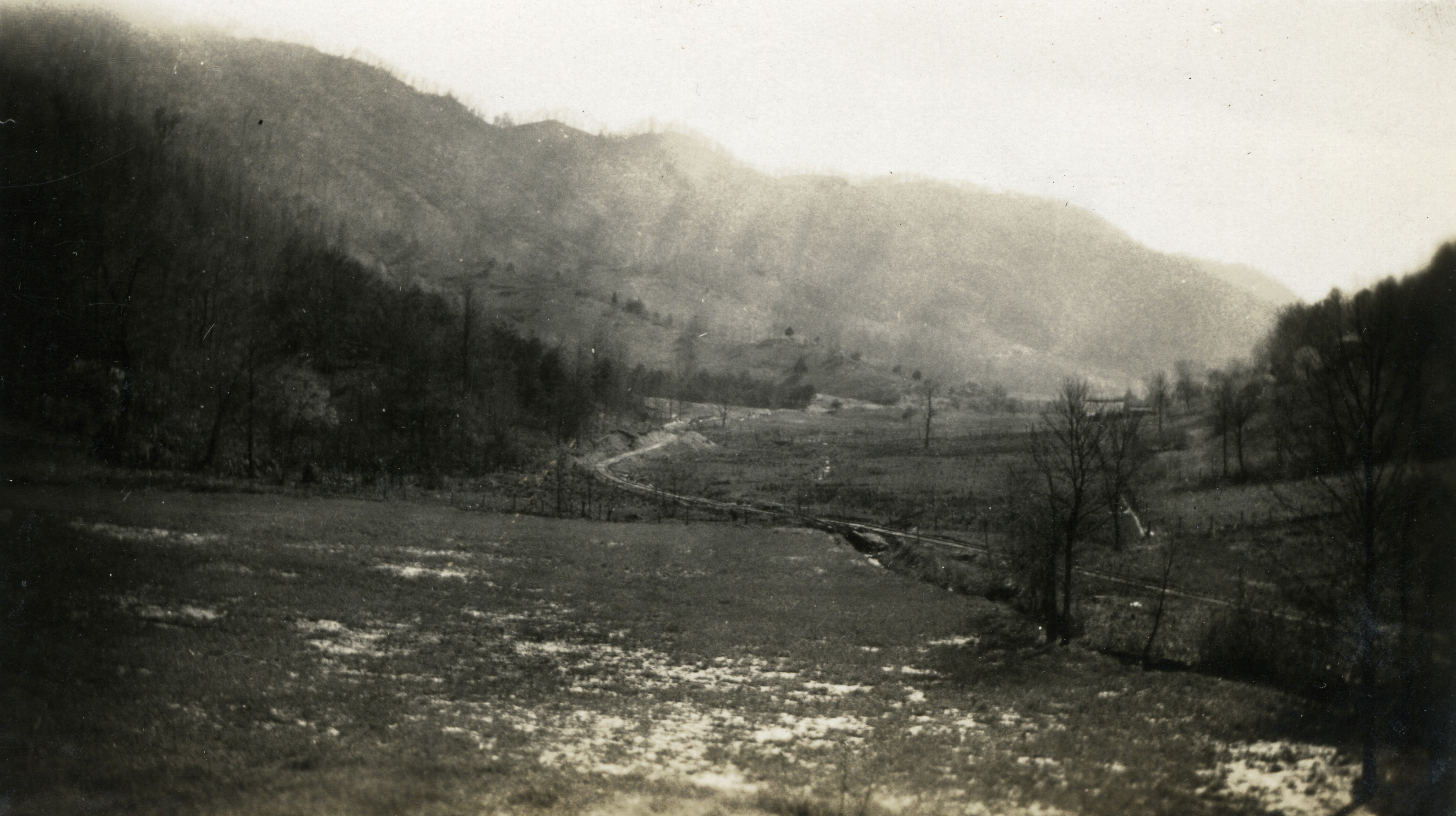
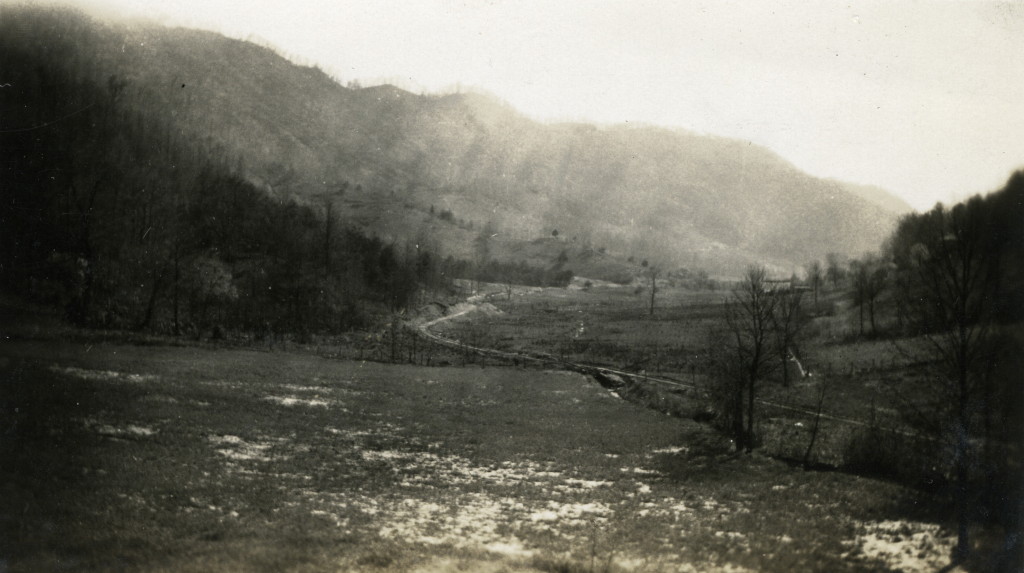
View down the Pine Mountain valley from the Westwind hill. c. 1920s.

The Cumberland Plateau encompasses some ten thousand square miles and contains nearly twenty counties in the eastern corner of Kentucky.  Pine Mountain Settlement School is in Harlan County, in the far southeast corner of the state where it borders on Virginia and Tennessee. The mountains in this area represent the most majestic in the state. At 4,145 feet high, Big Black Mountain faces the Pine Mountain range on its South side.

HARLAN COUNTY ITS MOUNTAINS AND RIVERS

Harlan County was named for Major Silas Harlan, a commander in the Illinois Campaigns of 1779,  and was the sixtieth county added to the state.  It was formed from parts of Knox and Floyd counties. The county was one of the highest, most mountainous, and most remote of the state’s 124 counties at the time of its formation and it remains remote in many ways even today.

Harlan County’s history is dominated by its story of coal.  Most all the mountains in the region contain coal that was formed when the ancient bog and vegetation of an inland sea was compressed into peat and then into coal over a period of millions of years.  Pine Mountain, one of the mountain chains formed when the earth buckled and thrust upward has coal but it is not coal-rich, as the coal seams are too difficult to mine due to their quasi-vertical angle.  This long “thrust-fault” mountain chain, some 150 miles long, parallels the tall Cumberland range to the south which is abundantly coal-rich.  Within this range is the “Big Black” mountain, at it’s 4,145′ is the highest mountain in the state.

When the Pine Mountain chain was formed, it thrust upward along the 150  miles in a continuous line running east to west.  Pine Mountain Settlement School sits on the north side of this east-west thrust fault and below the watershed point on the mountain that is the headwaters for two of Kentucky’s most important rivers, the Kentucky and the Cumberland.

Most all the Pine Mountain community knows the rarity of their mountain and have various stories of how it came to “tilt”.  An amusing story that stretches the truth, comes from a local community member whose unique perspective regarding how the mountain could have come to be so tilted is part Biblical and part geological and certainly humerous. His story was recorded by Alice Cobb, a school worker.

When he asked her if she knew, “Why Pine Mountain was such a “quare” shape with so many big loose rocks scattered around.”  Miss Cobb started to respond with her short interpretation of the geology of a “thrust-fault” when the man continued. “Well people about here thinks that when Christ was crucified the earth trembled and shook so it knocked Pine Mountain plum over on its side. And, that’s why.”  And, “on it’s side,” it is. The gentle side, the slope, faces Big Black Mountain, and the steep and rocky outcrops that form the backdrop to the Settlement School are on the North side of the long mountain.  All the mountains in the area sit close together, but the Pine Mountain with its long slope, is pressed up against everyone who lives in the Pine Mountain Valley.

As streams pushed their way through the early Cumberland plateau, they created multiple steep valleys somewhat similar to that of the Pine Mountain valley and with meandering creeks that feed the two main rivers.  These many waterways eventually wind their way as large tributaries to the Missouri and the Mississippi further west. Harlan County and specifically the Pine Mountain range above the settlement school is the source of three of Kentucky’s major rivers; the Cumberland, the Kentucky and further north, the Big Sandy river. It is some of the best water in the country. Unfortunately, coal mining quickly changed that bragging point.

The Cumberland River runs westward and southward through the length of Harlan County and has its head-waters on the south-side of the Pine Mountain range.  Isaac’s Creek or Isaac’s Run, which runs through the campus of the School is the essential headwater of the Kentucky River as it begins its journey. This north-side stream of the Pine Mountain range soon forms Greasy Creek and then joins the Middle Fork of the Kentucky and then on to the main Kentucky River.

State historian, Thomas D. Clark, told the story of this important state tributary in 1942, in a book titled, The Kentucky. John A. Spelman, III, an art teacher at Pine Mountain Settlement School, was asked by Clark to illustrate this book with a series of linoleum block prints.  The Kentucky was one in a series of books written for The Rivers of America Books, edited by Stephen Vincent Benet and Carl Cramer.  The book The Kentucky remains the definitive work on this beautiful river and a rich source for information on rivers and culture in the eastern part of Kentucky. Pine Mountain retains many of John Spelman’s original blocks. The blocks for the Clark book are held by the University of Kentucky but smaller blocks at Pine Mountain reveal the rich print work he completed for other projects at Pine Mountain Settlement. There are over 100 wood, linoleum and metal engravings held in the Pine Mountain Settlement Archive that capture the unique style of this talented artist as it evolved. Many of the linoleum block prints of John A. Spelman III are found throughout Pine Mountain school publications created in the late 1930’s and the early 1940’s.

Author Thomas D. Clark says of the Middle Fork of the Kentucky

“… the middle one [stream] scampers along through the Big Laurel to Greasy Creek and then to an arbitrary point where temperamental map makers finally decide to imprint the name “Kentucky.”  Perhaps nowhere else in America does a stream drain a more genuinely rural or isolated area. In some respects, the valley of this fork comprises America’s human museum. Here the great westward movement eddied and then stood still.  If it be true, as some sociologists have assured us, here are to be found America’s “contemporary ancestors.” Human life has changed little from what it was when the first settlers forced their way through the great pass at Pound Gap or wandered upstream from the “three forks.”  [Clark, p.9-10]

While Clark’s narrative written in 1942, captures the beginning of the life of this important Kentucky River in the creeks of the north side of Pine Mountain, it also captures the early settlers who came to the region and while isolated, retained their Pioneer ways long into the Nineteenth and Twentieth Centuries. Clark’s eloquent tale of this river spawned a familiar refrain that has been echoed by many writers of the region and Spelman’s block prints capture the visual romantic wildness of the mountains that has become part of the region’s legend.

At Pine Mountain Spelman left another remarkable set of prints in which he captured the elegance of mountain cabins and the patterns of the mountain farm. These images ar gathered in his published work, At Home in the Hills: Glimpses of Harlan County, Kentucky Through the Media of the Linoleum Block and the Woodcut.  Published in the Pine Mountain Print Shop in 1939, it was the sensitive work that caught the attention of Thomas Clark when he went looking for an illustrator for his classic, The Kentucky.

Spelman says in his introduction to At Home in the Hills

Where else can one find houses that so grow out of the soil, chimneys with so much unconscious beauty in their lines, roofs and wall spaces with such “at-oneness”? Time and the weather have done much toward their decay, but so have they colored these houses and barns to a mellowness that it makes them at one with the hills upon which they stand.

EARLY PIONEERS

The Harlan County region has always been difficult to access and to assess. The remote geographic area saw only limited settlement in the early years of pioneer exploration as most families pushed on to the fertile Bluegrass region. In fact the mountain area of Eastern Kentucky remained isolated far longer than many other more accessible areas of the Appalachian chain of mountains.  This geographic isolation of the north side of Pine Mountain in Harlan County has been a point of discussion of all who have sought to study the areaSs early settlement and even today it continues to challenge visitors as they are asked to assess their visits to the School or are asked “How do you get there?” Whether the isolation of the area brings to mind Shangrila or geographic determinism, it is a topic in most any discussion of the Pine Mountain Settlement School.  

Settlement of the region by pioneers,  largely European in origin, came early in the nation’s history.  The first exploration, completed by Dr. Thomas Walker in 1750,  rapidly opened the area to hardy settlers.  Immigrants mostly gleaned from England, Scotland, Ireland and the German Palatinate diaspora, eagerly homesteaded the mountainous area as pioneer farmers joining the Native Americans and a small number of African Americans who were found throughout the area.
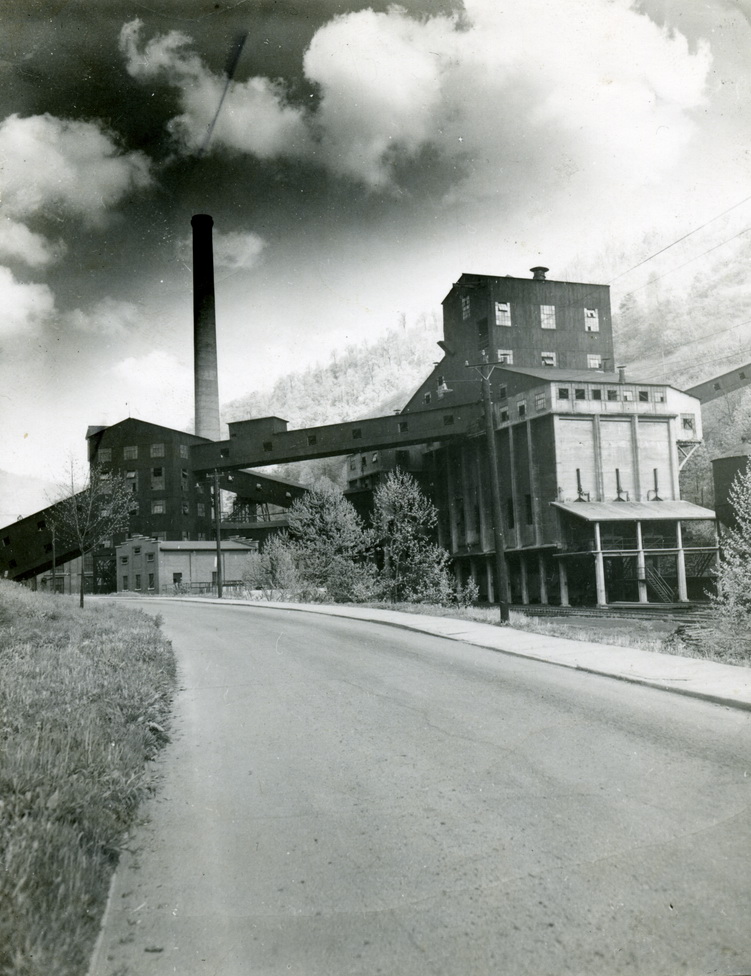
bram_ (59) Coal Tipple, c. 1940.  Arthur Dodd, photographer]

COAL

When coal was discovered in the mid-eighteen-hundreds, the population of the area surged. A wave of immigrants came from Europe and then Eastern Europe to work in the coal-fields. Italians, Austrians, Russians, Hungarians, Rumanians, Czechoslovakians and Polish men entered the mining work-force in Harlan County in large numbers. Southern negroes shifted from share-cropping to mining and Northern immigrants left inner-city life to join the coal mining labor force in many of the larger coal camps. The coal fields of Appalachia account for the diverse European names and the large population of African Americans in Eastern Kentucky.  Large coal camps run by International Harvester, and United States Steel established well-run and successful coal camps in the shadow of Big Black Mountain just east of Harlan town. These large and efficient coal camps had well-paid miners, medical care, and well-planned housing and social resources. Schools were well-staffed, but segregated and hospitals were well-funded and became a resource for serious medical needs across the county.

While conditions were better in these larger coal camps, not all labor was equal. Kentucky’s eastern coalfields have been both a source of wealth and a deplorable example of labor exploitation in the smaller and underfunded coal camps. Unfortunately, the exploitive coal camps proliferated as coal need surged and retrenched with the economy and later with WW I and II.

The region holds lands of extraordinary mineral resources and extraordinary exploitation. Environmental degradation began to devour what was once an Eden. It was not long before the Settlement Schools were focused on the growing social ills that follow the “boom and bust” of the coal fields. The history of the Settlement School at Pine Mountain, found in its farming, foodways and festivals, a large and important theme for successful mountain living, but coal always lurked as a sub-theme ready to wrest away all remnants of Pioneer culture.  In all that was and is Harlan County from the mid-1920’s forward, King coal has stood in contrast to the agrarian life of what some called “Creek Farmers”, those who retained their pioneer skill sets.  It was some time before the Settlement School, especially Katherine Pettit agreed to take students from mining families into the School.  In the 1970s the School found itself surrounded by mining and of a different sort.

While deep mining did not appear at first to be a threat to the land, it soon revealed a multitude of challenges to surrounding homes and settlements.  In the 1970s the introduction of surface mining brought a new educational challenge to the growing environmental concerns associated with “Strip MIning”. for the School. Challenged, by the growing hazards to the people and the environment the School challenged the actions of the surface mining techniques on the long-term stability of the local environment.  The environmental sensitivity of the School grew along with an awakening national push for environmental education. The challenges of the unsettling practice of surface mining and the need for an economic engine to raise the level of living in Harlan County and the surrounding coal fields.  was particularly true in the opening years of surface mining. Today coal mining is both a significant monetary asset and a gross environmental liability for the region. The lack of a diversified economy throughout the Appalachian coalfields has always presented a land of competing values and contrasts.

Authors who have written about the region have all approached the quandary of coal from different perspectives.  Dr. Thomas Walker in his important The Kentucky (1942) devotes one page to the topic.  “Coal” does not show up at all in the index to Henry Shapiro’s Appalachia on Our Mind (1978), one of the most comprehensive overviews of the Appalachian region.  David Whisnant, however, challenges the conundrums head-on in his All That is Native and Fine (1983).  The three works reveal the gaps that continue to perplex scholars as they confront the growing challenges of the agrarian and industrial nature of the region. Whisnant engages the coal story and citations for coal-related subjects are many, including coalfields; coal industry; coal miners, etc.. Whisnant’s book recounts one of many conflicting stories of coal and its role in the life of eastern Kentucky, but it is a perspective that resonates with some and rankles many.  Debates that surround the role of coal and coal camps in the development of the settlement schools of the region.

One story in the Whisnant book describes the early relationship of the coal industry with Hindman Settlement, Miss Pettit’s former home.  He recounts that early in the history of Hindman Settlement School when Miss Pettit was still with the institution, the secretary, Miss Eve Newman,  secured some $25,000 in preferred stock from the Elkhorn Fuel Company which over the years yielded a continuing revenue stream for the school.  John C. Campbell in a letter to John C. Glenn of the Russell Sage Foundation in 1913 noted that less than a decade after the founding of Hindman Settlement School (1909) some 76% of the school’s endowment was stocks and contributions from the local coal companies.  While this large investment in coal stocks was an early revenue stream for Hindman, Pine Mountain found it difficult to establish similar early ties to coal.

Katherine Pettit, when she came to Pine Mountain, reluctantly pursued both coal companies and logging companies for donations but was rebuffed in her early attempts to wrestle donations from both coal and timber companies working in the local area. Her initial efforts to secure contributions from the Kentweva Coal and Lumber Company and its President, Mr. Merritt Wilson, were largely unsuccessful, as were her efforts to stop the Company from running a narrow-gauge rail line to haul virgin timber through the heart of her new campus to distant mills.

Ron Eller’s book, Miner’s, Mules, and Millhands (1986), a well researched classic resource on Appalachian life, also looks closely at coal and its impact on eastern Kentucky and other coal areas.  It provides a balanced, documented, and clear assessment of the many sides of mining, mines, and miners.  The story of coal and the Pine Mountain valley is a complicated one but the story of Pine Mountain Settlement School yields a history that largely placed the school outside the influence of the coal industry, but not its impact.  Though the initial purchase of land for the school involved a land swap with the coal and lumber company, Kentweva, the competition for land and resources in the narrow valley has steadily waxed, waned, and waxed over many cycles at the School. Again, isolation played a key role as the north side of Pine Mountain has no coal and the area is too remote for much change.  It is, as recorded in a Settlement School survey taken in the late 1930s, “Some Shifting Aspects of Our Problem,”  that the School was “16 miles, 6 hours from [the] Railroad.” Further, it noted that the “mines produce a large shifting element that is perpetually on the move, and therefore a very difficult class to help.” This antipathy toward the populations of coal camps and mining communities shifted during the late 1930s and 1940’s when the need to help the youth from the large mining population centers became dramatic and youth from mining camps comprised a significant percentage of the School’s population.

For nearly half a century the school moved forward without significant contributions or endorsement from coal companies that came and went in the region.  Dis-entangled from any financial relationship to coal, the school became a voice for individuals, organizations, and institutions that began to question the serious environmental issues associated with the coal industry. By the l970’s both the environment and the social fall-out of the coal industry became a national issue and when Johnson launched his “War on Poverty,” the coal region came under the scrutiny of not just the Nation, but of the whole world.

When Uncle William said that he wanted the School to be a lesson even for those in other lands, he would not have imagined what valuable lessons many of those would be.  Over time, the school became the conscience of the region with regard to mineral and gas extraction and the School began to openly oppose any entity that would damage the environment, the economic security of the region’s people, or the health of both land and the people.  This sensitive vocal advocacy which continued from the 1970’s onward was seriously challenged in 2000 when it was clear that the coal industry was quickly beginning to encroach on the rights of the school and was showing little concern for its operational environment and its modeling of environmental education.

The encroaching surface mining in the area threatened the image of the school as an environmental center and threatened the pristine scenic views of the school, its watersheds, and its unique flora and fauna. Fearing an ever-growing coal appetite and a fledgling gas exploration and facing an expanding degradation of the environment, Pine Mountain took action and filed a petition on November 13, 2000, with the Kentucky Department for Surface Mining Reclamation and Enforcement to declare the surrounding 5,226 acres around the school as unsuitable for all types of coal mining operations. This so-called “Lands Unsuitable …” petition pointed out that the School had recently received status as a National Historic Landmark site and that as a national treasure it would suffer irreparable harm from continued mining in the immediate area.

Robin Lambert, Executive Director of Pine Mountain Settlement School (1999 – 2001), said

“As trustees for a National Historic Landmark which provides a unique resident outdoor environmental education experience to over 3,000 school children each year, and which has been a cultural and educational resource to this community for over 85 years, the Board of Trustees of the School believes that the permanent protection of the School property, the spring-fed water supply, and the view-shed, from mining impacts, must be our first priority.”

As reported by the Kentucky Resources Council,  Lambert stated,

“The process for designating lands as unsuitable for mining was intended by Congress to protect those lands where simply mitigating mining impacts on the environment would not be enough.”

The 32-page petition, endorsed by the school’s Board of Trustees, with strong support from environmentalists, historians, and friends, was successful in its effort to curtail proximate mining and to protect both the environmental mission and the physical environment of the institution for future generations.

These actions were specific to the immediate threat to the institution and were not intended as an indictment of the responsible coal industry and the many labor benefits that responsible mining operations brought to the region. Many of Pine Mountain’s boarding school children and, later, the children within the community, had strong ties to coal mining and their families were often wholly dependent on the industry for their livelihood. The tensions of these conflicting interests can still be felt in the community, but the School pulled from these experiences one of its most important educational missions, that of raising awareness of the human impact upon the environment.

Today, strong ties to coal is still the reality in Harlan County and the surrounding region.  Coal is “King” and “Black Gold”  rules both the economy and the cultural mind-set of the region. But, as coal again turns its back on the people of the region and as the industry declines — some say its last decline — the people and the state are looking for other economically sustainable livelihoods.

It is the juggling of diverse perspectives, the commitment to civil response, and the environmental realism of Pine Mountain Settlement School that makes it so very important to regions such as eastern Kentucky that are being devoured by insensitive corporate interests and by equally insensitive personal greed. This ravenous appetite for mineral and other resources is now world-wide and the dangers to the environment and to people is great.  Conflicting views arising from mineral extraction is an international reality that is being played out in nearly every corner of the world today as resources become scarce, and as industries lose their social compass and populations grow. Clearly, a strong environmental voice, education in our schools regarding our relationship and responsibility to vital resources such as land and water, and civic responsibility, is fundamental to everyone’s survival, not just those who live in eastern Kentucky. Learning how to live as a community of diverse interests but one that shares concern and respect for the common good is vital to the survival of us all.

William Creech reminded Pettit and de Long in his letters that he wanted the school to be a benefit not just to the community, to “their generations as yet unborn,  but to the whole state and nation and to folks across the sea if they can get any benefit out of it.” Pine Mountain still has this international perspective and continues to bring residents from throughout the country to work in the environmental education programs at the school.  Pine Mountain invites foreign visitors to the school to experience the beauty and peace of the valley, while taking from the visitors, their multiple world views. This has always been the history of the institution — that it both shares its lessons and learns from the lessons of others.

As the region continues its struggle with the dominant coal economy and consciousness, and now with the rapid decline of that industry — again —  It is not only Pine Mountain School, but the many social, religious, and educational institutions in the area that are struggling with what James Still, noted Appalachian author, called “a handful of chaos.”

James Still used this phrase in his sensitive portrait of an Appalachian family in River of Earth (1940). Caught in the chaotic transition from a simple life close to the land, many families were challenged to sort out a largely agrarian life-style against all that an evolving industrial economy promised.

In Still’s novel the family obliquely debates their future as they roam in search of the eggs of a guinea fowl in the pennyrile near their home.

 “This would make the finest hayfeed ever was,” Mother said.  “Just going wasting.”

Father kicked the lush growth where it caught the top hooks of his brogan.

“I hain’t started eating grass yet,” he said.

“There’s not a beast on the place to be cutting it for, and it’s the truth.”……”If we had us a cow her udders would be tick-tight,” Mother said.

It would be a sight the milk and butter we’d get.”

Won’t have use for a cow at Blackjack,” Father said.  “I hear the mines are going to open for shore. They’re stocking the storehouse, and it must be they got orders down from the big lakes. This time of year they come, if the’re coming a-tall.”

Mother picked up the baby, holding him stiffly in the crook of her elbow.

“Where is the big lakes standing?” Euly [their son] asked.

 “A long way north. It’s on reckoning how far, ” Father said. “There’s ships riding the waters, hauling coal to somewheres farther on.”

 “I had a notion of staying here,” Mother said, her voice small and tight.  “I’m agin raising chaps in a coal camp. Allus getting lice and scratching the itch.  I had a notion you’d walk of a day to the mine.”

“A far walking piece, a good two mile. Better to get a house in the camp.”

  “Can’t move a garden, and growing victuals.”

  “They’ll grow without watching. We’ll keep them picked and dug.”

“I allus had a mind to live on a hill, not sunk in a holler where the fog and dust is damping and blacking. I was raised to like a lonesome place.  Can’t get used to a mess of womenfolks in and out, borrowing a dab and a pinch of this and that, never paying it back.  Men tromping sut on the floors, forever talking brash.”   

 “Notions don’t fill your belly nor kivre your back.” [responded the Father]

Few authors have captured as starkly the lives and language of families caught up in the economic conflicts of the industrialization of eastern Kentucky, as does Still in this classic novel.  The mining and timber exploitation of a region that was largely agrarian, fractured the lives of the rural families in the region.  James Still heard their stories first-hand for he spent almost all his life within the folds of the hills of eastern Kentucky on Wolf Creek in Letcher County. As a librarian and employee of Hindman Settlement School,he knew the lives of his neighbors and he heard their voices and sensed their dreams and he listened,  closely.  Very closely.
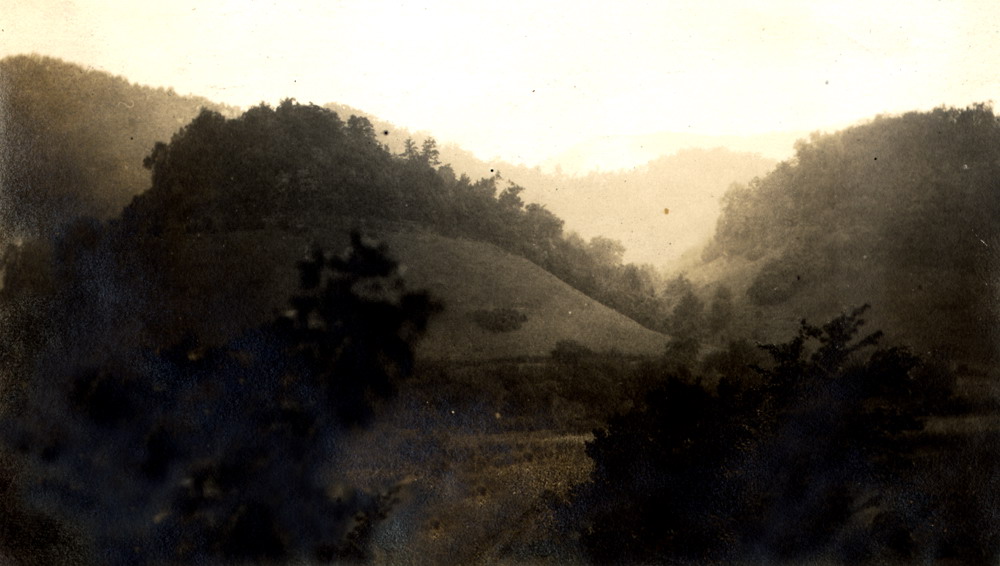
pmss0008Land cleared for mountain subsistence farming.

Pine Mountain continues to listen, as well.  As Pine Mountain looks back on its one-hundred-year history it can take pride in its strong protection of the land; its commitment to the people of the region; and its understanding of the pragmatic life-style, the dreams and the work-ethic associated with labor close to the land.

Farming, food, community celebrations, and a strong commitment to the preservation and conservation of the natural resources of the southeastern Appalachians, eastern Kentucky, and Harlan County,  are integral to the on-going ethos of  Pine Mountain Settlement School. The activities associated with these core elements are part of the “educating for life” that continues to hold a fundamental place in its framework for the future.  As the School has evolved and re-shaped itself to the twenty-first century and as it has adjusted to the increasingly rapid cultural surges forward, it shows every evidence of doing so with a solid foundation and values just as solid.

As this narrative, Dancing in the Cabbage Patch,  continues, it shares one story of Pine Mountain Settlement School.  There are many.  The essays are dialogues intended to contribute to and invite dialog regarding the most recent re-visioning processes at the School and more extensively in the eastern Kentucky region.  The narrative seeks to show how re-invention and the processes associated with it pay homage to and derive strength from historical commitments.  Like the warp of a loom, the narrative threads of history at the School continue to be a pragmatic and demonstrably foundational dialog. The personal narratives continue as an unbroken warp within various communities of interest. The long narrative of the first one-hundred years is foundational to the next one-hundred.   Farming, food, celebration and a profound environmental awareness are shared experiences that are understood at a very basic level by the institution and the community, even as that community continues to grow and change.

In its new form this electronic narrative looks to the past, but it also looks forward with hope that the guiding principles of the school, “… will make a bright and intelligent people …” as Uncle William hoped. Pine Mountain Settlement School is only one-hundred years down the road, but if the first century of the journey is any measure,  the next many centuries will be even more exciting and rewarding if the values and the vision of all stake-holders can be shared and learned. It is ironic that coal sits as a fundamental contributor to the digital revolution.  The coal-fired plant fueled the electronic frontier and continues to do so today.  That Appalachia has been one of the last stops on that frontier, makes the coal relationship even more ironic. It seems fitting that Pine Mountain calls these inequities to our attention and that we remind the lords of industry that their empires were built on the backs and resources of this unique region.

Farming, food, various celebrations, and conscious environmentalism, still serve to help sustain the school and its community, but it is the people, seen in many of the images in this web, or more accurately, weft, that gives hope for the coming centuries. The resilience, determination, intelligence, and work ethic of the people in both the school and the community suggest that the future is bright and that the people of the valley of the Pine Mountain and beyond will continue to dance in the cabbage patch.

Just how Pine Mountain continues its commitment to community, how it protects and nurtures the land, how it expresses it joys and sorrows and how the people will respond to pressures outside the valley and the region, cannot be known.  But, is is very likely that farming, food, health, celebrations, and environmental education will continue to be integral to the settlement school mission and to the lives of those living in surrounding as well as virtual communities of interest.  It is also clear that those communities of interest are now, not just local, but are expanding rapidly to the global.
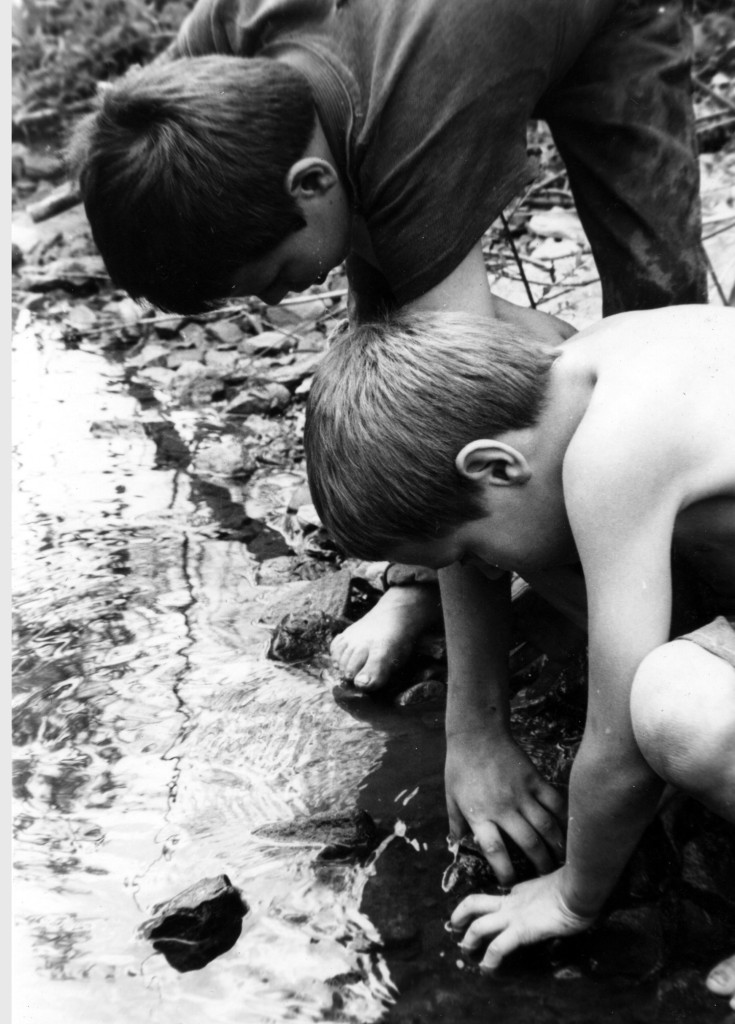
Friends & Neighbors - VI-51 - Capturing a snapping turtle

Capturing a snapping turtle, children at Big Laurel, 1960’s. Friends & Neighbors – VI-51 –

Farming, food,  community celebrations, and conscious environmentalism have all become quite complicated by our modern life-styles, but as we all struggle to sort out how we will manage the “new-normal,” it may be instructive to look to the lessons found at Pine Mountain Settlement  School and  to imagine them practiced in a wider context.
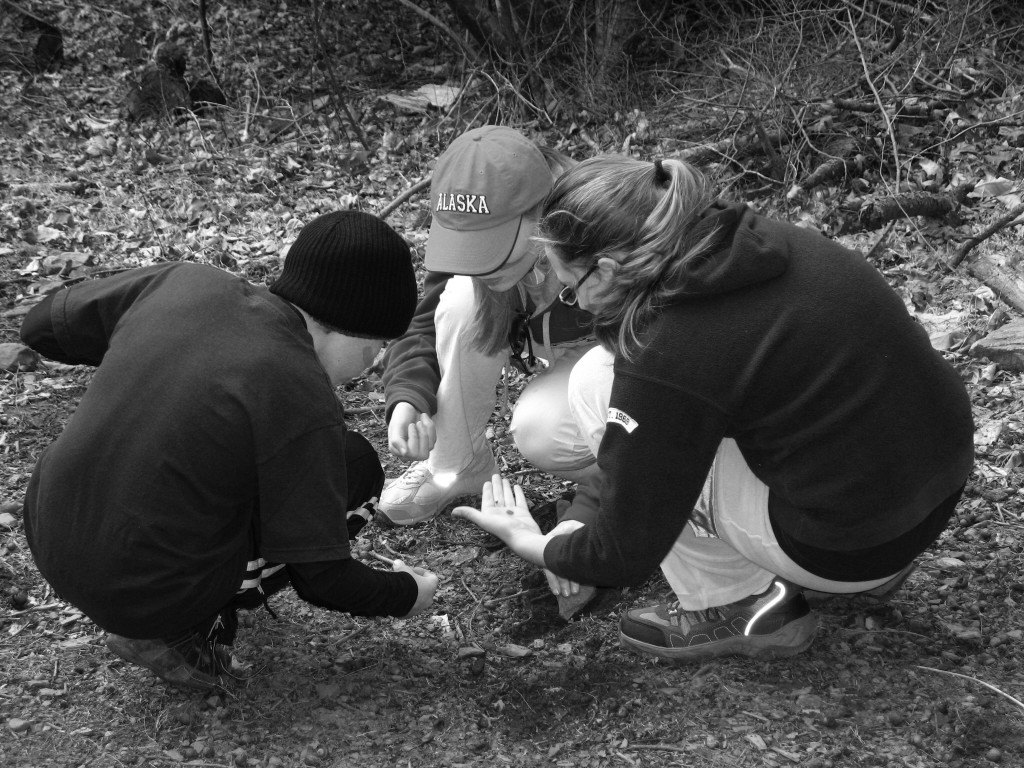
Western Elementary 022 bw

Students participating in the Environmental Education program at Pine Mountain, 2010
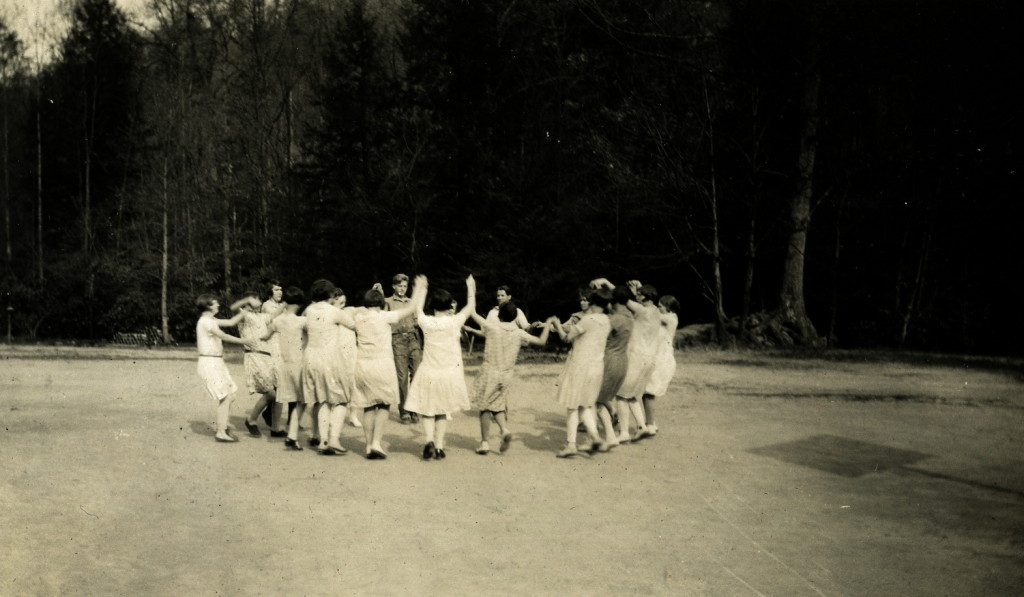
pmss001_bas098

Circle dance of students and staff on playground at Pine Mountain Settlement School, 1920’s. pmss001_bas098
IMG_0459

Children dancing on the playground at Pine Mountain Settlement School, 1990s.

How do we manage our resources?  How do we treat our neighbors?  How do we educate our children to respect nature? What lessons are there in working with our hands as well as our minds and hearts?  What is literacy?  Reading? Math? Computer skills? Visual literacy? Civic responsibility? How can we eat healthy? How can we grow responsible crops? How can we exercise, intelligently? How important are aesthetics to our well-being? How can we help to shape our life-style into quality of life? How can we better respect our natural environment? Speak out when our water resources are in peril? Stop the removal of our mountains? What does it mean to have quality of life? These are short questions with life long answers. To seek answers to these questions and more,  is the discovery of “educating for life” found at Pine Mountain School and in the surrounding community. In many ways it is the coming to a place and the discovering of it again, and again.

GO TO:  DANCING IN THE CABBAGE PATCH – IV – FARMING THE LAND

BACK: DANCING IN THE CABBAGE PATCH I – ABOUT