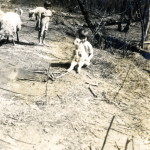
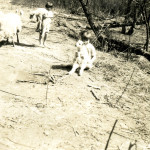
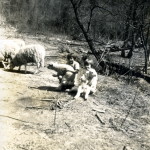
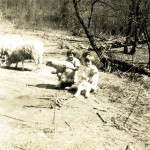
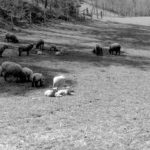
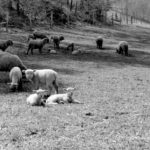
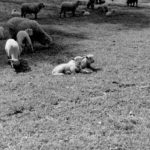
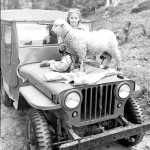
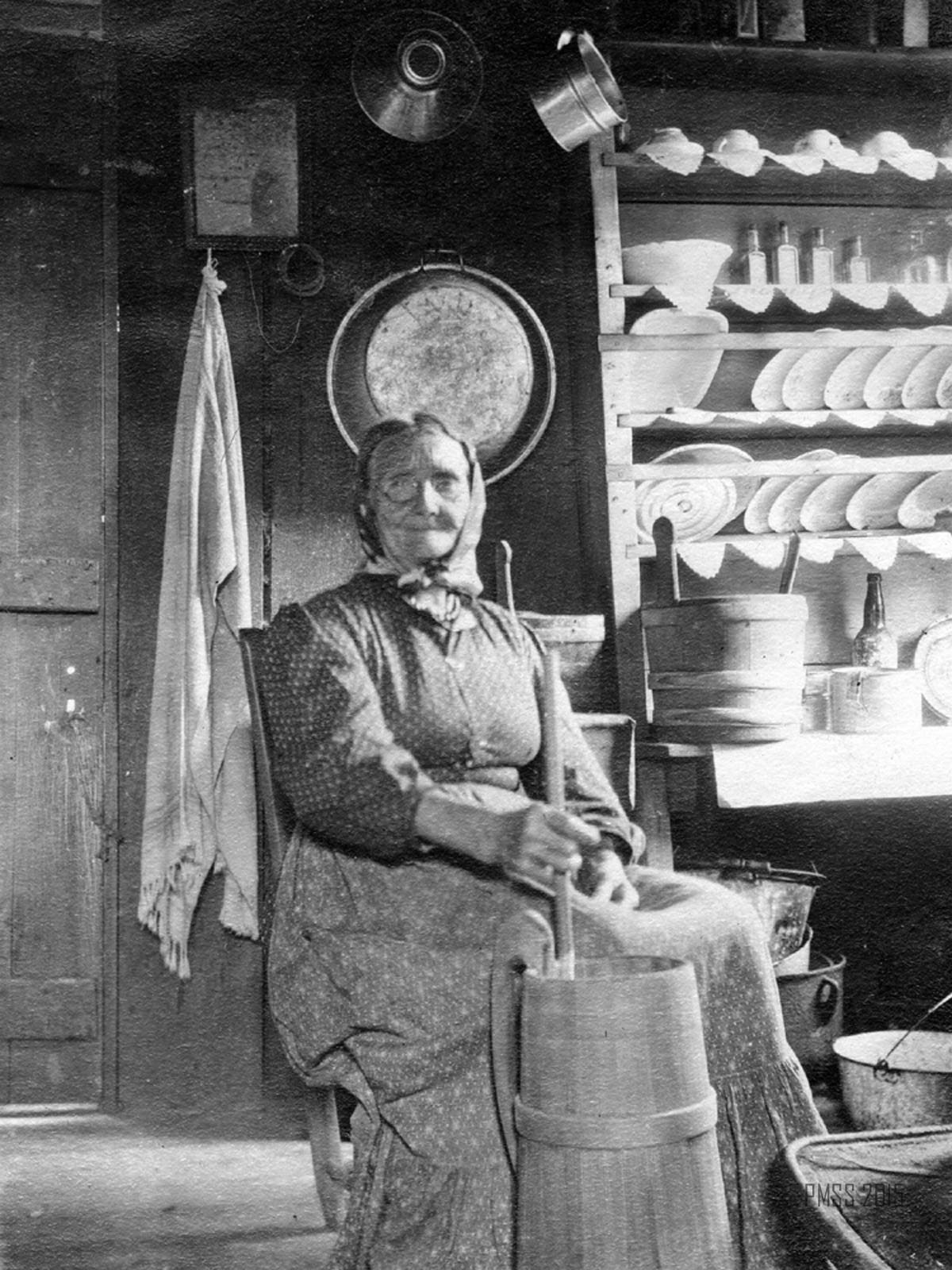
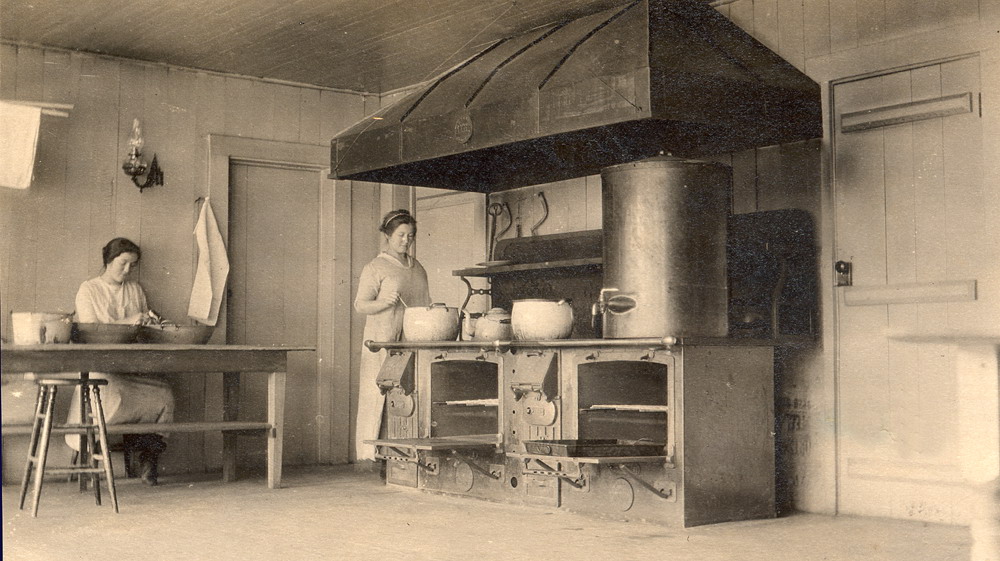
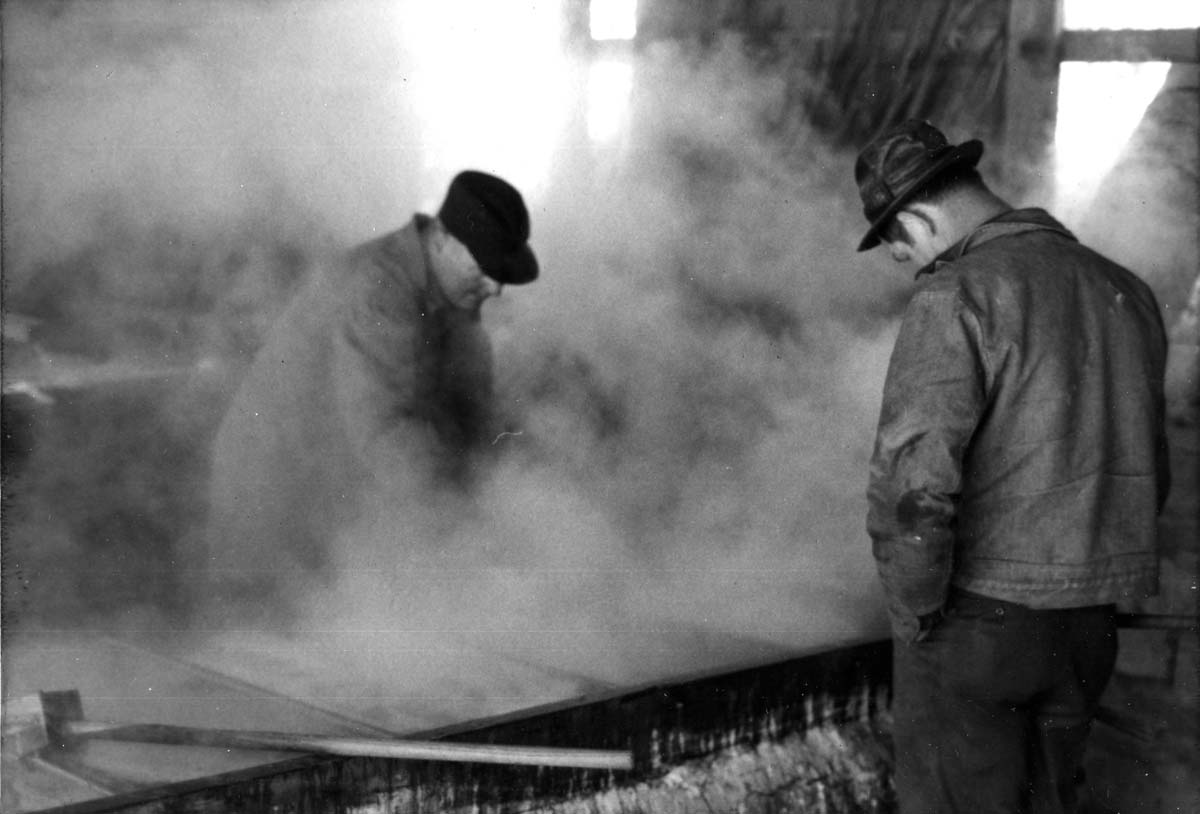
Sheep in the Pine Mountain Community

Pine Mountain Settlement School
POST: DANCING IN THE CABBAGE PATCH
Sheep
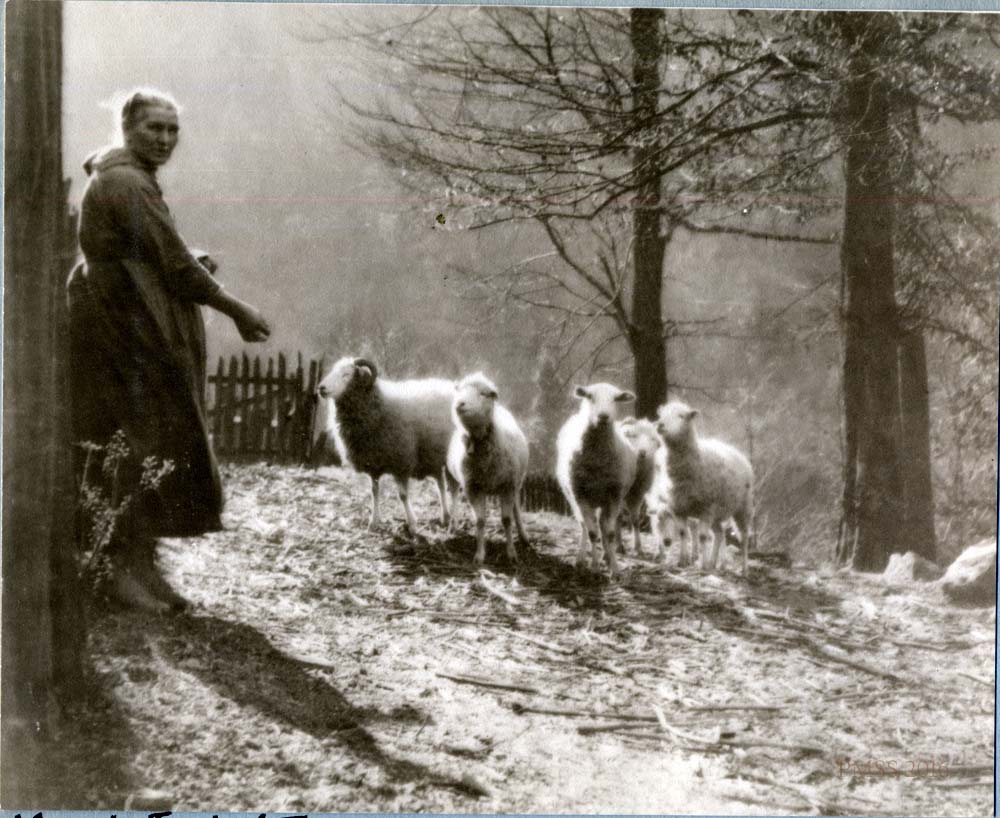


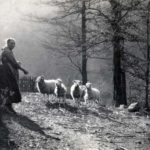
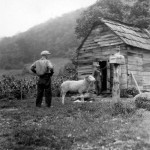
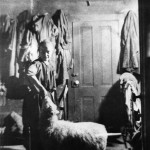
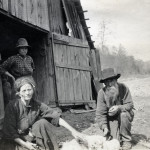
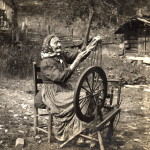
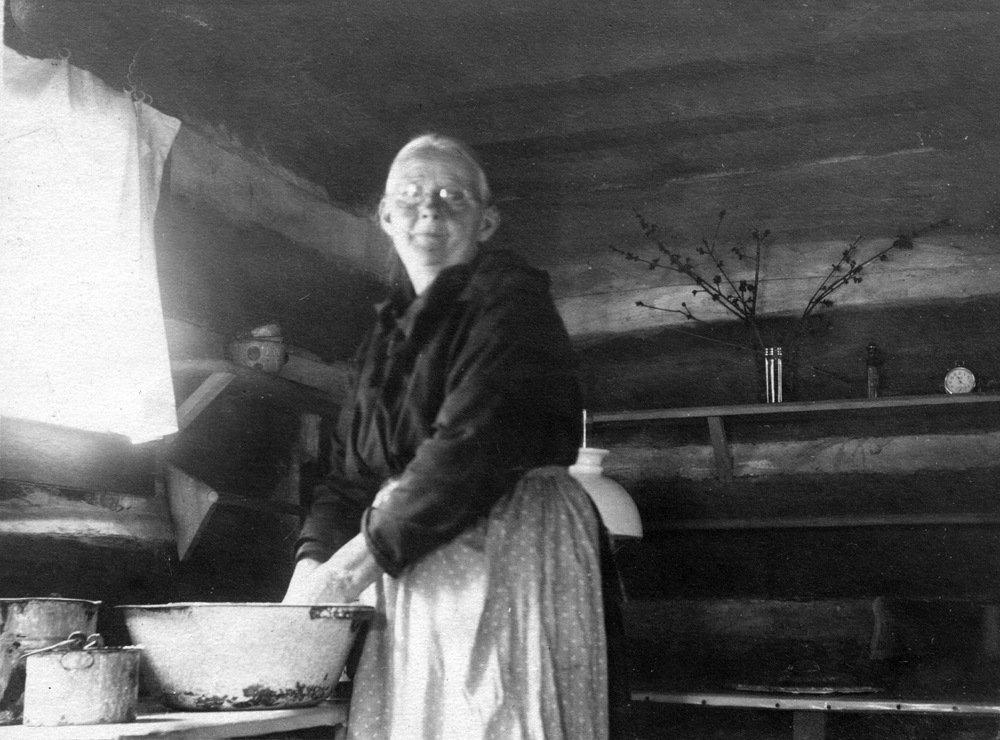
“‘Aunt Jude’ Turner, Big Laurel, about 1925” feeding sheep. [nace_II_album_010.jpg]

TAGS: sheep, agriculture, livestock, shearing, sheep shearing, wool, spinning, carding, weaving, dyeing, shepherds, textiles, looms, pastures, mutton, Thomas D. Clark, Aunt Jude Turner, Southeast Kentucky Sheep Producers Association, Patrick Angel, Merino sheep, Shetland sheep, Kentucky Sheep and Goat Development Office (KSGDO), Sarabeth Parido, sheep consultants, The Woolery


SHEEP

“The hills shall skip like lambs,” she sang
Of the mountain scallops ‘gainst the sky engraved.
Anew with gushing torrents laved
Were the mountain sides, and gay
With sarvice and red maples braved.

Sarah Marcia Loomis, Staff PMSS  c. 1928

SHEEP THROUGH THE YEARS

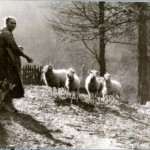
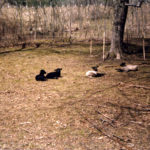
The photograph of Aunt Jude Turner feeding her sheep, seen above, is one of the most iconic photographs in the Pine Mountain Settlement School collections. Scattered throughout the early photographs taken at the School there are images of sheep, suggesting that they were an integral part of the landscape and life in the early years of the north side of the Pine Mountain. This image captures the essence of “romantic” sheep raising. But, was it all bucolic?

Bucolic, serene, and pastoral, are all words often used to describe sheep at pasture, Sometimes these words are found on early Pine Mountain Settlement photographs or on notes that refer to them. These are words that conjure up years gone by and times when many farms in Kentucky had flocks of sheep. But how many sheep were there? And, where do sheep figure into the agrarian life of Kentucky, and particularly into the life of eastern Kentucky? A historical review is revealing and surprising.

THOMAS D. CALRK AND Agrarian Kentucky (1977)

Thomas D. Clark, one of the most esteemed of Kentucky’s historians tackles some of those questions in his small but important book, Agrarian Kentucky, (1977). He tells us that

“The rolling country hills and valleys of Kentucky present a massive and alluring canvas. Dotted with peaceful farmsteads and modest cabins, the land collectively represents the substance and spirit of home. Its rurality has been the womb of a nostalgic history into which Kentuckians have often retreated …

Clark, Thomas D. Agrarian Kentucky, University of Kentucky Press, 1977, p.x. (Kentucky Bicentennial Bookshelf).

Clark’s history of Kentucky’s agrarian past can be eye-opening to those who choose to only give singular recognition to one Kentucky herbivorous animal — and that, the horse. The Kentucky horse was important, but what Clark makes clear in his little book on agrarian life is that along with the horse came a myriad of other farm animals that formed the backbone of rural life and, ultimately, industrial life in early Kentucky.

Agrarian Kentucky Clark tells us, is much more complex than the culture that has grown up around horses and crafts and memories of early pioneers. The common cattle, turkeys, hogs, chickens, goats, and sheep followed the early pioneers as they wagoned — or walked into the western wilderness. Often with possessions slung across the back of a horse or mule, the early pioneers traveled down the Great Wagon Road that ran through the Shenandoah Valley, and as they looked out on the great virgin forests of North Carolina, the great green valleys carved by meandering rivers in southwestern Virginia, and the vast game-lands of what was to become Kentucky, it must have looked like paradise.

As the migrations of settlers and their livestock increased into North Carolina and then back up to southwestern Virginia and into what is now eastern Kentucky, the pioneers were awed to see a wilderness dotted with herbivores —with buffalo, deer, and herds of elk. As they crossed over the Cumberland Gap and the mountains opened gradually into plains, there were even larger herds of buffalo and elk. It was a land ready for settlement and herbivores of all varieties.

What is little recognized is how quickly non-native farm animal species of almost every variety flowed into the state following the early arrival of the pioneers. Large numbers of European sheep were among the earliest arrivals. The livestock that came down the Wilderness Road and on the many flatboats floated down the Ohio was not a trickle. It was a torrent. The animals came, into the broad, sweeping landscape of Kentucky and they quickly adapted and grew strong.

As the pioneers settled in they added the animals that had remained for many of them a part of the nostalgic and bucolic memories of their life in other times and other countries. As wealth began to grow, the animals they owned became, for the settlers a symbol of new-found wealth in a conquered paradise. The scrub cow, mule, nag, sheep, and goats thrived on the lush forage of Kentucky. The evident health and strength of the animal caught the imagination of the early pioneer and began to give way to a sensitivity to the breed of their animals. Breeding began to grow in importance, and with it, the ferocious art of livestock trading.

The many early settlers who came down the Ohio on their flatboats also floated their sparse but precious cargo on the Kentucky, the Cumberland, and the Rockcastle rivers in the mid-eighteenth century. One of the earliest incursions was that represented by the party of the pioneer settler Benjamin Logan, known as “St. Asaph.” He settled in the area of Stanford, then called Logan’s Fort, in what later became Lincoln County. The year was 1775. The later settlements of Lexington, 42 miles north, and Somerset, 32 miles south, placed Logan’s Fort in a critical position for shaping agrarian practice in the heart of Kentucky’s lush grasslands — the Bluegrass.

THE WILDERNESS ROAD

A second route of the pioneer into the wilderness of Kentucky was along what is now known as the Wilderness Road. This primary “road” followed the well-used Indian trails that came from Virginia and that passed through the Cumberland Gap where Kentucky now touches the border of Tennessee. It is this more southern route that is central to an understanding of the early Central Appalachian pioneer family. This growing population of both early-comers and late-comers found the close mountains and private lifestyle of the terrain comforting — and cheap.  They comprised the early settlers of eastern Kentucky and it is not surprising to find names today of the common ancestor who first settled the land. Nolans, Turners, Metcalfs, Boggs, and others formed a closely bonded origin and lifestyle. Sheep were very much a part of their history. 

The Wilderness Road was the route taken by Daniel Boone and his party that eventually led the famous party to their settlement at Boonesboro Fort on the banks of the Kentucky River. When Daniel Boone and his party settled into Boonesboro Fort, it was the same year that the Benjamin Logan party settled near Stanford, or Logan’s Fort, not far away. The magical year for both was 1775.

These two 1775 primary settlements introduced many of the herbivores that became an integral force in growing Kentucky agriculture and that today continue to be foundational to farming in Kentucky. For example, the number of livestock accompanying the early migrants was generally dependent on the number of family members. Historian Clark gives us an interesting formula for dependency. He tells us that a family of four would most likely have brought with them, “... a horse and a mule, a bull, three cows, a ram and three ewes, four boars, five sows and fifteen pigs, a rooster, and two hens.” This estimate is based on what is known about the settlement patterns of the earliest pioneers. But by 1860, this generous allotment of livestock per family of four (an uncommonly low number for Kentucky families of that time) was curtailed by the dwindling supply of pasture. The decrease in pasture, says Clark, changes the estimated distribution of livestock to the family size and is far less generous. He writes

In 1860, by comparison, 21 persons would have had to depend on a horse and a mule; 6 1/2 would have looked to a single cow for milk; 2 would have had a single pig to satisfy their needs for pork; and 1 1/2 persons would have fared better sharing a single beef cow.

Clark, Agrarian … p.37.

However, not all things were equal in the early settlements when it came to sheep. Clark fails to mention sheep in the 1860 picture. By that year the gentle herbivore had already run up against some obstacles. The pioneers who took up settlement in the mountainous regions of eastern Kentucky soon found that sheep needed extra attention. Unlike the hardy hogs that were left to their own devices to forage, mate, give birth, and fatten, did not easily fill the smokehouses of the settlers. The sheep were higher maintenance. They needed to be monitored and protected from cougars and other predators, particularly the growing packs of roaming settler dogs that found the docile sheep an easy target. Further, there were few flat grasslands in the mountains and the uneven uncultivated terrain readily grew the most bothersome cockles, briars, beggers lice, and many prickly burrs that tangled the rich fleece of the sheep and refused to be easily coaxed from their thick coats.

Nevertheless, the early pioneers of eastern Kentucky persisted. While they reduced the number of sheep in their flock according to their household number, they did so thoughtfully. They often measured the flock number against the amount of wool that might come from each sheep sheared and how much could be traded and how much spun into wool for their large families. They grew adept at determining how many skeins of wool could be spun from the pounds of wool on each sheep. It was estimated that one adult sheep could produce about twenty pounds of fleece. It was a good educational mathematical exercise the maintenance of their household “budgets.” It was this simple mathematical formula and others that pointed to a growing disparity in agrarian practice in the two states of Kentucky. Geography had begun to define the distribution of agrarian wealth throughout the Blue Grass and in the eastern regions of Kentucky and it was increasingly uneven.

IN THE 19th CENTURY

While the migration of early settlers had slowed by the turn of the nineteenth century, the traffic across the Cumberland Gap had picked up. But, this traffic was largely going East. The new Eastward traffic was the surge of drovers pushing their livestock along the Wilderness Road to a growing livestock market in cities such as Philadelphia, Baltimore, Richmond, and south to Charleston. It’s estimated that while both the eastern mountain migrations and the Blue Grass migrations of settlers were staggering in their rapid rise during the last half of the eighteenth century, the livestock traffic exporting out of the two areas until the middle of the nineteenth century, was far greater.

Pioneer migrations clearly shaped the future of domestic herbivores, while they also reflected the role that choice played in the formation of distinct cultural lifestyles in Kentucky. The introduction of domestic herbivores into Kentucky defined the two migrant cultures. Where the two cultures met was in their adept dialog at “horse-trading.” The success of both highlanders and lowlanders in managing their livestock wisely and becoming clever “horse-traders” and drovers, kept agrarian life vital in the Blue Grass and all along the Wilderness Road for well over a century. The vibrant trade in livestock was an economic stream as critical to the economy of Kentucky as was the later lumber and coal boom. In the two latter economies, eastern Kentucky excelled…. and not. Neither coal nor trees could quickly be replenished in the market.

Yet, not all was rosy in the livestock trade, either. Thomas Clark, tells us a cautionary tale about the meteoric rise of the Kentucky livestock trade. He describes what he calls the “greatest tragedy” of the boom in livestock production in Kentucky. That was the tragic loss of the state’s lead in sheep production to the poor control of vagrant dogs. It was a loss of control that was both a civic and a political tragedy.

The story goes that because of the dominant political party’s fear of alienating their voter base, legislative action to restrain canines from marauding sheepfolds was never taken. The dogs won over the sheep. Today we train dogs to watch over sheep and goats, but in the earlier years, dogs often ran wild in a pack, much like wolves, that were even more destructive. During the early eras of Pine Mountain Settlement School, the various Directors struggled with similar agrarian tragedies. The early agrarian tragedies were also educational tragedies.

FARM LIFE IN THE PINE MOUNTAIN VALLEY

When Uncle William Creech married Aunt Sal in 1866 they struck out on their own to shape a life for themselves in the Pine Mountain Valley. Like so many pioneers before him, Uncle William brought the necessary sheep along with his new family to the Pine Mountain Valley. Uncle William wrote about the early years in his brief autobiography

“I will now get back to my subject of farm work. So early the next spring my wife children and myself went to getting ready for another crop, them to burning logs and brush and me plowing the ground and planting corn, which we worked hard until the first of August, Clearing land was the greatest industry for the fall and winter for several years until we had enough for what we needed for wheat, corn, rye and flax and buckwheat. In the dry season of the year we had to grind our meal on a hand mill which was very hard work. By raising flax and sheep my wife carded and spun and wove cloth to make clothes for us all while I tanned leather and made all the shoes that we wore. While the days was warm and dry we plowed and hoed corn and wet days and by night I worked in my blacksmith shop and my wife knit and spun. But when the children got large enough to do work the boys helped me and girls helped their mother. But all worked to gather in the cornfield.”

William Creech. A Short Sketch of My Life, after 1913 (written for Ethel de Long)

It is education we now know to be the backbone of successful agrarian practice and few schools have worked harder to integrate the two. At Pine Mountain Katherine Pettit, one of the co-founders of the School, shaped the idea of agrarian training as a kind of “Industrial training” in which she championed both formal education, civic education, and indirectly, political education. In her agrarian “classroom” she aimed to take her passion for the agrarian life and shape students into new citizens who could help shape a new social and civil society in the mountains. Agriculture was a persuasive model and not, as some have claimed, a prop for a cultural agenda. Like the later Ayrshire herd, sheep make for beautiful pictures, but farming sheep and milk cows makes for a marvelous education.

Pettit has been accused of being driven by her cultural interests and her desire to foster cultural programs at Pine Mountain to the exclusion of other needs at the School — particularly agricultural needs. Certainly, weaving and Appalachian weavers were never far from Pettit’s eye, but it was the land and its agricultural and educational potential that drove the bulk of her agendas.

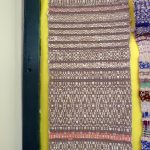
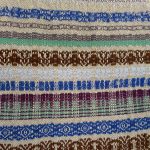
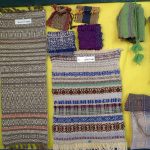
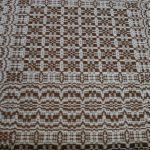
“KIVERS”

In her quest to understand the richness of the Central Appalachians, Pettit discovered “kivers” and they became the focus of her collecting instincts. In a personal letter that Pettit wrote to a friend in 1911, she outlines her fascination with “kivers,” the woven bed covers, the products of many mountain looms. Generally woven of wool raised by the family, spun, and then dyed with natural plants, these “kivers” or coverlets were prized possessions in the mountain families. Katherine Pettit had a passion for “kivers.” She certainly traveled miles to go see and seek her “kivers” but it soon became the “kivers” connection to the educational process of arriving at a “kiver” that held her attention and later her crusade. In instinct, she was a farmer in training and an educator before she was a collector.

… we had to hurry up to the head of Greasy to see Mrs. Shell and her coverlids [weavings]. She is over sixty years old and had just finished shearing her 100 sheep. Then we walked four miles along the foot of Pine Mountain down to Mr. [William] Creech‘s where they had looms, spinning wheels, hackles, etc., and had been longing for years for somebody to come along and tell them where they could get some flax seed to plant. They had been hoping for a school for 30 years and offered 100 acres of land.

Page 8 – [1911_pettit_ltr_0008-1.jpg]

Evelyn K. Wells captures another part of the Pettit-sheep story in a letter home to her family in 1918, in which she again describes the Shell family

https://pinemountainsettlement.net/?page_id=56474 Picture of Shell sheep. Sheep eating neighbor’s corn … “The other day I called on Aunt Sis Shell [Mary Elizabeth Nolan Shell]. She took me into the bedroom to see her wool, the fleeces of 50 sheep, black, Southdown and white, piled high on three feather beds, we have picked out some fleeces — mine, a lovely Southdown, gray-brown, to be woven into a linsey skirt for next winter.”

EVELYN K. WELLS 1918 Excerpts From Letters Home.
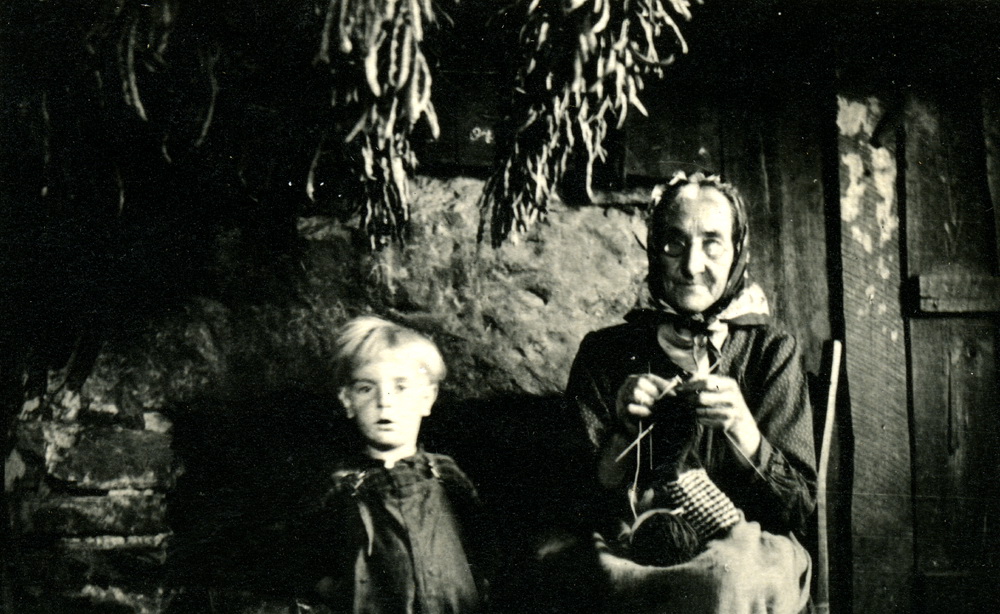
Aunt “Polly” Mary Ann Shell Day knitting, and Josiah (?) with dried “shucky” beans and peppers above their head and fireplace behind them. [hook_album_2blk__014.jpg]

Writing to her family two years earlier in 1916, Evelyn Wells again singles out the Shell family whom she had just visited and suggests that not all sheep farming was bucolic. She describes the visit, “He was most entertaining, telling us all about the game one used to be able to catch, and conditions when the country was really wild.” ….. Later, in her letter, she describes another visit to the Shell home where

“I saw a quaint procession passing, through the bottomland. Aunt Sis stalking along, behind her Uncle John with his beard and slouch hat, and after them a boy driving a sledge drawn by a team of oxen. They are getting in their corn because the sheep are eating it….” 

EVELYN K. WELLS 1916 Excerpts From Letters Home.

It is the agriculture that sits behind each “coverlid” that became a primary concern to Pettit and her community of subsistence farmers.

SHEEP ALONG THE PINE MOUNTAIN
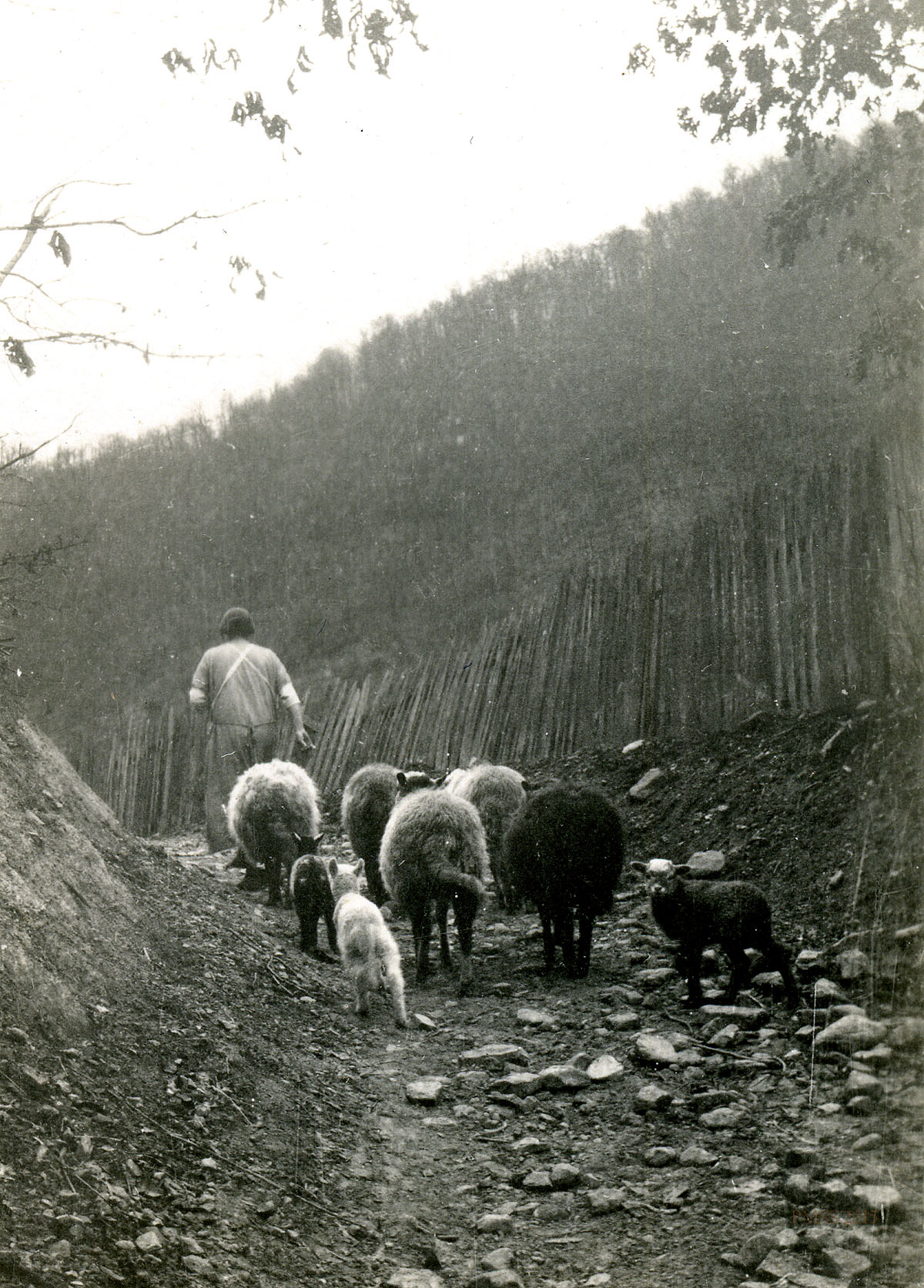
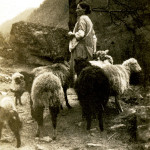
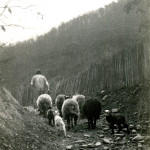
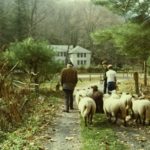
Kingman Album. Woman with sheep following her. [c. 1920’s]  [kingman_021d]

The raising of sheep and the issues of negotiating the open pastures in the first decades of the twentieth century were a source of constant contestation. Usually, disputes were worked out neighbor to neighbor but sometimes — not. Pigs were of the greatest concern as they were often the most destructive farm animal on the loose. Sheep, it appears, could also create issues, such as foraging in a neighbor’s corn patch. One story relayed by Pine Mountain staff member Alice Cobb describes the common incident in which sheep eat a neighbor’s corn crop.

Another incident, also described by Alice Cobb in her brief vignettes of life in the Pine Mountain valley, is more serious and ends up in court but as the incident is re-told it becomes a story of “clever justice”.

All evidence in the Pine Mountain Valley shows that the raising of sheep and the shearing of the sheep for wool was persistent and intermittently practiced in dwindling numbers until the late 1980s. Again Pine Mountain staff member Alice Cobb describes her observations as an “outsider” of a household that is “too evasive to be captured”

There are fifty million “schoolhouses in the foothills” stories to be dramatized, published, gobbled and washed down with laughter and tears. The truth is that the situation is too evasive to be captured except in a net of romance or a mire of realism, and every small incident has its share of both. We from the outside come down to the hills. Many of us see the quaint picture of Mag shearing her sheep and spinning the wool, Grannie Hall dipping vegetable dyes and weaving rare patterns in rare colors; ….

Alice Cobb, Letters

What Cobb does in her insightful and graphic descriptions of life in the Pine Mountain Valley is capture and explode the romantic notion of culture as a singularity only recognized in the photograph or romantic or picturesque story posed to inform the outsider. What she draws our attention to is the pervasive and often grinding agrarian labor of most all life in the Pine Mountain Valley. The multitude of hours it takes to raise sheep, goats, and cows; the back-breaking labor of farming a steep hillside; the desire for education that is devoured by the hours at the simple tasks of making a life. Maintaining a mountain home is an education, but not of the schoolhouse type. The maintenance of that education was not bucolic or picturesque until its conversion into memories and reverie.

The tasks associated with an agrarian life are labor-intensive and demanding on every member of the family. A subsistence farm is not so much a culture as it is a composite of the family’s relationship to the land, their husbandry of their animals, and their household skills in managing their small plots of land and large families. An agrarian existence is often centered on the success or failure of the agriculture skill of the family. The enhancement of this life and the preservation of the memories were at the heart of Pettit’s mission. The “kivers” were her “school books”.

Even earlier, in 1911, three years before Pine Mountain was founded, Katherine Pettit and a large group from Berea traveled to eastern Kentucky. A companion on the journey, Maria McVay [McVey ?], described the trip in a serialized diary published in a major Cincinnati newspaper. Pettit mentions the trip briefly in an early 1911 letter to potential donors for a new mountain School in Harlan County. Written while she was still at Hindman she recalled her first impression of the mountainous eastern region.

Writing from Hindman, she describes the life of families in the Pine Mountain Valley that she witnessed on her very first long trip to the region in 1899. With that group gathered by Berea faculty member Henry Mixter Penniman and other travelers, she was clearly moved by the beauty and the deprivation of the area. Surrounded by kindred spirits, including the suffragist Madeline McDowell Breckenridge,, and the outspoken geographer, “Nellie” Semple [Ellen Churchill Semple], who all had their views about the skills of farming, Pettit began to shape her plans for a school in the Pine Mountain valley.

In her Letter to Friends, she describes the remote valley and with a reflection of deep regret, she also describes the push and pull of industrialization that was manifested in the railroad then entering the mountains. In an effort to prepare mountain communities for the coming industrialization, she began to form a vision that would take native craft and mix it with informed industrial training and traditional educational coursework much like the program she had initiated at Hindman Settlement.

Pettit writes

” …. we had to hurry up to the head of Greasy to see Mrs. Shell and her coverlids [weavings]. She is over sixty years old and had just finished shearing her 100 sheep. Then we walked four miles along the foot of Pine Mountain down to Mr. [William] Creech‘s where they had looms, spinning wheels, hackles, etc., and had been longing for years for somebody to come along and tell them where they could get some flax seed to plant. They had been hoping for a school for 30 years and offered 100 acres of land.….

While we were lying there in those cliffs, looking up at the sky and the eagles soaring above us, we heard the whistle of the locomotive and then [(strike through) our guide] Christopher Columbus [Creech] told us it was the first passenger train going up the Cumberland River twenty miles above Harlan Town to Looney Creek on the Black Mountain and Wasioto Railroad. You can imagine the shock I had when I realized that near this remote mountain region where I stood twelve [(striike-through) eleven] years ago was the railroad. 

Katherine Pettit. Correspondence n.d. (describes an 1899 trip) https://pinemountainsettlement.net/?page_id=39951

There, on that mountain cliff, it seemed, the dream she held for the region merged with that of Aunt Louize in Sally Loomis’ poem, Neverstill, “The hills shall skip like lambs,” she sang —- Of the mountain scallops ‘gainst the sky engraved.

SHEEP IN THE PINE MOUNTAIN VALLEY

Along the Pine Mountain valley sheep were found on many early subsistence farms. In 1918, there is evidence that the Shell’s relationship with sheep was one that was long and deep as found in their knowledge of sheep raising and of weaving. It is probable that the Shell family had one of the earliest sheep flocks in the Pine Mountain Valley.


Emblematic of the return to models of an earlier time was the institution of the Community Farmer’s Day, later called “Fair Day. ” It was a day when the community could come together to show their skills in agriculture practice and animal husbandry. Community Day (Fair Day) was a time when students competed for prizes as the best hog-caller, and, yes, sheep-caller. Fair Day is a day that is still celebrated at Pine Mountain. Does anyone know how to call a sheep, today?

“How many of you ever heard hog calling? After some persuasion by Mr. Morris, the audience warmed up to the occasion and, with Old Aunt Till leading, half a dozen, one of them, little four-year-old Barbara Wilder [Brit and Ella Wilder’s daughter], filed up onto the porch and called the hogs or called the sheep, each in his or her own peculiar idiom. I know now why Mrs. [Alice Joy] Keith, when she first came, wondered what that train was that whistled down the valley at a certain time early each morning.” Community Day 1938

https://pinemountainsettlement.net/?page_id=46476 

The stories of farming sheep were not all joy and bliss. At Pine Mountain, the stories of dogs and sheep also took a darkly humerous turn in a well-known local feud. The story of that feud told by staff member Alice Cobb is about the uneasy relationship of dogs to sheep and the “price” paid for allowing one to dominate the other. Alice tells of an incident in the Pine Mountain valley that resulted in a trial and a long-lived but — on the face of it — amusing animosity. The story revolves around the famous trial of Jim Boggs’ dogs killing Abner’s (Abner Boggs) sheep) https://pinemountainsettlement.net/?page_id=49255 

Bish is the father of Jim Boggs [see Boggs Family], whom we visit at Turkey Fork occasionally. One time I asked Jim what relation he was to Abner, and he said, “He’s my half uncle, but we don’t claim no kin”. That was my first realization that the disagreement was really serious, so after that I avoided the subject in both homes. But the other night Abner brought it up himself. He asked me if I read the papers, and I confessed that I didn’t as much as I should. “Well,” he said, “Miss Cobbs, you’re going to be a reading even in the Indiana papers, some of these days, about little old Abner Bogg a shootin’ Jim Boggs. Cause as sure as that feller steps acrosst my paths a aimin’ to inconvenience me, I’m agoin’ to take a shot right for his heart. Of course I wasn’t alarmed, because Abner wouldn’t hurt anything — he just talks all the time. But he went on to tell us about the famous dog trial at Big Laurel, which seemed to be one of his quarrels with Jim. It seems that Jim’s dogs had killed Abner’s sheep — at least Abner thought they had, and he went and got a warrant, and arrested the dogs, brought them up to Big Laurel to the magistrate (that was Clarence Patterson), and they had a trial, with Bish BoggsSilus [Silas ?] TurnerJohn Lewis, and someone else as the jury. Well the end of it was that they indicted the dogs for murder, and the jury voted for them to be sentenced, and then Jim Boggs went over to Harlan and got himself appointed a Deputy Sherriff and that gave him some influence with Clarence Patterson, and so the dogs were let out on good behaviour, and Abner’s lawsuit came to nothing.

Now if that isn’t real artistry, I don’t know what it is. Nobody but Abner Boggs would have had sufficient imagination to do a thing like that — he is truly an artist.

ALICE COBB STORIES Farewell Trip to Line Fork June 14, 1937 https://pinemountainsettlement.net/?page_id=49255 

AGRARIAN-INDUSTRIAL EDUCATION “Sheep Calling” and the Community Fair

How did Pettit’s vision of a new agrarian-industrial education in the mountains begin? It began with an old set of customs married to a new and human-level industrial vision and idea in the mind of the Pettit, her co-founder, Ethel de Long, and her mentor, William Creech. Agriculture was an opportunity for social reconstruction and if a cultural re-birth of skilled craft could be interwoven — all the better. Agriculture and the raising of sheep were given a fervent push by the forceful personality of Katherine Pettit and those who were inspired by her and who followed her.

In 1941, the announcement of the Community Fair called forward a past more than a century old and a past that had a tradition at the Fair. But one that held promise for future centuries.

ANNUAL COMMUNITY DAY TO BE HELD OCTOBER 11 — HOST JUNIOR CLASS to dance and sing, eat ice cream, watch the set running and dramatization, practice sheep and hog calling; hosted by the Junior class; entertainment by five rural schools in the surrounding community. “Pine Mountain is keeping alive folk ways that are in danger of being lost or forgotten in the swift pace of the machine age, which is even now finding its way into the most remote sections of the Kentucky mountains.”

Volume 6 Pine Mountain Settlement School, September 1941
Harlan County, Kentucky, No. 1

As they did so many times, Pine Mountain looked to earlier practices of agrarian ways to enhance their current practice and to offset the growing cultural, social, and environmental impact of coal mining on the region. During both wars coal mining camps were springing up all over Harlan County and in the surrounding counties. Enormous loads of coal and young men were leaving the mountains to satisfy the war need. The reference to “machine age” is an indirect reference to a pre-war popular book by Malcolm Ross, The Machine Age in the Hills, 1933 — a favorite of Glyn Morris, director during the 1930s and early 40s.

While the School was lamenting the passing of earlier times and struggling with the ravages of mining, the number of sheep in Kentucky had been growing. The 2013 issue of the UK School of Agriculture Magazine, “No Business Like Sheep Business,” tells us that in 1942 the number of sheep in Kentucky had grown to over 1.4 million sheep. In the United States, there were 56.2 million sheep. Kentucky held the record for the most sheep per square mile of any state east of the Mississippi, according to the article.

THE PINE MOUNTAIN SETTLEMENT SHEEP EXPERIMENT
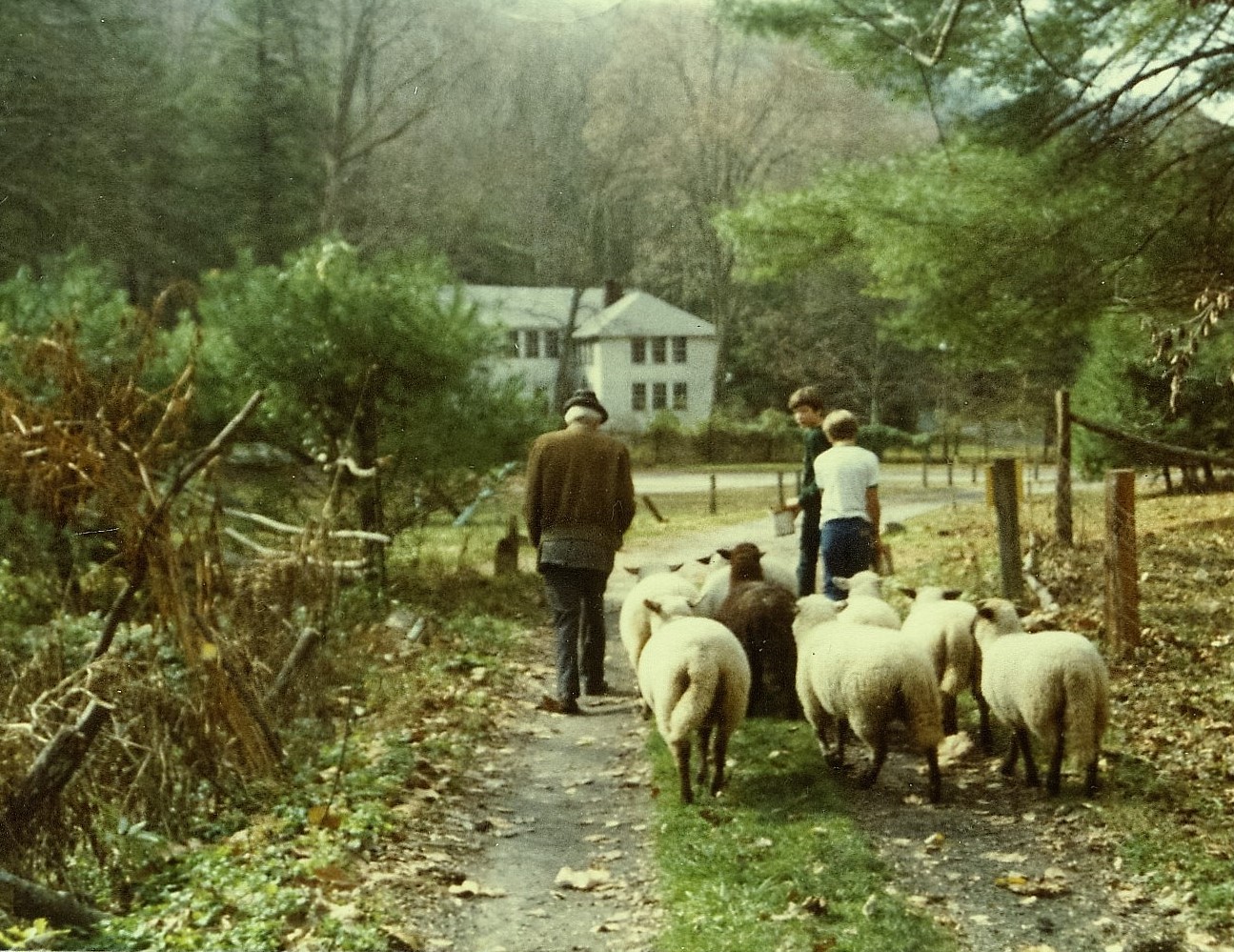
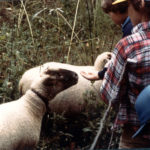
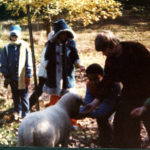
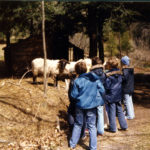
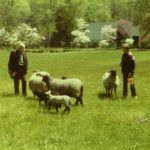
Malcolm Army’s grandsons, Michael and Eric with Burton Rogers and the sheep, 1980s. Photo courtesy of Suzanne Arny Fullar. [pmss_archives_arny_ photo1.jpg]

In the early 1950s there was an attempt to bring sheep back to the Pine Mountain Valley at the School. Sometime in 1953-54 a small flock of Merino sheep was purchased and was placed in the fields of the school. The Ayrshire herd had been sold and five beef cattle were purchased and they accompanied the sheep. The long-time farmer, William Hayes, had moved across the mountain to a new job as the Forest Ranger for the Kentenia Ranger Station and Brit Wilder, who carried many responsibilities on the farm, was assigned as acting head of Maintenance and the direction of the reduced farm. Brit was given sheep duty.

The School was slowly adjusting to cooperation with Harlan County Schools in the new Community School and everything was focused on making that educational experience work and the livestock were not high on the school’s radar. Pulled in many directions at once, in 1958-1959 the pilot trial of sheep at Pine Mountain ended, most likely due to the over-extension of staff to provide for their care. Brit Wilder was clearly over-committed by his responsibility to the farm and to maintenance.

In the 1970s there were intermittent attempts to bring back sheep and to re-focus on weaving. The period was marked by brief programs as the School that attempted to integrate sheep into the new Environmental Education offerings, Further, it was believed that the sheep could add to the new community Intervention program which also used weaving as an integrated part of its educational programming. It was during this time that community artisan, Sarah Bailey, led the School back to sheep.

SARAH BAILEY

Sarah Bailey was one of the most dedicated of the later crafts persons to work at the School and her efforts to bring natural dyeing back to the program and to maintain a weaving studio is fondly remembered by those who were privileged to work with her. Her full biography charts the important work she did for the School and chronicles her deep commitment to the craft of weaving and so many other mountain crafts. Her recommendations for a craft program are sound and still consulted but her reflections on sheep are not known.

SHEEP and PINE MOUNTAIN TODAY

Sheep have again entered into the Pine Mountain Settlement School conversation. Under the new direction of Preston Jones, the School has re-focused on the richness of the School’s agricultural heritage and married that to his skills and knowledge of agriculture. Preston’s years of outstanding work with Grow Appalachia and the recent enthusiasm of Patrick Angel, a former Pine Mountain Board member and sheep farmer, have led to new agrarian interests. The interests center on sheep and goat farming and a series of conversations have revitalized ideas around a demonstration project of sheep raising.

On August 13, 2020 a meeting was held via ZOOM to discuss the possibilities of a collaboration that would bring sheep back to Pine Mountain and would again link the agrarian past with a craft future. In attendance were Preston Jones, PMSS Executive Director, Patrick Angel, a sheep farmer and President of the Southeast Kentucky Sheep Growers Association [SEKSPA], Sarabeth Parido, a sheep farmer, wool producer, and craft workshop organizer, Ann Angel Eberhardt,co-editor of this website, and Helen Wykle, PMSS Board member and co-editor of the PMSS Archive web site.
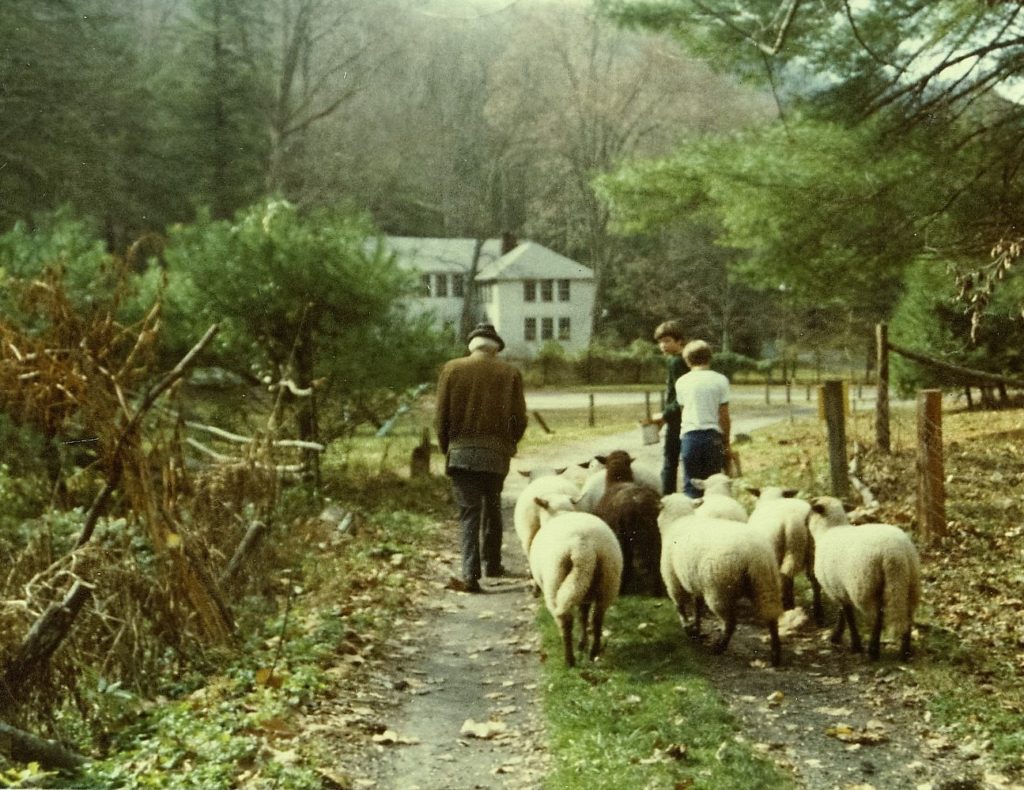
Sheep and Malcolm Army’s grandsons, Michael and Eric with Burton Rogers, 1980s. Photo courtesy of Suzanne Arny Fullar. [pmss_archives_arny_ photo1.jpg]
UPDATE:  In the Fall of 2022 sheep returned to the campus of Pine Mountain in a cooperative project with Southeast Kentucky Sheep Growers Association [SEKSPA]

The group discussed resources and options that could be exercised under COVID restrictions. Also discussed were a range of options for the types of sheep and institutional needs and the economic impact of new directions. The two options of raising sheep for meat or for wool were discussed. Both the agrarian idea and the craft focus were seen to have good instructional potential for the School as well as a revenue stream. The various programs that might be developed around a small demonstration sheep project at the School were extensive but seen to be very feasible based on models offered by PMSS and by Patrick and Sarabeth.

If there is interest in exploring this path of returning sheep to the School and building workshops around this new farm/craft direction, please contact the PMSS office and schedule time to speak with Jason Brashear, Interim Director. It is important that all interested parties explore all the options this opportunity provides. 

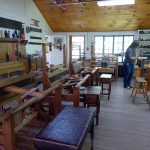
Working with the Kentucky Sheep and Goat Development Office (KSGDO) in Frankfort and their craft consultant, Sarabeth Parido, is available to provide multiple educational workshops (small and COVID-safe) and/or virtual classes filmed at PMSS for distribution. Other options proposed in the meeting focused on the use of local and regional resources. Craft sessions were proposed as 3-5 hour sessions for very reasonable fees that would encompass a materials fee, registration fee, and cost of lodging and meals and that could be extended to seminar weekends, and other time frames, depending on COVID guidelines and enrollment. Pine Mountain is ideally suited for small groups and “distancing.” The large weaving studio at the school has 24 operational looms of variable size and a small stockpile of supplies. Examples of possible instruction workshops follow

  • weaving instruction classes (based on levels)
  • natural fiber workshops
  • natural dye workshops
  • felting workshop
  • raising sheep and managing small sheep farms, how-to and hands-on
  • various highly skilled artisans offering weaving and wool craft classes
  • basket weaving with wool
  • knitting worshops
  • instruction and guidelines for establishing a small sheep-centered business
  • goat cheese
  • goat soap
  • goat milk processing
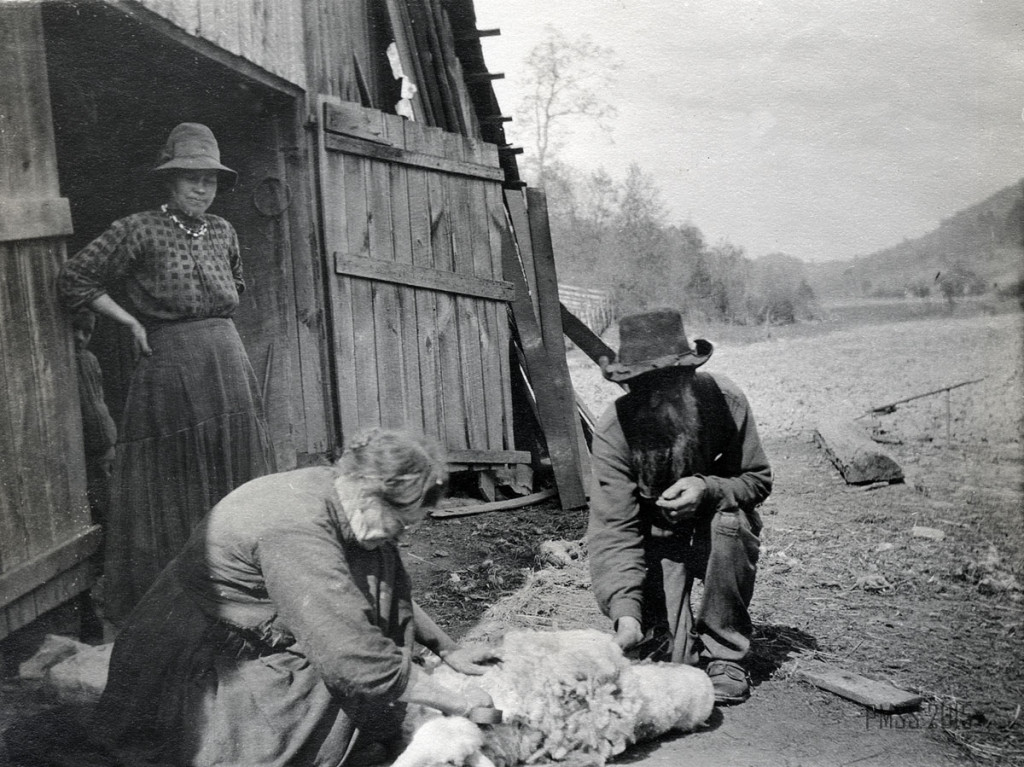
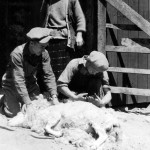
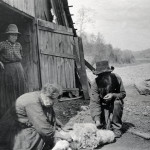
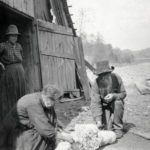
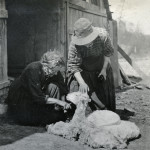
0046a P. Roettinger Album.”Sheep Shearing, Uncle John Shell, Aunt Sis Shell, and Mrs. Joe Day.” [Woman standing next to a barn on left, watching man and woman sheer a sheep.]

SEE – RELATED MATERIAL

FARM GUIDE TO SHEEP, GOATS, CRAFT, WEAVING

http://www2.ca.uky.edu/agcomm/Magazine/2013/Summer2013/story3.html The Magazine, Univ. of KY Sheep article –excellent
No Business Like Sheep Business – UK College of Agriculturewww2.ca.uky.edu › Magazine › Summer2013 › story3

https://pinemountainsettlement.net/?page_id=62470 Describes Wildflower and Bird Weekends, Summer Spinning Bee, led by local craftswoman Sarah Bailey and members of the Kentucky Weaver’s Guild. 119 attenders went through all the old-time intricate processes of shearing the sheep, carding and spinning the wool into yarn, dyeing yarn with vegetable dyes, and finally weaving the patterns. Textile Workshop. 1974-75

https://pinemountainsettlement.net/?page_id=61483 Pictures of sheep … 1970s

https://pinemountainsettlement.net/?page_id=53122 Aunt Jude Turner picture with sheep. (008) 1925

https://pinemountainsettlement.net/?page_id=52294 Shearing sheep (Shell family)

https://pinemountainsettlement.net/?page_id=48966 Alice Cobb Story of raising sheep and living off the land.

https://pinemountainsettlement.net/?page_id=48730 Florence Reeves story about Aunt Phronie .. describes her “pre delight” the care of sheep and took peace ad quiet as she carded ad spun the wool….

https://pinemountainsettlement.net/?page_id=47705 Mary Rogers subject directory: weaving of sheep wool

https://pinemountainsettlement.net/?page_id=15574 Sarah Bailey 5 entries …as she demonstrated how to shear, card, dye, and spin sheep’s wool. “THE COMMUNITY. Old friends of the School would have especially enjoyed the Spinning Bee held last summer under the direction of Mrs. Sarah Bailey, neighbor and well-known craftswoman. She and members of the Kentucky Weaver’s Guild led the 119 attendees through all the old-time intricate processes of shearing the sheep, carding and spinning the wool into yarn, dyeing the yarn with vegetable dyes, and finally weaving the patterns. It was three days out of history!” On July 13, 1935, Sarah married Frank Bailey. The couple built their own house on a small farm where they raised a variety of farm animals, including sheep which provided the wool for Sarah’s spinning, weaving and knitting. Sarah was known for her excellent cooking skills, using produce grown in her enormous garden…”

https://pinemountainsettlement.net/?page_id=41225 Aunt Nance Templeton. Great story on shearing and weaving with sheep wool….Alice Cobb as told by Pettit.

https://pinemountainsettlement.net/?page_id=41126 Uncle Wiliam raising sheep before PMSS created…

BIBLIOGRAPHY

No Business Like Sheep Business – UK College of Agriculturewww2.ca.uky.edu › Magazine › SUMMER2013 › story3

  • Jul 1, 2013 – Kentucky sheep producers are tapping into a rich history. Stone Age humans domesticated sheep 10,000 years ago in Asia Minor—the first farm animals on record. They were easy to handle, and they produced meat, milk, fiber, and shelter.

A Brave and Imaginative Plan Takes Shape

Pine Mountain Settlement School
DANCING IN THE CABBAGE PATCH
A Brave and Imaginative Plan Takes Shape
Lewis Lyttle ( ) – A Key Player in the Founding of PMSS

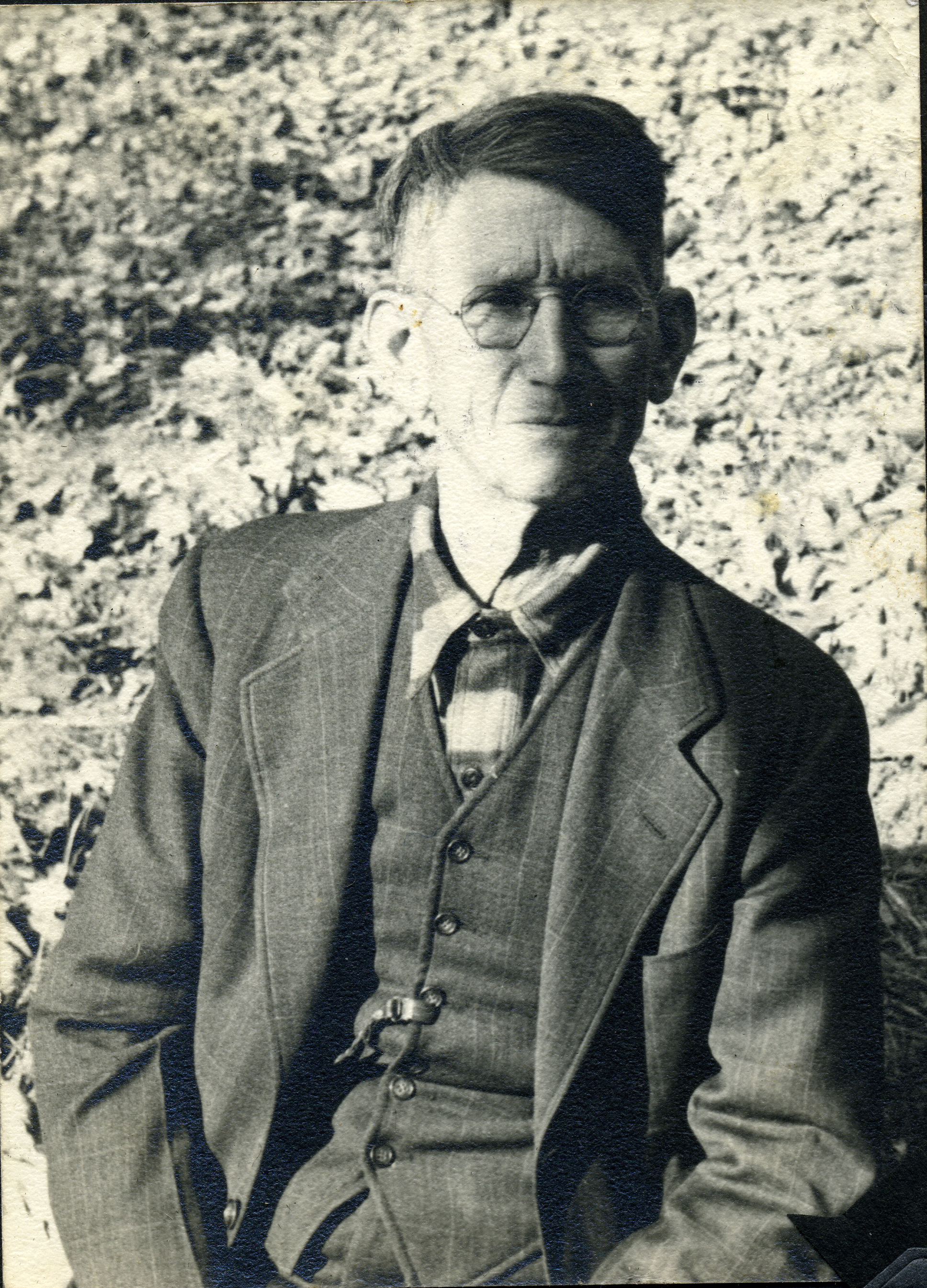
Lewis Lyttle (1868-1950).[rood_083.jpg]

Reverend Lewis Lyttle, an itinerant Baptist preacher, knew intimately what he was writing about in his 1911 letters to Katherine Pettit. During his visits to the Pine Mountain area as a mountain missionary attending to the spiritual needs of the community, he learned firsthand the severe educational, medical, and cultural needs of the people. When he wrote to Katherine Pettit in the first years of the 1900s his letters were impassioned pleas for the people of the region. He asked Pettit to consider building a new school on a portion of land that he had seen and that he suggested was rich with potential for a school. He wrote, 

“I think there is a good place here where Greasy, Middle Fork, Line Fork, Straight Creek, Leatherwood, and Cutshin, all head in against the Pine Mountain. Pure air, pure water, and plenty of children to enjoy it.”

Lyttle, having seen Pettit’s work at WCTU (Women’s Christian Temperance Union) Settlement School (later known as Hindman Settlement School), had every hope that the same could be done in Harlan County in the Pine Mountain Valley.  It was clear to Lyttle that Pettit had the skills that could handle such an endeavor. Pettit not only understood the needs of the area but she also had a reputation for action and a no-nonsense leadership style that had already proved effective in the founding of the Hindman Settlement.

Rev. Lyttle wrote to Pettit 

“I would shrink from asking anyone but you to undertake to start a school in such conditions as we will have to meet but I know you understand them.”

Lyttle had ideas but no money, no land, and no aptitude for breaking ground, building out the facilities, or negotiating the finances. However, he knew landowners and community leaders who had these skills — and he knew Katherine Pettit — at least he believed he did. 

Lyttle began by preaching the idea of a school to the community. As Lyttle’s idea of a new school began to take shape in the mind of the community, William Creech and other valley families such as the Metcalfs, the Turners, and others called for a school, Lyttle continued to serve as a liaison between the community, the landowners, and with Pettit and later with Ethel de Long, her co-worker at Hindman. 

Katherine Pettit and Ethel de Long had been struggling with their roles at Hindman and were ready for a new venture. Negotiating the exit from Hindman was not easy but  Pettit smoothed the edges. She was both a masterful negotiator and a fiercely independent presence. By suggesting the Pine Mountain idea as an extension of the settlement idea, she kept her relationships at Hindman while convincing Ethel de Long, one of Hindman’s most progressive educators to join her in the Pine Mountain venture. The Knox County school was struggling with increasing costs, a lack of farming land, and a dwindling donor base. 

Pettit and de Long became the co-founders of the Pine Mountain Settlement School.  Building on the ideas of William Creech and his generous donation of land. the two women ventured deeper into the Appalachian mountains. Their sanguine and determined success in founding the institution at Lyttle’s suggested location was a convergence of luck, savvy, and timing. The resulting institution was also a school with a well-chosen mission. It was one that has proved resilient enough to last for over 100 years. Part of the resiliency of Pine Mountain Settlement is  the ecumenical foundation that Pettit and de Long instituted. It was a foundation that served the future. Successors in the governance and administration worked within the flexible framework established by the founders and this appears to have played a significant role in ensuring its longevity. 

While Lyttle was strongly immersed in his Baptist roots, he was also a pragmatist.  The School was never sectarian but was founded as a Christ-centered institution, not under the sway of any one religious denomination. Like Lytle and William Creech, the primary goals of the new school that  Pettit and Zande hoped to build focused on education, civic responsibility, and human empathy.

In the letters of Lewis Lyttle to Katherine Pettit, one can feel the urgent appeals to reform all three important areas of life in the community.  Yet, education, civic responsibility, and human empathy do not take easily to reform. In the area surrounding the new school, the challenges were enormous. Feuding,  drinking, and carousing had become a sport.  Schools were few and far between and empathy could quickly be short in supply if a famiy member was disabused by a neighbor. Lyttle in a letter to Pettit asked that she build a school that would  “invest in the character of these boys and girls.” The letters, of Lyttle recently added to the Pine Mountain Settlement School Collections website, present an early road map to the development of the School and its education, civic responsibility. and human empathy in the areas of service. 

THE ECUMENICAL APPROACH

Pettit and many of her colleagues at Hindman were steeped in the national Settlement Movement that was centered on the work of Jane Addams at Hull House in Chicago. The urban movement had much in common with the strong egalitarian and independent attitudes of mountain people. Both the early settlers of the Southern Appalachians and the founders of the Settlement Movement shared many of the precepts of the prevailing Protestant religions of the day — Methodists, Presbyterians, Lutherans, Congregationalists, and Baptists. Later years brought many other religious practitioners to the area such as Shakers, Mormons, Catholics, Mennonites, Buddhists, Muslims, Jews, Shinto, and others. However, no religion was as entrenched as dramatically as the Baptist sects.

In the early years of the twentieth century, Lewis Lyttle, as a Baptist itinerate preacher, knew he would never be far from a call to preach in the Central Appalachians. In the 18th century, the Presbyterians held sway in many pockets of the region but the religion did not meld well with the isolation and independent dwellers of the mountains. Many, if not most were descendants of the early European Dissenters and dissimulation was a second nature. But, as the population demographic changed with the industrial age of coal, this heritage of dissimulation, found mainly in Baptists and their many splinter denominations, began to shift. 

The shift within the greater population of the Central Appalachianssectarian institutions, but Pine Mountain funded on a non-sectarian base, did well.  Early in the settlement of the Central Appalachians, Baptist sects dominated many rural communities. An inventory of denominations in 1900 shows Baptists accounting for more than one-third of the total church memberships in the mountains of Kentucky. With the Bible as their supreme guide, many splinter groups reserved their right to their interpretation of the Holy Word, and small churches were established in the many small communities. The families were often defined by their geography and their kinships, more than their adherence to a specific dogma.

This fragmented geography, population, and religious disparity of the so-called “Southern Mountaineers” led Samuel Tyndale Wilson in his book, The Southern Mountaineer (1906) to declare in his small book, that the “Appalachian Problem” was found in its seven peculiarities: deep-seated Americanism; Protestantism; White; Country [i.e. rural]; Varied and Complex; Delicate; and Urgent. Wilson was a student and then a professor at Maryville College in Tennessee,

Writing from a Presbyterian perspective, Wilson and others have been described as leaders in shifting the focus of social/religious uplift from the Black South to the Appalachian mountaineer. The “problem”, as seen by Wilson and many others of his time, was

“How are we to bring certain belated and submerged Appalachian blood brethren of ours out into the complete enjoyment of the twentieth-century civilization and Christianity?”

The difficulty with this “problem,” was the many varieties of “Christian” and the growing competition for souls. Further, some “soul winners” held more sway than others in Eastern Kentucky.

SOUL WINNERS AND THE REV. EDWARD O. GUERRANT

Kathrine Pettit was strongly influenced by the Social Gospel Movement and the work of The Reverend Edward O. Guerrant, who was a family friend, a physician as well as a minister. Guerrant, founder of the “Soul Winner Society,” spent many years in the mountains of eastern Kentucky. Along with the Rev. Stuart Robinson (1814-1881), he was instrumental in bringing together many of the ideas of the Settlement Movement into mountain mission work. Both Robinson [Stuart Robinson School, Blackey, KY] and Guerrant [Witherspoon College (Buckhorn School) and others] dominated the religious landscape of Eastern Kentucky. While a direct connection cannot be established between Guerrant and Lyttle, it is sure that they were familiars. 

While Guerrant’s “Soul Winner” sounds like a competition for souls, the Social Gospel that Guerrant proposed was more one of conciliation, and his role was one of a conciliator between the various religious factions. Guerrant saw the Soul Winners as inter-denominational — not favoring one religion or sect over another. From his base near Mt. Sterling, Kentucky, and not far from Berea College, Guerrant could easily strike out to the mountains of Eastern Kentucky.  

What is more well-known is the influence of Guerrant upon the Pettits in their Blue Grass household near Lexington where he was frequently a visitor. His many tales of the area had long been shared with his friends the Pettits. Guerrant’s ideas likely stuck with Katherine Pettit as she listened to the banter in her household as she grew up. Following her junkets into the eastern mountains she began to know all too well how fragmented the religious tenets were in the region.  On the need to exercise caution and more than a little conciliatory wisdom, Lyttle, Pettit and Guerrant were all in accord.

Pettit entered the region remarkably well prepared for the task before her. Working with Lyttle and under the shadow of the work begun by Guerrant and other progressive reformers, Pettit was able to adapt the settlement movement initiatives.  She had learned first-hand at Hindman the basics and she adapted those and melded them with the missionary energy found in the early Appalachian mission schools.  The early residential schools that grew under the watchful eye of Guerrant became a lasting model for Pettit.  However, the lessons learned in those decidedly sectarian models were modified by Pettit and de Long. Their vision grew into a push for a non-sectarian and strong educational combination — Christian, but not bound to any denomination or sect. Pettit moved forward with a studied Progressive force, a hands-on agricultural knowledge, and a deep commitment to the lessons learned in the Settlement Movement. Pettit was more intent on enriching minds, bodies, and character than on sending souls to heaven. She was, as described in the article by

RECORDING COMMUNITY 

The letters of Lewis Lyttle and the insights pulled from the writings of Katherine Pettit reveal an informal, interpretative, and practical view of community development in the early years of the Pine Mountain Settlement School. The School’s relations with the Pine Mountain valley and its people focused on education and agrarian reform  It is clear from the letters of Pettit and Lyttle that the nature of the community fascinated them. Not just the “kivers” that Pettit so diligently collected, but the language, the agricultural practice, the relationships, show Pettit’s deep love for the land and the people. She spent a lifetime gathering snippets of wisdom which she recorded in her “Common Book,” a scrapbook of common wisdom, quotes, ideas, Biblical interpretations, and medicinal and mental health practices. The “Common Book,” held by the University of Kentucky, with copies at Berea and a poor mimeograph copy at Pine Mountain, is probably the most intimate record we have of the corners of early Appalachian life that are so difficult escribe. That Pettit was fascinated these “snippets” is much more that just a curiousity. The cultural picture gleaned from the scrapbook informs both Pettit and her Pine Mountain community. As a record of Pine Mountain’s essence and that of its founder, the “snippits” are,  perhaps, as close as we will get to an understanding of Pettit and hr motivations.

The letters of Pettit are anther means of getting close to the enigmatic founder, Katherine Pettit. They come close to revealing her motivations and her hidden personality. In the small body of personal comments found in her letters and tjose of her correspondents, Pettit’s personality begins to take shape.. It is unlikely that an intimate portrait can be drawn, but the letters help to give shape to her planning processes.  Through time the history of Pine Mountain Settlement School is revealed in its letters — internal and external..

Both Lyttle and Pettit worked diligently to contribute to the institution even after retirement. Lyttle continued to preach and as a formidable Harlan County Judge, he raised “judgement ” to another level — that of civic judgement. Until her death in 1938, Pettit kept an ever-watchful eye on the School and in a scattered array of letters she kept a watchful eye on the institution to which she gave birth and longevity.  She contiued to keep in touch with  Lyttle, and it is difficult to tell if she was at his beck and call or if he was responding to the force of her powerful personality. The lessons and the synergy of both are woven into the fabric of the School.

HHW w/ light editing by AAE


See Also:

LEWIS LYTTLE Rev. Biography

KATHERINE PETTIT Biography

KATHERINE PETTIT CORRESPONDENCE 1911 August – December
In these letters by PMSS’s co-founder, the seeds of PMSS were planted and planning for a school began.

KATHERINE PETTIT CORRESPONDENCE 1911 My Dear Friend Letter, May 27, 1911
This letter, dated May 27, 1911 and written by Katherine Pettit, recounts a visit by Pettit, Rev. Lyttle, PMSS nurse Harriet Butler and Stephen Guilford (a former Hindman student) through four Eastern Kentucky counties to view a site at Pine Mountain that was proposed by Rev. Lyttle for a new school and for Pettit to visit homes that wove “coverlids” — Pettit’s strong interest.

An earlier trip to Pine Mountain by both Pettit and de Long was recorded by Lewis Lyttle to have taken place in the spring of 1910.  That visit was described by Pettit when the vision she held for so long began to be realized to build an industrial training school in the mountains. Enthusiastic descriptions in Pettit’s earlier letter were used in de Long’s 1911 letter as a way to prompt readers to make donations.

This is a critical document for the Pine Mountain Settlement School as it shows the early passion of Pettit to build a school at Pine Mountain while she was still at Hindman and maps to the later Ethel de Long DEAR FRIEND Letter of 1911 which was a fundraising letter to start the institution at Pine Mountain.

DEAR FRIEND Letters 1911 (Hindman) (Signed by Ethel de Long.) This early fund-raising letter by Ethel de Long appears to rely on a previous Katherine Pettit letter which de Long says inspired the move to Pine Mountain by the two founders.

BIBLIOGRAPHY

Horine, Kristy Robinson. “Practical Idealist,”

Huddle, Mark Andrew. “Soul Winner: Edward O. Guerrant, the Kentucky Home Missions, and the “Discovery” of Appalachia.” Ohio Valley History, vol. 5, No. 4, Winter 2005, pp. 47-64

Wilson, Samuel Tyndale D.D., The Southern Mountaineers, New York: Literature Dept., Presbyterian Home Missions, 1906.

LEWIS LYTTLE Letters to Katherine Pettit 1911
LEWIS LYTTLE Letters to Pettit and Nolan 1912
LEWIS LYTTLE Rev. Biography


Salamanders at Pine Mountain Settlement School

Pine Mountain Settlement School
DANCING IN THE CABBAGE PATCH
Salamanders at Pine Mountain Settlement School
Environmental Education

SALAMANDERS at Pine Mountain Settlement School

Plethedon cinereus. Red-backed Salamander
[Brian Gratwicke [CC BY 2.0 (https://creativecommons.org/licenses/by/2.0)] Wikimedia Commons

TAGS:  salamanders, green salamander, Pine Mountain Settlement School, Clifford H. Pope, Harlan County, Kentucky, Plethdons, Plethodon Aneides aeneus, Greasy Creek, Limestone Creek, 1928 , ecological life histories, chestnut trees, ecological history, eggs, hibernation, salamander aggression, red-backed salamanders


The salamanders of Pine Mountain Settlement School are some of its most fascinating residents and like the School, they have an engaging history- one that has captured the attention of herpetologists through the years.

In 1928, Clifford H. Pope a herpetologist and conservationist with the American Museum of Natural History, engaged in a field study of salamanders from the mountains of North Carolina to the Cumberland Plateau of Kentucky. His study was far-ranging, and one segment took place at Pine Mountain Settlement School in Harlan County, Kentucky. Funded by the Douglas Burden Research Fund, Pope was at the School for the purpose of a field study to determine the relationships of four species of the genus Plethodon — P. glutinosus, P. shermani, P. jordani, and P. metcalfi. The focus of Pope’s work at Pine Mountain was a species within the Plethodontidae family, known as Aneides aeneus. Also called the “green salamander,” it is today a rare lungless salamander seldom encountered in the region.

The Plethodon salamander genus

Green salamander from Breaks Interstate Park [Brian Gratwicke [CC BY 2.0 (https://creativecommons.org/licenses/by/2.0) ]Wikipedia

In his published research in American Museum Novitates, No. 306, April 14, 1928, he noted the hospitality he received at the School from “Mrs. Ethel de Long Zande and her colleagues who made me feel very much at home while collecting …” Pope was at Pine Mountain Settlement for five days, from July 20th until the 25th and a return for one day on the 28th. He was assisted in his search for salamanders by a Pine Mountain student, Evans Compton. Evans, a thirteen-year-old, was familiar with the local terrain and acted as an assistant in the collection of the salamanders.

The salamander search is described in Clifford Pope’s notes from his field diary:

July 20. We hunted for part of the afternoon on the School grounds just below the reservfoir in damp, thick woods and found one specien inside of a large, decayed log.

July 21. during the morning we hunted in the forest along the Laden Trail, a wagon road that crosses Pine Mountain about a mile southwest of the School, and found five specimens (A.M.N.H. Nos. 25583-25587) as follows:
(a) a small one under the very loose bark of a solid log lying beside the road. Only a little bark remained on the log;
(b) two small ones under the bark of a limb of a large, prostrate water oak. The log was solid and the specimens were about five feet above the ground;
(c) one more under the very loose bark of a large, prostrate, solid, chestnut log lying by the road;
(d) the fifth under the bark of a large, solid, prostrate log embedded in a thicket above the road.

A long unt in the afternoon, along the base of Pine Mountian about a mile northeast of the School, netted only one specimen. It was taken on the edge of a clump of scrub trees under the bark of a solid section of a log lying in a dry, overgrown pasture. The log was exposed to the sun.

July 22. Our morning’s search was fruitless but in the afternoon we found one specimen a mile below the School near Greasy Creek under the bark of a section of a solid water oak lying exposed to the sun in an area devestated by lumbermen and another (A.M.N.H. No. 25589) under the remaining loose bark of a solid, prostrate log also well exposed and lying in the same devestated area.

July 23. Hunting in the forest near the base of Pine Mountain about two miles southwest of the School we found four specimens (A.M.N.H. Nos. 25590-25593), the first two under the loose, decaying bark on the upper side of a huge, prostrate chestnut log and the last under the loose bark of another fallen chestnut tree four or five feet in diameter and not far from the first. Both logs were solid.
The third specimen was found with a batch of fourteen eggs ina prostrate water-oak limb eight feet long and one foot in diameter. The eggs were in a long, shallow cavity one to three inches wide by one deep and near one end of the limb. Much of the bark was missing and the log, though still solid, had a thin layer of decayed wood under the bark where the eggs were found. The cavity was on the side of the log and so the eggs, though virtually suspended, actually rested against the cavity’s bottom or the side of the log.

[Discussion of egg cache]

July 24. During a long half-day’s search we found only one specimen (A.M.N.H. No. 25594). It ws taken in the forest near the base of Pine Mountain some two miles southwest of the School under the very loose, decaying bark of a chestnut limb or small tree barely a foot in diameter leaning against other trees. The salamander was aout five feet above the forest floor.

July 25. It was not until this date that we really found the true habitat of A. aeneus. On this day our first three hours netted twelve specimens and yet we hunted just where we had worked before with little result. Searchig in the forest along the Laden Trail we found:
(a) one at the base of Pine Mountian under the very loose bark of a solid chestnut stump five feet high and ten inches in diameter;
(b) six or seven more not far away under the very loose bark of a solid white walnut limb some twelve fee long and eight inches in diameter lying near a strea in heavy shade with one end propped against small trees and the other resting on the ground;
(c) two more only twenty feet away on a solid, poplar log placed much as the white walnut just described;
(d) two more under the bark of the end branches of a large, solid, basswood log lying in a tangle of weeds and bushes about halfway up Pine Mountain, three to four feet above the forest floor;
(e) two more under the bark of a large, solid chestnut limb lying across a fallen tree; and finally,
(f) four more under the bark of a large, solid, maple log lying near the road about halfway up the mountain.

July 28. In about an hour’s hunting alone in the woods between the School and the reservoir I found five specimens:
(a) two of which were under the loose bark of a slender, solid, chestnut log leaning against some living trees;
(b) one more three feet from the ground under the loose bark of a small, solid stump about four feet high; and finally,
(c) two more, one large and one small four to five feet from the ground under the loose bark of an upright, dead white walnut tree still quite solid and only four to six inches in diameter.

Aneides aeneus,then lives under the loose bark of dead trees.

Pope, p. 8

HABITAT

It is interesting that Pope’s assessment that the habitat of the Aneides aeneus was “under the loose bark of dead trees.” This has been questioned to some degree by more recent articles that suggest the preferred habitat of many green salamanders is indeed in some cases under the loose bark of dead trees in arboreal areas but they are also regularly found in the crevices of rocks. For example, a 1952 article by Robert E. Gordon, a Naturalist at the Highlands Biological Station in North Carolina managed by the Biology Department of the University of Georgia, Athens, he describes crevices to be the preferred habitat. The abstract of Gordon’s study states

Limestone Creek, Pine Mountain Settlement School. Photo by HWykle. [P1130801.jpg]

In eastern Kentucky, southwestern Virginia and adjacent portions of Tennessee Aneides aeneus is found to occur in an arboreal or arboreal-rock crevice habitat. Its habitat in all other portions of its range is chiefly rock crevices. The region of arboreal habitat coincides with the undifferentiated mixed mesophytic forest [of Emma Lucy] Braun,] while the rock habitat generally occurs in regions of segregated forests of the mixed mesophytic type. 

Robert E. Gordon. The American Midland Naturalist Vol. 47, No. 3 (May, 1952), pp. 666-701

While Pope focused on the arboreal habitat, he seems to have had some difficulty identifying the names of trees in his field notes and relied on the information given by one of Pine Mountain’s students. He says

Unfortunately, only the popular names of the trees on which my series were taken can be given though these may be relied upon because they were verified by an advanced student of the Settlement School.

12 examples were living in chestnut
8 or 9 examples were living on white walnut
5 examples were living on water oak
4 examples were living on maple
2 examples were living on poplar
2 examples were living on basswood
1 example was living on pine
1 example was living in a decayed log

Three additional specimens were found on logs which I failed to identify. The names of at least two of these undetermined logs would be included in the above list. The great number of fallen chestnuts on Pine Mountain mayaccount for their heading the list.

Pope, p. 8

While salamanders have the reputation of being indestructible — going through fire and not being burned, etc., today their numbers are on the decline. In the mid-1970’s the Aneides aeneus that Pope and other found fascinating, started to experience a decline and some call it a population collapse in many of it common ranges. Those who have been monitoring the main 7 green salamander populations have documented “… a 98% decline in relative abundance since 1970.” The decline is remarkably rapid and a novel agent is suspected. Some agents under consideration are climate change, epidemic disease, and over-collecting by pet enthusiasts. [See: Corser, Jeffrey D. “Decline of disjunct green salamander (Aneides aeneus) populations in the southern Appalachians,” Biological Conservation 97(1):119-126.

SEE ALSO:

CLIFFORD POPE and Salamanders

EE STREAM ECOLOGY Hop-Scotch 

Notable Quotables

Pine Mountain Settlement School
DANCING IN THE CABBAGE PATCH
Notable Quotables
Series 27: Publications

NOTABLE QUOTABLES

TAGS: quotes, publications, snippits of history, intellectual and moral training, 

ARTICLES OF INCORPORATION 1913

The purpose and objects of the corporation shall be to found a Mountain school or schools for industrial, intellectual and moral training and education in the mountainous district of eastern Kentucky. The organization, management, and activities of such school or schools shall be dominated by a Christian spirit and influences but entirely free from anything of a sectarian or denominational character. The school or schools … shall also serve as a social center for the people of the neighborhood and community in which the same may be established. The corporation shall also have power to engage in such other activities, either of an educational or business character, as may come within the scope of the main objects above declared …
Articles of Incorporation, 1913


PMSS PURPOSE 1914

To give industrial, moral, and intellectual education, Christian but non-sectarian; to serve as a social center in an isolated, intensely rural neighborhood; to further by teaching and by the wise use of its own 234 acres of land, the agricultural and economic development of the country.
Publicity folder, c. 1914


SETTLEMENT INSTITUTIONS

GRAHAM TAYLOR AND THE CHICAGO COMMONS 1911

Described as “General Propaganda” in the Handbook of Settlements, the idea of the Chicago Commons was to promote public education. This it did very well by encouraging public debate and free speech in the weekly “free floor” discussions and in the widely circulated monthly magazine, “The Commons.”

“The Commons”, founded by John Palmer Gavit, 1897-1899 was continued by Graham Taylor and found its way into the discourse of the growing city of Chicago. It is not surprising to find Jane Addams soon cooperating with Taylor to spread the work that she and others at Hull House were doing in education and “social betterment”. Over the course of years at Hull House the interests of the women who passed through the seminal institution, turned increasingly toward politics, social justice, and civic betterment in the inner-city neighborhoods.

See Woods, Robert A. and Albert J. Kennedy, editors. Handbook of Settlements, Russell Sage Foundation, 1911. E-Book Free  0.00 x 0.00 in. 351 pages January, 1970


KATHERINE PETTIT

NOT WHAT DO YOU KNOW? BUT WHAT CAN YOU DO?

The average school teaches the child to answer such questions as, “What do you know?” but we think the question that life itself puts to him, “What can you do?” is of equal importance. They should be taught to be industrially efficient and responsible. The mountain child does actually do those things which he is expected to perform in a larger way in adult life. He should be taught to do them in such a manner as to acquire those elements of character, which we look for in the honest, industrious, self-reliant man or woman. We want to have such an environment for our boys and girls that will furnish a whole group of ideals ad standards of living, which they will strive to realize later on in their own homes.
Katherine Pettit, 1912


KATHERINE PETTIT AND THE AGRARIAN MYTH

When William Creech surveyed the lands around his small farm on the headwaters of the Kentucky River in Harlan County, Kentucky, he noted the way his neighbors farmed, or more importantly, didn’t farm.

He believed that farming was “doing them no good … it was hardening them.”

The Creechs, one of the earliest pioneer families to cross the Allegheneys and move from Virginia into the high Cumberland Plateau in the Southern Appalachians, were fiercely patriotic. William Creech, one of the founders of Pine Mountain Settlement School was a veteran of the Civil War, and a literate and original thinker. Creech was a complex man. He was a dreamer, a pragmatist, and an environmentalist in the broadest sense of the word. His personal dialog with mountain farming was one grounded in religion, patriotism, economics and civic responsibility.

But even more importantly, his thought was deeply tied to a need to access an education. It was this mutual desire that brought Katherine Pettit into contact with William Creech and to the eventual founding of the educational institution, Pine Mountain Settlement School.

Katherine Pettit had been in and out of the southeastern corner of Kentucky for some years when the Pine Mountain valley came to her attention …

Helen Wykle, 2015 Katherine Pettit and the Agrarian Myth (unpublished)

ETHEL DE LONG ZANDE

KENTUCKY AND ILLITERACY

The illiteracy commission appointed by Governor McCreary under an act of the 1914 Legislature, to attempt to eradicate illiteracy in the state has held “Illiteracy Week” in various cities of the state. Louisville held the first campaign the week of November 15, 1914. Eleven other cities held similar campaigns the following week. Dr. P.P. Claxton, U.S. Commissioner of Education, announces that this commission marks the most important educational advance of recent years.
See Ethel de Long, School as Community Center – Talk

We do want Pine Mountain to give our children tools that will make them fit for the modern life that is coming in, but also we want it to be a place where hearts and souls are trained Spirit is the most important thing in the whole world.
Ethel de Long Zande, 1921 Letter

PMSS NOT AN INSTITUTION BUT A LIFE

Pine Mountain isn’t an institution, it is a life; people aren’t here just to earn their livings; they are living.
Ethel de Long, 1917

CONSTRUCTIVE WORK NOT IMMEDIATE

Our conviction steadily increases that we must do work in the neighborhood which is constructive in the long run, rather than immediately helpful.
Ethel de Long Zande, 1918

CHANGE 1921

I do not believe we can expect very great differences in conditions in the mountains inside of a generation; there have been so many generations of isolation and of individualism rather than of community living. The problem of getting people who work together seems to me to be exactly what one finds in many communities outside. A good leader must invariably work through other people, helping them to make their ideas go, and inspiring them without being too much in the foreground … It is my firm belief that the more we take the mountains as a place in which to live and practice our legitimate professionalism and work on the same large lines that people live and work on [the] outside, the better it is for the mountains.
Ethel de Long Zande, 1921

SPIRIT 1921

We do want Pine Mountain to give our children tools that will make them fit for the modern life that is coming in, but also we want it to be a place where hearts ad souls are trained. Spirit is the most important thing in the whole world.
Ethel de Long Zande, 1921

QUIET MODIFICATION BY EXAMPLE 1924

The greatest need of the mountains is for contact with the right people … Nothing can ever be so significant for the mountain people as constant, quiet contact with friends and teachers — living among them — who have wider experience, and who are modifying day after day, in unnoticed ways, the ideas and standards of the mountains.
Katherine Pettit, 1924

HERITAGE AND COMMUNITY 1926

[Pine Mountain] tries in every way to foster appreciation of the heritage of mountain children both in character and culture, to give them an independent viewpoint as they think of making their own livings and raising their families … Socially they must be trained to think of the group and the community rather than of themselves alone. They must be stimulated by wholesome recreation, spiritual guidance of the highest type, and by example from their own communities as much as possible.
Ethel de Long Zande 1926


VISITORS

PRAYERS

Observed in 1910 by artist and writer in his Appalachian travels.

A woman prayed in an agonized, hysterical voice for “a special blessing Lord, a very special blessing.” When her voice died away, an old man, with a long white beard knelt stiffly with rheumatic knees and prayed in these words: “Lord, we know mighty little. You know our need-cessities. Bless us to suit yourself. Amen
Henderson Daingerfield Norman, The English of the Mountaineer, 1910

IN PRAISE OF EDUCATION AT PMSS 1926

We reached home yesterday after a most delightful visit. Adjectives seem bromidic, inadequate to express the extent and quality of well-being that one feels after such an experience. It is more than enjoyment, more than satisfaction and pride in seeing a group of people throw themselves so completely into the breach between the lack of opportunity of yesterday, and a carefully adapted program for meeting the needs of today.

I love the spirit of youth, of joyousness with which both workers and children attack the business of the hour. This leaven of ginger or unadulterated play, and of beauty with which you surround them robs duty of its irksomeness, and daily routine of becoming deadly monotony. The picture you are crystallizing in their minds of life as it may be lived i the mountains will blend their pioneer heritage with modern achievement into invaluable citizenship. Uncle Sam owes you a debt of gratitude. Your children are to be congratulated, — and so are you.
In Pine Mountain Notes, 1926
Dr. Frances Sage Bradley (1866-1949), of the Children’s Bureau
[Physician and public health official married to artist husband Horace James Bradley


GLYN MORRIS

PMSS PURPOSE 19 …


PMSS PURPOSE 1938

We are trying to help the youngsters to understand the problems of this particular area, indicate some solutions, and of course, above all to make them think for themselves.
Glyn Morris, 1938


PMSS NOTES QUOTES

CHANGE 1949

Although we are still far from the well-beaten paths of civilization, we are constantly reminded that things are not as they were when Pine Mountain was founded 36 years ago. Even in a few years we have seen changes in the economy of our local community. The construction of roads is linking what were once remote spots. Even the new telephone in the school office is a symbol of this change. No one who sees the situation can feel the need for the school has passed. We are still almost twenty miles from the nearest county high school and a large percentage of our boarding students cannot easily reach schools from their homes. We have always tried to plan the program to fit the situation and are at present particularly concerned that we may be ministering to the changing needs about us. To this end, we are thinking and discussing in the hope that we may develop more significant channels of service — especially in the life of the communities around us.
Pine Mountain Notes, Feb. 4, 1949


POST-WAR [WWII] CHANGE SEEN FROM THE OUTSIDE [MOUNTAIN LIFE & WORK]

The mountain areas have been seriously affected by the drainage of youth into the armed forces and many others into the war industries. What this is doing to the institutions that most of you Mountain Life and Work [MLW] represent is something about which you are better informed than myself …. Thousands who have gone out of the mountains during this war period will not come back anticipating to remain. As never before they are being trained in technical skills for which they will not be able to find a satisfying outlet in mountain life as it exists today; it is a real question as to whether much of mountain life can be so reorganized at to provide this outlet, This raises the question which if we are to be honest must be raised. It is this; Has not the time now arrived to reappraise the mountain situation, to be realistic in our thinking, and to recast our philosophy and program?

Are we justified in maintaining a program that encourages so many of these people to remain in a land area that cannot provide the economic resources necessary to maintain the standard of living and culture which we are accustomed to think of as American? ….

A survey made some ten years ago of the territory represented by this Conference (Conference of the Southern Mountain Workers) revealed that there are two-thirds more people in the area than can be supported by the land and resources than are available and that even when the changes had been made and a more suitable agriculture had been achieved, it would not support more than half the present population on a desirable minimum standard of living.] [See Amanda Stone Thorburn article in Louisville Courier Journal] ….
Mountain Life and Work, ? [post 1947] ?AUTHOR – Glyn Morris?

END OF AN ERA- BOARDING SCHOOL CLOSURE 1949

For the first time since its founding thirty-six years ago, Pine Mountain Settlement School is operating without boarding students. They are missed in many ways; the quiet of the campus after the last school bus leaves; absence of student chapel services on Sunday; the passing of a student labor program which did so much to make our community life run smoothly. But Pine Mountain has not lost its vitality. One has only to step into the Schoolhouse on any school day to realize that!

The considerations leading to the change from a boarding high school to a consolidated elementary school were various. Trustees have been alarmed at the necessity for using capital funds to maintain a boarding school at present-day high costs. They felt too, that Pine Mountain had a definite responsibility toward the younger children of the immediate community. Several one-room county schools had three or four emergency teachers a year with long breaks between. Such teaching failed to prepare pupils for high school at Pine Mountain and few of the children close to us had enough interest in more schooling to come.


The Board asked three well-qualified men to survey our situation and give their recommendations. This committee was composed of Dr. William Jesse Baird, president of of Morehead State College; Dr. L.E. Meece of the Department of Educatio of the University of Kentucky; and Dr. Howard Beers of the Department of Rural Sociology of the University of Kentucky. After studying their report the Board took action last April with the following results. Berea College was asked to sponsor our administration, leaving Pine Mountain to operate under its original articles of incorporation. Pine Mountain’s new Board of Trustees is composed of nine members of the Berea College Board. Berea does not assume any of the financial load. The budget must still be raised by Pine Mountain School. Five one-room county schools have been consolidated at Pine Mountain. The Harlan County Board of Education pays the five teachers and the bus drivers and furnishes buses to bring in the children. President Hutchins and members of the Berea staff have been of the greatest help during these days of reorganization not only with suggestions and advice in their specialized fields but in the locating of needed personnel. This is a year of pioneering but the zeal of the staff, the enthusiastic help of our Berea colleagues and the heartening cooperation of the County school board and our neighbors give us hope for the future of our work.

Rogers, Burton. Pine Mountain Notes November, 1949


The Gospel of the Clean Plate

Pine Mountain Settlement School
Series: DANCING IN THE CABBAGE PATCH
The Gospel of the Clean Plate

THE “GOSPEL OF THE CLEAN PLATE”

FOOD CHALLENGES AND WWI 

By 1916, it was clear that Pine Mountain Settlement School was food challenged, and more ways were needed to supply the workers and children with a sustainable and nutritious diet that would go beyond the current mountain resources.  By 1917, the challenges and food shortages  related to WWI were being felt across the country, and Pine Mountain joined thousands of institutions in subscribing to President Woodrow Wilson’s programs to conserve food.  Administered by Herbert Hoover, the “Gospel of the Clean Plate” was started as an attempt to ensure that there would be adequate food for the troops and for the Europeans caught up in WWI.  The government designed a program for certain days to be “meatless, sweetless, wheatless, and porkless.” Each state was charged with overseeing the program and monitoring commercial businesses and restaurants.

The staff at Pine Mountain followed the war efforts intently, as did many Americans. Many of the staff came from missionary families and were familiar with the dynamics of the European conflicts. One staff member, in particular, was following the war daily. Leon Deschamps, a Belgian, still had family in Belgium and watched the war unfold with great anxiety.  In May of 1917, the strain was too much, and he left the School to fight in the Great War for his homeland.  Deschamps was much admired by the staff and students at the school.  He was a vital part of the farming activity at the school, and when he left, his departure left a void and not just a little anxiety. Before he left, Deschamps made sure that  Pine Mountain understood that he would return following the end of the conflict. He also made sure that the School was committed to the support of the Belgian Relief Fund. Deschamps, as the school’s forester and farmer knew what the loss of a farmer at Pine Mountain meant, but his need to join the war effort was overwhelming and immediate,   Mr. Baugh, who had worked with him, assumed his responsibilities in the forest and the farm and the campus had Deschamps promise to retrun to Pine Mountain following the end of the conflict. His strong belief in the war effort and his subsequent departure stirred many students to action to support the War and was their first introduction to a world “beyond the seas.”

The children began to imagine Mr. Deschamps in the fields of war and for them, Belgium became a real place with real danger.  A campaign was put into place by the students, not just the staff, to off-set the growing shortages and perceived dangers to the security of their School. The children determined they would save money for the War effort, and particularly for the people of Belgium. They agreed to a program of rationing themselves once a week.  This rationing included adhering to the “Gospel of the Clean Pate and they formed the “Clean Plate Club”.  The children, however, took the idea one step further.

PINE MOUNTAIN’S CLEAN PLATE CLUB

On a chosen day, the children planned to forego their meal and substitute a lean fare of rice with cocoa rather than a full-course meal.  These rice and cocoa meals had been adopted following WWI for other occasions that required saving money, but now they had a concentrated effort to help one of their own. For example, the swimming pool was a rice and cocoa student project that resulted in the building the swimming pool recreation center.  But clearly this was a more personal campaign with lives at stake. Persuasion was not needed alongside the looming disaster in Europe and the danger to one of their own — the forester and farmer, Boy Scout Leader,  Leon Deschamps.

“JUST THE WAY I LIKE IT!”

The students at Pine Mountain were well prepared to be “Clean Plate” eaters, as one of the rules of the School was that all students must eat at least three bites of the food served to them. The story is told of a young boy who was served some soup from the communal large bowl at the center of the dining table. As he lifted the spoon to his mouth and took the first taste, he quickly offered his uncensored opinion. “It tastes like soap!” he exclaimed. Somewhere in the depths of the kitchen, a soap bar had inadvertently fallen into the soup pot. The young boy startled all the children as no one was to comment on their likes and dislikes of any one food. He looked around the table at his fellow diners and quickly recovered, “And, that’s just the way I like it!” he said as he looked sharply at the supervising staff at the table and continued to slurp the offensive soup.

The Clean Plate Club asked America, ” Leave a clean dinner plate. Take only such food as you will eat. Thousands are starving in Europe.”

Clean Plate Club

PRACTICE HOUSE/MODEL HOME/COUNTRY COTTAGE

Another effort to promote the “Gospel of the Clean Plate” was the industrial training that young women received at Practice House, the home economics training center at the School.  Practice House, also called Model Home and Country Cottage, was built with funds that were donated to the School by the New York Auxiliary of the Southern Industrial Educational Association.  The donation was a testimony to their very active NYC President, Mrs. Algernon S. Sullivan. Mrs. Sullivan was a generous supporter of Pine Mountain Settlement School and a name familiar to staff. Mrs. Sullivan is the same individual associated with The Algernon Sydney Sullivan Award  that was nationally known in academic circles for its recognition of high-minded ideals in students. For example: the Algernon Sydney Sullivan Award  was presented to undergraduate seniors at colleges on vote of the faculty for an individual who

“exhibits Sullivan’s ideals of heart, mind, and conduct as evidenced by a spirit of love for and helpfulness to others, who ‘excels in high ideals of living, in fine spiritual qualities, and in generous and unselfish service to others.’ ” [ Algernon Sydney Sullivan Award Wikipedia]

Practice House/Country Cottage was a center for  industrial training and just the place to practice frugality and attention to good housekeeping, gardening, cooking, budgeting, and other household skills. These were skills that made a difference during wartime and that lingered with those who were trained in the high ideals of living .

Evelyn Wells, in her gathered letters and history of the School, described the Practice House in this manner:  

“Our Country Cottage aimed to show them [the girls at Pine Mountain] what was good about their own methods, and to introduce to them others that they badly needed to learn.  Some ideas with which we started had to be abandoned, such as well with water running by gravity to the kitchen sink because we could not strike water …”

Cornelia Walker, a Cornell graduate and our Domestic Science teacher in 1922-1923, was the first hostess.  There followed Mrs. Seidlinger, Mary WorkAnnette Van Bezey, and in 1926, Marguerite Emerson.  During Mrs. Emerson’s regime, the name was changed from the Model Home to the Country Cottage.

No attempt is here made to estimate what this building has meant to the groups of girls who three at a time have spent six weeks in the Country Cottage, cooking, living on a carefully worked out budget, caring for the cow and selling its milk, and entertaining, under the guidance of the housemother.  The garden was also important, and a summer worker has usually (and with varying degrees of success) canned its produce for the family’s winter consumption.

Two lots of lumber were measured out “according to the Country Cottage plan” and were then sold to community families. The house and the terraced gardens were copied by many in the area.

The structure was built between 1922 and 1923 and was then remodeled in 1927 and again in 1951.  It became a staff residence in 1940 and today serves as a residence for various interns at the School.

Evelyn Wells noted that “We regret that as a neighborhood house it has not become the center that was one of its ideals at the first.”

While the home only accommodated three girls at a time, the impact on those three girls was profound and had a lasting effect on the surrounding community. [The girls were rotated through the program for short periods of time.]

[From The Pine Cone,  May 1935, p.3]

    “Groups of four or five girls have lived at Practice House each six weeks period of this school year to learn what they could of home life.  Twenty-eight girls have had the privilege of making it their home this year while at school.

We realize just as a nation is the composite of the states of which it is made, a state is dependent upon the atmosphere of the communities with it and in turn, the atmosphere of a community is the home life in the community.  We feel we can do a little bit of world service by helping to make the girls of Pine Mountain worthy home members.  A worthy home member is one who not only does her share of the work willingly but one who adds to the joy of the home by her desire to do the right thing and by her pleasant, courteous manner.

Some of the more immediate aims which we have held before us have been as follows:

1.    The desire and ability to prepare attractive, tasty meals that were well-balanced and inexpensive.

2.    The desire and ability to plan and carry on the work in an orderly way.

3.    To develop a feeling of helpfulness, thoughtfulness and interest in others.

4.    Desire to become a socially poised person.

The work has been grouped and each girl has taken her turn at the various types of work to be done in the home life here

BUTCHERING

Butchering was another skill taught as part of the early curriculum of the School. The skill of handling butchered animals was taught by the former student and then staff farmer, William Hayes.

“Mr. Hayes has been teaching his A-1 and A-2 Agriculture classes how to butcher hogs.  Hence, good pork chops and hams appear on the dining table.”

Most butchering of meat was conducted by the school during the Boarding School years, and meats were canned, salt-cured, sometimes frozen, smoked, and sometimes dried.

This recipe for liver-loaf is most likely scaled for calf liver, but pork liver and even chicken livers could be substituted.  

[From The Pine Cone, April 1934, p.3]

LIVER LOAF – REALLY!?

Liver Loaf

One way to make a popular cut of the animal go ’round!

1 1/2     lbs. liver
1 1/2     cup dry bread crumbs
1-4        cup melted fat
1            egg
1            teaspoon salt
1-8        teaspoon pepper
1           onion  — chopped

Pour boiling water over liver. Let stand five minutes.  Drain and chop fine and  add all other ingredients, mix thoroughly and shape into loaf.  Put into greased baking dish, or lay strips of salt pork or bacon on top, add one cup water, bake one hour, add one cup tomatoes or tomato soup fifteen minutes before taking from the oven.

IN THE KITCHEN

Kitchens in the community varied widely.  Delia Creech, wife of Henry Creech, son of William and Sally Creech, was known for her frugality and the rich maple sugar she created from the Creech “Sugar Camp”. 

In the photograph below, a woman prepares food in a traditional enameled metal bowl.  Sometimes called flow-ware, these enameled metal-ware pots were favorites in Appalachia and in the South at the turn of the century. Either a blue or a red flowware color, these metalware containers were found in many homes and continue to be prized as family keepsakes. 

On this page below, Aunt Sal (Sally Creech) is seated at her churn in her very tidy kitchen.  In this posed photograph of Sal, she is seated at the churn, which was a necessary kitchen tool for all households that owned milk cows.  Tools in most mountain households were often hand-made or were purchased from “Tinkers” who roamed the mountain valley with wares such as tin pans, crockery, and wash-boards. “Tinkers also made it part of their trade to repair items.  Rarely would any item be thrown away, and then only if completely broken or ruined.

Kitchens could also be as rudimentary as cast-iron pots on tripods located near the backyard doorway, or they could be fully equipped centers of family life, as seen in this photograph.  The dangers associated with yard kitchens, the soap pots, and the “blue” pots (indigo dye pots), often located in the yard, are obvious. Small children and adults frequently suffered scalds and burns from these open-air kitchens.  A daughter of Aunt Sal was scalded and died from the burns.  The luxury of an indoor kitchen was only for those whose homes were large enough to accommodate an indoor cooking space.  More frequently, the fireplace was a center of household meals, and large cast iron pots hanging on hooks or settled on stones, or buried in cinders, were sources of family meals.   This kind of cooking encouraged stews, soups, and simple baked goods.

HOME ECONOMICS RECIPES

A variation of the old  and well-known favorite:

Spider Corn Bread

1 3/4     cups of milk
1             egg
1             cup cornmeal
1-3         cup of flour
2             tablespoons sugar
1             teaspoon salt
2             teaspoons baking powder
1             tablespoon fat

Beat egg and add one cup milk;  stir in cornmeal, flour, sugar, salt and baking powder which have been sifted together;  turn into a heavy, new frying pan in which the fat has been melted;  pour in remainder of milk but do not stir it.  Bake about twenty-five minutes in a hot oven.  There should be a line of creamy custard through the bread.  Cut like pie and serve hot.

Don’t let an aversion to spiders or bugs stop a trial of this cornmeal bread. It is delicious!

One of the goals in later years was to provide at least a quart of milk per person per day. Further, each staff member was allotted milk quarts through the end of the Boarding School years (1949). This supplement, no doubt, was a great offset for the prior Great Depression years as well as both World Wars. 

Meals at Pine Mountain cost the school 33 cents per person per day in 1925 and “it requires great skill and ingenuity to serve interesting food for this sum of money, in a place where there is no ice, and no market where the fresh meat is local beef or pork possible only in cold weather.  Miss Gains, [Ruth B. Gaines]  who has been with us thirteen years, has developed so unusual an ability in dealing with these circumscribed conditions that she has often been urged to get up an institutional cookbook for others up against such difficulties as we have .”

RUTH GAINS MENUS

Miss Ruth Gaines menus for yesterday and today:

BREAKFAST

1.  oatmeal, stewed prunes, biscuits with butter substitute

2. Cream of wheat, cocoa, biscuits with butter substitute

DINNER

1. Chicken and rice loaf, creamed turnips, chopped cabbage and celery, soup beans, cornbread, chocolate pudding

        2. Creamed tuna fist, sweet potatoes, green beans, cold slaw, cornbread, jello

       SUPPER

       1. Rice and milk, cornbread, canned pineapple

       2. Potato salad, cornbread, one-egg cake

Our main dishes for dinner are wonderful mixtures of fish and potato, rice and tomato, cheese and bacon. Variety at breakfast comes with fish-cakes, potato cakes, French cream toast, and at supper with a vegetable or cream soup, a bean or potato salad. “

[Worker letter, n.d., source unknown]

OLD LAUREL HOUSE

Kitchen in Old Laurel House

The earliest kitchen at the school was very rudimentary until a new kitchen was planned and included in the first  central dining and community building called ‘Laurel House.’  For the day, it was a state-of-the-art facility and was equipped to accommodate the growing population of the school.  The fire that destroyed the first Laurel House in 1943 was a tragedy in many ways.  It seriously disrupted the food supply at the school, and the loss of life in the tragic fire was emotionally devastating for many who worked and knew the students who died in the fire.   While it may be suspected that the fire began in the kitchen, it is known that it was not the case and that the small living quarters in the building were the source of the fire.

GIRL’S HOME ECONOMIC CLASS 1934

The Girl’s Home Economic Class of the tenth grade, under the guidance of Miss Smith, has been making Menus for the day and testing them by the following rules:

1.   Distribute the protein, carbohydrates and fats equally throughout the day

2.   Do not serve the same food twice in one day.

3.   Do not serve more than one strongly flavored food at a meal.

4.   Balance the soft, solid and crisp foods.

5.   Do not serve several acids or sweet foods at one meal.

6.   Season foods mildly, but tastily.

7.   Serve left-overs in a new form and always attractively.

8.   Greasy meats and vegetables and poorly seasoned foods are not appetizing.

9…Include daily —

(a)  One quart of milk for each child and one pint for adult.

(b)  Two vegetables besides potatoes. (one raw)

(c)   Two Fruits.  (one raw)

(d)  Whole ceral in some form.

(f)   One egg and a serving of meat for an adult.

10.  Serve light desserts,  as fruit or milk pudding with heavy meals.

11.  Serve heavy desserts, such as, pie or cake with light meals.

12.  Serve only one relish or jam at a meal.

13.  Avoid serving colorless meals.

14.  Plan simple meals.

15.  Consider the cost carefully.

 MINTED CARROTS

2 cups grated raw or cooked carrots
1 cup water
4 tablespoonfuls sugar
4 tablespoonfuls chopped mint leaves
4 tablespoonfuls butter

Cook the water and sugar until syrup like.  Stir in the butter and add the mint leaves.  Pour over the carrots and serve.

The family will not object to carrots when served in this interesting way.

The Pine Cone,
February 1934

STOVES

When coal stoves with ovens became more commonplace and could be afforded, baking was a point of pride for most mountain households.  The regulation of heat in the coal oven was an art, but once mastered, the cook would rarely trade up for the newer ovens.  Electric ovens became a part of some households when the Tennessee Valley Authority (TVA) brought electricity to the Pine Mountain valley.  Through the Rural Electric Cooperative (REC), often referred to as the REA, or Rural Electric Association, a part of the New Deal programs of the late 1930s, many household routines changed, but life in the kitchen was very slow to change. While the electric stove became a regular household item following WWII, it was slow to be adopted in the Appalachians.  Propane gas stoves were used by some mountain families, but by far the most frequent home stove found in mountain communities until well into the 1950’s was the coal stove. 

Pine Mountain was fortunate to have a superbly equipped kitchen in the Old Laurel  House, and there the coal stove was a central source of freshly-baked breads. The kitchen was staffed with a dietitian who was an important member of both the dietary health of the school and the homemaker educational programs during the Boarding School years.

The Pine Cone, Dec. 1934

MAKING MAPLE SUGAR in THE KENTUCKY MOUNTAINS

“The time for making Maple sugar is during February and March.  The sap “startups” at this time.  The trees are “tapped” and the sap is collected in a pail. Tapping is accomplished by boring a hole in the tree, driving a spout in, and hanging a bucket on it.  The sap looks like clear water but has a sweet taste.

Somewhere in the maple grove, there is a small shed, a “sugar camp” as it is called, to shelter the furnace, a large supply of wood, and the evaporating pan.

When the sap buckets are full, they are either carried to the camp by hand or the sap is sent through gutters. It is “boiled down” to a thin syrup and then it is taken out and boiled down to sugar in small pans.

It takes 50 gallons of sap to make one gallon of syrup ready for table use, and a gallon of syrup will make about two pounds of sugar. “

[The Pine Cone]

MOLASSES STIR-OFFS

Making molasses was another labor-intensive activity at Pine Mountain.  The Creech family, near the school, almost always raised sugar cane, the source of the liquid used to create molasses.

First, the cane was harvested while still green but mature. Then, the cane was trimmed of leaves, and bundles of canes were placed in a mill where the canes were crushed to extract the juice of the plant.  The juice was funneled into containers and then deposited into a large iron pot or a flat metal pan that was positioned over a continuous fire.  The pot or pan of cane juice was allowed to boil until it became sugar sweet, concentrated, and thick. The foam on the top of the syrup was constantly dipped off the boiling molasses. Most often, this was everyone’s job and a most rewarding job.  The foam sticks to the canes dipped into the molasses and makes a sweet treat for all who come to  “Stir-Off” the sorghum.

The young molasses is called “Sorghum.” It is sweet, light, and gentle in flavor.  When the molasses is cooked more, the syrup becomes more concentrated and heavier in flavor and sugar. Dark molasses is the bulk of the molasses-making processes but not its most flavorful.  This very dark molasses, usually at the bottom of the pot, is referred to as “black-strap molasses,” and the strong flavor of this residue was sometimes added to corn silage for the livestock. It was used as a sweetener and it also encouraged the fermentation of the chopped silage, which was generally made from green corn stalks.

“JUST THE WAY I LIKE IT”

The Gospel of the Clean Plate was not just for those seated at a table; it carried over into every aspect of growing, preparing, and making more palatable nature’s bounty during the war-time years at Pine Mountains Settlement School.

hw/2019-06-10

Other Food Ways
Community Farming – Beans, A Goose, a Sassy Lady, and Leather Britches
The Gospel of the Clean Plate
Stones, More Stones and Scalloped Potatoes
In the Kitchen With Pots and Pans I
In The Dining Room – Manners and Etiquette
Poultry and Chicken n’ Dumplings
THE STIR-OFF Sorghum Molasses