
DANCING IN THE CABBAGE PATCH
Pine Mountain Settlement School
and Early Post Offices and Mail
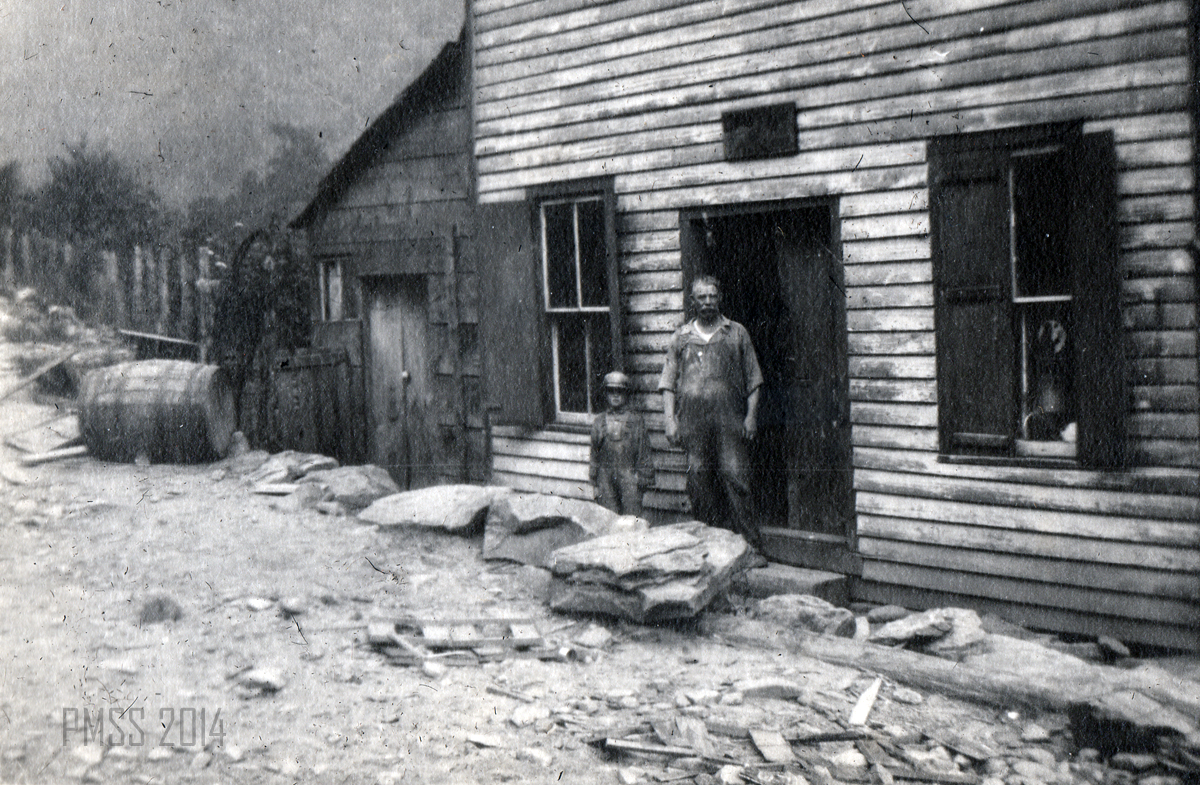
Maya Sudo Album – Postmaster [James C. Creech] and little boy standing in front of Pine Mountain Post Office, c. 1920s [sudo_album_015c_mod.jpg]
TAGS: Post office, Pine Mountain, Kentucky, mail, mail delivery, mules, postmen, mailmen, Hon. C.C. Slemp, Bascomb Slemp, Committee on Expenditures in the Post Office Department, Maya Sudo, Eve Newman, James C. Creech, James A. Cawood, President Calvin Coolidge (1923-25),
PINE MOUNTAIN SETTLEMENT SCHOOL
POST OFFICE AND MAIL
Writing in 1920, the Secretary at Pine Mountain asks the Post Office Department in Louisville, Kentucky, the following question
November 8, 1920
Letter November 8, 1920. Administration General Correspondence
Post Office Department
Louisville, Kentucky
Gentlemen:
Will you please tell us whether or not we can send parcel post packages to Nanking, China? If not, how can we send warm clothing and books, in small parcels to one of our workers who is there at present, and writing us for her things?
An early reply will be very much appreciated.
Very truly yours,
Pine Mountain Settlement School
Sending parcel post packages to Nanking, China seems a curious question to come out of Pine Mountain Settlement School, located deep in the Appalachians of eastern Kentucky. Long considered an area so remote that creating reliable ways to even get mail to the School and out of the School was a topic of many years and numerous discussions. But sending mail to the other side of the world was not just a Pine Mountain issue. It was a challenge near the turn of the twentieth century. At Pine Mountain, it was not an unusual need but it was also not at the center of the mail issues at Pine Mountain Settlement.
The Pine Mountain, like the Great Wall of China is a tilted limestone wall that stretches over 150 miles and even today presents a formidable barrier to nearby cities and towns. Even today there are few new travelers to the School who don’t feel compelled to have long conversations about “getting there.” Travelers comment on the challenge of finding their way to the long valley on the Northside of the unique Pine Mountain, no matter from which direction they started.
The Pine Mountain is a rocky ledge like no other in the region. It tilts skyward, pushed by the Continental Plate as it meets the Eastern United States. It challenges anyone who wants to go across its crest or decipher instructions for doing so — or, try to build a road across it. The “Finding the way directions” to the School are always lengthy, rarely the same, and wholly dependent on who is queried.
The long mountain with its undulating swags and knobby crowns challenged all the early travelers to the School whether they walked over the mountain, rode a mule, or eventually came in by automobile on one of the torturous roads that lead into the valley. The long conversations about “getting there” is generally prefaced by “Where is ‘There’.” The answer is usually elusive and troublesome. To the postman, ‘There” was well known and not elusive, but it was often ‘troublesome.’ “Rain, Sleet or Snow” are mild inconveniences given the multiple other obstacles to the successful and consistent delivery of mail.
-
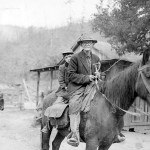
- Community mailman with saddle-bags and child. 1940’s Arthur W. Dodd Album. [dodd_A_070_mod.jpg]
-
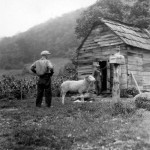
- Man with ram (sheep) at house and mail-box to right. FN Vl_35_1141
Early communication among the staff at the School regarding the mail tells us something of this peristent and troublesome “getting there” and the even more troublesome early mail history, generally. For example, the first chapter in the Post Office story at Pine Mountain opens with a letter that seeks to be informed about the laws and regulations governing the exchange of mail in the area. A form letter from Louisville, printed May 27, 1916, attempts to answer the inquiry from Pine Mountain which dealt with bulk mailing — a matter that was central to fundraising for the School. The response describes the “Postal Laws and Regulations Governing the Mailing of Identical Pieces of Third and Fourth Class Matter and of Certain Second Class Matter Without Postage Stamps Affixed.” … and we think our current government documents cryptic …? … “without postage stamps affixed …” ?
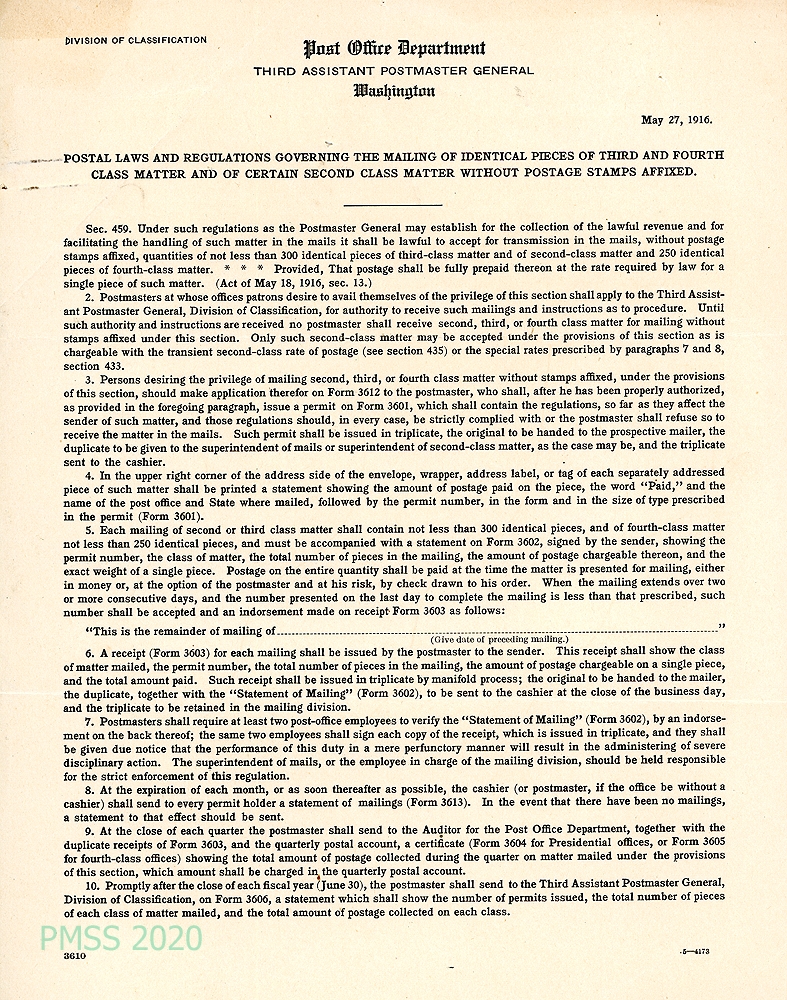
Upon receipt of this notice, carrying the mail across the mountain must have looked like only a small obstacle to negotiation of the growing government requirements.
Ethel de Long Zande, and the staff a Pine Mountain Settlement did not let bureaucracy or geography dissuade them from attempting to improve mail service to the Schoool. In her typical “get it done” mode, Ethel de Long went to the School’s Board of Trustees and suggested she be appointed Postmaster for Pine Mountain, Kentucky. That uppity solution to the Post Office tribulations, while pragmatic, proved to be more complicated than she imagined, and as this letter suggests. “Uppity women” took some getting used to.
Hon. C.C. Calhoun
Letter First Assistant Postmaster General to the Hon. C.C. Calhoun, April 24, 1919, Administration General Correspondence, Post Office Dept. 1916-20. Pine Mountain Settlement School Collections.
Evans Building,
Washington, D.C.
Dear Mr. Calhoun:
Referring to your call at the Department on the 23rd instant when you presented a letter from C.N. Manning of Lexington, Kentucky, concerning the candidacy of Mrs. Ethel deLong Zande for appointment as postmaster at Pine Mountain, Kentucky, I beg to advise you that James C. Creech has not resigned as postmaster at that place. Should a vacancy occur in the postmastership at Pine Mountain, the Civil Service Commission will be requested to submit a register of eligibles and will be informed that Mrs. Zande is an applicant. Should her name appear upon the register submitted, her candidacy will be given such consideration as is permissible under civil service rules.
Very truly yours,
First Assistant Postmaster General.
These letters and others from the archive at Pine Mountain begin to tell the uneven tale of the Post Office at Pine Mountain Settlement School.
THE POST OFFICES
From the beginning of Pine Mountain Settlement School, Co-Director, Katherine Pettit had a direct line to the Post Office in the person of, C. Bascom Slemp. In 1911 she had corresponded with him soliciting help in establishing Pine Mountain Settlement. He had previously been of great help to Hindman Settlement School as outlined in the letter below. Clearly, Slemp had the connections Pine Mountain needed to get things moving for the Post Office at Pine Mountain. But, then, again, Slemp, a Member of the House of Representatives, and a member of the U.S. Committee on Expenditures in the Post Office Department, Washington, DC. did not now occupy the same status as he did in 1911. Nor, did he benefit from the company of Eve Newman to broker for Pine Mountain. [See Katherine Pettit Letters 019-022, 1911? ]
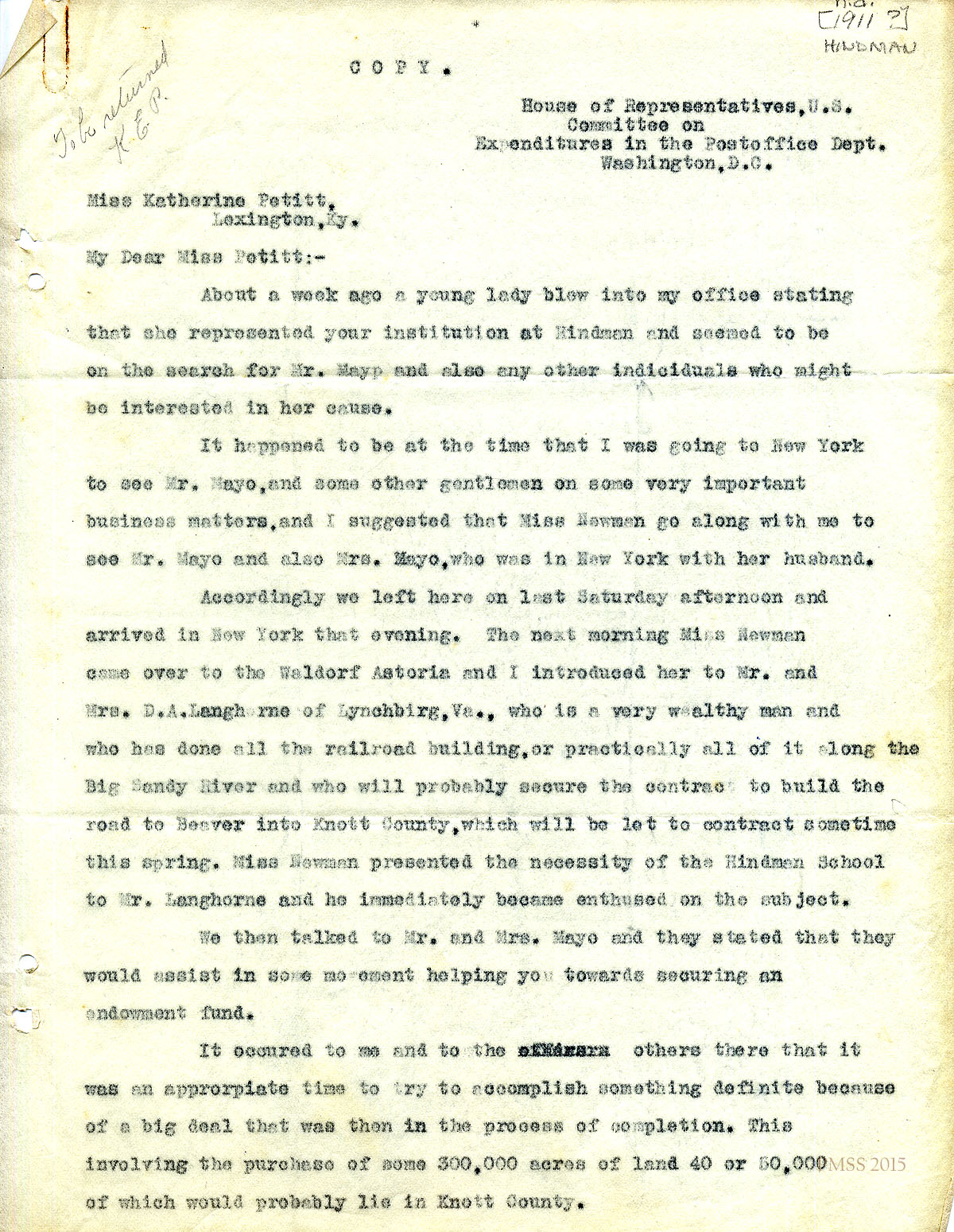
1911 Katherine Pettit Correspondence. [pettit_1911_019.jpg]
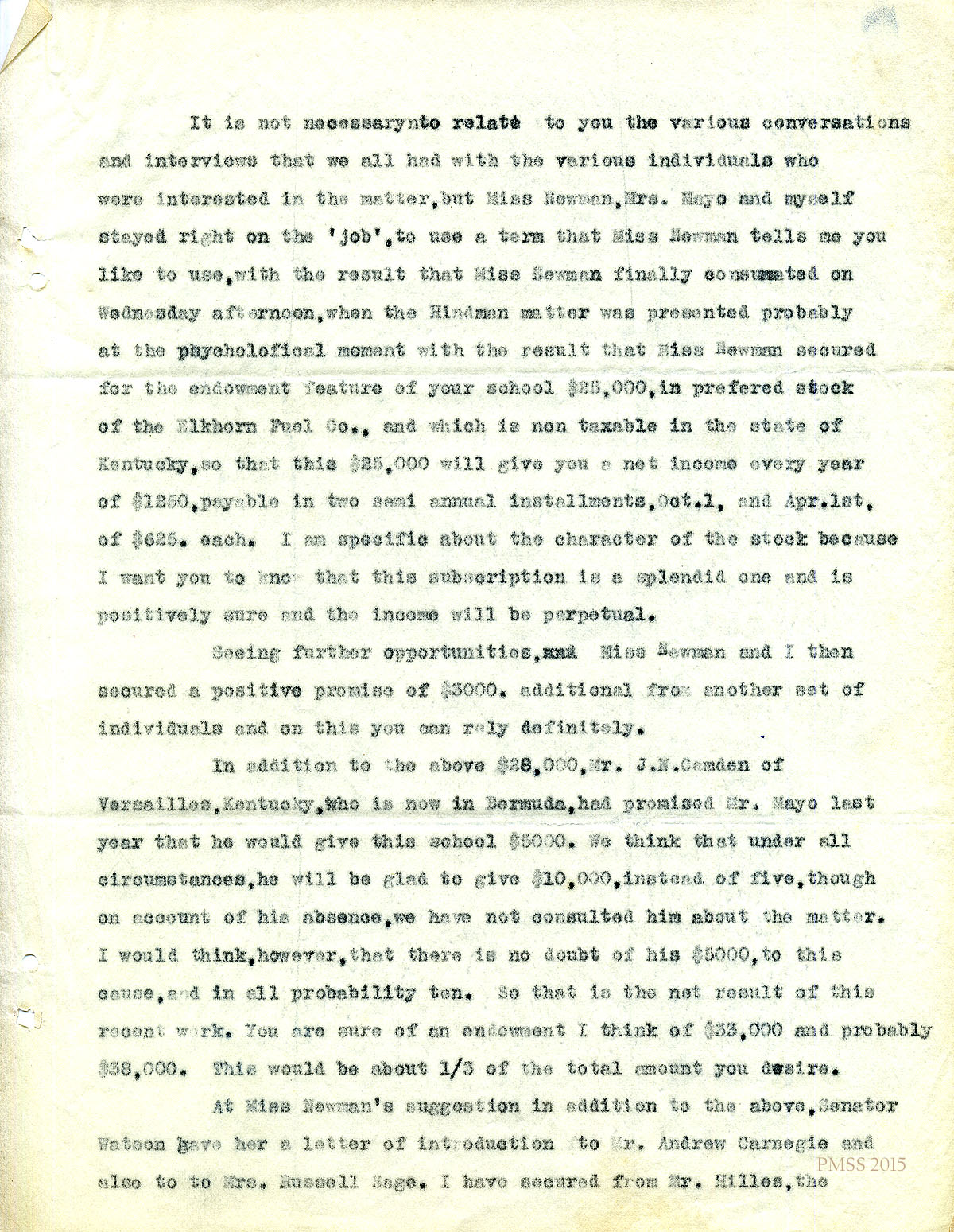
1911 Katherine Pettit Correspondence. [pettit_1911_020.jpg]
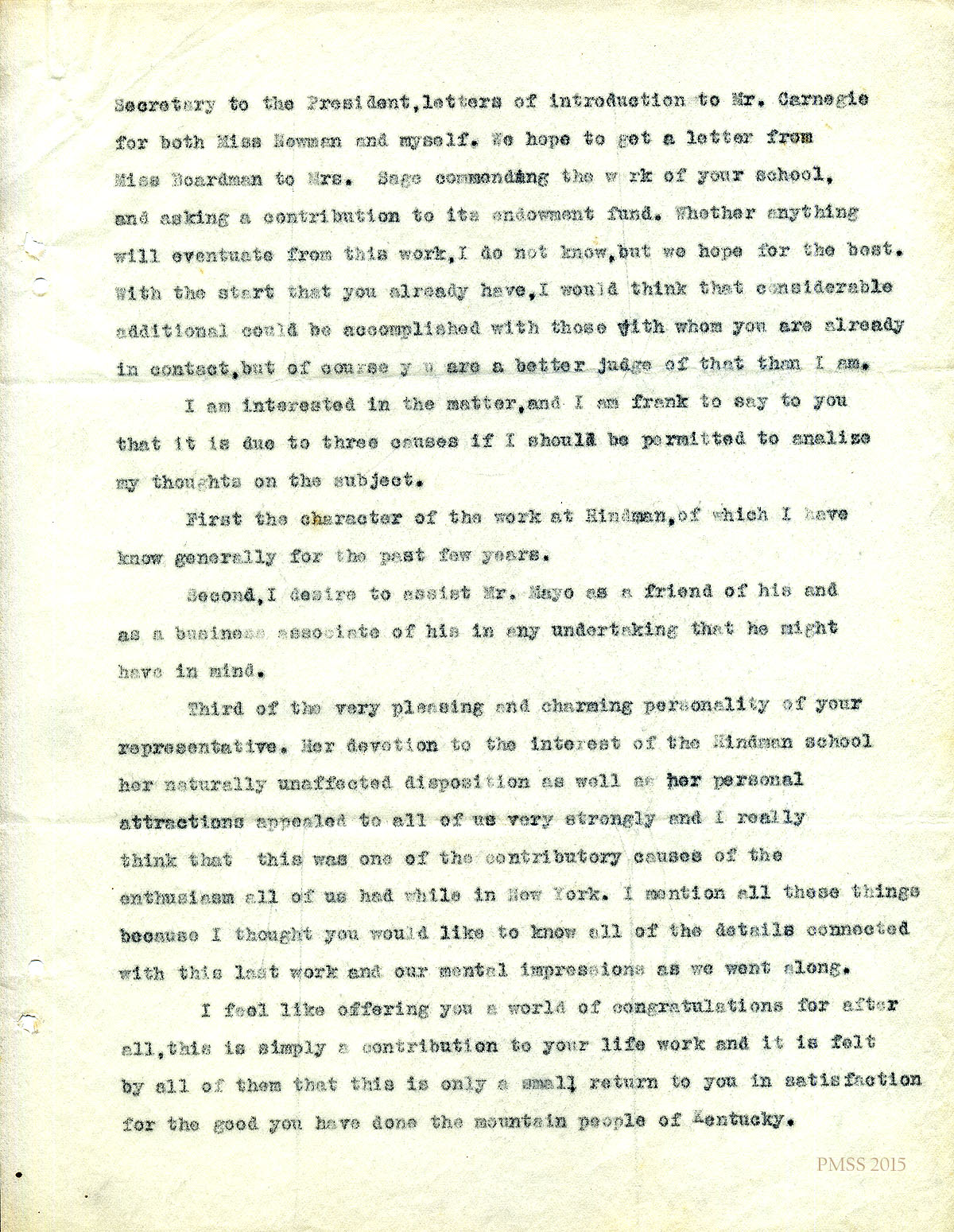
1911 Katherine Pettit Correspondence. [pettit_1911_021.jpg]
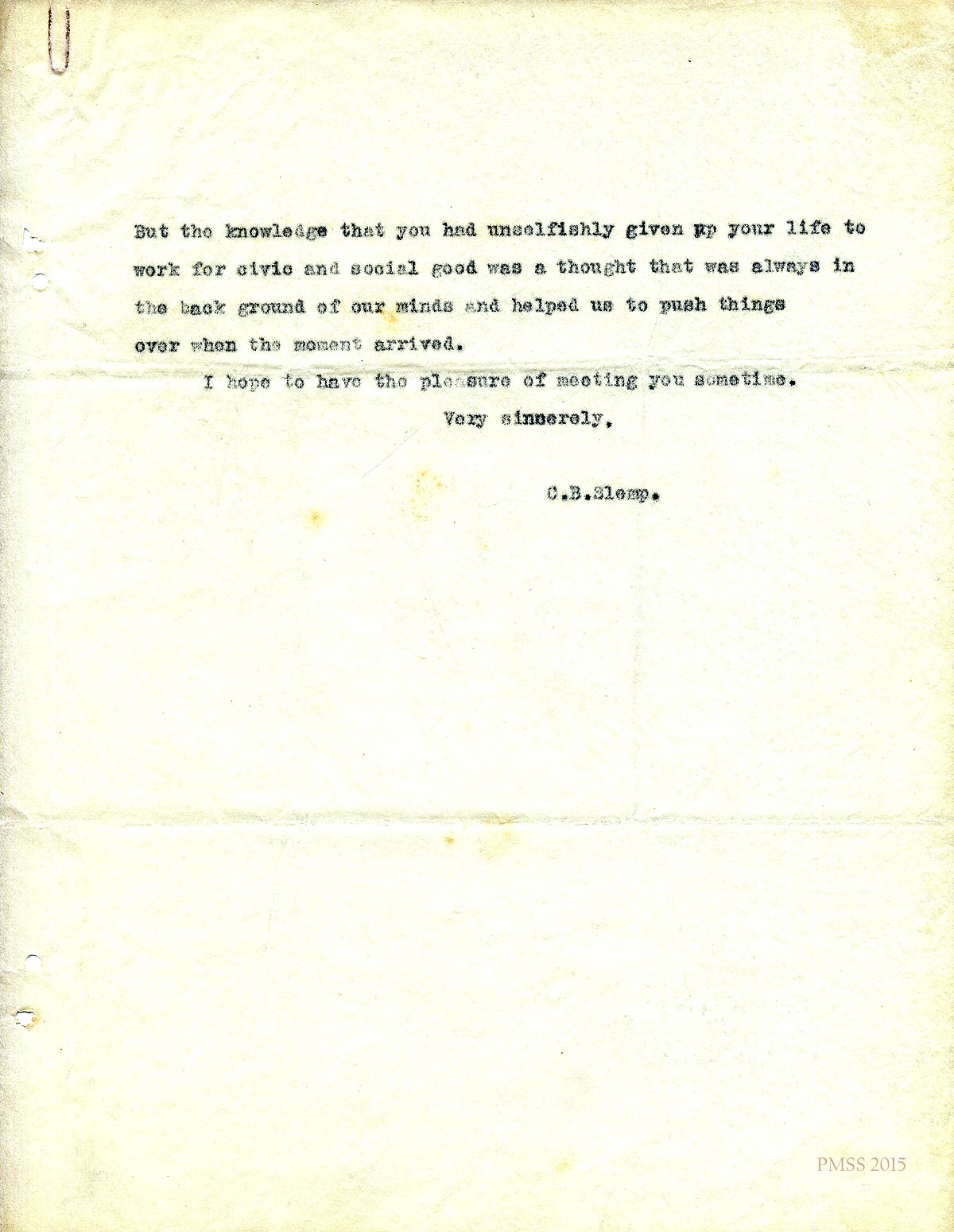
1911 Katherine Pettit Correspondence. [pettit_1911_022.jpg]
C.B. Bascomb Slemp was the son of Colonel Campbell Slemp and Nancy “Nannie” Britain Cawood Slemp. Nancy was born in Harlan County and is related to long-time County Superintendent of Schools, James A. Cawood and other Harlan County Cawoods. Campbell Bascom, or, C.B. as he preferred to be called, spent most of his early life and the last years of his life in nearby Lee County, Virginia. As a young student at V.M.I. (Virginia Military Institute), he received the award as the most outstanding student in his graduating class in 1891, and then returned just ten years later to teach mathematics at the school for a year.
Following his brief stint as a teacher at V.M.I he returned to his hometown of Big Stone Gap where he practiced law for seven years. Following in his father’s footsteps, Bascom Slemp was soon elected to Congress in 1907 and served until 1923. It was during this time that Pettit called on his assistance with the Post Office questions. Slemp was the most powerful member of the House of Representatives U.S. Committee on Expenditures in the Post Office Department in Washington. It did not hurt that Pettit’s pursuit of his assistance was helped by a visit to the offices of Slemp by the attractive Pine Mountain employee, Eve Newman.
Slemp was a powerful figure in Washington and as a powerful Republican presence, he quickly flipped the largely Democratic region of southeast Virginia to Republican and it remained so throughout his Washington years. From 1923 until 1925, he served as one of two Secretaries (essentially White House Chief of Staff) to President Calvin Coolidge, but the two were not well matched. He left the Coolidge Whitehouse in 1925 to practice law in Washington and by 1932 he had returned to live in Big Stone Gap.
Col. Campbell Slemp, the father of Bascom, had large holdings of timber and coal in Virginia, Kentucky, and West Virginia and Bascom Slemp built this inheritance and his Washington connections into a considerable fortune. It was this fortune and his politics that brought Slemp and Katherine Pettit together. And, Katherine was well versed in ferreting out money and influence.
[019-022] [n.d., 1911?] Typewritten copy of letter from C. B. [Bascom] Slemp*, House of Representatives, U.S. Committee on Expenditures in the Postoffice Dept, Washington, DC, to Miss Pettit, Lexington, KY. Miss [Eve] Newman’s visit; names of his contacts who will help with school land and endowment.
[*Campbell Bascom Slemp was born in Big Stone Gap, VA. His mother was Nancy (Nannie) Britain Cawood of Harlan Co., KY, born nearby. Slemp represented the 9th District of Virginia in Congress for fifteen years. As a Republican, he established a stronghold over a largely Democratic region and held on to that reign for some fifteen years. He also served as secretary to President Calvin Coolidge (1923-25). Slemp, recorded as one of the most influential Southern members of the Republican party, had large coal and timber holdings in Virginia, Kentucky and West Virginia which were the sources of his large fortune and, no doubt, added to his interest in Pettit and her new School, though most of his fortune went to projects in Virginia, he continued to contribute to education and other philanthropic causes until his death. (See: Hathorn, Guy. “B. C. Bascom Slemp — Virginia Republican Boss, 1907-1932.” in The Journal of Politics, Vol. 17, No. 2 (May, 1955), pp. 248-264.)]
MORE ON THE POLITICS OF THE POST OFFICE IN EARLY APPALACHIA ,,,,,,
Also see the excellent article “How the Post Office Came to Pine Mountain, KY” by Dave Tabler,
GALLERY – POST OFFICES AT PINE MOUNTAIN
-
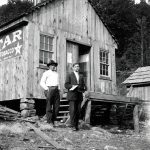
- Store and Post Office. 047_IV_FN_04a_027
-
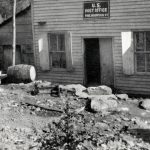
- “Our Store and Post Office.” 047_IV_FN_04a_026
-
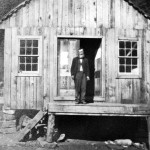
- 015c P. Roettinger Album. “The Postmaster.” [Standing on porch of post office?]
-
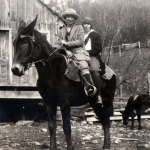
- Maya Sudo Album: “Some mules object to this syle of riding.” Two women on a mule at post office. 30d
-
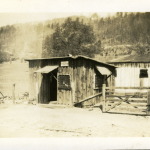
- Post office. Kendall Bassett Photograph Album, c. 1928-29.[pmss_bas044.jpg]
-
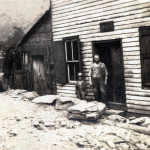
- Maya Sudo Album: Postmaster and little boy stand in front of P.M. Post Office. 029d [duplicate of 015c]
-
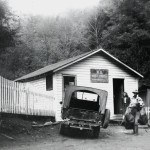
- Pine Mountain Post Office [Watkins was postmistress]. [nace_1_062c.jpg]
-
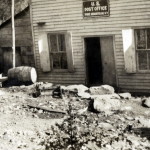
- Margaret Motter Album – Post Office at Pine Mountain. [mott_3495_003x-.jpg]
GALLERY – MAILMEN AND WOMEN AT PINE MOUNTAIN
-
- Community mailman with saddle-bags and child. 1940’s Arthur W. Dodd Album. [dodd_A_070_mod.jpg]
-
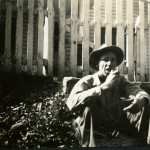
- Marcus Howard who carried the mail from Helton, October 1946. [nace_1_063b.jpg]
-
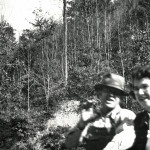
- John A. Lewis who carried the mail from Putney, October 1946. [nace_1_062a.jpg]
-
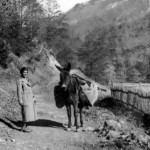
- Lutrella Baker Album. Delivery of mail. line_fork_012b_mod.jpg
-
- Man with ram (sheep) at house and mail-box to right. FN Vl_35_1141
-
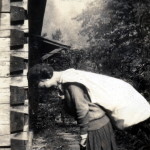
- Medical Settlement, Big Laurel. Aileene Lewis with pack [mail? books?] on her back. [nesb_011_mod.jpg]