
Pine Mountain Settlement School
Series: PHOTOGRAPHS
88 VII Life and Work
School – Library
1950s-1960s,
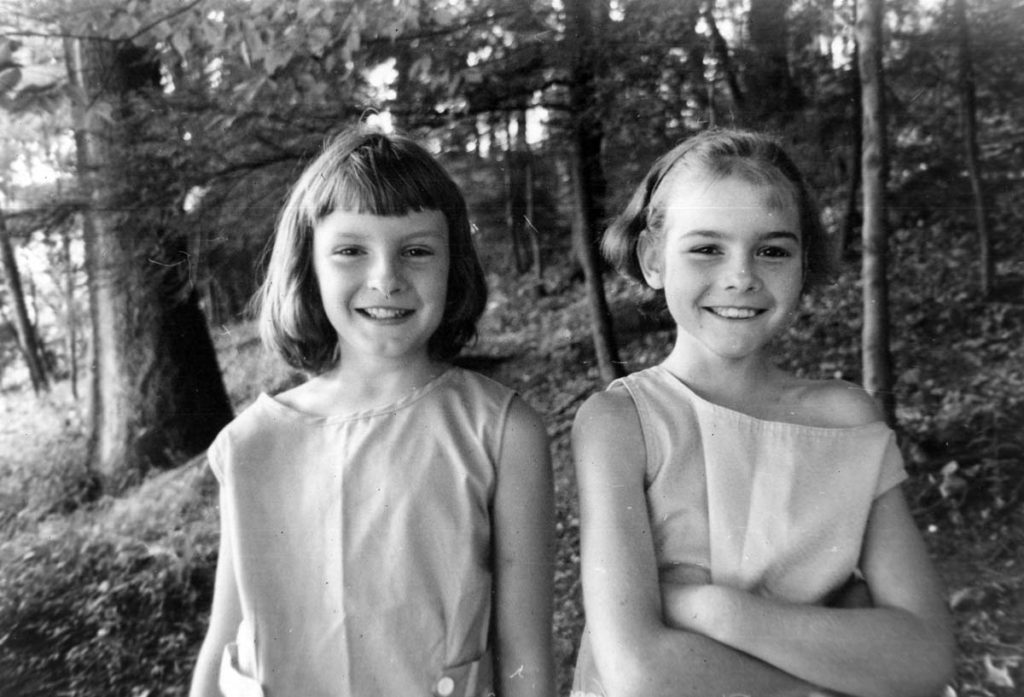
Celeste and Kitty LeHigh. [life_work_046a.jpg] 1699
TAGS: photographs, libraries, children’s libraries, books, reading, education, Harlan County Schools, rural schools, Black Beauty, Kitty LeHigh, Celeste LeHigh, reading is fundamental, digital libraries, rural schools, Miss Gephart, Ruby Yocum, Mary Rogers, Ruth Creech, Fern Hayes
088 PHOTOGRAPHS VII LWS School Library (singles)
READING IS FUNDAMENTAL
Reading is fundamental, and school libraries are fundamental to providing opportunities to grow the interest and the skills of reading. Free access to other worlds, other lives, and other experiences can be life-changing for children. The library at Pine Mountain was an educational change agent for many of the nearby rural children as well as for their immediate families.
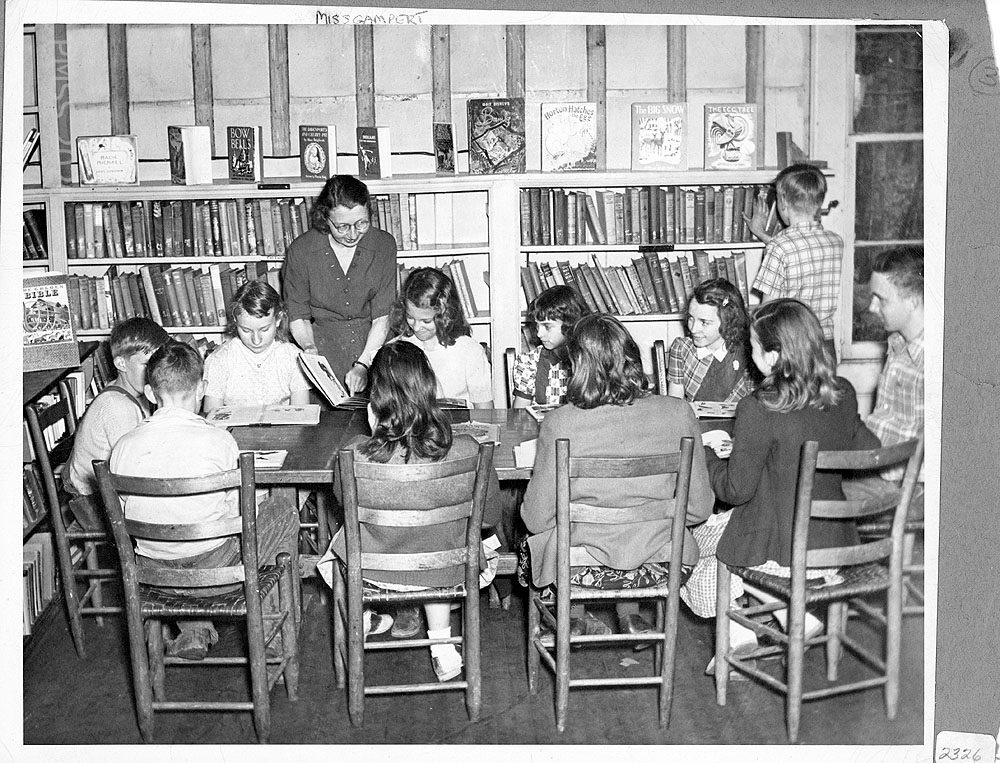
03a The Librarian, Miss Gampert, and students. Early 1950s in Burkham Schoolhouse II Library. [88_life_work_school_library_003a.jpg]
FOR Example …
Black Beauty is not just a story about a horse. It is a story that takes the reader on a deep dive into empathy. The story is told through the eyes of the horse Black Beauty, who experiences multiple owners and experiences, but who never abandons the feelings of compassion for all living things. The book challenges the reader to share the horse’s empathy and to empathize with the horse. The many experiences of the horse with a multitude of real and perceived assaults and injuries, sometimes paralleled the experiences of the reader.
Without identifying any specific religion, the author of the story, Anna Sewell, tells the reader that books, like all religions, have special skills for teaching love and kindness, but that the skills can be wasted if that love and kindness is not practiced and shared.
“…there is no religion without love, and people may talk as much as they like about their religion, but if it does not teach them to be good and kind to man and beast, it is all a sham…
Anna Sewell. Black Beauty, Chapter 13, last paragraph
Anna Sewell also tells the reader to never give up, and that bad beginnings have happy endings when guided by compassion and a strong passion for helping others. These nudges toward kindness are found in many children’s books, and they often stay embedded in the minds of children.
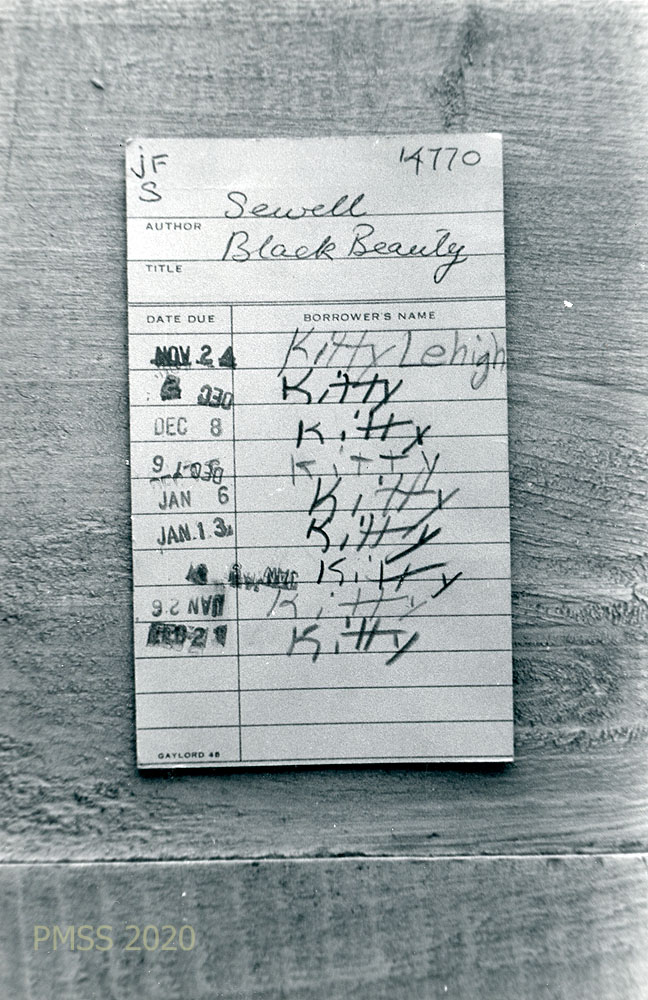
Kitty LeHigh check-out card, 1965. [091_LW_school_library_s_003e.jpg]
[88_LW_school_library_s_009f.jpg]
READING THE WORDS AND THE PICTURES
In this 1877 book, Black Beauty: His Grooms and Companions, the Autobiography of a Horse, the author, Anna Sewell, takes the reader through the life of the remarkable horse — as seen by the horse. The story of Black Beauty is a tale told by a horse. It is a journey with many lessons in love, kindness, and sharing. It is not just for lovers of horses, but also for all those who discover they can relate to animals as well as people.
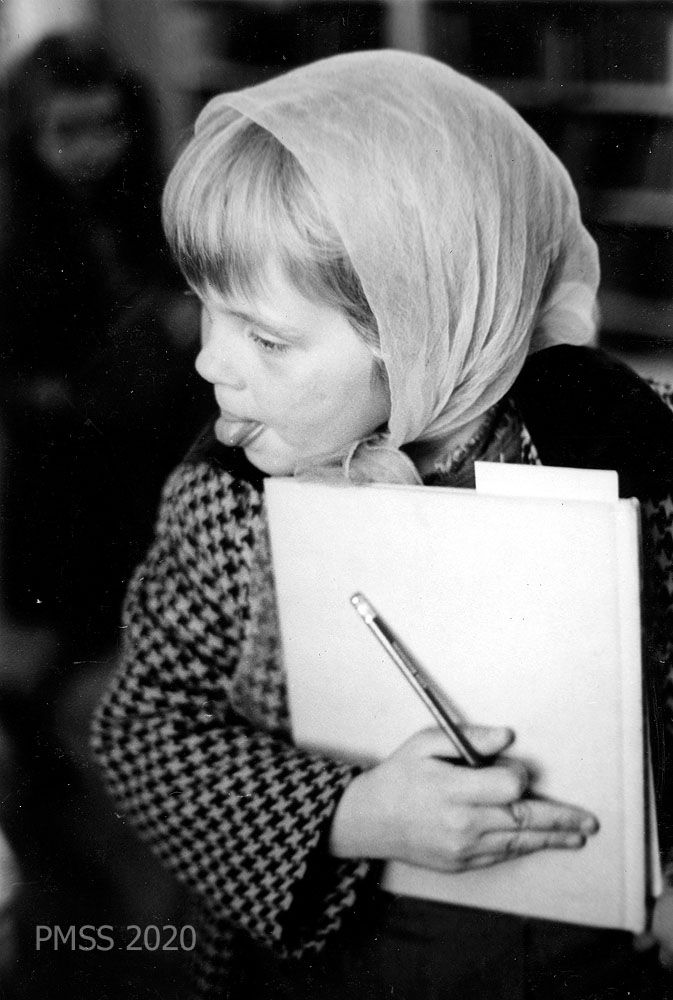
Like stories written down in the pages of books, photographs also tell stories. Photographs such as the ones seen on this page were taken in the 1950s-1960s, two decades at Pine Mountain Settlement School. The children are now adults.
(NOTE: If any viewer objects to the open display on the Web of their image and wishes to remove the image, please contact: office@pinemountainsettlementschool.com and ask for removal.)
NOTE from editors: [Page 4 is missing – 2 additional pages were in folder not belonging to 088 ??]
COMMUNITY COOPERATIVE SCHOOL
The Community Cooperative School operated at Pine Mountain from 1949 until 1972. The institution of the cooperative school at Pine Mountain Settlement marked the end of the boarding school years. The Community School was a cooperative arrangement between Pine Mountain Settlement and the Harlan County Schools system. The Cooperative School program reduced the need for lengthy busing over the Pine Mountain to schools in the Harlan town region. Further, the County School system shared in the costs of education, greatly reducing costs to the settlement school. Yet, the geography of the region continued to create lengthy and treacherous rides for many students to the settlement school. Further, in these years, there continued to be no provision for Middle and High School students on the north side of Pine Mountain. Many of the students experienced the hazardous rides on the narrow roads in the region and often up and over Pine Mountain.
THE LIBRARY
“There is no dictionary in the mind …”
James Gleick. The Information – A History, a Theory, a Flood. “The Persistence of the Word,”… p. 28 (2011)
When James Gleick wrote this in 2011, we had more access to information and resources than ever in all our lives. Today, that access has exploded. Technology and AI have brought “the dictionary in the mind” closer than it has ever been to reality. For example, Wikipedia, the online digital encyclopedia, tells us that
The largest English language dictionary, the Oxford English Dictionary (OED), features over 520,000 entries (over 600,000 when including definitions and phrases). Due to its sheer volume (20 volumes in print), the physical book cannot fit on a pin, but the entire dictionary can be micro-etched or stored digitally on a microchip, easily fitting on a pinhead.
New digital dictionaries can be compressed to a minuscule scale, but without a digital reader, they do not exist as a reference. Along with today’s new technologies, the tangible book challenges us to imagine the future of libraries and the future of children’s digital education. The new information and new power of the digital world — prepared by whom and for whom and for how much? There are no librarians on the internet guiding our children’s internet use. Many households show little interest in monitoring what their children learn on the Web. How are they reading their screens or filtering truth from fiction? How many hours are spent on games? Unless we all push for more supervision of children’s computer choices and their screen time, we are not harvesting the best from our new technologies. We cannot expect our children’s education to be guided unless we all share the journey at home and at school.
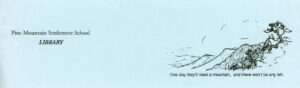
[mary_rogers_book-mark-001.jpg]
[Old PMSS book mark – “One day they’ll need a mountain, and there won’t be any left.“]
The LIBRARY of the 1950s-1970s at Pine Mountain was one of the richest educational experiences at the School for local children because of the very close personal guidance of teachers, story-tellers, engaged parents, and broadly circulated library collections. Storytelling with Mary Rogers, the loan of much-loved books, and the sharing of mutual stories among friends, the access to the Bookmobile from the Harlan County Schools, and public libraries, all these resources contributed to appetites and habits of life-long learning for many students. While the Community School and its library no longer exist at Pine Mountain Settlement, the names of many of the students who once checked out the books may be found in the remaining check-out cards tucked into the pockets of the books from the old PMSS Library.
Further, the complete school record of each child who attended the Community School has been retained by Pine Mountain Settlement. As a body of information, their records provide a rich research repository for anyone studying rural education in the mid to late decades of the twentieth century. The extensive school records of the Community School period at Pine Mountain are the “letters” from each student written while in grade school, and the wonderful extra delight of being able to place names with the photographs of classmates taken during those early years.
Of the many promises made during the 2013 celebration of the one-hundred years that the School has been in existence, one of them was that the School would begin to “give back its history to the Community in a digital form.” This process was begun in 2010 as technology and inexpensive digital tools became widely available. By 2013, the early pages of the Pine Mountain Settlement School Collections site were online. Digital access to the history of the School was increasing. Now, more than ever, it was imperative that rural children have access to learning resources equal to those in wealthier districts. As digital resources became more critical to learning, one of the first lists of priorities for new school administrations was to tackle the appropriate use of new digital resources and their educational use. Early access and instruction on the appropriate uses and the productive uses of digital resources for education were lagging in school instruction. Many were asking how we can keep parents and children in pace with the explosion of digital tools and their products? Especially, we began to ask our Representatives to lobby for LIBRARIES AND EARLY DIGITAL INSTRUCTION in any FEDERAL funding for schools! This needs to continue as the gap is widening.
FACTOID: Did you know that Tribal Libraries are often not eligible for Federal funding for access to digital resources and that they are often excluded from free access to State-wide digital educational resources?
These inequalities in the rapidly exploding digital world should give us all pause on this rapid leap forward. What can we harvest from our past that will make our future a better place for all?
Wendell Berry, a sometime visitor at Pine Mountain Settlement, speaks in his small book The Long-Legged House (1965) about the challenge of trying to figure out the complexities of life that surrounded him as a young husband in 1961. As he began to read authors such as Thoreau, Gilbert White, and others, he came to reckon with “habitat.” He writes
“And that summer, I remember I began to think of myself as living within rather than upon the life of the place. I began to think of my life as one among many, and one kind among many kinds. I began to see how little of the beauty and richness of the world is of human origin, and how superficial, crude, and destructive — even self-destructive – is man’s conception of himself as the owner of the land and the master of nature and the center of the universe. The Camp, with its strip of riverbank woods like all other places of the earth, stood under its own widening column of infinity, in the neighborhood of the stars, lighted a little, with them, within the element of darkness. It was more unknown than known. It was populated by creatures whose ancestors were here long before my ancestors came, and who had been more faithful to it than I had been, and who would live as well the day after my death as the day before.”
From this writer’s copy of the first edition of The Long-Legged House, autographed by Wendell Berry: “For Fern (Hayes), With my very best wishes 5/12/1999“
CHILDREN AND ADULTS IN PHOTOGRAPHS
| NAME | NAME |
| Miss Gampert | Delma Huff |
| Fern Hall Hayes | Mina Jane Huff |
| Ruth Creech | Kitty LeHigh |
| Ruby Yocum | Billie June Lewis |
| Rebecca Caudill Ayars | Teresa McCoy |
| Mary Rogers | Betty Middleton |
| Connie Boggs | Freddie Nolan |
| Don Boggs | Bertie Patterson |
| Billy Bo Boggs | Audry Turner [See Turner Family for all] |
| Judy Boggs | Bonnie Turner |
| Patsy Boggs | Debbie Turner |
| Don Browning | Jimmy Turner |
| Glenna Callahan [Glenda Callahan ?] | Lesia Turner |
| Norma Callahan | Marilyn Turner |
| Gayle Cootes | Mike Turner |
| Connie Cornett | Ralph Turner |
| Harold Couch | Sandra Turner |
| Cathie Creech | Kathie Wilson |
| Mable Day | Brenda Wilder |
| Ronnie Day | Don Wilder |
| Loretta Harris | Evelyn Wilder |
| Earl Hensley | |
| Betty Jo Hoskins | |
| Brenda Hoskins | |
| Vickie Hoskins |
GALLERY: 088 PHOTOGRAPHS VII LWS School Library singles
-
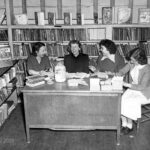
- Library Committee: Miss Gampert, Fern Hall Hayes, Ruth Smith Creech, Ruby Yocum . 8_LW_school_library_s_001a
-
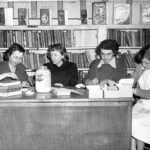
- Library Committee: Miss Gampert, Fern Hall Hayes, Ruth Smith Creech, Ruby Yocum. 88_LW_school_library_s_001b
-
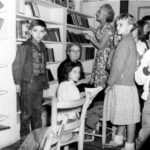
- Mary Rogers and students in the Library with guest reader. 88_LW_school_library_s_002a
-
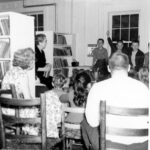
- Guest reader Rebecca Caudill with Mary Rogers and students in the Library. 88_LW_school_library_s_002b
-
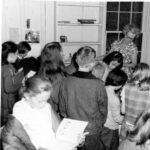
- Mary Rogers and students. 88_LW_school_library_s_002c
-
- 88_LW_school_library_s_002d
-
- 88_LW_school_library_s_002e
-
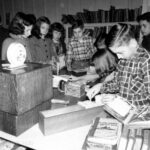
- 88_LW_school_library_s_002f
-
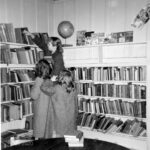
- 88_LW_school_library_s_002g
-
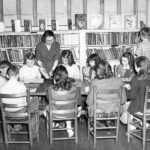
- Miss Gampert and students. 88_LW_school_library_s_003a
-
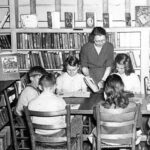
- Miss Gampert and students. 88_LW_school_library_s_003b
-
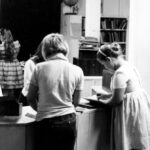
- 88_LW_school_library_s_005a
-
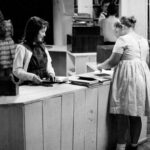
- 88_LW_school_library_s_005b
-
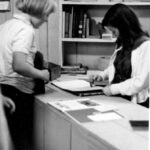
- 88_LW_school_library_s_005c
-
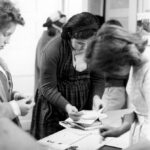
- 88_LW_school_library_s_005d
-
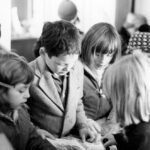
- 88_LW_school_library_s_005f
-
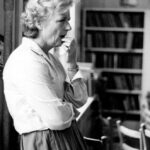
- Mary Rogers, Librarian. 88_LW_school_library_s_005g
-
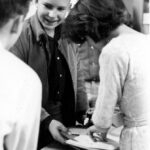
- 88_LW_school_library_s_005h
-
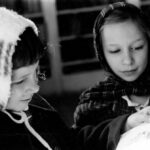
- 88_LW_school_library_s_006a
-
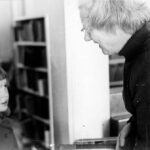
- Mary Rogers and student. 88_LW_school_library_s_006b
-
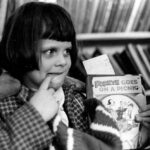
- 88_LW_school_library_s_006c
-
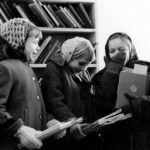
- 88_LW_school_library_s_006d
-
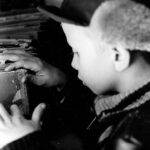
- 88_LW_school_library_s_006e
-
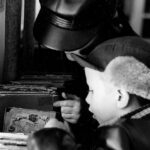
- 88_LW_school_library_s_006f
-
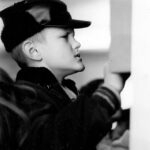
- 88_LW_school_library_s_006g
-
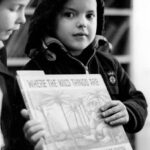
- 88_LW_school_library_s_006h
-
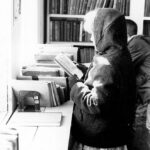
- 88_LW_school_library_s_007a
-
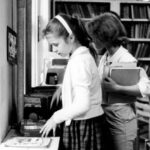
- 88_LW_school_library_s_007b
-
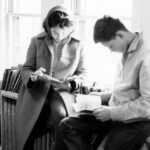
- 88_LW_school_library_s_007c
-

- 88_LW_school_library_s_007d
-
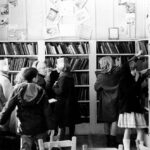
- 88_LW_school_library_s_007e
-
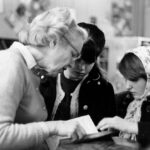
- Mary Rogers, Librarian working with students. 88_LW_school_library_s_007f
-
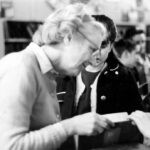
- Mary Rogers, Librarian working with students. 888_LW_school_library_s_007g
-
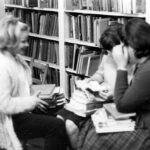
- 88_LW_school_library_s_007h
-
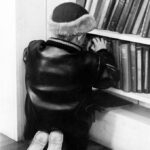
- 88_LW_school_library_s_008a
-
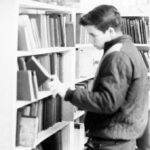
- 88_LW_school_library_s_008b
-
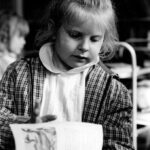
- 88_LW_school_library_s_008c
-
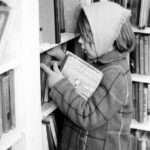
- 88_LW_school_library_s_008d
-
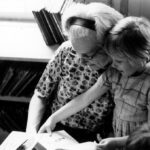
- Mary Rogers and student. 88_LW_school_library_s_008e
-
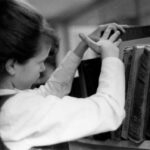
- 88_LW_school_library_s_008f
-

- 88_LW_school_library_s_008g
-
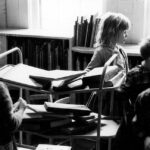
- 88_LW_school_library_s_008h
-
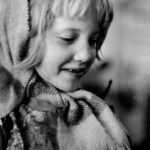
- 88_LW_school_library_s_009a
-
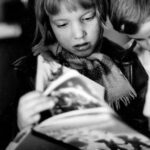
- 88_LW_school_library_s_009b
-
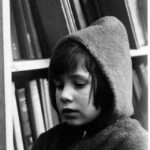
- 88_LW_school_library_s_009c
-
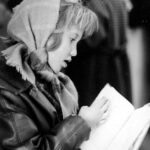
- 88_LW_school_library_s_009d
-
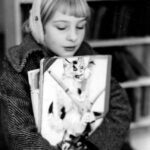
- 88_LW_school_library_s_009e
-
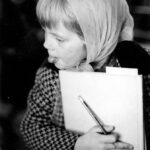
- 88_LW_school_library_s_009f
-
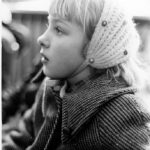
- 88_LW_school_library_s_009g
-
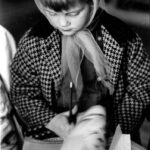
- 88_LW_school_library_s_009h
SEE ALSO:
[LW or LWS = Life Work series]
52 VII LIFE WORK Children and Classes Part 1
052 PHOTOGRAPHS VII LW Children and Classes Part 2
055 PHOTOGRAPHS VII LW Children and Classes
057 PHOTOGRAPHS VII LW Children and Classes
086 PHOTOGRAPHS V LW School Clubs Handwork
088 LWS LIFE AND WORK School Library single photographs
088 LIFE AND WORK School Library pages
089 LWS LIFE AND WORK School Library single photographs
089 LIFE AND WORK School Library pages
090 LWS LIFE AND WORK School Library Storytelling single photographs
090 LIFE AND WORK School Library Storytelling pages
091 LWS LIFE AND WORK School Library Storytelling II single photographs
091 LIFE AND WORK School Library Storytelling II pages
088 LIFE WORK School Library single photographs
090 PHOTOGRAPHS LWS School Library Storytelling singles Part I
Return To:
PHOTOGRAPHS Guide