Pine Mountain Settlement School
Series 05: Administration – Board of Trustees
Series 09: Biography – Staff/Personnel
Series 10: Built Environment
PMSS MASTER ARCHITECT

Mary Rockwell Hook. Portrait
MARY ROCKWELL HOOK Autobiography “This and That”
Mary Rockwell Hook (1877 – 1978)
School Architect and Consultant 1913 through – c. 1968
Member, PMSS Board of Trustees
TAGS: Mary Rockwell Hook, autobiography, Wellesley College, Ecole des Beaux-Arts, Jean-Marcel Arbutin, Art Institute of Chicago, women architects, Katherine Pettit, Ethel de Long Zande, Marguerite Butler Bidstrup, Angela Melville, Luigi Zande, gender bias, American Institute of Architects, Kansas City, MO, Howe, Holt and Cutler, Old Log, Big Log, Laurel House I, Laurel House II, PMSS Board of Trustees, Inghram D. Hook, National Register of Historic Places, Kansas City Landmarks Commission, Leon Deschamps, Hook and Remington, Eric Douglas MacWilliam Remington, ‘Mac’ Remington, International Archive of Women in Architecture, Susan Huntington, Ann Huntington, Burton Rogers, Glyn Morris, Gladys Morris,
Mary Rockwell Hook wrote her autobiography, “This and That,” in 1970 in the tenth decade of her life. Born September 8, 1877, she died on her birthday, September 8, 1977. She was 101. Mary Rockwell Hook rarely did anything without planning, but remarkably, even her death seemed fit into some larger cosmic plan. Planning was built into her psyche, if not into her destiny. Even at the age of 101 and quite blind, she was still planning and building in her very imaginative brain.
In the final pages of her autobiography, Mary Rockwell Hook conjured up imaginative designs. In her mind’s eye, she designed a new capital for France and redesigned the Washington White House, adding a new two-story wing that surrounded an Italian garden where the President could entertain, surrounded by nature. In this vision, she described her future construction as a “whole new White House done in white marble and glass,” growing from its natural setting. She imagined the old White House retired for the people as a “historic “National Treasure.” Basically, she turned the White House inside out, placing the emphasis on the view in as well as a refreshing view out — where the governed and the government would mingle on a human scale.
In many ways, these imaginative designs were Mary’s contributions to a “shining city on the hill” where nurture and nature could come together. She always imagined her houses with gardens and places where the dweller could live a life in harmony with the natural outside world. One of her last visions was a new contemporary town in western Kansas, where she was born. She imagined that it would share “a park complete with prairie dogs and tumbleweed.” In the town of her birth, Junction City, Kansas, she “designed” another park which she imagined to be filled “with sunflowers and various wildflowers.” Many of her homes were surrounded by marvelous gardens and views. Pine Mountain was the largest “garden” she continued to return to even near the end of her life. The Florida Siesta Key home was her “White House” —low to the earth with sweeping views and gardens, and gardens — where she loved to entertain her friends and guests, but the deep valley in Kentucky was where her imagination seemed to run free.
It is little wonder that Mary Rockwell Hook continued to come to Pine Mountain as long as her frail body could manage it. There, in the deep mountains of eastern Kentucky, her Open House was surrounded by the most natural of gardens. The mossy slopes, and boulders topped with trillium, and ferns, rhododendron, and laurel mixed with azaleas tumbling in lush bouquets outside her doors, — enough to satisfy even the most persnickety gardener. Her architectural vision was consistently a house that was inside out, where she could both look out and walk out into the expansive natural spaces of the forest, garden, or ocean.

005b. Approach to Open House mccullough_I_006a
At Pine Mountain, her vision was, without doubt, harmonious with the land. Not only did her view include her forest garden, but also a view of “her” School in that landscape. Hers was an open door, an educational adventure. She felt comfortable purchasing a small tract of land with her Pine Mountain Settlement School colleagues and designing and placing a home in the middle of Eden … well at least, Paradise… Her architectural eye had frequently mingled with her structures with their natural landscape — the essence of the place. Her “Open House” was a natural architecture friendly with the rustic cabins of those who first came to the Pine Mountain valley. Her creative eye frequently invited others to open their own eyes to beauty. She shared this educational trait with many of the folk who first passed through the Pine Mountain valley and with those who came to make a Settlement.


She encouraged the School to send its rural mountain students to spend a summer in a city, Kansas City. At her home and the homes and businesses in Kansas City, she found work for students in landscaping, construction, childcare, and other jobs that instilled in them a greater appreciation for their native talents. Those who employed the students were often the learners. The Kentucky students had a native instinct for an education that sustains life. They knew how to improve the land, process its bounty, and meet their obligations. Bringing students to new geographies, customs, and ideas often brought local employers closer to their own innate relationship with their own history, geography, customs, and particularly their relationships.
The Kentucky students’ deep love of the land and their distinct Appalachian mountain lifestyle were put to the test when the students stepped outside their geography. New geographies opened up new realities and new appreciations across the students’ landscapes. Travel helped to bring new tests to life-styles that were quickly growing into silos and stereotypes. The students came from Kentucky for Summer work, and many found they had skills that they had not recognized were admired and useful. They learned more technical skills and social skills that turned into permanent employment following graduation. The students worked from a rich base of native skills, and their disciplined summer work in new environs broadened their horizons. It was a winning combination on both sides. Many of the disciplined elements that were nurtured at Pine Mountain Settlement and in the work-study programs outside the State translated well in their future lives.
To see additional examples of Hook’s architectural work outside Pine Mountain Settlement School, see, particularly, her home and associated architecture in Kansas City in the following nicely photographed Architectural Observer article — “Mary Rockwell Hook: Ahead of Her Time“. The article describes her family’s homes in Kansas City, Missouri, and in the Florida Keys.
HOOK AND OTHER GEOGRAPHIES
https://architecturalobserver.com/mary-rockwell-hook-ahead-of-her-time/
The personal dynamic creativity that Mary carried with her, no matter the location, comes forward in her brief autobiography, This and That. Her autobiography is dedicated to Burton Rogers, the long-term educator and later Director of Pine Mountain Settlement School. Burton met Mary in 1938 when he and his wife, also named “Mary”, came to Pine Mountain having worked in China and in India. Mary Rockwell Hook was the new arrival’s historical source for the School and a mentor in numerous ways. Their relationship quickly became a mutual affection. Burton and Mary shared Mary Rockwell Hooks’ deep affection for the School, the nurturing natural environment, and her strong belief in the power of education. All three held to beliefs in the power of beauty and goodness to shape a bountiful life.
It is remarkable that another very different geographic location attracted Mary Rockwell Hook’s tastes and aesthetics. This geography was Florida, and the region around Sarasota, and the nearby Siesta Keys. The Keys are rare strips of land in the Gulf along the Panhandle of Florida. Mary and her husband purchased undeveloped beachfront land there in 1935 and built a hotel that she hoped would be a gathering place for artists and creatives. She called the location “Whispering Sands“. It stood out from the surrounding area with its remarkably white quartz sand beaches. The geology had dumped a particularly heavy load of quartz sand near Sarasota.
One of the purest locations of quartz sand was found at Whispering Sands. Undeveloped and sparsely settled, it was a location that only the eye of an artist would recognize. Mary and her husband did not plan to leave Kansas City, but Mary hoped to develop and share a beautiful retreat on a warm beach with like-minded artists, writers, and friends. On that sandy shore, Mary designed an inn she called Whispering Sands Inn. She surrounded it with native gardens and soon attracted many regulars, including Pine Mountain Settlement School guests. Her choice makes one almost believe in destiny. Hook’s Whispering Sands was immediately popular and gained a reputation for it’s rare white quartz sands and the beauty she had brought to the undeveloped land. When she completed her project, it was a remarkable visual remake. Something that came naturally to Mary. But one element was not only visual, it was also geologically special. The land had an even more remarkable connection to Hook’s wanderings. The ancient white quartz sand had its origins deep in the ancient Appalachian mountains. At Whispering Sands, the white quartz sand is 99% pure quartz, rare even among other white quartz beaches along the Gulf and it had flowed and filtered down the continent and formed this special beach on the shores of the Gulf. Mary had a good eye for the rare.
GALLERY: THIS and THAT by Mary Rockwell Hook
-
- hook_this_that_cover
-
- hook_this_that_dedication
-

- hook_this_that_ph01
-

- hook_this_that_title
-
- hook_this_that_001
-
- hook_this_that_002
-
- hook_this_that_003
-
- hook_this_that_004
-
- hook_this_that_005
-
- hook_this_that_006
-
- hook_this_that_008
-
- hook_this_that_009
-

- hook_this_that_010
-
- hook_this_that_011
-

- hook_this_that_012
-

- hook_this_that_013
-
- hook_this_that_014
-
- hook_this_that_015
-
- hook_this_that_016
-
- hook_this_that_017
-
- hook_this_that_018
-
- hook_this_that_019
-
- hook_this_that_020
-
- hook_this_that_021
-
- hook_this_that_022
-
- hook_this_that_023
-
- hook_this_that_024
-

- hook_this_that_025
-
- hook_this_that_026
-

- hook_this_that_027
-
- hook_this_that_028
-
- hook_this_that_029
-
- hook_this_that_030
-

- hook_this_that_031
-

- hook_this_that_032
-
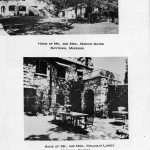
- hook_this_that_033
-
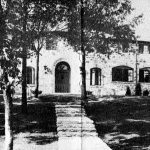
- hook_this_that_033a
-
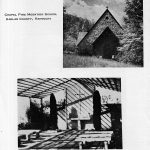
- hook_this_that_034
-
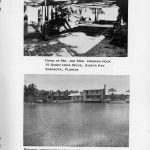
- hook_this_that_035
-
- hook_this_that_036
-
- hook_this_that_037
-
- hook_this_that_038
-

- hook_this_that_039
-
- hook_this_that_040
-
- hook_this_that_041
-
- hook_this_that_042
-
- hook_this_that_043
-
- hook_this_that_044
-
- hook_this_that_045
-

- hook_this_that_046
-
- hook_this_that_047
-
- hook_this_that_048
-
- hook_this_that_049
-
- hook_this_that_050
-
- hook_this_that_051
-
- hook_this_that_052
-
- hook_this_that_053
-
- hook_this_that_054
-
- hook_this_that_055
-
- hook_this_that_056
-
- hook_this_that_057
-
- hook_this_that_058
-

- hook_this_that_059
-

- hook_this_that_060
-
- hook_this_that_061
-
- hook_this_that_062
-
- hook_this_that_063
-
- hook_this_that_064
-
- hook_this_that_065
-
- hook_this_that_066
-
- hook_this_that_067
MARY ROCKWELL HOOK (Biography)
MARY ROCKWELL HOOK Autobiography 1970 “This and That”
MARY ROCKWELL HOOK 1913 Arrival at Pine Mountain
MARY ROCKWELL HOOK 1913-1947 Guide to Correspondence
MARY ROCKWELL HOOK 1920 Correspondence
MARY ROCKWELL HOOK 1921 Correspondence
MARY ROCKWELL HOOK 1922 Correspondence
MARY ROCKWELL HOOK 1923 Correspondence
MARY ROCKWELL HOOK 1924 Correspondence
MARY ROCKWELL HOOK 1925 Correspondence
MARY ROCKWELL HOOK 1926 Correspondence
MARY ROCKWELL HOOK 1927 Correspondence
MARY ROCKWELL HOOK 1928 Correspondence
MARY ROCKWELL HOOK 1929 Correspondence – Line Fork Cabin
MARY ROCKWELL HOOK 1930 Correspondence
MARY ROCKWELL HOOK 1931 Correspondence
MARY ROCKWELL HOOK 1932 Correspondence
MARY ROCKWELL HOOK 1932 Correspondence Box 18:02
MARY ROCKWELL HOOK 1933 Correspondence
MARY ROCKWELL HOOK 1934 Correspondence
MARY ROCKWELL HOOK 1935 Correspondence
MARY ROCKWELL HOOK 1936 Correspondence
MARY ROCKWELL HOOK 1937 Correspondence
MARY ROCKWELL HOOK 1938 Correspondence
MARY ROCKWELL HOOK 1939 Correspondence
MARY ROCKWELL HOOK 1940 Correspondence
MARY ROCKWELL HOOK 1941 Correspondence
MARY ROCKWELL HOOK 1942 Correspondence
MARY ROCKWELL HOOK 1943 Correspondence
MARY ROCKWELL HOOK 1947 Correspondence
MARY ROCKWELL HOOK 1948 Correspondence
MARY ROCKWELL HOOK 1949 Correspondence
MARY ROCKWELL HOOK 1950Correspondence
MARY ROCKWELL HOOK 1962 Correspondence
MARY ROCKWELL HOOK Album I
MARY ROCKWELL HOOK Photo Album II Part I
MARY ROCKWELL HOOK Correspondence 1940 Architectural Planning PMSS
MARY ROCKWELL HOOK Correspondence 1940 II Box 19: 2-85
NOTES – 2013, Spring, p. 11-12
NOTES – 2019, Winter, pp. 6-7
MARY ROCKWELL HOOK ARCHITECTURAL DRAWINGS & PLANNING:
BUILT ENVIRONMENT Architectural Planning Guide
REFLECTIONS: SUMMARY OF THE ARCHITECTURAL PLAN
MARY ROCKWELL HOOK Talk 1920 Architectural Planning at PMSS
MARY ROCKWELL HOOK CORRESPONDENCE GUIDE
MARY ROCKWELL HOOK ALBUM I
MARY ROCKWELL HOOK ALBUM II
MARY ROCKWELL HOOK 1920 TALK Architectural Planning at PMSS
MARY ROCKWELL HOOK 1929 Line Fork Architectural Planning Cabin 2
GUIDE TO ARCHITECTURAL DRAWINGS at PMSS
To review Mary Rockwell Hook’s architecture at Pine Mountain Settlement School, see also BUILT ENVIRONMENT for specific details of the buildings.
For more information, see the following:
DRAWING OF MASTER BUILDING PLAN FOR PINE MOUNTAIN c. 1913
DRAWINGS FOR SCHOOL BUILDINGS IN SITU
LAND USE Plan for Pine Mountain Mid-1930s
BIG LOG PLANNING
LAUREL HOUSE I PLANNING
LAUREL HOUSE II PLANNING
WEST WIND PLANNING