
Pine Mountain Settlement School
Thanksgivings at Pine Mountain Settlement School 1915 –
Excerpts from the Archive
Narratives by Evelyn Wells and an Other Workers
Thanksgiving Ball
Poetry
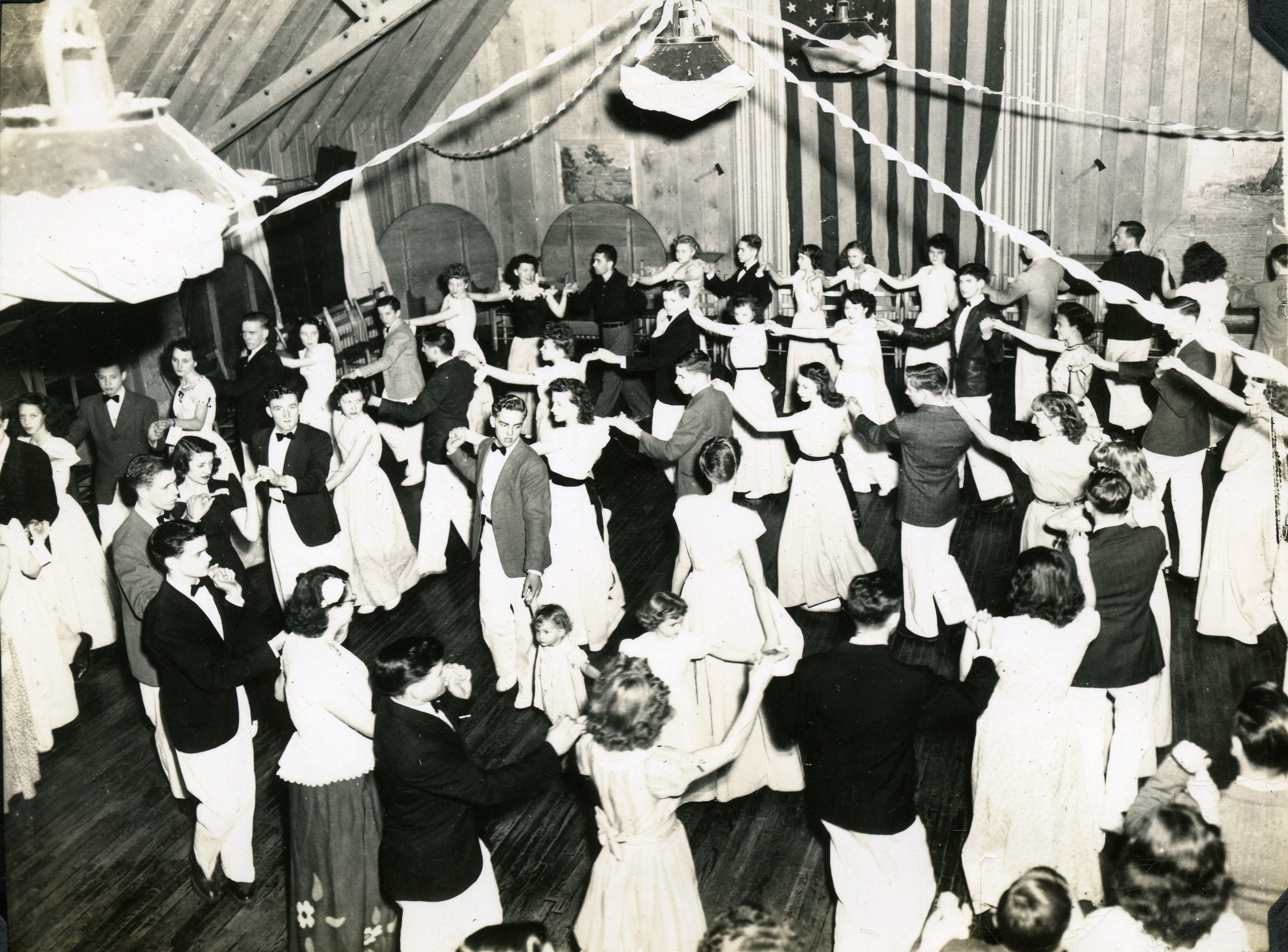
Thanksgiving Ball. early 1940’s Grace Rood Album. Children, Margo and Elizabeth Dodd at center.
THANKSGIVING DAY, NOVEMBER 1915
[*The following selection is taken from the notes of Evelyn Wells for her History of Pine Mountain Settlement School 1913 -1928 (unpublished).
A beautiful day. We started out with a nice breakfast party for the visitors from Hindman, at the Pole House, and by the time things were cleared up it was time to start up to the woods. What a procession: every child carrying some kind of bucket or pan of food. We established ourselves, some 60 strong, in a lovely glade about a mile from here which the children call the Fairy Forest, it’s so full of moss and soft grasses and pretty rocks and laurel. We had three big fires, one for the coffee, and two for the squirrels, which we toasted – roasted – on long sticks, while the children played in the woods. When the squirrels were done, we sat around and had pork, squirrel, sandwiches, jelly, pumpkin pie, and coffee. It was so warm that we didn’t even need sweaters.
Then a very simple, lovely Thanksgiving Service. A hymn or two, and the story of the first Thanksgiving, told by Munroe, age 11, on the spur of the moment, very simply and dramatically. Then Miss de Long talked for a little while, using St. Francis’ Prayer to the Sun [Canticle to the Sun or Canticle to the Creatures] as a starting point. She certainly can touch and hold every kind of person, and there was nary a one of the sixty mountain people, children, or workers, that didn’t get much from what she said. We ended with “Come, ye thankful people, come”, and out in the woods I suddenly realized what the line, “Come to God’s own temple” meant, especially to people who have never been inside a church. Then the children sang “Under the Greenwood Tree“, some of them, a little way off, echoing the last line as if from another part of the forest. They call it the Robin Hood song.
Afterward, the little girls ran sets, and the boys had a shooting match with bows and arrows. The problem was to prevent Miss Cobb (of Hindman) from joining the party for Jack’s Gap, for she is delicate and won’t admit it. But finally Uncle William decoyed her away to show her some interesting trees, and we made our escape. Jack’s Gap is the most beautiful place in the world, and the lights and colors at this time of year are so soft. We got back to Miss Pettit‘s for supper – TURKEY – and a nice evening. The children sang ballads and Miss Pettit was in fine form, with many stories of the beginnings of Hindman and Pine Mountain. When I got back to Far House, there was another party going on. Several mountain young people, one of them with a banjo. They are perfectly content to sit and pick the whole evening the tunes that sound exactly alike.
When they sing to the banjo, there’s a long monotonous accompaniment and now and then a line of the ballad thrown in in a dreary nasal voice, and when the theme is thrilling as it usually is, you just sit on edge of your chair waiting to see what’s going to happen in the next line.
Friday afternoon we took the Hindman horses out for exercise. I rode the least “feisty” one, a nice little mare with a really stylish gait, and realized for the first time what bad nags I’d been riding. My, but I’d love to have a good horse at my disposal here, it makes riding a different thing.
PILGRIMS AND INDIANS
The very early years of the School brought the students along on a historical adventure that today has been radically changed by commerce and culture. During the early years of the institution, the life-style and values of both Pilgrims and Indians was Romanticized by many staff at the School. This was particularly true for those who wished to link the mountaineers to the “Long-lost tribes” of early European immigrants who settled in the Appalachian (largely Scotland and Ireland). Many early Pioneers, of whom, many were Borderland Scots and/or Ulster Scots-Irish, were pushed forward into the Central Appalachians along the Wilderness Road. In a number of pageants devised by staff at the School, this early migration and ethnic settlement of the Southern Appalachians became difficult to romanticize as the county of Harlan filled with immigrants from throughout Europe and other locations seeking work in the growing coal mining industry. The following picture captures the disgruntled faces of some PMSS students who do not seem to be enjoying their translation into early Native Americans, though some were descendants of the tribes that first settled the area.
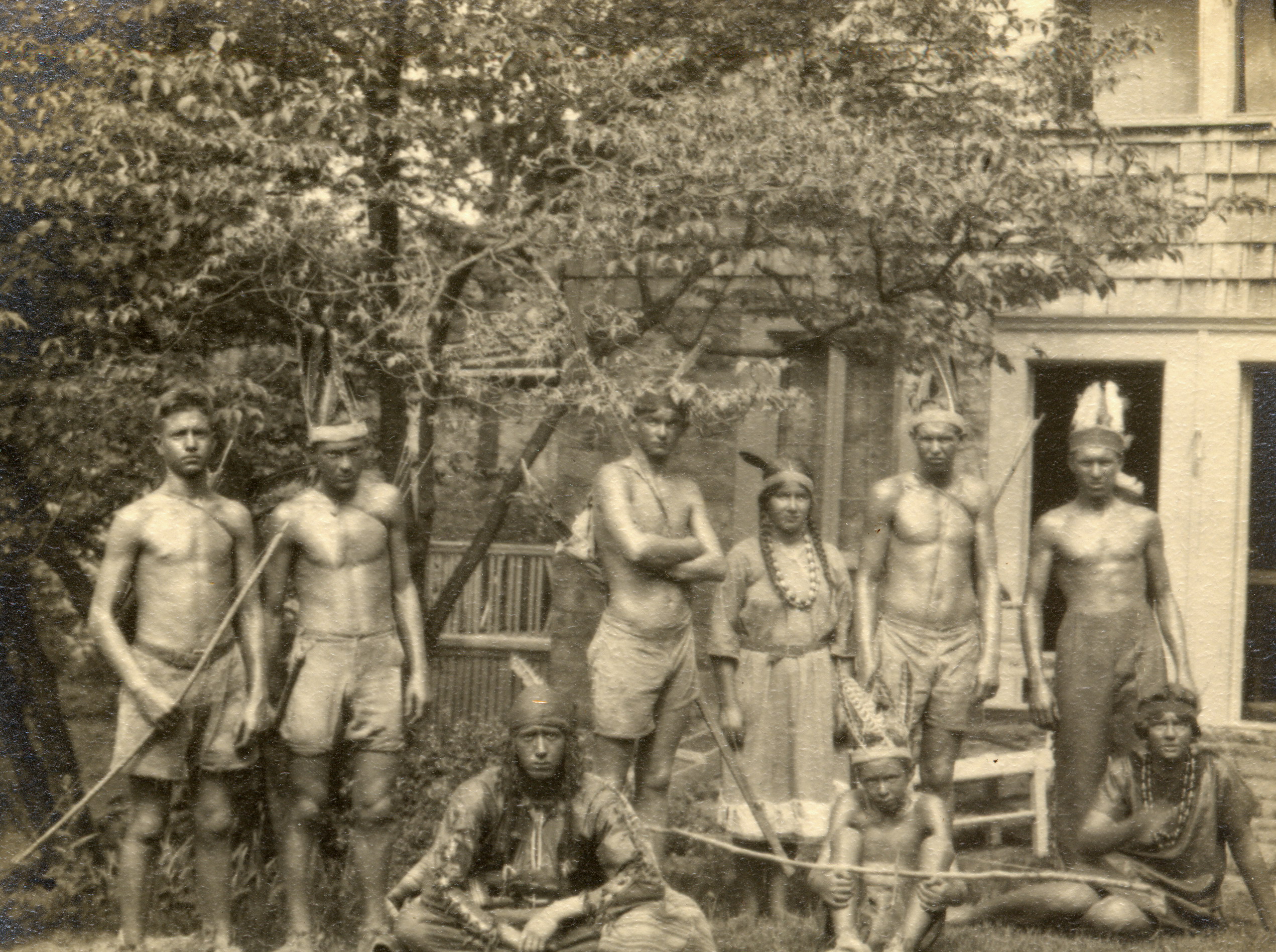
Marian Kingman Album – Pageant – Silvan Hayes (third from left) with arms folded, 1930s
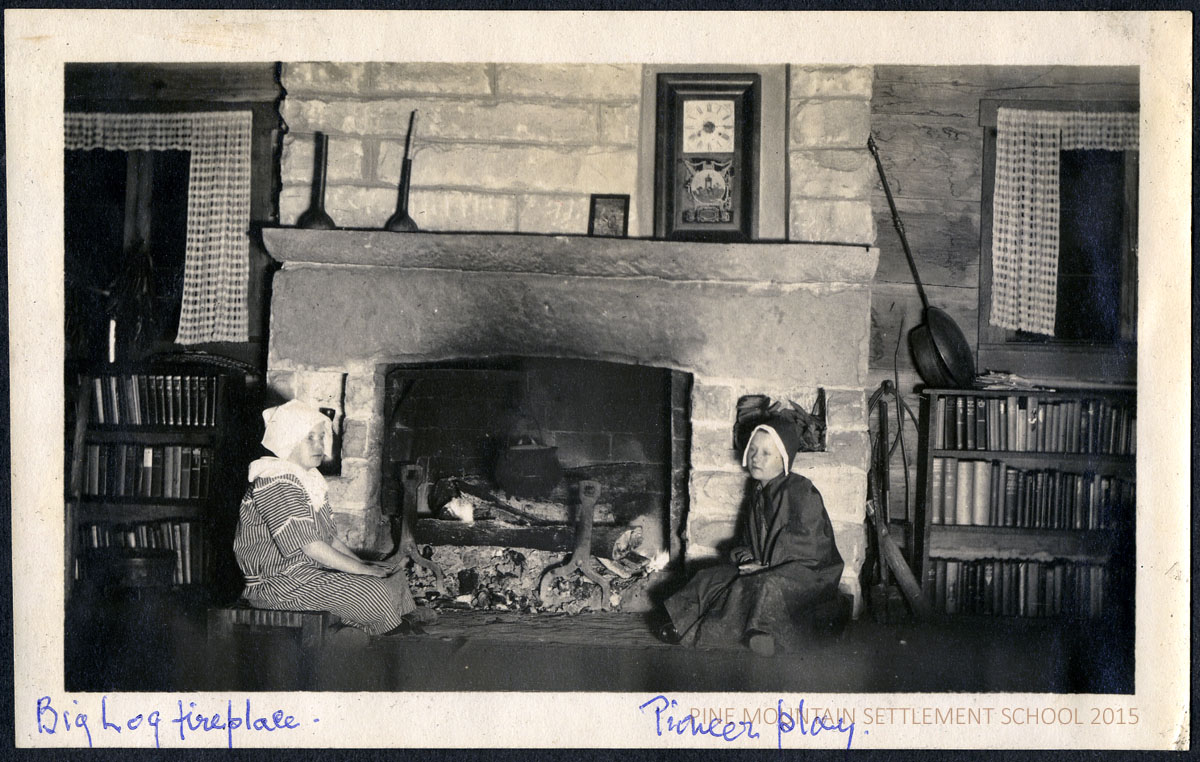
“Big Log fireplace, Pioneer play.” Children as Pilgrims. Angela Melville Album II, Part I. “Big Log Fireplace – Pioneer Play”[melv_II_album_032.jpg]
CITY-WAYS AND COUNTRY-WAYS
By 1927 the School had institutionalized the celebration of Thanksgiving and some of the students accustom to celebrating with their families were given a new venue for the Holiday. Those students not accustomed to celebrating the day with their families, found a new way to connect to their heritage, but also to new customs and to what some students called “city-wise” activities.
In this account recorded by a worker at the School, a cultural tug of war is evident in the exchange that occurred around this holiday:
Thanksgiving morning one of our big boys asked if he could go home for the day. “You know I like to be with my folks,” he said, adding a second later, “but I like to be here too. I’d rather be here than at home.” Then, anxiously, so as not to have his meaning mistaken, “You know of course I like to see my folks, but you see my mother keeps house country-wise, and I like keeping house city-wise.” It was the only way the lad could think of to express his new views of order and cleanliness acquired since school began this fall!
Anon. The name of the writer is not known
Apparently, the worker believed the School to be the purveyor of “city-ways” and that the city offered lessons in cleanliness and order that “country-ways” did not. The worker and the student are caught in a cultural tug of war that seems as culturally unresolved as were many of of the students.
STAFF THANKSGIVINGS
During the later years (1930s – 1940s), the staff at the School often gathered to share a Thanksgiving meal together and to capture some sense of the “Pine Mountain family” that seemed to fill many special events at the School. Traveling to be with relatives was rarely possible for large departures from the remote School, yet, a special familial bond was created by the School’s isolation. The following image shows a gathering of those staff at the School sharing a Thanksgiving meal in Practice House or (now) Country Cottage. Director H.R.S. Benjamin, whose face looks toward the camera from the left of the photo, sits across from Brit Wilder.
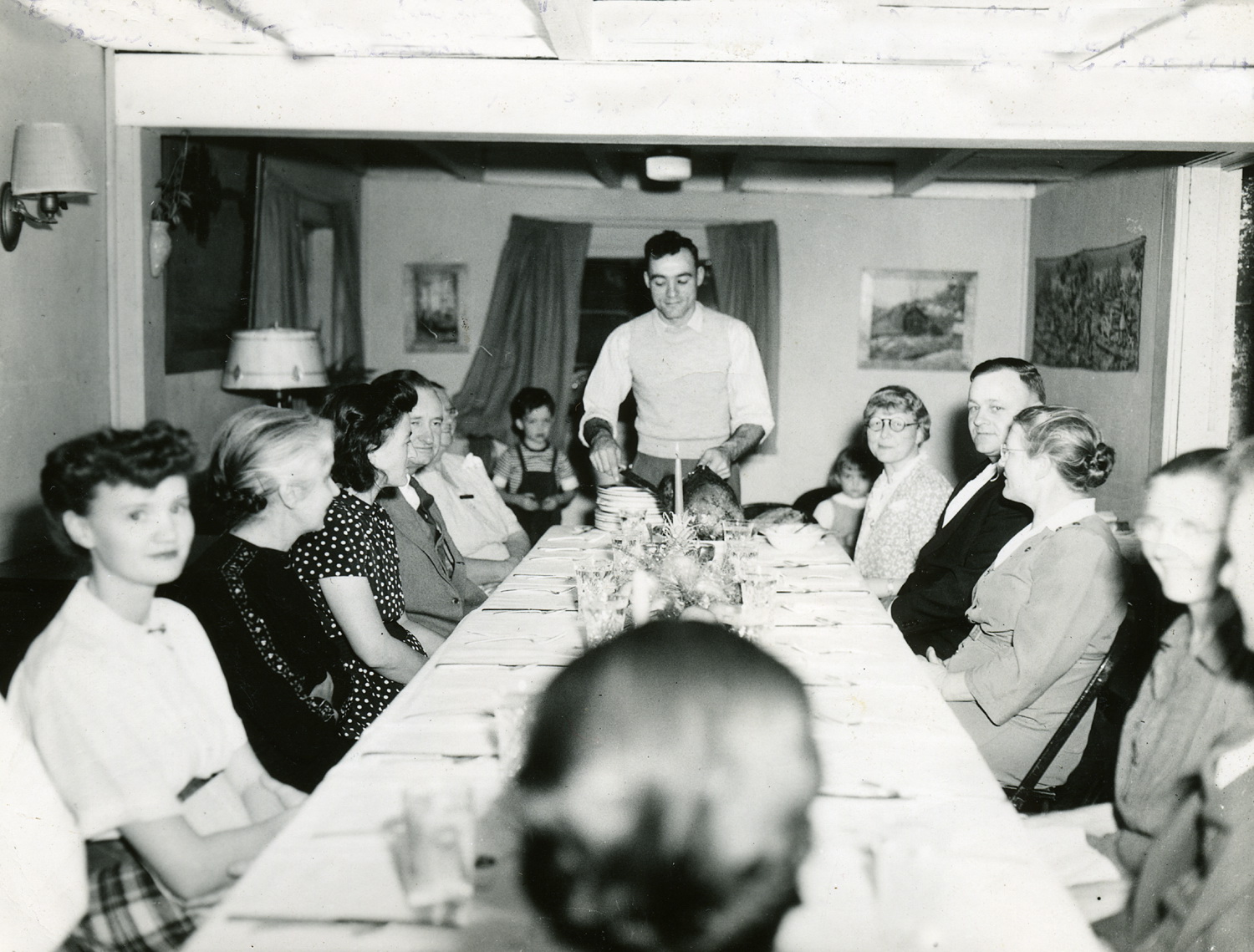
Country Cottage, interior view. Thanksgiving dinner for staff at the home of William and Fern Hayes. (Country Cottage). Head, (left to right) Elbow of Arthur Dodd? (he took the picture) Georgia Dodd, (?), Ella Wilder, Mr. H.R.S. Benjamin, Mrs. H.R.S. Benjamin, Steven Hayes (child), William Hayes carving turkey, Helen Hayes (child), Margaret Motter (?), Brit Wilder, and his wife, Ella sits across from him. c. 1945-46?[X_100_workers_2644_mod.jpg]
Other Food Ways
Community Farming – Beans, A Goose, a Sassy Lady, and Leather Britches
The Gospel of the Clean Plate
Stones, More Stones and Scalloped Potatoes
In the Kitchen With Pots and Pans I
In The Dining Room – Manners and Etiquette
Poultry and Chicken n’ Dumplings
THE STIR-OFF Sorghum Molasses
SEE ALSO
EVENTS THANKSGIVING BALL
EVENTS GEORGE WASHINGTON BALL