
Pine Mountain Settlement School
Series : Community
Putney Forestry Station
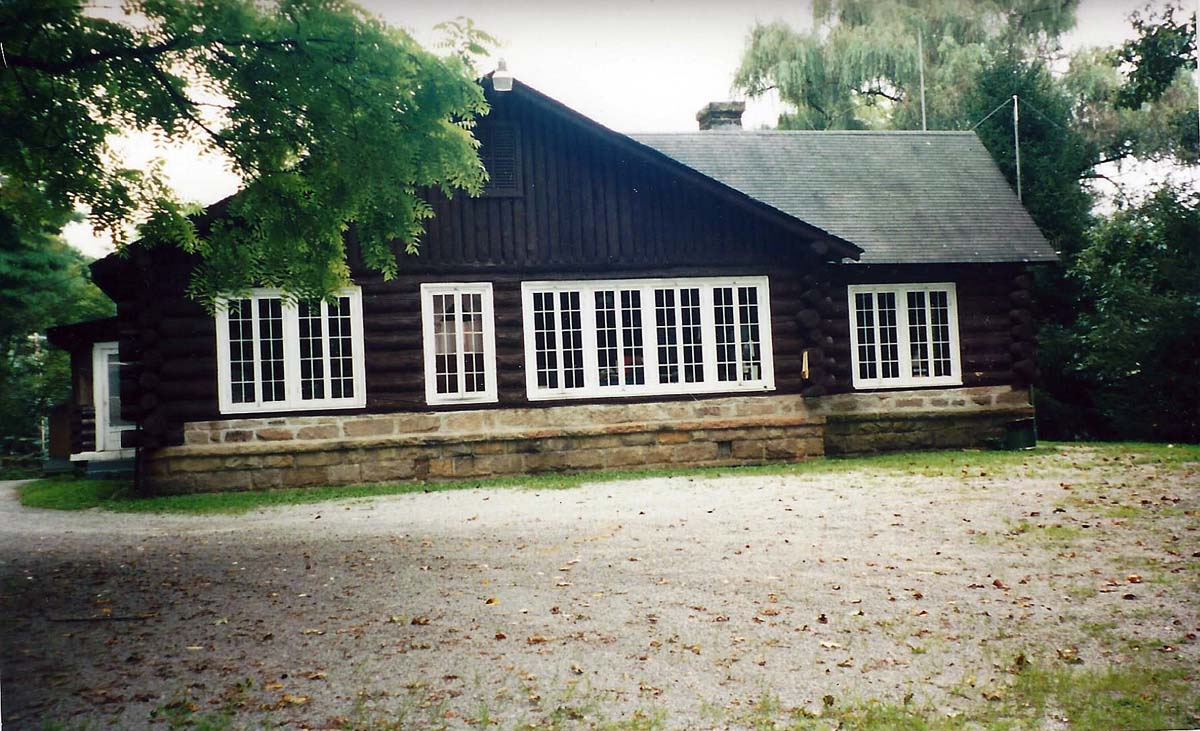
Putney Ranger Station. West flank. [hayes_putney_pd_01]
PUTNEY FORESTRY STATION Putney, Kentucky
TAGS: Putney Forestry Station, Kentucky Division of Forestry, Putney Kentucky, Camp Harlan, historic restoration, Kentenia State Forest, Civilian Conservation Corps, CCC, Kentucky Division of Forestry, United States Forest Service (USFS), log construction, forestry, fire prevention, Putney Lookout Tower, Gross Knob Lookout Tower, forest fires, New Deal program 1933-1939, President Franklin D. Roosevelt, Kentenia State Forest Telephone Line, Isaac’s Creek Trail, Laden Trail, Pine Mountain Settlement School, Harlan County Chamber of Commerce, Nancy Adams, Rachael Kennedy, Cynthia Johnson
See Also: A History of the Daniel Boone National Forest 1770-1970 by Robert F. Collins. https://foresthistory.org/wp-content/uploads/2017/01/A-history-of-the-Daniel-Boone-National-Forest.pdf

NPS staff use preservation project for training.

| S-53 | 512 | 5/23/1933 | Laden | Putney | Camp Harlan 1.5 mi NE |
The New Deal Builds: A Historic Context of the New Deal in East Kentucky, 1933 to 1943, Written by Rachel Kennedy and Cynthia Johnson. Designed by William Macintire. Cover Design by Hayward Wilkirson. All photographs by the authors, unless otherwise noted.

“It is likely that there are many more CCC associated projects in an area. For instance, research of the Putney Archive at KDLA (Record Group 2825) revealed CCC work plans for a few camps in the region from 1939-1943. These plans illuminated many more projects than originally found in the newsletters. Locating work plans for the other camps, however, may require more creative research.”
APPENDIX: PUTNEY FORESTRY STATION Putney, Kentucky
Harlan Co. 512/S-53 Putney Gatun Trail Harlan Co. 512/S-53 Putney Pine Mountain Trail Harlan Co. 512/S-53 Putney Laden Trail Harlan Co. 512/S-53 Putney Benham Spur Telephone Line Harlan Co. 512/S-53 Putney Putney Lookout Tower Harlan Co. 512/S-53 Putney Gross Knob Fire Tower Harlan Co. 512/S-53 Putney Dam for District Hdqtrs Harlan Co. 512/S-53 Putney Issac’s Creek Trial Harlan Co. 512/S-53 Putney Ridge Top Trail Harlan Co. 512/S-53 Putney District Headquarters Harlan Co. 512/S-53 Putney Greasy Road Harlan Co. 512/S-53 Putney Kentenia Trail Harlan Co. 512/S-53 Putney Putney Tower Trail Harlan Co. 512/S-53 Putney Camp Harlan Quarry Harlan Co. 512/S-53 Putney Gross Knob Tower Rd Harlan Co. 512/S-53 Putney Telephone Lines Harlan Co. 512/S-53 Putney Laden-Laurel Trail Harlan Co. 512/S-53 Putney Kentenia State Forest Telephone Lines Harlan Co. 512/S-53 Putney Pine Mountain School Trail
“The New Deal and the Civilian Conservation Corps: USFS Ranger Stations
One of the main missions of the CCC was to promote environmental conservation on public lands. Since national and state forests were not intended to be used as parks but as natural resources, administrative buildings and infrastructure were needed for access and management purposes. Working in conjunction with national and state forest divisions, the CCC constructed numerous support buildings for forestry personnel and equipment. (Grosvenor 1999, 33). CCC projects included construction of forestry division facilities, such as stations, dwellings, garages, warehouses, and waterworks. Forest Service buildings were typically constructed with locally available materials, such as log and stone, in order to harmonize with scenic natural surroundings. (Grosvenor 1999, 36). In fact, use of these materials was strongly favored by the US Forest Service, which consistently supported rustic architectural styles and materials, often referred to in CCC newsletters as “old fashioned Indian or Daniel Boone style.” (The Wildcat 1937, 1). The rustic architectural style is generally characterized by a horizontal emphasis and low massing, similar to the Craftsman style popular at the time. (Grosvenor 1999, 33). In terms of designs, these too were approved by the US Forest Service. Plans for buildings were often already drawn and available in CCC camp manuals with specifications for construction. New Deal Case Study: Putney Ranger Station In 1919, the site of the first state forest, Kentenia, was established on the south side of Pine Mountain in Harlan County. The land was acquired by the state as a gift from the KenteniaCantron Corporation, which was presumably a company associated with timber extraction. The forest was comprised of seven scattered tracts totaling 3,624 acres.
(http:// www.forestry.ky.gov/programs/stateforest/State+Forest+Locations.htm).
In order to assist in the protection and management of the forest, an on-site district headquarters was needed. Infrastructure for the forest such as lookout towers, truck trails, and telephone lines were also necessary for forest fire prevention. To manage the program, Putney Ranger Station was established as the first district headquarters for the Kentucky State Division of Forestry and was situated in the Kentenia Forest. (Howard and Greene 1992, 488). The ranger station was constructed by CCC Camp S-53, Company 512 with work starting in January 1937. Camp S-53 was established in May 1933 and was among the first CCC camps established in Southeast Kentucky. (The Wildcat 1935, 4). The camp was located adjacent to the Kentenia State Forest. Work by Company 512 encompassed forest fire presuppression, fire fighting, and forest stand improvements. The camp also did extensive construction in the Kentenia Forest including roads, truck trails, fire towers, and telephone lines, as well as building the district headquarters. (Wildcat Weekly 1939, 2). Putney Ranger Station, west façade, 2004.”
Plans for the district headquarters were approved by the Regional Forester to construct a 69 feet by 49 feet rustic style building to serve as an office and a dwelling house for the forest ranger and his/her family. The building program included two offices, a large drafting room, a living room, a dining room, four bedrooms, and a bathroom. A basement was also constructed to provide space for heating equipment. Materials specified for the construction of the headquarters were native sandstone quarried from state forest land to be used in the foundation to a height directly under the window sills; 10 inch logs for walls above the window sills; split shingles for the roof; and chestnut paneling with black walnut trim for the interior walls. To enhance the rustic appearance, a large stone fireplace was included between the living room and dining room and wood beamed ceilings were installed in the public spaces. (The Wildcat 1937, 1). On the exterior, plans called for a front veranda measuring 13 ft x 28 ft. Further enhancing the site, a terraced lawn with ornamental plantings was included in the overall design. New Deal Case Study: Current Conditions Putney Ranger Station (A) is extant and in good condition. The building is one story in height plus a basement and has a gable roof. The structure utilizes an H-shaped floor plan with a front terrace and a screened porch in the rear. The sandstone foundation and log walls remain exposed. A creek is located to the east of the ranger station. This creek was used as a source to supply water for the Putney Ranger Station. The CCC constructed a reservoir with a dam to establish a water supply (B). It is located a short distance to the north along the creek The dam is made with a heavy rock wall and has an adjustable flood gate. (The Wildcat, Aug. 1937, 1).
Putney Ranger Station, massive interior stone chimney, 2004. Putney Site plan.”
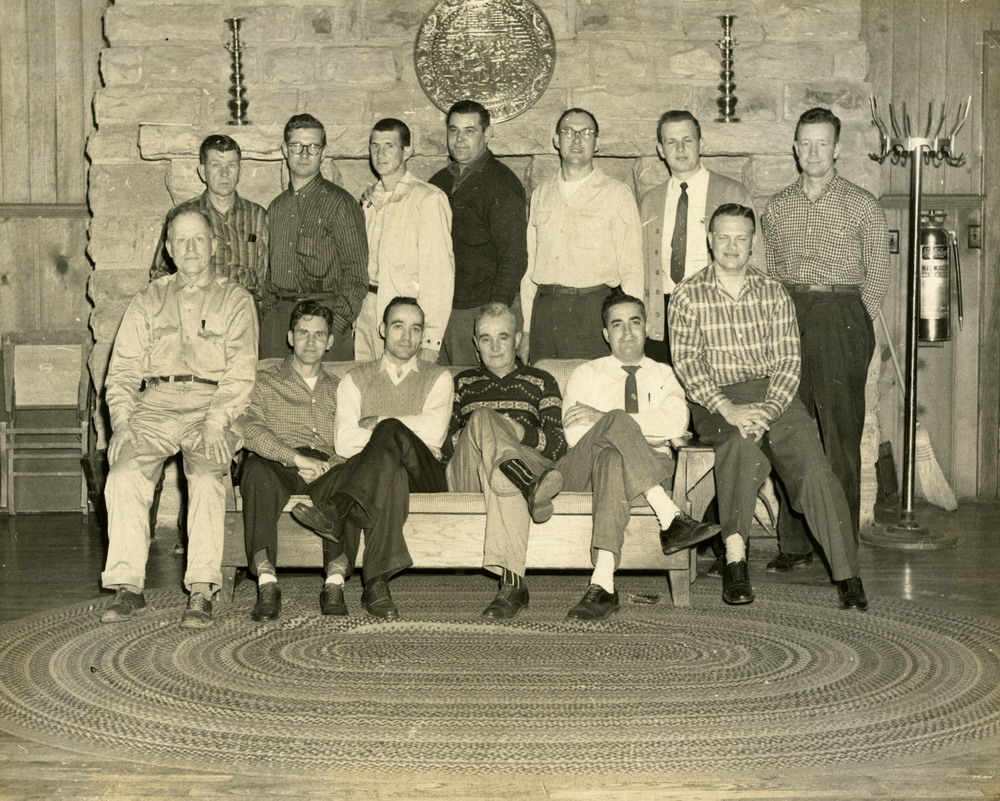
William Hayes with colleagues at Putney (KY) Ranger Station, living room. c. 1960. [hay0146]
The ranger station site has several support buildings also constructed by the CCC. These buildings had a variety of uses for the purpose of forest management from storage to vehicle maintenance. Two garages and a warehouse remain extant, as well as two other buildings with unknown functions. To the west of the ranger station is a two bay garage is a log structure with a gable roof (C). The other garage is on the east side of the ranger station. It is a single bay structure with principal log framing elements and vertical wood siding (D). It has a gable front roof and a pit that appears to have been for servicing automobiles. The rectangular “warehouse” building is located to the northeast of the station near the creek bed (E). It is of frame construction with wood clapboard siding. The structure has a gable roof with one side extending outward to form a porch along the length of the building. It sits on stone piers and has been filled in with concrete block to make a basement space. Based upon the appearance of this structure, it could have been used as living quarters for USFS staff or the CCC. There is also a small frame building with clapboard siding and a gable-front roof directly beside the ranger station on the west side (F). The building rests on piers and may have been moved to the site at a later period. The other building sits behind the ranger station on the north side (G). It is frame with board-and-batten siding and clerestory lighting. The style and materials differ from the rest on the compound, which might indicate that it was constructed during a separate building campaign.”
New Deal Case Study: Integrity The Putney Ranger Station is eligible for the National Register under Criterion A because of its association with the first state-owned forest in Kentucky and its association with New Deal era conservation services provided by the CCC. It is very rare to find a forest station complex intact from this era, especially with a high level of integrity. The Putney Station is an exception, as it maintains a high degree of integrity. The site retains its forested setting and none of the buildings have been moved. Most of the original materials on the interior and exterior remain intact for the entire complex, including the Station building and support structures. The original windows, floors, beamed ceilings, fixtures, and paneling are still in place in the station. Additionally, the original floor plans have been retained on all structures. There have been very few alterations to the buildings. On the station building, the kitchen and bathrooms have undergone minimal modern renovations, and split shingles on the roof have been replaced with asphalt shingles. Additionally, building E has been altered through enclosure of the open area between foundation piers with concrete block. Otherwise, there has been very little loss of materials and design elements. The former five elements of integrity, when taken together, combine to give the site integrity of association and feeling with the New Deal era. Therefore, the Putney site possesses integrity of design, materials, workmanship, setting, location, feeling, and association. Today, plans for the Putney Ranger Station are to rehabilitate it as a tourism welcome center and CCC museum. The welcome center will provide crucial tourism infrastructure to Harlan County. The museum will pay homage to the CCC heritage of Harlan County. Plans include a new roof, log restoration, new heat, air, plumbing, and wiring. The outbuildings will also be repaired and restored. This project will preserve the history of the ranger station and its dependencies that were a vital element in forest management of the Kentenia Forest. Putney double bay garage, Building C. Photo taken in 2004 187 Section Six Conclusion and Notes for Future Research This report has attempted to chronicle New Deal history during the 1930s and 1940s across the state and in the East Kentucky study region. Contexts have been developed that address such themes as PWA and FSA housing and rural rehabilitation efforts, New Deal recreation sites, and CCC conservation infrastructure. It has become clear from these efforts that the impact of the New Deal is far-reaching. The roads we drive on, the state parks we enjoy, and the water we drink has all been influenced to some extent by a New Deal agency. In combination with these studies, surveys have been undertaken in the region to develop an understanding of potential property types. In particular, this data along with contextual themes, has permitted for evaluation and integrity assessments of certain classes of resources, although much more still needs to be done. The four county surveys have also revealed a disturbing trend—the destruction of New Deal resources at a rate of 65 percent on average. This is a regrettably low rate of retention that undoubtedly points to a lack of recognition of the historic significance of these resources, and a subsequent need for educational efforts regarding the New Deal. The rewards for such actions will be felt in local communities gaining a broader, more holistic view of their past. Future Research As is always the case, there is still much work to be done. There are several classes of resources of which we are just beginning to understand. Few of these resources were documented in this study, though it is realized that they too are as ubiquitous as schools and courthouses. Particular examples of these property types are sanitary sewers, wastewater treatment facilities, incinerators, and waterworks. It will be important in future studies to document their presence and develop workable integrity standards for these property types. These studies should be done in concert with a mechanical engineer or expert in public health infrastructure. Also important to a complete understanding of the New Deal is inclusion of all the main agencies whose mission involved construction or altering the cultural landscape. Future research should encompass the work of the PWA, CWA, CCC, KERA, FSA/RRA, HOLC, NYA, and TVA, not just projects undertaken by the WPA. The WPA’s influence has largely become synonymous with the New Deal, yet its progeny do not equal half of these agencies combined. Further augmenting these endeavors will be future county and state park surveys and National Register work. This report has largely not attempted to tell the New Deal story on this level, because of the need for a large scale context through which to view local works projects. It is hoped that this study can be utilized to initiate more studies on a smaller scale. In the region, for example, two state parks are in need to comprehensive documentation, Dr. Thomas Walker State Park and Levi Jackson State Park. Beyond the area, a full scale survey should be undertaken of state park architecture, or parkitecture, that would assist with understanding and preserving our park’s historic resources, and marketing them appropriately. Additionally, all counties in the region benefited from a New Deal program, yet there are very few surveys 188 or National Register work accomplished in this area. A county study could, for example, link New Deal quarry sites to specific construction projects, or document CCC camp sites and work projects in a county or region. In sum, the New Deal was the consummation of progressive efforts to modernize the state of Kentucky and the nation. Evenly paved roads, modern hospitals and clinics, and potable water can date their beginnings to the New Deal era. It is hoped that this report has successfully documented these endeavors and has shed new light on the important historic resources that date from the Great Depression that were built by local sponsors with federal government labor and assistance.”
“f you are looking for detailed information on the work of the CCC in Kentucky, you’re really in luck because there is at least one book devoted to CCC work in that state. Kentucky’s Civilian Conservation Corps by Connie M. Huddleston will be a boon to anyone researching Kentucky’s CCC work; the photos and illustrations alone make it a real treasure. I am especially drawn to Huddleston’s text and photos related to the work of the CCC at Cumberland Falls State Park. A few years ago, the annual Civilian Conservation Corps reunion was held at Cumberland Falls State Park so in the case of Kentucky, I have some photos of my own to share. To access an article about the reunion that I posted at the Forest Army blog back in 2007, click here.“
http://www.foresthistory.org/ASPNET/Publications/region/8/history/chap4.aspx
In 1933 President Franklin D. Roosevelt implemented the New Deal programs which were planned to revitalize the economy of the nation during the economic downturn referred to as the Great Depression. Throughout the nation, the unemployed were hired to establish recreation and infrastructure projects in national parks and in support of state conservation programs. The Civilian Conservation Corps (CCC), sometimes referred to as the “Tree Army” conducted programs in reforestation and recreation projects, as well as major infrastructures such as roads and bridges. Major additions to the nation’s parks and fire prevention programs in the states were undertaken. The CCC operation was generally run out of large camps where from 100 to 200 men were housed, fed and trained. Based on their satisfactory completion of training and work, the men were paid $30.00 a month of which $25 dollars was sent to their families and $5.00 given to the men for spending money.
The CCC operation was generally run out of large camps where from 100 to 200 men were housed, fed and trained. Based on their satisfactory completion of training and work, the men were paid $30.00 a month of which $25 dollars was sent to their families and $5.00 given to the men for spending money. One of those camps was located at Putney, Kentucky.
One of the tasks of the CCC program was to address the lack of adequate facilities for fire prevention and monitoring in the US.
-
State 1934 1937 1941 Kentucky Total residents enrolled in CCC camps (nationwide) 4,495 5,571 5,414 In Far West (beyond Great Plains) 1,068 669 587 In Appalachians 820 1,224 660 In other regions 2,607 3,698 4,167 Out-of-State residents in Kentucky Appalachian camps 0 725 740 - Biography / History
- During the Great Depression, the people of the United States turned to Franklin D. Roosevelt and his New Deal programs to help them through the trial. With the Emergency Conservation Work Act of 1933, the Civilian Conservation Corps was established. The CCC, also known as Roosevelt’s Tree Army, recruited unemployed young men for a peacetime army to help combat the destruction and erosion of the country’s natural resources. Roosevelt selected Robert Fechner to be the National Director of the program. Some of the work accomplished by the CCC included the improvement of millions of acres of federal and state lands and parks, building of new roads, placement of new telephone lines, building of fire towers and fighting forest fires, protection of natural wildlife habitats, improvement of streams, fish restocking, and planting of billions of trees. The CCC had great public support and was one of the most successful New Deal programs. Consequently, it was also one of the least criticized programs. Following the death of Fechner in late 1939, Roosevelt appointed John T. McEntee as director but the CCC’s days were numbered. The war in Europe drew the nation’s attention and finally, with the United States’ entry into World War II, the CCC was forced to cease operation in 1942.
- Scope and Content
- This collection consists of the newsletters of various Kentucky Civilian Conservation Corps camps. The newsletters, dated 1934-1941, contain not only camp news but also articles encouraging moral and patriotic behavior as well as articles on hygiene and work safety, jokes, cartoons, puzzles, poetry, and news of surrounding communities. Some newsletters from West Virginia, Utah and Oregon are also included.
- Subjects
- Civilian Conservation Corps (U.S.)
- Civilian Conservation Corps (U.S.) – Kentucky — Periodicals
- New Deal – 1933-1939 — Kentucky
- Depressions – 1929 – Kentucky
- United States – Economic conditions – 1918-1945
- United States – Social conditions – 1933-1945
ENVIRONMENT AND FORESTRY
| Mountain Life & Work vol. 11 no. 4 January, 1936 | “On Lynn Fork of Leatherwood Creek, in Perry County, Kentucky, there are approximately 2,500 acres of original forest remaining. A greater variety of trees may be found in the tract than in the Smoky Mountain federal preserve in Tennessee. There is a tulip poplar which towers eighty feet before branching – the largest of its kind in the United States. A league has been formed under the chairmanship of Miss Daisy Hume, Lexington, to preserve this forest. Beautiful vegetation and clear streams make the area a natural recreation spot. Its preservation would be a service to wild life, as well as to botanists and conservationists.” |
GALLERY: PUTNEY FORESTRY STATION Putney, Kentucky
-
- Putney Ranger Station. West flank. [hayes_putney_pd_01-1]
-
- Putney Ranger Station. [putney_views_002]
-
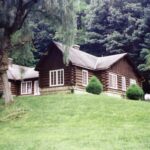
- Putney Ranger Station. [putney_distant_view]
-

- Putney Ranger Station [hayes_putney_pd_01]
-
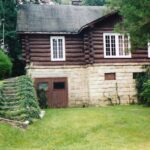
- Putney Ranger Station. [putney_views_01]
-

- Putney Ranger Station. [putney_views_01-1]
-
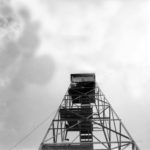
- Putney Lookout Tower. [hayes_2015_019_mod.jpg]
-
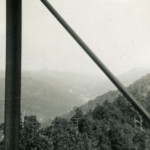
- Mountain Day. View from the top of Putney Fire Tower on the crest of Pine Mountain, looking toward Pine Mountain Settlement School [?]. c. 1947. Birdena Bishop Album. [bishop_06_001][bishop_06_001.jpg]
-
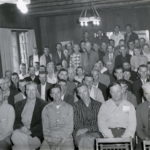
- William Hayes. Forestry meeting at Putney Forestry Station, c. 1963. [hay0144]
-
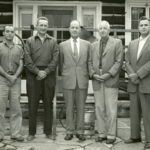
- Putney Ranger Station: William Hayes, Elmore Grim, Wilson Wyatt, Lt. Gov. ? ,Maynard Marcum. [hay0143]
-
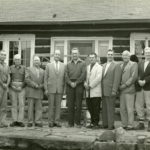
- Putney Ranger Station: William Hayes, Elmore Grim, Wilson Wyatt, Lt. Gov. ? , Marcum. [hay0145]
-
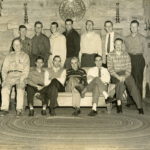
- William Hayes with colleagues at Putney Ranger Station, living room. c. 1960 [hay0146]
-

- View from Putney Tower, Fall 1949. [From-Putney-Tower- fall-1949]
-
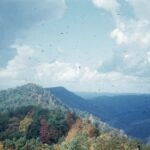
- View from Putney Tower, Oct 1949. [Putney-Tower-Oct-1949]
BIBLIOGRAPHY
Huddleston, Connie. Kentucky’s Civilian Conservation Corps
https://dspace.kdla.ky.gov/jspui/bitstream/handle/10602/2778/New_Deal_in%20East_KY(complete).pdf?sequence=1
http://www.foresthistory.org/ASPNET/Publications/region/8/history/chap4.aspx
Mountain Life & Work vol. 11 no. 4, January, 1936
“On Lynn Fork of Leatherwood Creek, in Perry County, Kentucky, there are approximately 2,500 acres of original forest remaining. A greater variety of trees may be found in the tract than in the Smoky Mountain federal preserve in Tennessee. There is a tulip poplar which towers eighty feet before branching – the largest of its kind in the United States. A league has been formed under the chairmanship of Miss Daisy Hume, Lexington, to preserve this forest. Beautiful vegetation and clear streams make the area a natural recreation spot. Its preservation would be a service to wildlife, as well as to botanists and conservationists.”
See Bruce Poundstone, “Land Use In Eastern Kentucky,” Mountain Life and Work, October 1933